Do these 3 things before closing this tab:
1Scan for outdated or missing drivers - takes under a minute2Clear out junk files and repair common Windows errors3Fix the driver behind crashes, sound loss and screen glitchesMing was an ocean quahog clam (Arctica islandica) estimated to have lived 507 years. Researchers collected it off Iceland in 2006 for climate research and learned how extraordinarily old it was only after examining its shell. The death was real; the idea that scientists knowingly killed a record-breaking animal is not.
How old was Ming the clam?
Ming’s best-supported reported age is 507 years. Bangor University researchers first estimated 405–410 years, then revised the figure in 2013 after a closer count of its shell growth bands. Guinness World Records lists it as the “Oldest non-colonial animal ever,” a record for an individual animal discovered and reliably aged—not proof that no older animal has ever lived or remains in the ocean.
The nickname refers to China’s Ming dynasty, which Guinness says was in power around Ming’s estimated birth in 1499. That year is inferred from the clam’s estimated age; it is not a recorded birth date. Guinness World Records’ record page defines the category as non-colonial, excluding communal organisms made up of multiple individuals, such as corals and siphonophores.
Did scientists kill Ming the clam?
Yes, the clam died during collection and preservation—but scientists did not know its age when they collected it. In 2006, a Bangor University research cruise dredged live ocean quahogs and empty shells from Icelandic waters for a project studying marine climate changes over the previous 1,000 years. The live specimens were frozen aboard the research vessel for transport. Paul Butler, a Bangor climate scientist, told National Geographic in 2013: “This particular animal was one of about 200 that were collected live from the Icelandic shelf in 2006,”
Recommended Free Tools
#1 Best Overall
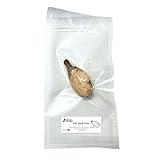
- Preserved Soft Shell Clam Specimen: Mya arenaria, an authentic marine bivalve commonly studied in biology and environmental science
- Formalin-Preserved for Educational Use: Professionally preserved to maintain anatomical structure for observation and dissection
- Hands-On Learning Resource: Suitable for marine biology, invertebrate zoology, anatomy, and ecology instruction
- Classroom & Laboratory Ready: Prepared for use in science classrooms, laboratories, homeschool programs, and museum collections
- Not for Consumption: Preserved specimen intended strictly for educational, research, or display purposes
Its age could only be established after researchers examined the shell in the laboratory. Bangor said in a 14 November 2013 statement: “The notion that scientists knew in advance that it was the longest-lived species and then deliberately destroyed it is plainly incorrect.” At the time of collection, the species was believed to live for around 100 years based on the information then available and its size.
How do scientists know a clam’s age?
Annual shell bands provide an age estimate
Ocean quahogs form annual growth bands in their shells, in principle much like tree rings. Researchers can count those bands to estimate age. The method is not the same as observing an animal from birth, and Ming did not have a recorded birth date; the estimate comes from interpreting the shell’s growth record.
Rank #2

- Preserved Razor Clam Specimen – Ensis directus., a marine bivalve known for its elongated shell and burrowing behavior
- Formalin-Preserved for Educational Use – Professionally preserved to maintain anatomical structure for observation and dissection
- Hands-On Learning Resource – Supports instruction in marine biology, invertebrate zoology, anatomy, and ecology
- Classroom & Laboratory Ready – Suitable for science classrooms, laboratory instruction, homeschool programs, and reference collections
- Not for Consumption – Preserved specimen intended strictly for educational, research, or display purposes
Why the first count changed
The initial 405–410-year estimate focused on the hinge area, where more than 500 tiny bands had become crowded and difficult to distinguish. In the 2013 reassessment, researchers counted more successfully in a shell region where the exterior bands were more evenly spaced and compared the patterns with other shells. National Geographic reported that the revised count was checked against radiocarbon dating.
Size alone is a poor age guide for an old quahog. Madelyn Mette, an Iowa State University doctoral student studying the clams, explained to National Geographic in 2013: “Once they reach a certain age, they don’t get a lot bigger per year … If you have a large clam, you can’t always tell if it’s 100 years old or 300 years old, because there’s very little difference.”
Free tools Windows power users keep installed
One-click scans. No signup required.
Rank #3

- Authentic Atlantic Surf Clam Specimen: Real Spisula solidissima preserved for anatomy study, marine biology instruction, and specimen-based classroom learning.
- Study Bivalve Form and Structure: Excellent for observing clam shell shape, hinge anatomy, growth lines, and the body plan of a marine mollusk.
- Perfect for Labs and Classrooms: Designed for biology classes, marine science units, homeschool lessons, zoology demonstrations, and dissection activities.
- Supports Coastal Ecology Education: Helps students examine a key Atlantic shellfish species and understand marine habitats, filter feeding, and benthic organisms.
- Professionally Preserved and Ready to Use: Formalin-fixed and packaged for long-term educational study, classroom handling, and display applications.
Why was Ming called the world’s oldest animal?
The phrase needs a category qualifier. Ming is recognized as the longest-lived precisely aged non-colonial animal discovered. “Non-colonial” means the record concerns one individual, rather than a colony composed of multiple organisms. The distinction matters: a species’ potential longevity or an organism’s life cycle is not the same as a verified age for a known individual.
The superlative also does not establish that Ming was the oldest animal ever to exist. It describes a record based on an individual that people found and were able to age reliably. Other animals may have lived longer without being discovered or precisely aged.
Rank #4

- Quantity: 10 PC
- Size: 2-1/4 Inch ~ 3 Inch
- Come in color from soft yellows to bright pinks, usually white.
- Making shell dolls, shell mirrors, wreaths, shell ornaments and in shell art and shell crafts.
What Ming’s shell can tell scientists about climate
The quahogs were collected because their shells preserve records of marine conditions, not because researchers were seeking a longevity record. Bangor described the project as investigating climate changes over the previous millennium. In 2013, marine geologist James Scourse told National Geographic: “The 507-year-old is at the top end of the series,” and said: “From this we can get annual records of marine climate change, which so far we’ve never been able to get from the North Atlantic.”
Ming’s age made it an exceptional specimen within that series, but its shell should not be mistaken for a complete account of climate change on its own. Bangor researchers also suggested that studying the clam’s tissues might help investigate resistance to aging processes. That was a research possibility, not evidence of an anti-aging treatment for people.
What’s actually slowing this PC down?
Pick the symptom - the matching free tool is one click away.
Quick Recap
Best Value

- Contains 24 pieces of striped chocolate clam
- Measures 3.5 to 3.75 inches in size
- 100 percent natural shell
- Excellent for centerpieces
- Excellent for any nautical theme events
Product prices and availability are accurate as of the date/time indicated and are subject to change. Any price and availability information displayed on Amazon at the time of purchase will apply.




