Quick wins for a faster PC:
Scan for outdated or missing drivers - takes under a minuteDriver Scan →Clear out junk files and repair common Windows errorsFree Scan →The safest way to help a dog adjust after a move is to make the change smaller and more predictable. Prevent escapes while doors are open, preserve familiar food and routines, give your dog one quiet home base, and expand access to the new house and neighborhood gradually. Some dogs settle quickly; others need longer depending on their temperament, health, previous experiences, travel, and how different the new home is.
Why moving can unsettle dogs
A move changes nearly every environmental cue a dog uses to feel secure: familiar smells, sounds, rooms, boundaries, walking routes, toilet areas, and access to people. Moving day adds unusual noise, strangers, open doors, boxes, vehicle travel, and schedule changes.
Stress after a move is not necessarily a training failure. A previously reliable dog may have an accident, bark more, follow you constantly, hide, eat less, or seem unusually quiet. Treat the first days as a management and adjustment period: reduce opportunities for mistakes, keep the dog safe, and rebuild familiarity through repetition and reward-based guidance.
Start preparing before the move
The exact timeline will depend on your move, but early preparation prevents many avoidable problems. Keep meals, walks, outdoor time, play, and medication schedules as stable as practical while packing.
What’s actually slowing this PC down?
Pick the symptom - the matching free tool is one click away.
#1 Best Overall

- Multiple Cats: Two large cat carriers that connect in a snap—plus, the side windows can be rolled up or down whenever you need! Ideal for traveling with multiple fur babies.
- Spacious 2-in-1 Design: The carrier transforms into a secure playpen or travel crate, suitable for pets up to 35 lbs. Ideal for cats, dogs, and other small to medium pets, it offers comfort and flexibility.
- Enhanced Travel Convenience: Comes with a collapsible travel bowl and a litter box. Perfect for car rides, vacations, or camping trips, ensuring your pet's basic needs are met.
- Secure and Safe: Features locking zippers to prevent escapes, reinforced stitching, and a stable base to keep your pet secure during travel.
- Easy Setup and Storage: Simple assembly with pipe connectors, designed to be safe and user-friendly. The foldable design allows for convenient storage when not in use, saving space.
Update identification and veterinary records
- Update your dog’s microchip registration with working contact details and the new address where applicable.
- Replace or update the ID tag before moving day. A frightened dog can bolt while furniture is loaded, a vehicle door is opened, or movers enter the house.
- Ask your current veterinary practice to transfer records to a clinic near the new home.
- Identify a local veterinarian and emergency animal hospital before arrival.
- Refill necessary prescriptions early enough to cover the journey and the first days after arrival.
If your dog’s tag is outdated or damaged, a replacement dog ID tag is a small but useful part of the moving kit. Identification does not replace secure handling, but it improves the chance of reunification if an escape occurs.
Check destination-specific travel rules
For a move between U.S. states or territories, requirements come from the destination’s animal-health authority. Depending on the destination, your dog may need a health certificate, current vaccinations, testing, or treatments. There is no single health certificate that automatically satisfies every state.
For international travel, requirements can include a microchip, vaccinations, tests, treatments, an import permit, a health certificate, and USDA endorsement. These rules vary by country and can take weeks or months to complete. Begin checking the destination country’s current requirements as soon as travel is known, then confirm details with your veterinarian and relevant official authorities. Requirements can change.
If the journey involves international transport, airline travel, or complicated documentation, you may need a professional pet relocation service. Treat this as logistical assistance, not a substitute for checking official requirements, and verify route coverage, credentials, insurance, and exactly which tasks the provider will handle.
Free tools Windows power users keep installed
One-click scans. No signup required.
Make the crate or carrier familiar
If your dog will travel in a crate or carrier, do not introduce it for the first time amid moving-day chaos. Leave it accessible well before the move. Feed meals near or inside it, place treats and toys inside, and allow your dog to enter and leave voluntarily at first. Progress to brief door-closed sessions and short practice trips only as your dog remains comfortable. Crating may not suit every dog, especially one distressed by confinement; discuss alternatives with your veterinarian if needed.
Choose equipment that is appropriately sized and suitable for the dog, vehicle, route, and transport rules. Your dog should have enough room to stand, turn around, and lie down in a natural position. A dog travel crate or carrier may be appropriate for some journeys, but no option is automatically right for every dog or trip.
Keep familiar objects and routines together
Pack your dog’s bed, blanket, favorite toys, bowls, leash, harness or collar, food, medication, towels, waste bags, and records in a clearly marked box that stays with you rather than disappearing into the moving truck. Familiar scents can make the new setting less abrupt.
Rank #2
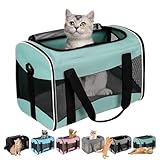
- [PRODUCT DIMENSIONS] Pet travel carrier size : 17x11x11 inches, recommended up to 15 lb pets, it is suitable for large, medium cats and small dogs. Please don't choose your airline cat carrying case based on weight, please refer to your pet's length and height when choosing a pet carrier size.
- [AIRLINE APPROVED] This cat carrier is designed with airline approved, it can fit comfortably under most flight seats, we can take our pets wherever we want. Dog travel carrier offers two attachment loop handles that can be used as a dual harness or as a luggage strap for balanced carry and secure transport.
- [EXCELLENT MATERIAL] Collapsible cat carrier is made of polyester fabric, supported by a steel ring, washable, wear-resistant and durable. The three sides and the top of this pet carrier are nylon mesh, scratch-resistant and not easy to damage, it can not only check your pet in real time, but also ensure enough air circulation.
- [SAFE AND COMFORTABLE] Dog travel bag has metal zippers on the top and side entrances, durable and not easy to deform, it allows your pets to enter and exit easily. The cat carrying case is equipped with an anti-escape safety buckle, which can effectively prevent pets from accidentally falling. It is suitable for car rides and vet rides.
- [PORTABLE AND FOLDABLE] Pet travel carrier comes with a detachable and hand washable wool pet bed, it can provide a comfortable sleeping space for your traveling pet. The cat travel case comes with an adjustable shoulder strap and handle for easy portability. When not in use, you can fold it up for storage.
Keep meals, toilet breaks, walks, rest, and medication as close to their usual times as the move allows. Avoid changing food, bedding, equipment, or household rules at the same time unless safety requires it. Consistency gives your dog fewer new problems to solve.
Arrange a protected location for moving day
The best option for many dogs is to stay away from the property while movers work. A trusted friend’s home, reputable boarding facility, or carefully screened moving-day dog sitter can keep your dog away from open doors and unfamiliar people.
If your dog remains at home, use a closed, quiet room well away from the front door and moving traffic. Put up a clear sign so nobody opens the door casually. A secure crate, pen, or room can work if your dog is already comfortable with it; do not use confinement as an unplanned first-time experience. Check the dog regularly for water, temperature, toileting needs, and signs of distress.
Moving-day travel: prevent escape and reduce physical risk
Give your dog an opportunity to relieve itself before departure. Then secure the dog for the entire journey in a suitable crate, carrier, or vehicle restraint. Never allow the dog to ride loose, sit unsecured in a truck bed, or approach an open vehicle door without a leash attached.
For car travel, a properly fitted dog car seat-belt harness can be one option for vehicle restraint. Follow the equipment manufacturer’s instructions and make sure the restraint is compatible with your dog and vehicle. Do not assume that an ordinary leash clipped to a collar is an adequate crash restraint.
For a longer drive, plan toilet and water breaks in advance. Keep your dog leashed before opening any vehicle door, and avoid unfamiliar off-leash areas where a startled dog could disappear. Never leave your dog in a parked vehicle. Watch for distress such as panting, drooling, restlessness, or hiding; pause somewhere calm and shaded, and seek veterinary advice if signs are severe or persist. Bring food, water, medications, veterinary records, identification details, waste bags, and familiar bedding where they can be reached immediately.
Air travel requires separate planning
Airline travel is not interchangeable with a car trip. The dog’s health, age, breed-related risks, kennel suitability, airline rules, weather, route, and destination requirements all need to be assessed. Air travel can injure animals and, rarely, can be fatal, so discuss the risks with your veterinarian and check the airline’s current requirements directly.
Rank #3

- The large pet carrier is only suitable for daily travel, car seat journey and pet hospital etc. Do not place it under an airplane seat
- The adjustable shoulder strap help you hands-free carrying and makes it the most safe and convenient pet carrier bag for your travel
- The four-side mesh will not only give a safe and comfortable travel for your pet, but also easy for you to check on your pet
- This dog carrier is easy to carry and store, which has a padded shoulder strap and handles
- The large cat carrier is designed for small and medium pets within 18" x 12" x 12"(smaller than product) and 25 lbs. Please do not choose your carrier only based on weight. Reference your pets' length and height in selecting a carrier size.
Do not give sedatives or calming products as a universal solution. Medication may be appropriate for some dogs and unsafe for others, particularly dogs with respiratory disease, severe anxiety, motion sickness, or other health concerns. Ask your veterinarian whether medication is suitable and how to monitor your dog. If an event-based medication is prescribed, ask whether it should be trialed at home first so you can observe for side effects. Do not use someone else’s prescription or guess a dose.
Prepare the new house and yard before your dog explores
Ideally, inspect the new property before bringing your dog inside. A dog who does not yet understand the new boundaries may test every exit.
Do these 3 things before closing this tab:
1Repair Windows errors before they cause bigger problems2Scan for outdated or missing drivers - takes under a minute3Clear out junk files and repair common Windows errorsCheck for escape routes
- Confirm that exterior doors and windows close and latch securely.
- Inspect gates, fence lines, and the bottom of fences for gaps or loose sections.
- Look for spaces beneath gates, damaged screens, unsecured balcony doors, and garage access.
- Keep the dog away from loading areas and open doors until the move is finished.
- Use a leash for the first yard visits, even if the property is fenced.
Remove household hazards
Secure cleaning products, chemicals, pesticides, medications, fertilizers, antifreeze, tools, electrical cords, small objects, and debris left by previous occupants. Check the yard for poisonous plants, sharp materials, rodent bait, standing water, and anything your dog could chew or swallow. A fenced yard is not automatically a safe yard.
Create a quiet home base
Before unloading your dog, prepare one calm area away from the front door and moving traffic. Place the dog’s bed or crate, water, familiar food, a blanket, and a few known toys there. This room or home base gives your dog somewhere predictable to retreat instead of forcing immediate access to the entire house.
Keep the dog in that area while boxes and furniture are being carried. Once the home is safer and your dog seems settled, open up additional rooms gradually and supervise the exploration.
The first hour after arrival
- Secure the dog before opening the vehicle door. Attach the leash or confirm that the crate is closed and secure.
- Go directly to the toilet area. Keep your dog on leash, even in a fenced yard, because the surroundings are unfamiliar.
- Bring your dog to the prepared home base. Offer water and allow quiet time rather than requiring a house tour.
- Limit greetings. Visitors, movers, children, and other pets can wait until your dog has decompressed.
- Keep doors and gates managed. Use physical barriers, closed rooms, or a designated handler whenever people are moving in and out.
Some dogs benefit from a short, leashed exploration paired with calm praise or treats. Others need several quiet hours before they can process anything new. Let your dog’s behavior guide the pace.
Windows Errors? Fix Them Before They Spread
Repair common Windows errors and clear accumulated junk for a smoother, more stable PC - no reinstall needed.Free scan · no reinstallOutdated Drivers Are Slowing You Down
One free scan finds every outdated or missing driver and matches the right update for your exact hardware.Free scan · exact hardware matchThe first days and weeks
Restore the ordinary schedule
Return to familiar meal times, toilet opportunities, walks, medication times, and bedtime as quickly as practical. Feed the usual food and use the same bowls and sleeping items if possible. Predictable repetitions help the new home become familiar.
Rank #4
- Multiple Cats: Two extra large cat carriers that connect in a snap—plus, the side windows can be rolled up or down whenever you need! Ideal for traveling with multiple fur babies.
- Spacious 2-in-1 Design: The carrier transforms into a secure playpen or travel crate, suitable for pets up to 45 lbs. Ideal for cats, dogs, and other small to medium pets, it offers comfort and flexibility.
- Enhanced Travel Convenience: Comes with a collapsible travel bowl and a litter box. Perfect for car rides, vacations, or camping trips, ensuring your pet's basic needs are met.
- Secure and Safe: Features locking zippers to prevent escapes, reinforced stitching, and a stable base to keep your pet secure during travel.
- Easy Setup and Storage: Simple assembly with pipe connectors, designed to be safe and user-friendly. The foldable design allows for convenient storage when not in use, saving space.
For the first several days, supervise your dog indoors and outdoors. Take the dog to the toilet area on leash and praise the desired behavior. If accidents occur, clean them thoroughly and avoid punishment. Stress, confusion about the new layout, and disrupted access can temporarily affect house training.
Expect temporary behavior changes
A dog may respond to a move with:
- clinginess or frequent following;
- withdrawal, hiding, or unusual quietness;
- more barking, whining, pacing, or restlessness;
- reduced appetite or altered sleep;
- accidents or renewed chewing;
- hesitation around stairs, doors, floors, elevators, or the yard.
Do not punish stress-related behavior. Punishment can add fear without teaching your dog what to do instead. Use barriers, supervision, scheduled toilet trips, calm redirection, and reward-based reinforcement. If necessary, temporarily return to simpler training steps your dog already knows.
There is no fixed adjustment deadline for every dog. Some dogs seem comfortable quickly; others take longer, and a dog may appear quiet at first before showing more obvious stress later. Watch your dog’s behavior and appetite rather than relying on a timetable.
Recommended Free Tools
Help your dog get comfortable being alone
Let your dog acclimate to the new home before leaving them alone if possible. When you do begin, increase alone time in short steps and monitor how your dog copes. Arrange check-ins or care if you need to be away for longer than your dog can comfortably manage.
Independent reader supportYour contribution helps us test, update, and keep practical guides available for everyone.Introduce the neighborhood gradually
Early outings should be short, calm, and controlled. Check that the collar or harness fits securely, keep your dog on leash, and choose a route with manageable levels of traffic and noise. Let your dog investigate smells without turning the first walk into a crowded social event.
Delay dog parks, busy gatherings, multiple visitors, errands, and introductions to unfamiliar dogs until your dog is coping well. Add new experiences one at a time so you can tell what is difficult and give your dog a chance to recover.
If the move changes your dog’s lifestyle, build replacement routines rather than expecting immediate adaptation. For example:
The Tool Desk
Outbyte Driver Updater FREEFix the driver behind crashes, sound loss and screen glitchesFind Drivers →Outbyte PC Repair FREERepair Windows errors before they cause bigger problemsFix Now →Best Value
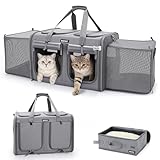
- 60% More Headroom with Patented Square Expansion - Unique square expandable design provides 60% more interior space than round tunnel carriers, expanding from 20"L x 18"W x 14"H to 42"L x 18"W x 14"H to let cats stand, stretch, and turn freely. Reduces travel anxiety and stress for long road trips, moves, or vet visits
- Flexible 2-Room or 1-Room Configuration - Detachable Velcro divider separates two cats (up to 15lbs each) for safety and privacy, or removes to create one extra-large space for a single large cat up to 30lbs like Maine Coon. Includes 2 comfort mats and 2 safety tethers to secure each pet
- Complete Road Trip Solution - Includes zip-out leak-proof litter box (14"L x 9.5"W x 5"H) with moisture-guard liner, 2 seatbelt loops for car seat security, and 2 collapsible food/water bowls. Perfect for moving, cross-country drives, or extended travel where bathroom access is limited
- 5-Sided Breathable Ventilation - Constructed with anti-scratch mesh windows on five sides for maximum airflow. Your fur babies can breathe fresh air and see you constantly, keeping them calm, cool, and connected to you throughout the journey
- Escape-Proof Safety System - Equipped with premium anti-slip locking zippers that pets cannot claw open. Includes two internal safety tethers to clip onto collars, effectively preventing escapes when opening the bag outdoors or at the vet
- House to apartment: schedule frequent toilet trips, practice calm hallway and elevator behavior, and find safe exercise routes.
- Apartment to house: supervise yard access, teach the new property boundaries, and prevent fence-running or nuisance barking.
- Urban to rural: check fencing carefully and manage wildlife, livestock, roads, and unfamiliar outdoor hazards.
- Rural to urban: introduce traffic, crowds, elevators, and building sounds in small, rewarding steps.
When to call a veterinarian or behavior professional
Contact a veterinarian about travel-related illness, persistent appetite or elimination problems, medication questions, or any behavior change that could have a medical cause. Seek prompt help if your dog is dangerously panicked, repeatedly attempts to escape, becomes aggressive, cannot settle, or shows worsening symptoms.
A behavior professional can help when basic management and gradual exposure are not enough. Do not diagnose separation anxiety, panic, or illness from a short description online. A veterinarian can first assess medical factors and, when appropriate, recommend an animal behaviorist or another qualified professional.
Printable moving-with-a-dog checklist
Before moving day
- Update the microchip and ID tag.
- Transfer veterinary records and identify a local clinic and emergency hospital.
- Refill prescriptions.
- Check destination-specific state, territory, airline, or international requirements.
- Practice the crate, carrier, or vehicle restraint.
- Keep food, water, bedding, leash, medications, records, and waste bags accessible.
- Arrange boarding, a trusted caregiver, or a quiet closed room for moving day.
For travel
- Give your dog a toilet break before departure.
- Use a suitable crate, carrier, or vehicle restraint for the entire journey.
- Pack food, water, a portable dog water bowl, medication, records, towels, and familiar bedding.
- Keep your dog leashed before opening any vehicle door.
- Plan safe breaks for long trips and never leave your dog in a parked vehicle.
At the new home
- Inspect doors, windows, gates, fencing, yard hazards, and household chemicals.
- Set up a quiet home base before unloading your dog.
- Take your dog to the toilet area on leash immediately after arrival.
- Limit visitors and prevent access to open doors.
- Let your dog acclimate before leaving them alone; build up alone time gradually.
- Expand access to the home and neighborhood gradually.
- Resume familiar routines and use reward-based guidance.
FAQ
How long does it take for a dog to adjust to a new home?
There is no reliable timetable for every dog. Adjustment varies with temperament, environment, health, and experience. Watch your dog’s behavior and appetite, and contact a veterinarian about significant, persistent, or worsening concerns.
How do I help my dog settle into a new home?
Keep familiar routines, start with a quiet room containing familiar bedding and toys, and let your dog explore more of the home gradually. Keep the dog supervised and secure while they learn the new surroundings.
How can I keep my dog safe on moving day?
Keep your dog with a trusted person or in a secure, quiet room away from loading and open doors. Use an appropriate carrier or vehicle restraint during travel, keep your dog leashed at unfamiliar stops, and never leave them in a parked vehicle.
Should I sedate my dog for a move?
Do not give sedatives or calming products without veterinary advice. A veterinarian can determine whether medication is appropriate based on your dog’s health, anxiety, motion sickness, and travel method.
What should I do if my dog escapes after the move?
Keep current microchip registration and ID-tag information in place before moving. If an escape occurs, contact local shelters, animal-control agencies, veterinary clinics, and the microchip company, and use recent photographs and neighborhood notifications. Prevention remains especially important during loading, unloading, and open-door periods.
The Bottom Line
Make the move predictable, not perfect: secure your dog, preserve familiar routines and objects, provide a quiet home base, and introduce the new house and neighborhood in manageable stages. If illness, severe fear, dangerous behavior, or worsening problems appear, involve a veterinarian or qualified behavior professional rather than waiting for a fixed adjustment deadline.
Quick Recap
Product prices and availability are accurate as of the date/time indicated and are subject to change. Any price and availability information displayed on Amazon at the time of purchase will apply.




