The strongest current evidence supports treating Nanotyrannus as distinct from juvenile Tyrannosaurus rex, but it does not settle the identity of every small tyrannosaur fossil. A 2025 study examined the Nanotyrannus holotype’s throat bone and reported evidence of skeletal maturity; a separate 2025 study described a near-mature skeleton that its authors identified as Nanotyrannus.
What is Nanotyrannus?
Nanotyrannus lancensis is the name given to a small-bodied tyrannosaur from Montana’s Hell Creek Formation. The name-bearing specimen, CMNH 7541, is a skull with associated hyoid material. The Cleveland Museum of Natural History reports that its field team discovered the fossil in 1942. Charles Gilmore assigned it to Gorgosaurus in 1945; researchers named it Nanotyrannus lancensis in 1988. See the museum’s history of the specimen.
The central question is whether the holotype represents a small-bodied tyrannosaur or a growing T. rex. That question is distinct from whether other small tyrannosaur fossils, such as Jane, belong to the same species.
Why scientists considered it a juvenile T. rex
Young tyrannosaurs could differ in proportions from adults, with more lightly built skulls and longer legs. This makes it difficult to tell whether a feature distinguishes one species from another or reflects growth within a species. The Cleveland Museum notes that many experts argued the Cleveland skull was a juvenile T. rex.
#1 Best Overall

- Material:Made of wood,6pcs different dinosaurs puzzles.The pieces are cut smoothly and perfectly fit together.Accurate cuts focusing in the most reliable final look.
- Features:Natural unitary wooden 3mm boards for your safety - breakout parts can be stained or kept intact. No scissors and no glue required.Can be reused
- Function:In your spare time, activate your brain and create a cute dinosaur model, which can improve your manual skills, entertainment and inspire your love for animals and nature.Bring you a endless fun.
- Easy to install: The puzzle is easy to install and every child will fall in love with it.
- Best gift:Enjoy the great parent-child interaction game and create all kinds of 3D wooden dinosaur animals. It's the best birthday / children's Day / Christmas / New Year gift for family or friends.
A 2020 bone-histology study of Jane and the Cleveland specimen found that the sampled animals were immature and argued that Nanotyrannus was a juvenile T. rex. But immaturity by itself does not establish an animal’s species. The microscopic structure of bone can help indicate growth stage; classification also depends on anatomy and other evidence.
What the 2025 studies reported
Two 2025 studies used different specimens and methods. One examined the Cleveland holotype’s hyoid, or throat bone, to assess its maturity. The other described NCSM 40000, a near-mature tyrannosaur skeleton from the Hell Creek Formation, and assessed its anatomy and classification.
| Study | Specimen and evidence | What the study reported |
|---|---|---|
| 2025 Science study | The Cleveland holotype, CMNH 7541; microscopic examination of its hyoid bone. | The study reported an external fundamental system in the hyoid, interpreted as evidence that the animal was skeletally mature. |
| 2025 Nature study | NCSM 40000, a near-mature Hell Creek skeleton; comparative anatomy, growth models and phylogenetic analysis. | Its authors concluded that Nanotyrannus is distinguishable from Tyrannosaurus and proposed two species, N. lancensis and N. lethaeus. |
The holotype’s hyoid
The hyoid is part of the bone structure that supported the tongue and throat. Because the Cleveland holotype does not provide the kind of complete long-bone sample commonly used in growth studies, the research team investigated whether hyoid microstructure could help assess maturity. The Cleveland Museum says the researchers compared hyoids from living birds and crocodilians and extinct dinosaurs, including T. rex, Coelophysis and Allosaurus.
Rank #2

- 4 PC WOODEN DINOSAUR PUZZLES: Contain Tyrannosaurus, Triceratops, Pterosaur and Brachiosaurus. Total 4 pack of wood building kits for kids ages 8-12. A very cool and interactive stem project
- STEM BUILDING TOYS: These are great STEM projects for kids ages 8-10. They could stimulate children's curiosity about the work of electric toys. During the assembly process of the robot building kit, children will understand different dinosaurs’structures, learn how the motor works, and enhance their basic STEM scientific knowledge
- EASY TO ASSEMBLE: Pop out the puzzle pieces on the board, then refer to the instruction manual for assembly and fix them with screws, thus completing your own woodworking project kits! Everything in the diy kit is clearly marked and labeled, perfect craft kits for boys and girls 8-12. Children aged 8 may need the help of parents
- UNIQUE GIFT IDEA: The stem building kit were designed for boys and girls age 8-10 and 10-12 years old, packed with a beautiful color box. These wood 3d puzzle toys also can be painted to create arts and crafts. It would be a lovely gift for kids or a beautiful decoration for your room or office
- DURABLE AND SAFE: Made of non-toxic plywood, easy to assemble. Smooth surface and rounded corner design keep your kids safe while assembling these stem dinosaur 3d puzzle
The study reported an external fundamental system in the holotype’s hyoid. The Cleveland Museum describes this as evidence that the individual was skeletally mature at death. This finding directly concerns the specimen that anchors the name Nanotyrannus lancensis; it does not by itself classify every small tyrannosaur fossil. Read the museum’s study summary.
The near-mature NCSM 40000 skeleton
The 2025 Nature paper examined NCSM 40000, a near-somatically mature skeleton from the Hell Creek Formation. Its authors used comparative anatomy, growth models and phylogenetic analysis to argue that the specimen shares features with the Nanotyrannus holotype and is distinguishable from Tyrannosaurus. They proposed N. lancensis and N. lethaeus, assigning Jane to the latter species.
Those are the authors’ conclusions, not uncontested findings about every specimen. PubMed records a correction to the paper published in 2026, but the correction’s substantive effect has not been established in the research reviewed for this article. Accordingly, the paper’s claims should be attributed to its authors rather than presented as unqualified current consensus. The original article is available at Nature.
Rank #3

- 7 Large Dinosaur Skeletons for Prehistoric Exploration: This set includes 7 large dinosaur skeleton models: T-Rex, Triceratops, Velociraptor, Stegosaurus, Mosasaur, Tanystropheus. Each dinosaur measures over 8 inches (approx. 20 cm) long when assembled, featuring rich details and mighty poses for an impressive visual experience and immersive paleontologist role-play.
- Designed for Repeated Take-Apart & Rebuild Fun: Featuring sturdy snap-fit connections, all pieces can be safely and easily assembled, disassembled, and rebuilt countless times. Kids can relive the complete scientific process of "excavation, assembly, display, and re-discovery" like real paleontologists, dramatically extending play value and providing ongoing educational enjoyment.
- Hands-On STEM Learning Through Building: More than a toy, this is an engaging STEM project. The building process naturally develops fine motor skills, spatial reasoning, logical thinking, and patience, while teaching about different dinosaur bone structures, names, and habitats—sparking a lasting interest in archaeology and biology.
- Child-Safe, Durable Construction: All bone pieces are made from high-quality, non-toxic, odorless PVC plastic with smooth, rounded edges. They are sturdy and built to last, meeting all child toy safety standards. A worry-free choice for parents, allowing kids aged 6-12 to explore and play with confidence.
- The Perfect Gift to Spark Curiosity & Learning: Beautifully packaged in a gift-ready box with clear, step-by-step instructions—adventure begins right out of the box. The ideal present for birthdays, holidays, or rewards that will amaze kids and impress parents. It encourages screen-free play, rewarding children with knowledge and a great sense of accomplishment.
What this evidence does—and does not—show
The hyoid study addresses the maturity of the holotype. The Nature study addresses the anatomy and classification of a different, near-mature skeleton. These lines of evidence support the distinct-Nanotyrannus interpretation in different ways, but they do not automatically resolve the identity of all small tyrannosaur fossils.
- Holotype, CMNH 7541: The 2025 Science study reported hyoid evidence of skeletal maturity.
- NCSM 40000: The 2025 Nature paper’s authors identified it as a near-mature Nanotyrannus and argued that the genus is distinguishable from Tyrannosaurus.
- Other small fossils: Their maturity and species identity require specimen-specific evidence.
What about Jane?
Jane, specimen BMRP 2002.4.1, is a separate small tyrannosaur skeleton. The hyoid finding concerns the Cleveland holotype, not Jane. The authors of the 2025 Nature paper classified Jane as Nanotyrannus lethaeus; whether Jane belongs to that proposed species or represents a juvenile T. rex remains a separate classification question.
How big was Nanotyrannus?
The Natural History Museum of Los Angeles County estimated that Nanotyrannus was roughly 17 feet long and around 1,500 pounds at maturity. These are the museum’s estimates, not direct measurements of a complete skeleton assigned beyond dispute to the species. The museum also reported eight growth rings in the holotype compared with about two in the teenage T. rex used for comparison. These are study-specific observations, not general statistics for tyrannosaurs.
Rank #4
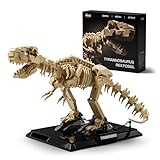
- Step back to the age of dinosaurs. This series was created to let you rediscover the dinosaurs that once ruled the Earth and bring their stories to your display space.
- Sized at 18.31 × 6.3 × 7.48 inches, this T. rex fossil fits well on a desk, shelf, or cabinet. A collectible display piece that brings the spirit of ancient creatures into any home or office.
- Adjust the jaw, head, and tail to craft your own display posture. Every movement reveals a lifelike structure that invites endless ways to showcase the mighty T. rex.
- Enjoy a mindful building process while exploring each bone’s structure. Learn how the T. rex fossil comes together piece by piece, from the skull to the tail.
- A thoughtful set for dinosaur fans and adults collectors alike. Complete your T. rex fossil lineup with other species and create your own natural history museum dinosaur exhibit. This product is designed for users aged 16 and above.
What remains unresolved?
The evidence discussed here supports distinguishing the holotype from a very young T. rex, while taxonomic assignments beyond the holotype remain more specific questions. The 2025 Nature authors proposed two species, but the paper’s 2026 correction must be reviewed before its claims are restated without qualification. The genus name and the classification of individual small fossils should therefore be treated carefully.
FAQ
Was Nanotyrannus a juvenile T. rex?
The 2025 Science study reported that the Cleveland holotype’s hyoid showed an external fundamental system, interpreted as evidence of skeletal maturity. That supports the view that the holotype was not simply a very young T. rex. It does not establish the identity of every small tyrannosaur fossil.
What is the difference between the holotype and Jane?
The holotype, CMNH 7541, anchors the name Nanotyrannus lancensis and was the specimen examined in the hyoid study. Jane, BMRP 2002.4.1, is a separate skeleton. The 2025 Nature authors proposed classifying Jane as N. lethaeus.
PC Slower Than It Used to Be?
A free scan shows the junk files, broken settings and background clutter dragging Windows down - then fixes them in one click.Free scan · Windows 10 & 11Crashes, No Sound, or Screen Glitches?
Random freezes, missing sound and display glitches usually trace back to one bad driver. Find and replace yours safely.Free scan · under a minuteBest Value

- Meet Essien the Spinosaurus, a 9.1-inch PNSO Prehistoric Animal Models display model reconstructed as a 15-meter semi-aquatic predator.
- The long crocodile-like skull, sensory pits, cone-shaped teeth, and interlocking jaws show the fish-hunting features that set Spinosaurus apart.
- The tall back sail, strong forelimbs, shorter hind limbs, and webbed feet reflect PNSO's modern view of Spinosaurus as a water-adapted dinosaur.
- Made with solid PVC and hand-painted natural colors, with textured skin, detailed scales, teeth, claws, and a shelf-ready open-mouth pose.
- Includes the Essien model, A3 science-art poster, 64-page manual, and QR codes linking to online video lessons (internet required) for teens 15+ and adult collectors.
Does skeletal maturity mean the animal had reached its absolute maximum size?
Not necessarily. The study’s conclusion concerns skeletal maturity as indicated by bone microstructure; it should not be expanded into a claim that every aspect of body size or development had stopped changing.
Did the 2025 Nature study settle the debate?
Its authors argued that Nanotyrannus is distinguishable from Tyrannosaurus and proposed two species. A correction was published in 2026, but its substantive effect has not been established in the reviewed research. The study’s conclusions should be attributed to its authors, and other specimens should be assessed separately.
Quick Recap
Product prices and availability are accurate as of the date/time indicated and are subject to change. Any price and availability information displayed on Amazon at the time of purchase will apply.




