Free tools Windows power users keep installed
One-click scans. No signup required.
A nearly complete fossil shark from Peru’s Pisco Formation was unveiled in Lima on January 20, 2025. Identified at the presentation as Cosmopolitodus hastalis and dated to about nine million years ago, the extinct shark is notable for its reported preservation and for sardine remains paleontologist Mario Urbina said were found inside it. It is best described as an extinct great white relative—not a proven direct ancestor of today’s great white.
What was the fossil found in Peru?
The specimen was identified at its January 2025 presentation as Cosmopolitodus hastalis, an extinct shark from the Pisco Formation. In the recorded presentation, INGEMMET engineer César Augusto Chacaltana dated it to nine million years ago and said the work involved three institutions; the recording transcript does not identify all three. Reuters’ recording of the presentation provides the identification and remarks.
News coverage described the fossil as nearly complete and placed it in Peru’s Pisco Basin, about 235 km south of Lima. The Straits Times, citing Reuters in 2025, reported teeth reaching up to 8.9 cm and an estimated adult length of nearly seven metres. Those figures are report-level estimates, not formal measurements established here for the displayed individual. The Straits Times report also quoted Urbina saying complete shark fossils are uncommon, a qualitative observation rather than a measured frequency.
Why is the fossil’s preservation notable?
Sharks have skeletons made mostly of cartilage, which generally preserves less readily than bone. As a result, the fossil record for sharks often relies heavily on teeth and vertebrae rather than a largely intact skeleton. The presentation described this specimen as exceptionally preserved for a shark; that characterization is noteworthy, but it does not by itself establish how often comparable fossils occur worldwide.
Recommended Free Tools
#1 Best Overall

- Hyper-realistic large great white shark tooth replica, measuring approximately 2.5" long, modeled after Carcharodon carcharias, the largest predatory fish in the world
- Perfect gift for shark enthusiasts and collectors, providing a fascinating marine biology specimen to display and appreciate
- High-quality replica made to look like a real great white shark tooth fossil, ideal for educational purposes and adding to fossil collections
- Great white sharks feed on marine mammals like seals, sea lions, and dolphins
What did this ancient shark eat?
At the presentation, paleontologist Mario Urbina said the fossil contained stomach contents with many sardines. He described C. hastalis as pelagic, meaning it lived in the open water rather than being confined to the seafloor or shore. The sardines are the reported contents of this individual; they should not be taken as a complete account of the species’ diet.
Was Cosmopolitodus hastalis a direct ancestor of the great white?
Chacaltana called C. hastalis an ancestor of the modern great white during the presentation. That wording reflects his statement at the event, but the sources describing this newly unveiled specimen do not establish that this individual—or its species in a simple, direct line—gave rise to living great whites.
Rank #2

- Design: This is Museum quality fossil cast replica of a tooth from White Shark,hand painted to look realistic, allowing you to observe closely and study thoroughly the specimens that are not available to you.
- Gift Choice: This white tooth replica is a favorite gift for teens, adults, collector, fossil enthusiast, educator, who are interested in shark, it can stimulate their curiosity to the ocean.
- Room Decoration: Can be displayed on your shelf, table, mantel, window sill, or anywhere you want, to show your distinctive taste and express your passion for the ocean and the shark.
- Material: Mainly made of resin material, it is resistant to high and low temperatures, water, corrosion, smooth and anti aging, reliable and safe, strong and firm, easier to store and carry, allowing it to accompany you for a long time.
- Packaging and size: 1 x tooth Replica, with 1x gift box and 1x bag. Each tooth is about 2.56 inches (6.5cm) long, 2.17 inches (5.5cm) wide.
The broader evolutionary picture is more nuanced. A 2012 peer-reviewed study proposed that Carcharodon hubbelli, a different shark species dated to 6–8 million years ago, was a transitional form between C. hastalis and the living great white, Carcharodon carcharias. The study offers context for a relationship between broad-toothed makos and white sharks, but it did not analyze the fossil presented in 2025. Ehret and colleagues’ 2012 study discusses that separate fossil and evolutionary interpretation.
How does it compare with megalodon?
Megalodon should not be casually described as a close great white relative or simply as a giant version of one. Smithsonian Ocean says modern research places megalodon closer to an ancestor of mako sharks than to the great white. The 2025 C. hastalis fossil is a separate find and does not revise that distinction. Smithsonian Ocean’s megalodon explainer summarizes the evolutionary context and the preservation limits of shark skeletons.
Outdated Drivers Are Slowing You Down
One free scan finds every outdated or missing driver and matches the right update for your exact hardware.Free scan · exact hardware matchPC Slower Than It Used to Be?
A free scan shows the junk files, broken settings and background clutter dragging Windows down - then fixes them in one click.Free scan · Windows 10 & 11Rank #3

- 💎 Authentic Shark Tooth: You will receive 1 piece of real shark tooth embedded in stone. Each shark tooth is an authentic fossil that has been carefully preserved and is ready for your shark teeth holder.
- Diversified Use: This shark tooth can be placed in a shark tooth holder for display, added to a real fossils collection, or used in educational setups to teach about dinosaur teeth and animal teeth.
- 🔆 Wide Variety: Our selection includes a range of sharks teeth, from a small shark tooth to the highly desired great white shark tooth, and even the megalodon tooth real fossil.
- 🤝 Best Quality : Our shark teeth are carefully selected for quality and authenticity. Whether you're seeking a real shark tooth or a real megalodon tooth, you can trust in the authenticity of our fossils.
- ⭐ Perfect for Learning : Great for kids interested in paleontology, these real shark teeth will spark curiosity about prehistoric creatures, the great white shark, and the giant megalodon. Each tooth is a genuine piece of history.
Is this the same Peruvian fossil described in 2009?
No. A separate Peruvian fossil discussed by the Florida Museum in 2009 was dated to 4–5 million years ago and described as an early white shark. It included a complete jaw with 222 teeth and 45 vertebrae. That specimen is not the C. hastalis presented in 2025. The earlier study supported a mako-related evolutionary path and argued that great whites and megalodon were more distantly related than once believed. The Florida Museum’s 2009 account covers that different fossil.
Independent reader supportYour contribution helps us test, update, and keep practical guides available for everyone.What is known about the specimen’s current location?
The available reports identify the fossil and describe its presentation in Lima, but do not establish its current repository, collection number, or whether it is now on public display. The presentation transcript also does not provide the names of all three collaborating institutions.
Quick Recap
Best Value

- EXCAVATE REPLICA SHARK TOOTH FOSSILS – Kids will dig into an excavation brick to uncover four replica shark teeth modeled after real ancient species, creating an exciting hands-on fossil discovery experience.
- DISCOVER ANCIENT SHARK SPECIES – Each tooth represents a prehistoric or modern shark, including the otodus, crow shark, tiger shark, and great white, offering a fun introduction to marine predators and ocean science.
- MAKE A SHARK-TOOTH NECKLACE – After the excavation, kids use the included adapter and string to create a necklace with the great white shark tooth, turning it into a wearable keepsake!
- AN ENGAGING STEM LEARNING ACTIVITY – This fossil dig kit supports STEM exploration through tactile play, teaching kids about shark evolution, marine fossils, and how paleontologists uncover specimens.
- FULLY ILLUSTRATED LEARNING GUIDE – A detailed guide packed with shark facts enhances the experience, helping kids understand the science behind their discoveries and inspiring further curiosity.
Rank #4
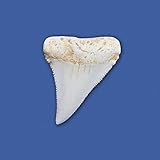
- Measures approximately 2.5 inches long
- Made from resin/fiberglass
- Museum quality replica
- Hand painted to look realistic
Product prices and availability are accurate as of the date/time indicated and are subject to change. Any price and availability information displayed on Amazon at the time of purchase will apply.




