
Free tools Windows power users keep installed
One-click scans. No signup required.
Some links on this page are affiliate links: if you buy through them we may earn a commission, at no extra cost to you.
Bring a stray dog indoors when outdoor conditions, illness, injury, escape risk, or unknown behavior make an outdoor shelter unreliable. Use a separate, quiet, escape-proof room or enclosure away from children and resident pets. An outdoor shelter is reasonable only when it is genuinely weatherproof, insulated for the local climate, ventilated, secure, supplied with unfrozen water, and checked often enough to catch problems quickly.
First protect people, then protect the dog, and treat the animal as potentially lost rather than ownerless. A microchip scan, found-dog report, and local stray-hold rules are as important as the choice between a kennel and a spare room.
As an Amazon Associate I earn from qualifying purchases.
Should I put a stray dog in an outdoor shelter or bring it indoors?
Choose indoors if you can safely contain the dog without exposing household members or pets to avoidable risk. Indoor isolation gives you better control of temperature, moisture, supervision, and escape prevention, especially during severe weather or when the dog appears sick, injured, exhausted, very young, elderly, or unusually fearful.
An outdoor shelter is not a substitute for supervision or veterinary care. It can work as a temporary option for a calm, healthy dog when the weather is moderate and the shelter meets welfare requirements, but it must be managed as a complete care system rather than treated as a box left in the yard.
Popular on Amazon

- 🐾【Sturdy & Weatherproof】: Made from high-quality PP material, this dog house is fully waterproof. Rain, sun, or snow — your dog stays dry and comfortable all year long. Ground nails are included to keep the doghouse secure even in strong winds.
- 🐾【Easy Setup & Hassle-Free Cleaning】: Our dog house is designed for quick and easy assembly, so you can have it ready for your pup in about 20 minutes. The smooth surface makes cleaning a breeze—just wipe it down with a damp cloth to keep it looking fresh and new.
- 🐾【Four Colors for Choose】: Available in four colors, this dog house is suitable for most breeds. Whether you have a small Chihuahua or a large-sized Labrador, you’ll find the perfect fit to ensure your dog has plenty of space to relax and stretch out.
- 🐾【Ventilated & Temperature-Regulating Design】: The elevated floor ensures optimal airflow, keeping the interior cool in summer and cozy in winter, and the elevated floor design promotes air circulation underneath, preventing moisture buildup and keeping your dog comfortable in all seasons.
- 🐾【Great Value for Money】: Affordable yet high-quality, this dog house combines durability, functionality, and ease of assembly. A perfect gift for pet owners seeking a reliable and versatile home for their furry friends.
What should I do in the first hour?
Move methodically. A frightened dog can bite or bolt even when it appears friendly, and a dog that is loose may still have an owner searching nearby.
- Keep your distance. Do not chase, corner, grab, or put your face near the dog. Remove children and your own animals from the area and give the dog a clear escape route away from traffic.
- Call for help when handling is unsafe. Contact animal control, a local authority, or an established shelter if the dog is aggressive, badly injured, trapped, or impossible to contain without a struggle. Follow their instructions rather than improvising a capture.
- Create a safe boundary. Close gates only if doing so will not force the dog into a corner. Use a quiet, secure room, pen, or appropriately sized crate indoors if the dog can be guided there without physical confrontation.
- Provide water and calm. Offer fresh water and a quiet resting place. Avoid crowding, loud voices, sudden movements, and attempts to hug or inspect the dog.
- Check for identification without forcing contact. Look for a collar or tag from a safe distance. Arrange a microchip scan through a veterinarian or shelter as soon as practical.
- Report the found dog. Notify the relevant local authority or animal-control service, and post a factual notice in appropriate local channels while officials or rescue groups help search for the owner.
When is bringing the dog indoors the safer choice?
Indoor isolation is the better option whenever an outdoor setup cannot keep the dog dry, protected, contained, and observable. The decision should account for the dog’s condition and the household’s risks, not just the temperature shown on a weather app.
Dangerous weather
Bring the dog inside during severe cold, heat waves, storms, flooding, high winds, or rapidly changing conditions. Coat type, age, body condition, acclimation, wind, and wetness all change cold and heat risk, so there is no single temperature number that is safe for every dog. Weather alerts and signs of distress should outweigh a generic cutoff.
Illness or injury
A dog that is limping, bleeding, vomiting, struggling to breathe, extremely weak, confused, or unable to rise needs prompt veterinary or animal-control assistance. Indoor containment makes observation and transport easier and prevents an injured animal from disappearing under a fence or being exposed to predators.
Escape or predator risk
Use an indoor room or secure enclosure when fencing is damaged, the dog is attempting to climb or dig out, or wildlife and traffic are nearby. A shelter that looks sturdy but has an unlatched gate, a low wall, or a gap under the floor is not secure enough.
Unknown behavior around people or animals
Until a professional assessment, assume the dog may be frightened, contagious, or unpredictable. Keep it away from children and resident animals. The ACT Government’s 2026 guidance specifically recommends a safe, quiet space away from traffic and other hazards and separation from household pets to reduce stress and the risk of disease or injury.
How do I set up a safe indoor isolation area?
Use a closed, easy-to-clean room, secure pen, or crate in a low-traffic part of the home. The goal is controlled separation, not immediate integration into family life.
- Containment: Check doors, windows, vents, and gates for escape routes. A crate or pen must allow the dog to stand, turn, sit, and lie normally.
- Location: Keep the area away from resident pets, children, busy hallways, and direct household traffic. Reduce noise and visual pressure.
- Basics: Supply fresh water, a dry resting surface, and only food the dog can safely tolerate. Do not force feeding or handling.
- Hygiene: Choose surfaces that can be cleaned and disinfected. Wash hands after contact and keep bowls, bedding, and cleaning tools separate from those used by household animals.
- Professional checks: Arrange a veterinary or shelter visit for a microchip scan and health assessment. Ask about parasites, contagious disease, vaccination, injuries, and how long isolation should continue.
- Introductions: Do not allow face-to-face meetings with children or resident animals until a professional assessment and the dog’s behavior support them.
When can an outdoor shelter be acceptable?
Outdoor housing is acceptable only when all of the following are true: the dog can be handled or monitored safely; weather is within the dog’s tolerance; the shelter stays dry and ventilated; water remains available and unfrozen; the dog cannot escape; and you can check the setup regularly and obtain help if the dog deteriorates.
| Question | Outdoor shelter may be workable when… | Choose indoor isolation or urgent help when… |
|---|---|---|
| Weather | Conditions are moderate and the enclosure reliably blocks rain, wind, sun, and damp ground. | There is severe weather, flooding, dangerous heat or cold, or the dog is wet and cannot dry safely. |
| Health | The dog appears stable, mobile, and free of obvious injury while professional help is arranged. | The dog is injured, ill, weak, distressed, or needs medication or close observation. |
| Behavior | The dog remains calm enough to be observed without people entering an unsafe situation. | The dog is aggressive, panicked, trapped, or repeatedly trying to escape. |
| Household risk | The shelter is physically separated from children, pets, traffic, and hazards. | You cannot prevent contact with resident animals or people. |
| Supervision | You can inspect the dog, water, bedding, fencing, and weather conditions at appropriate intervals. | No one can reliably monitor the dog or respond to a change. |
What must an outdoor dog shelter provide?
Ontario’s outdoor-dog standards emphasize that welfare includes physical and mental well-being and opportunities to thrive, not merely survival. Apply that principle to every part of the setup.
Also popular on Amazon
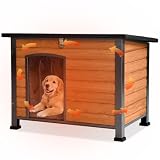
- ADVANCED INSULATED DOG HOUSE: The GUTINNEEN insulated dog house is crafted with high-quality insulation, keeping outdoor animals warm and cozy even when temperatures dip below 0°C. Its windproof door curtains effectively block cold air from seeping in and trap warmth inside. Even without the additional liner, our dog house is constructed with solid, thick fir wood that acts as a natural insulator against the cold and a specially designed insulated structure to help retain your dog's body heat and provide a cozy shelter for dogs
- ANTI-CHEWING METAL FRAME DESIGN: This outdoor dog house combines solid wood panels with a heavy-duty metal frame—each panel is fully framed in metal and secured by metal connecting bars, making the structure much sturdier than dog houses with thin aluminum trims or plain wood. The upgraded metal reinforcement is also designed to resist chewing and destruction, so you won’t have to worry about your pup damaging their shelter even as they follow their natural chewing instincts
- ALL-WEATHER PROTECTION: Built to shield your pet from the elements: an asphalt roof blocks rain, snow, and harsh sunlight; a PVC door curtain keeps cold wind out; and raised waterproof feet elevate the dog house off the ground, preventing dampness and keeping the interior dry. No matter the season, your dog stays comfortable and protected
- EASY CLEANING & QUICK ASSEMBLY: This large outdoor dog house features an openable roof for easy interior access (ideal for quick daily tidying) and a removable bottom plate for deep cleaning—keeping the space fresh and hygienic. All necessary parts are included for assembly, with pre-drilled holes allowing setup in under 30 minutes. Once assembled, the sturdy structure resists splitting or loosening, ensuring stable use for years
- IDEAL FOR SMALL-TO-MEDIUM DOGS: Measuring 33.5"L x 22"W x 25.2"H, this dog house offers ample room for small to large-sized dogs—specifically those up to 150 lbs. with a shoulder height of 15–30 inches. Its cozy, roomy design makes it perfect for backyards, patios, or porches, giving your dog a safe, relaxing spot to rest outdoors
A weatherproof structure
Provide a roof, enclosed sides, a solid moisture-resistant floor, and a protected entrance that limits driving rain and wind. The structure should be stable and free of sharp edges, protruding nails, toxic materials, and openings through which the dog could become trapped.
Crashes, No Sound, or Screen Glitches?
Random freezes, missing sound and display glitches usually trace back to one bad driver. Find and replace yours safely.Free scan · under a minuteWindows Errors? Fix Them Before They Spread
Repair common Windows errors and clear accumulated junk for a smoother, more stable PC - no reinstall needed.Free scan · no reinstallCorrect size and insulation
The dog must be able to stand, turn, sit, and lie in a normal posture. A shelter that is too small restricts movement; one that is excessively large may not retain body heat in cold weather. Insulate according to local climate and keep insulation inaccessible to chewing dogs.
Raised, dry flooring
Where local guidance calls for elevation, raise the floor above wet ground. Toronto’s 2026 guidance specifies at least two inches of floor elevation for shelters used beyond 30 minutes. That figure applies to the cited municipal use case, not as a universal design rule for every jurisdiction.
Ventilation without drafts
Ventilation must limit condensation and overheating while avoiding a direct cold or wet draft onto the resting area. Check for damp walls, stale air, and heat buildup, particularly when the entrance is covered.
Shade and heat protection
In hot weather, shade the dog’s entire body throughout the period of direct sun, not merely the roof at one time of day. Move or reorient the shelter as the sun shifts. Never rely on a dark enclosed box as a cooling strategy.
What’s actually slowing this PC down?
Pick the symptom - the matching free tool is one click away.
Water that stays clean and unfrozen
Supply fresh, clean water in a stable container that cannot be tipped easily. Inspect it frequently and replace it when dirty, contaminated, or frozen. A dog left without drinkable water can become distressed quickly in heat or after exertion.
Dry bedding
Bedding must remain dry and be replaced whenever it is wet or contaminated. Wet fabric or straw loses insulating value and can chill the dog. Check beneath the dog as well as the visible top layer.
Secure containment
Use fencing, latches, and a roof or covered run when necessary to prevent climbing, digging, and squeezing through gaps. Protect the area from predators and from nearby roads. Inspect the perimeter after wind, rain, or attempted escape.
Avoid fire hazards
Austin’s guidance warns against space heaters and heat lamps in outdoor dog shelters because of fire risk. Do not improvise electrical heating where the dog can chew cords or where bedding can ignite.
Do these 3 things before closing this tab:
1Scan for outdated or missing drivers - takes under a minute2Clear out junk files and repair common Windows errors3Fix the driver behind crashes, sound loss and screen glitchesAlso popular on Amazon
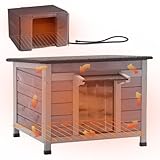
- Multi-Layer Warmth Protection: Built with solid fir wood, a full 6-sided insulated liner, and a heating pad, this outdoor dog house ensures lasting warmth and comfort, even in freezing winter nights
- Safe Heated Pad: UL-certified heating pad that maintains 85–115°F with automatic temperature control and high-temperature protection. Includes a 6.5 ft chew-resistant cord for added safety
- All-Weather Insulation: All walls, roof, and floor are lined with 0.78" thick insulation effectively locking in heat, blocking cold drafts, and keeping pets warm and cozy even in freezing weather
- Sturdy and Weatherproof Exterior: Solid wood construction combined with a thermal liner and asphalt sloped roof provides reliable protection against wind, rain, and snow
- Elevated and Spacious Design: Raised base with sturdy plastic feet prevents ground moisture and ensures stability. Measuring 23.6"L x 20.9"D x 18.3"H, ideal for multiple kittens or small dogs up to 25 lbs
How cold or hot is too dangerous for a stray dog?
No universal temperature threshold applies safely to every dog. A thick-coated adult accustomed to outdoor conditions is not equivalent to a short-coated puppy, an underweight senior, or a sick animal. Wind, moisture, shade, acclimation, and shelter design can change risk at the same air temperature.
Use observable signs and conditions rather than a made-up cutoff. Move the dog indoors and seek veterinary advice if it is shivering persistently, weak, confused, panting heavily, unable to settle, excessively drooling, stumbling, or trying repeatedly to escape the shelter. A wet dog, a dog exposed to a weather warning, or a dog whose bedding cannot stay dry should not remain outside simply because the thermometer reading appears moderate.
How do I evaluate the dog without getting bitten?
Observe before approaching. A loose body, normal movement, and the ability to look away are less concerning than a stiff posture, hard stare, raised hackles, growling, lunging, snapping, cowering, or frantic pacing, but none of these observations guarantees safety.
- Stand sideways rather than squarely facing the dog, and avoid prolonged eye contact.
- Do not reach over the head, grab a collar, or block the dog’s retreat.
- Keep children and pets completely out of the area.
- Use animal-control or shelter staff for capture when the dog is injured, defensive, or cannot be guided safely.
- Seek urgent help for breathing difficulty, severe bleeding, collapse, suspected poisoning, or a dog trapped in traffic.
How do I find the owner and follow stray-dog law?
Finding a safe place is only the first phase. Reporting and identification protect the dog from being rehomed prematurely and help an owner recover it.
- Record where and when you found the dog and note its color, size, sex if known, collar, tags, and distinctive markings.
- Contact the local authority, animal-control service, shelter, or police service designated for found animals in your area.
- Arrange a microchip scan through a veterinarian or shelter. A missing chip does not prove the dog has no owner.
- Post a factual found-dog notice through locally appropriate channels, withholding one identifying detail so a claimant can describe it accurately.
- Keep written records of reports, calls, veterinary advice, and any transfer of the dog.
Rules differ by jurisdiction for reporting, licensing, who may collect a stray, and how long an animal must be held. In the England and Wales local-authority process cited by the Department for Environment, Food and Rural Affairs in 2026, collected dogs are held for seven full days with safe housing, food, water, enrichment, and veterinary care as needed. That period does not establish a universal ownership rule elsewhere; follow your own authority’s instructions.
Independent reader supportYour contribution helps us test, update, and keep practical guides available for everyone.What are the most common mistakes?
Putting a frightened dog straight into a family room
Even a gentle-looking dog may react defensively when cornered. Start with a closed isolation area and controlled observation.
Leaving the dog outside with an empty bowl
Water can freeze, spill, or become dirty. Inspect it frequently and provide a container the dog cannot easily overturn.
Using a shelter that is dry only on top
Ground moisture, condensation, and soaked bedding can chill the dog. Check the floor, corners, and underside of bedding after rain.
Quick wins for a faster PC:
Repair Windows errors before they cause bigger problemsFix Now →Scan for outdated or missing drivers - takes under a minuteDriver Scan →Assuming a collar means the dog is safe to handle
A collar identifies a potential owner; it does not predict behavior. Do not grab it unless trained personnel determine that handling is safe.
Also popular on Amazon

- All-Season Shelter with Heating Pad: Whether it's freezing winter or scorching summer, this insulated wooden dog house keeps your pet comfortable year-round. Add the included heating pad for extra warmth on snowy days—open the roof for ventilation when it's hot
- Chew-Proof Iron Frame for Outdoor Safety: Solid wood panels reinforced with full-edge iron frames prevent chewing damage and withstand attacks from wild animals. Unlike flimsy plastic kennels, this durable shelter gives you peace of mind when your dog stays outside overnigh
- Weatherproof & Dry Interior: Sealed protective coating, raised floor with 4 waterproof foot pads, weatherproof asphalt roof, and PVC door curtain keep rain and moisture out. Your dog stays warm and dry even during heavy downpours
- Easy-Clean with Openable Roof & Floor: Lock-open roof lets sunlight in for your pet's bath time; removable floor makes feeding and cleaning effortless. No more struggling to reach the back corners—just lift and wipe
- Fast Assembly in 30 Mins for Dogs & Cats: Pre-stamped parts with aligned screw holes—one adult assembles in under 30 minutes with simple tools. Spacious enough for large dogs
Introducing the dog to resident pets to “see how they get along”
Unknown disease status and stress make an informal introduction unsafe. Keep animals separated until veterinary advice and behavior assessment support a gradual plan.
Waiting to report because the dog seems settled
A calm dog may still be recently lost. Start the identification and reporting process while providing temporary care.
How should the decision change for puppies, seniors, and injured dogs?
Vulnerable dogs have less margin for error. Puppies can become chilled, dehydrated, or overwhelmed quickly; seniors may have arthritis, heart disease, or poor temperature regulation; and injured dogs may hide pain until their condition worsens. For these dogs, indoor isolation and prompt veterinary or shelter involvement are generally safer than unattended outdoor housing.
The Tool Desk
Outbyte PC Repair FREEClear out junk files and repair common Windows errorsFree Scan →Outbyte Driver Updater FREEFix the driver behind crashes, sound loss and screen glitchesFind Drivers →Do not attempt to diagnose from appearance alone. Keep the environment quiet, prevent contact with pets and children, and tell the veterinarian or authority exactly what you observed and how long the dog may have been exposed.
What is the practical decision rule?
Use this sequence whenever you are unsure:
- Can you approach and contain the dog without a realistic bite or escape risk? If no, call animal control or another qualified authority.
- Is the dog exposed to dangerous weather, injury, illness, predators, traffic, or an unreliable fence? If yes, move to safe indoor isolation if it can be done safely, or request urgent assistance.
- Can an outdoor shelter stay dry, ventilated, shaded, secure, and supplied with unfrozen water? If no, do not use it as the primary plan.
- Can you separate the dog from children and resident animals? If no, contact a shelter, veterinarian, foster network, or authority for placement.
- Have you started identification and reporting? Arrange the microchip scan and notify the responsible local service even if the dog remains in your temporary care.
Frequently Asked Questions
Does a seven-day stray hold mean I automatically own the dog?
No. A seven-day period is part of the cited England and Wales local-authority process, not a worldwide ownership rule. Hold, adoption, licensing, and transfer requirements vary, so ask the authority handling the report what happens after the deadline.
What if the dog has no microchip?
A no-chip result does not prove the dog is ownerless. Keep the found-dog report active, use local lost-and-found channels, and follow the authority’s required stray-hold procedure before arranging any permanent placement.
Can I use a garage or utility room for temporary isolation?
It can work if it is closed, escape-proof, easy to clean, quiet, adequately ventilated, and separated from household pets and children. Remove chemicals, tools, exposed cords, and other hazards before allowing the dog inside.
Recommended Free Tools
Who should collect a dog I cannot safely approach?
Use the local animal-control service, municipal authority, shelter, or another organization designated for found animals. Do not attempt a chase or physical capture simply because the dog appears to be in a hurry to leave.





Leave a Reply