
Recommended Free Tools
Some links on this page are affiliate links: if you buy through them we may earn a commission, at no extra cost to you.
Pet adoption fees usually pay for much more than the hand-off. In most shelters, the fee helps cover spay or neuter surgery, age-appropriate vaccinations, parasite treatment, microchipping and veterinary records, plus the food, housing, enrichment, staff time and medical care provided before adoption. The exact package is set by the organization and can change with the animal’s species, age, breed, size, medical condition and length of stay. Some charges—such as local licensing, later vaccine boosters, transport equipment or additional tests—may be separate. Read the shelter’s written fee and medical policy, then ask which services are complete, deferred or still your responsibility.
What does a pet adoption fee include?
An adoption fee commonly bundles the routine preparation a shelter completes before an animal goes home. The package is not standardized nationally, so treat the list below as a guide and confirm the individual animal’s record.
As an Amazon Associate I earn from qualifying purchases.
Do these 3 things before closing this tab:
1Clear out junk files and repair common Windows errors2Fix the driver behind crashes, sound loss and screen glitches3Repair Windows errors before they cause bigger problems| Usually included | What that can mean | Important qualification |
|---|---|---|
| Spay or neuter | Sterilization surgery for covered species | Some very young or medically unready animals leave with surgery scheduled or covered by a written agreement instead. |
| Vaccinations | Initial or age-appropriate core vaccines | Rabies is generally given only when the animal is old enough and healthy enough; later boosters are often the adopter’s expense. |
| Parasite control | Deworming and flea or tick treatment | Heartworm, FIV/FeLV and other testing varies by organization and case. |
| Identification | Microchip implantation and, in some programs, registration or tags | Ask whether registration is completed in your name before or after adoption. |
| Veterinary documentation | Exam notes, vaccine history, surgery information and medication instructions | The amount of paperwork differs; request copies for your veterinarian. |
| Follow-up support | A first exam, telehealth appointment, counseling or post-adoption advice | These benefits are program-specific and may have geographic or time limits. |
Spay and neuter surgery
Seattle, Nashville, Utah, Southern Arizona and Ontario SPCA programs list spay or neuter as part of their standard package for eligible animals. Surgery may occur before adoption or be arranged afterward when an animal is too young, ill or otherwise not ready for anesthesia. Get the due date, appointment location and written responsibility for any no-show or cancellation before signing.
Vaccines and rabies protection
Shelters commonly provide initial core vaccines appropriate to the animal’s age. A puppy or kitten may receive a first dose but still need a series of boosters as it grows. Rabies vaccination may be absent when the animal is below the legal age, recovering from illness or otherwise not ready. Ask for the exact vaccine names, dates and next due dates rather than assuming “shots” means a complete lifelong series.
Popular on Amazon

- Pet Carrier: 17.5” L x 11” W x 11” H, Recommended max load of 16 lbs cats small dogs. Please do not choose your carrier based on weight--please reference your pet's length and height in selecting a pet carrier size.
- Fits for under-seat dimensions of most airlines. Every airline has a specific set of rules and regulations, please contact with airline before flying with your cats small dogs.
- Mesh windows for ventilation, top and side entry with locking zippers for safety. Carrying handles, adjustable shoulder strap which can also be used as seatbelt, and back strap can fasten the pet carrier to your luggage.
- Pet carrier comes with a removable base insert, which creates a solid surface for your pet to stand on, along with a removable & hand washable cozy fleece pet bed, which offers a cozy sleeping space for your traveling cats small dogs.
- "Toys for pets, of textile materials". Mostly used as a Toy of Fabric Pet Home for pets playing and relaxing.
Parasite treatment and testing
Deworming and flea or tick treatment appear frequently in adoption packages. Some organizations also perform heartworm testing or other screening, while FIV/FeLV tests and additional diagnostics can be optional, deferred or case-specific. A negative test is a result from a particular date, not a guarantee that an animal cannot become infected later.
Microchips, tags and records
Microchipping is common, but the practical value depends on registration. Confirm the chip number, the registry used, whether staff submit your contact details and how you update them after moving. Some shelters provide identification tags, a records folder and a veterinary summary; others provide only digital documents.
Exams and post-adoption help
Some programs include a free initial or follow-up veterinary exam, behavior counseling or continuing support. Ontario SPCA lists one free 24/7 online veterinary appointment through Vetster, while the Humane Society of Southern Arizona includes a free veterinary visit. Availability, geography and terms apply, so confirm that the benefit is valid where you live and when it expires.
Why do adoption fees differ between shelters?
Organizations use different pricing models and absorb different preparation costs. A higher fee does not automatically mean a better animal, and a lower fee does not mean fewer needs; compare what has actually been done and what you will still have to pay.
Age, species and size
Young animals often have higher fees because they require more vaccines, multiple examinations and additional feeding or foster care. Adult and senior animals may be discounted, and some shelters waive fees for seniors, bonded pairs or animals with special needs. Dogs generally cost more to prepare than cats because of space, food, handling and licensing requirements, but each organization sets its own schedule.
Breed, medical condition and length of stay
Utah says its variable pricing considers age, breed and length of stay. Tacoma also identifies size and medical condition as factors. A pet needing surgery, long-term medication, rehabilitation or behavior support can cost a shelter substantially more than a healthy short-term resident, even when the adoption fee is reduced to encourage placement.
Also popular on Amazon
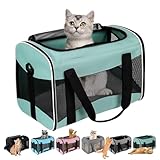
- [PRODUCT DIMENSIONS] Pet travel carrier size : 17x11x11 inches, recommended up to 15 lb pets, it is suitable for large, medium cats and small dogs. Please don't choose your airline cat carrying case based on weight, please refer to your pet's length and height when choosing a pet carrier size.
- [AIRLINE APPROVED] This cat carrier is designed with airline approved, it can fit comfortably under most flight seats, we can take our pets wherever we want. Dog travel carrier offers two attachment loop handles that can be used as a dual harness or as a luggage strap for balanced carry and secure transport.
- [EXCELLENT MATERIAL] Collapsible cat carrier is made of polyester fabric, supported by a steel ring, washable, wear-resistant and durable. The three sides and the top of this pet carrier are nylon mesh, scratch-resistant and not easy to damage, it can not only check your pet in real time, but also ensure enough air circulation.
- [SAFE AND COMFORTABLE] Dog travel bag has metal zippers on the top and side entrances, durable and not easy to deform, it allows your pets to enter and exit easily. The cat carrying case is equipped with an anti-escape safety buckle, which can effectively prevent pets from accidentally falling. It is suitable for car rides and vet rides.
- [PORTABLE AND FOLDABLE] Pet travel carrier comes with a detachable and hand washable wool pet bed, it can provide a comfortable sleeping space for your traveling pet. The cat travel case comes with an adjustable shoulder strap and handle for easy portability. When not in use, you can fold it up for storage.
Local budgets and mission
Public shelters, nonprofit humane societies and rescue groups have different funding, contracts and donor support. One may set a low flat fee and rely heavily on donations; another may charge closer to the cost of preparation. Ask what the fee covers rather than judging the organization by the number alone.
How much are adoption fees? A dated example
Metro Nashville Animal Care and Control listed 2025 fees of $90 for dogs, $40 for cats and $60 for kittens on a page last updated October 17, 2025. That page states the fees include spay or neuter, a microchip, a rabies license, initial core vaccines and parasite treatments. These are Nashville’s posted amounts for that period, not a national price schedule; fees can change and may differ for individual animals.
| Example program | Published fee or cost figure | What the figure represents |
|---|---|---|
| Metro Nashville Animal Care and Control | Dogs $90; cats $40; kittens $60 (2025) | Adoption fees with the listed medical and identification services included. |
| Arizona Humane Society | More than $1,300 average cost per pet | Organization-reported average care cost for more than 15,000 pets each year; the page does not state a publication year, so it is not a dated national average. |
| Humane Society of Southern Arizona | $910 average spent per shelter pet | Organization-specific figure; the page does not state a publication year. |
The two cost figures illustrate why an adoption fee is usually a partial contribution rather than a retail price for an animal. They should not be used to predict what every shelter spends or to compare organizations without matching definitions and dates.
What might I have to pay separately after adopting?
Budget for expenses that are commonly outside the headline fee. The shelter should identify these in writing, but verify them yourself before payment.
What’s actually slowing this PC down?
Pick the symptom - the matching free tool is one click away.
| Potential extra | How it can arise | Question to ask |
|---|---|---|
| Local license | A city or county may require a separate dog or cat license. Tacoma says licensing commonly varies by region and is typically $14–$30. | What is the amount, who files it and when is it due? |
| Booster vaccines | Later doses are needed to complete a puppy or kitten series or maintain protection. | Which vaccine is next, on what date and at whose cost? |
| Additional tests or treatment | Heartworm, FIV/FeLV, imaging, dental work, medication or behavior care may be optional, deferred or case-specific. | What has been completed, what is pending and what symptoms require follow-up? |
| Carrier, collar or leash | Seattle lists a cat or small-animal carrier for separate purchase at $6. Southern Arizona requires cats to leave in a proper carrier; dogs may need a collar and leash. | Must I bring equipment, buy it there or show it at checkout? |
| Routine veterinary care | Exams, parasite prevention, food, dental care and emergency treatment continue after adoption. | Does any included exam have a deadline or participating-clinic restriction? |
How can I compare two shelters’ fees fairly?
Compare the services and obligations line by line, not just the advertised amount. Use this six-part framework when reviewing listings or calling an adoption desk.
- Medical work completed: Record the surgery status, vaccine names and dates, parasite treatments, tests, medications and any diagnosis.
- Medical work deferred: Note every pending booster, surgery, recheck or treatment, the deadline and who pays.
- Identification and paperwork: Confirm the microchip number, registration process, tags, license documents and records you receive.
- Supplies and veterinary follow-up: Check for food, medication, a carrier, collar, leash, a clinic exam or telehealth support.
- Pricing rules: Ask whether age, breed, size, medical condition, length of stay, bonded status or special-needs discounts change the fee.
- After-adoption policy: Read return, hold, refund, exchange and post-adoption-support rules before paying.
What should I ask before paying the adoption fee?
Ask for specific answers about this animal rather than relying on a general brochure.
Also popular on Amazon

- High Quality Design:Sturdy steel cage structure and wooden support board maintain good spatial stability and shape. Breathable mesh windows on four sides,which can ensure good air circulation and views,make pets have a comfortable and safe travel.It can also be easy for you to check on your pets.There is a front pocket to store pet toys,treats,etc.
- Dimension and Weight:Made of durable tear-resistant fabric.Four easy entrances for pets. Dimensions: 17 inch x 11 inch x 11 inch (L*W*H), suitable for pets up to 16 lbs.Please don't choose your carrier based on weight only,consider your pet's length and height when choosing a carrier.
- Airline Approved & Safty:Can be placed under the seats of most airplanes(Four non-slip feet on the bottom to prevent movement), and comfortably on the seat next to you in a car or bus.It has a adjustable shoulder strap.Can also be fastened to the car seat with a safety belt or shoulder strap to keep your pet safe.
- Easy to Clean :You can clean the stains and dirt on the surface with a soft cloth.Soft mat inside the pet carrier is removable and washable.You can take it out and wash it easily to solve all stains.
- Easy to Collapsible & Lightweight:When not in use,fold it into a flat,space saving and easy to store.Only 2.2lbs,it's easier to carry around.It can also used as a toy of pet house,allowing pets to play in a safe space to relax and rest.
- Which procedures are already complete, and which are scheduled because of age or health?
- Has the animal received rabies protection? If not, what legal or medical reason applies?
- Which boosters, tests, medications or rechecks will I need to arrange?
- Are licensing, microchip registration, tags, a carrier, collar or leash separate charges?
- Which veterinary records will I receive, and can they be sent electronically?
- Is a free exam, telehealth visit, food, training or behavior consultation included? What are its location and expiration limits?
- What happens if a medical problem appears immediately after adoption?
- What are the return, hold and refund rules, and is any fee refundable?
What is the adoption-day process?
Preparing a few details in advance prevents surprise costs and unsafe transport.
- Read the animal’s profile and medical disclosure. Look for age, sterilization status, vaccine dates, medications, restrictions and known behavior concerns.
- Request the itemized fee. Have staff mark each completed service, deferred service and separate charge on the paperwork.
- Prepare transport equipment. Bring a secure carrier for a cat or small animal. For a dog, bring a properly fitted collar or harness and leash unless the shelter supplies them.
- Confirm your veterinarian plan. Book an appointment within the shelter’s recommended window and bring the complete records.
- Register identification promptly. Update the microchip registry and apply for any local license as soon as required.
- Save every document. Keep the contract, receipts, vaccine certificates, surgery confirmation, medication labels and support instructions together.
What if a vaccine or surgery is deferred?
Deferral is not necessarily a warning sign. Very young animals may be below the vaccination or sterilization threshold, and illness, recovery or anesthesia risk can make postponement safer. The important issue is a clear handoff plan.
Before leaving
- Get the procedure name, due date or age threshold and the clinic responsible.
- Ask whether the shelter pays directly, reimburses you or requires you to use a designated provider.
- Obtain written proof that the service is included in the adoption agreement.
- Ask what signs require urgent care and whether a follow-up appointment is already scheduled.
After adoption
Bring the shelter records to your veterinarian, who can reconcile vaccine timing and test results with local laws and the animal’s health. Do not repeat a vaccine or medication without professional advice, because the shelter may already have administered a dose that has not yet appeared in a database.
Does paying an adoption fee mean the shelter made a profit?
Usually, no. Humane Society of Utah explains that preparing homeless pets requires healthy food, safe shelter, lifesaving medical care, exercise, enrichment, foster care, staff and volunteers. Adoption fees help offset those expenses, but the amount collected from one adoption may be below the cost of that animal’s preparation, especially after emergency treatment or a long stay.
Arizona Humane Society reports caring for more than 15,000 pets each year at an average cost above $1,300 per pet. The Humane Society of Southern Arizona reports an average of $910 spent per shelter pet. Because neither page states a publication year and both figures are organization-specific, they are context for those organizations rather than a universal benchmark.
What are the most common fee-related mistakes?
- Assuming “vaccinated” means fully protected: Young pets often need additional doses.
- Skipping the microchip transfer: A chip that is not registered with your current details cannot reliably reunite you with a lost pet.
- Forgetting transport rules: A shelter can refuse release if a cat lacks a proper carrier or a dog lacks safe restraint.
- Comparing prices without comparing care: A low fee may exclude licensing, boosters or treatment that another shelter includes.
- Leaving without records: Missing vaccine and medication dates can lead to duplicated treatment or delays.
- Ignoring return terms: Some contracts require the animal to come back to the same organization and do not provide refunds.
How should I budget for the first month?
Start with the charges the shelter identifies as separate, then add ordinary settling-in costs. At minimum, plan for any local license, outstanding booster, initial veterinarian visit, parasite prevention, food, identification updates and required transport equipment. Keep an emergency reserve for an illness discovered after adoption; an included exam or support appointment does not guarantee that every subsequent treatment is free.
Outdated Drivers Are Slowing You Down
One free scan finds every outdated or missing driver and matches the right update for your exact hardware.Free scan · exact hardware matchWindows Errors? Fix Them Before They Spread
Repair common Windows errors and clear accumulated junk for a smoother, more stable PC - no reinstall needed.Free scan · no reinstallAlso popular on Amazon
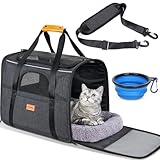
- 【 Spacious & Comfortable Cat Carrier 】The large cat carrier provides ample space for your feline friend to move, turn, and stretch during travel. Measuring 17.3 x 12.2 x 13.4 inches, it is wider and taller than most cat carriers, ensuring your pet feels comfortable and at ease while on the go.
- 【Balanced Mesh Design】Unlike other cat carrier hard, our cat carrier soft strikes the perfect balance with 40% mesh surface area. This ensures your pet can observe the surroundings and breathe easily while feeling safe and secure at the same time. The cat carrier large is suitable for pets in all kinds of situations.
- 【Built-in Dual-Sided Cushion】The detachable pad offers two distinct comforts: a cool side for summer and a super-soft, warm side for winter. You can easily flip it to match the season, providing the perfect temperature for your pet in any weather.
- 【Includes Foldable Bowl】Designed for on-the-go use, our foldable bowl carries 410g of food or 20oz of water. After use, simply collapse it and attach it directly to your pet's collar or leash, perfect for keeping your pet fueled and hydrated anywhere.
- 【Safe & Durable】Safety is our top priority, and the pet carrier for cat is equipped with a secure buckle to prevent your pet from escaping. The cat carrier soft is made of reinforced snow silk fabric and hard mesh material, ensuring durability and preventing any tearing during long-distance travel.
For cats, verify whether a carrier is required or available for separate purchase. For dogs, check licensing and safe walking equipment. For either species, ask when the next preventive-care dose is due and whether a shelter partnership limits where you can redeem a free visit.
Is a higher adoption fee worth it?
It can be, when the higher amount includes surgery, vaccines, testing, microchipping, treatment or follow-up that you would otherwise purchase immediately. It may also reflect a longer stay or expensive medical care. The only reliable comparison is the itemized package and the remaining obligations for the specific animal, not the fee by itself.
Frequently Asked Questions
Can I adopt a pet without paying the full fee upfront?
Some organizations offer fee waivers, sponsored adoptions or payment arrangements, but availability is local and may apply only to certain animals or events. Ask the adoption desk before selecting a pet, because a promise of a later discount is not the same as a written waiver.
Are adoption fees tax-deductible?
Whether any amount is deductible depends on local tax law and whether the payment is treated as a charitable contribution rather than an exchange for an animal. Keep the receipt and ask the organization for its donation documentation, then confirm eligibility with a qualified tax professional.
Free tools Windows power users keep installed
One-click scans. No signup required.
What happens if my adopted pet becomes ill right away?
Contact the shelter promptly and follow the adoption contract’s instructions; some organizations provide a defined medical-support period or require use of a partner clinic. Seek emergency care immediately for serious symptoms, even while you notify the shelter, and retain itemized records.
Can a shelter change the fee after I place a hold?
Policies differ. A hold may preserve an animal but not lock the adoption price, especially if the hold expires or the animal’s medical status changes, so ask for the hold duration, payment terms and whether the amount is refundable in writing.
Do rescue groups include the same services as municipal shelters?
No. Rescue groups may use private veterinarians, foster homes and different testing protocols, while municipal shelters may follow local contracts and licensing rules. Request the same itemized details—surgery, vaccines, tests, identification, records and pending care—before comparing their fees.





Leave a Reply