Do these 3 things before closing this tab:
1Clear out junk files and repair common Windows errors2Fix the driver behind crashes, sound loss and screen glitches3Repair Windows errors before they cause bigger problemsEpisode 116 of the Best Friends Podcast argues that adoption screening should focus on whether a person can meet an animal’s needs—not on whether the person fits an idealized profile. The rebroadcast, published June 23, 2022, revisits a 2021 conversation with Lawrence Nicolas about open adoption and the barriers some shelters may place between animals and prospective adopters.
What is episode 116 about?
The episode examines a tension in shelter policy: organizations want to place animals in homes, but some application rules may screen people for circumstances that do not, by themselves, show whether they can care for a pet. Its title poses the question, “If ‘nobody’s perfect,’ then why do we expect all pet adopters to be?”
| # | Preview | Product | Price | |
|---|---|---|---|---|
| 1 |

|
Desk Pet Adoption Day | $13.90 | Buy on Amazon |
| 2 |

|
Can I Be Your Dog? | $8.19 | Buy on Amazon |
| 3 |

|
My Someone: A Pet Adoption Story | $13.25 | Buy on Amazon |
| 4 |

|
Crouton: One Cat's Adoption Tale | $9.49 | Buy on Amazon |
| 5 |
|
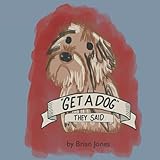
“Get A Dog,” They Said | $12.99 | Buy on Amazon |
As an Amazon Associate I earn from qualifying purchases.
The rebroadcast was published June 23, 2022, as episode 116. It originally appeared as episode 67 on June 10, 2021. The 2022 page identifies guest Lawrence Nicolas as COO of Jacksonville Humane Society; the original episode page identified him as COO of Peggy Adams Animal Rescue League at that time. These are descriptions of his roles on the respective pages, not confirmation of his current position. Best Friends Animal Society’s episode 116 page and the original episode 67 page provide the publication details.
Quick wins for a faster PC:
Scan for outdated or missing drivers - takes under a minuteDriver Scan →Clear out junk files and repair common Windows errorsFree Scan →Which adoption barriers does the episode name?
The episode description gives examples of requirements that may complicate an application:
#1 Best Overall
- An adopter’s age, or the animal’s age
- Renting a home rather than owning one
- Not having a fenced yard
- Being asked whether the applicant plans to have children in the next decade
Best Friends characterizes some screening processes as grueling and invasive, and argues that they may do little to predict how well an animal will be cared for while discouraging people from adopting. Those are the publisher’s framing and arguments in the episode description; they should not be read as proof that every shelter uses these criteria or that every such question is irrelevant in every case.
What does “open adoption” mean in this discussion?
The episode description presents Nicolas’s account of an open-adoption process at Peggy Adams Animal Rescue League. In this framing, adoption is less about rejecting applicants against a rigid checklist and more about discussing an animal’s needs with prospective adopters and helping them find a suitable match. The episode page links to organizational materials about open adoption and client service, including a playbook and training module. The episode’s resource list also includes barrier research and survey materials, alongside resources from other animal-welfare organizations.
Rank #2
The page reports that the process sends roughly 6,000 animals to new homes each year and has a return rate under 4 percent. These are figures reported in the Best Friends episode description in 2022. The page does not state the measurement period or methodology, and it offers no independent evaluation; the numbers therefore should not be treated as current performance statistics or evidence that open adoption alone caused the reported outcomes.
How can shelters assess fit without demanding a perfect applicant?
The episode’s argument is not that animal needs should be ignored. A more useful policy question is whether a screening step helps the organization understand the particular animal’s needs and support a safe, sustainable placement. Shelters can examine their approach through a few practical questions:
Rank #3
- What does the rule actually assess? Connect questions to a specific care or safety need rather than treating homeownership, a yard, or a conventional household as automatic proof of suitability.
- Can staff discuss the animal’s needs directly? A conversation can clarify exercise, behavior, household routines, and available support more meaningfully than a one-size-fits-all assumption.
- Does the process offer help when a concern arises? Explain options and support so an applicant can make an informed decision, rather than treating every uncertainty as a reason to end the conversation.
- What happens after placement? Track outcomes and use them to review policy. A single reported return-rate figure, without its definitions and measurement window, cannot answer whether a rule or model works across different organizations.
What can listeners take from the episode?
The episode makes a case for lowering unnecessary barriers while still taking an individual animal’s welfare seriously. Best Friends’ description puts the point this way: “Every time someone chooses to adopt an animal, we have the opportunity to positively change that person’s life and save an animal’s life.” It also asks, “So why do we still put up so many barriers that make adopting an animal so unreasonably difficult?” Both quotations are from the episode description, not verified transcript quotations from Nicolas.
Listeners looking to explore the policy discussion further can use the linked open-adoptions playbook, Client Service & Open Adoptions training module, Adoption Barrier Study, and pet adoption survey results listed on the episode page. These are presented as organizational resources and further reading; the episode page does not provide a controlled comparison proving that one adoption policy works in every shelter.
Quick Recap
Best Value
Rank #4
Product prices and availability are accurate as of the date/time indicated and are subject to change. Any price and availability information displayed on Amazon at the time of purchase will apply.




