
Quick wins for a faster PC:
Clear out junk files and repair common Windows errorsFree Scan →Scan for outdated or missing drivers - takes under a minuteDriver Scan →Repair Windows errors before they cause bigger problemsFix Now →Some links on this page are affiliate links: if you buy through them we may earn a commission, at no extra cost to you.
A veterinary obesity check is more than stepping on a scale. At each visit, the team reviews your pet’s food, treats, activity, medications and environment; records weight and its trend; scores body condition (BCS) and muscle condition (MCS); and performs a physical examination. Blood tests or imaging are added when that screening reveals a risk, an unexplained change or an abnormality. A BCS of 6–7/9 generally indicates overweight, while 8–9/9 is the usual obesity range, but a diagnosis also considers whether excess fat is causing measurable health or quality-of-life problems.
How do vets assess whether a dog or cat is overweight?
The first assessment is a structured nutrition and health screen, not a judgment based on appearance. AAHA’s 2021 guideline treats nutrition as a routine vital assessment. The veterinary team typically:
As an Amazon Associate I earn from qualifying purchases.
What’s actually slowing this PC down?
Pick the symptom - the matching free tool is one click away.
- Records current weight and compares it with previous measurements.
- Takes a complete nutrition history, including meals, treats, table food, supplements and food used to give medication.
- Discusses activity, daily routines and the home environment.
- Assigns a body-condition score (BCS) and a muscle-condition score (MCS).
- Performs a physical examination and reviews medical conditions and medicines.
This quick screen is expanded when the findings are not straightforward. A thick coat, stocky build, fluid retention or loss of muscle can make a visual impression or a number on the scale misleading, so the veterinarian also looks and palpates the body.
What does a body-condition score (BCS) mean?
BCS is a hands-on and visual estimate of body fat on a nine-point scale. The examiner views the animal from above for a waist, from the side for an abdominal tuck, and feels the ribs and fat deposits. The commonly used interpretation is:
Popular on Amazon
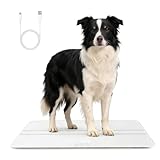
- DOG WEIGHING SCALE SIZE :27.16 x 12.99 inches, lighter and easier to carry. This dog scale size is easier to weigh dogs. Medium-sized dogs are very easy to weigh, but weighing large dogs sometimes requires good cooperation with the owner. NOTE: Not suitable for weighing giant dogs
- DOG SCALE SCALE LINE :There is a 68 cm/26.77 inch length scale line on the weighing platform to track the length of the pet's body. LARGE DOG SCALE CAPACITY 7oz-220 lbs, Measurement MEASUREMENT ACCURACY 0.35oz/10g, TARE Function, 3 UNITS: kg, lb, st
- HIGH QUALITY :The pet scale is designed with a glass weighing surface, which not only looks elegant, but also ensures that the surface is durable and easy to clean.
- RECHARGEABLE DIGITAL ANIMAL SCALE :The digital pet scale is powered by a 3.7V, 200mAh rechargeable battery. It saves the trouble of buying batteries.
- WIDELY USED: This dog weighing scale suitable for families, pet grooming care, pet clinics, pet stores and other places, it can track the weight and height of pets and monitor the health of cats and dogs,you can also keep a close eye on your child's weight and height, and continuously monitor whether your child maintains healthy standards.
| BCS (9-point scale) | Typical interpretation |
|---|---|
| 4–5/9 in dogs | Generally ideal condition |
| 5/9 in cats | Generally ideal condition |
| 6–7/9 | Overweight or excess adiposity range |
| 8–9/9 | Usual obesity range |
These categories are clinical approximations rather than a substitute for individual judgment. AAHA guideline authors report that each one-point increase on the nine-point BCS corresponds to approximately a 5% increase in body-fat percentage. BSAVA describes a BCS of 8–9 as an obese phenotype equivalent to at least 30% excess weight. Breed, conformation, age and muscle mass still matter when the score is interpreted.
Why do vets record muscle-condition score separately?
MCS answers a different question: how much skeletal muscle remains. The veterinarian observes and palpates muscle over the spine, shoulder blades, skull and pelvis, then records normal, mild, moderate or severe loss. An animal can carry excess fat while losing muscle, particularly with advancing age or chronic disease. Recording BCS without MCS can therefore hide an important health problem and lead to an unsuitable weight-loss target.
Is body weight enough to diagnose pet obesity?
No. A scale measures total mass, not the proportions of fat, muscle, bone, fluid and organs. A weight trend is valuable for detecting gain or loss in the same patient, but it cannot reliably distinguish fat from lean tissue or compare unrelated animals. BCS adds an estimate of adiposity, while MCS shows whether muscle is being preserved. AAHA reports that BCS correlates with body-fat percentage measured by DEXA in validation work, but DEXA itself is a reference method rather than a routine test at every primary-care visit.
Also popular on Amazon

- 【Dog Scale Size Optimization Upgrade】27.16 x 12.99 inches, lighter and easier to carry. This dog scale size is easier to weigh medium-sized dogs such as bulldogs, beagles, dachshunds, Welsh Corgis, adult large cats. Weighing large dogs requires good cooperation between pets and owners. Note: Not suitable for giant dogs with larger bodies.
- 【Dog Scale Scale Line】There is a 68 cm/26.77 inch length scale line on the weighing platform to track the length of the pet's body. 【Large Dog Scale Capacity】7oz-220 lbs, 【Measurement Accuracy】±0.35oz/10g, 【TARE Function】Multiple Units: kg, lb, st
- 【Sway Detector Lock Weight】This dog scale uses an algorithm implemented by proprietary technology that can accurately calculate the weight of your pet even if your cat or dog is active.
- 【Digital Dog Scale Rechargeable Function】The electronic pet scale is powered by a 3.7V, 200mAh rechargeable battery. It saves the trouble of buying batteries.
- 【High-quality Materials】The pet scale is designed with a glass weighing surface, which not only looks elegant, but also ensures that the surface is durable and easy to clean. 【Widely Used】Suitable for families, pet clinics, pet stores, pet grooming care can monitor the health of dogs and track the weight and length of pets. 【Versatility】The scale can also weigh infants, children and adults.
When does a pet need blood tests or imaging?
Diagnostics are selected to answer a clinical question; they are not automatic proof of obesity. An extended evaluation is considered when screening identifies a non-ideal BCS or MCS, unexplained weight change, a change in activity, an abnormal examination, relevant disease or medication history, other nutritional risks, or an abnormality on an initial test.
| Assessment or test | Question it helps answer | How results are used |
|---|---|---|
| Weight trend, BCS and MCS | Is body fat increasing, and is muscle being maintained? | Establishes the physical pattern and guides monitoring. |
| Complete blood count (CBC) | Is there evidence of anemia, inflammation or another systemic problem? | Abnormal findings require clinical interpretation and, when appropriate, confirmation. |
| Serum chemistry | Are organs or metabolic markers abnormal? | Focused review may include fasting triglycerides, total cholesterol, glucose, ALT and ALP in patients with suspected adiposity-related dysfunction. |
| Urinalysis | Are there urinary or kidney-related abnormalities that change the picture? | Findings are interpreted with the history, examination and blood results. |
| Diagnostic imaging | Could a structural problem explain signs, reduced mobility, breathing difficulty or weight change? | Used when clinical signs or examination findings justify it, not as a universal obesity panel. |
The World Pet Obesity Association’s Minimum Obesity Database includes weight trend, BCS, MCS, a structured nutrition history, physical examination, CBC, serum chemistry and urinalysis for patients with high BCS or suspected adiposity-related dysfunction. A single abnormal value does not establish clinical obesity: the veterinarian confirms the result and decides whether excess adiposity plausibly explains it. BSAVA likewise recommends investigating other diseases in dogs and cats with obesity when signs, biochemical changes, organ dysfunction, mobility or respiratory impairment, or an alternative explanation for weight change is present.
What is the difference between excess adiposity and clinical obesity?
World Pet Obesity Association states, “Excess adiposity is a finding. Clinical obesity is a diagnosis.” A high BCS establishes that an animal has too much body fat, but the clinical-obesity framework also requires an objective abnormality and a plausible link to that adiposity after other explanations are considered. Objective abnormalities can include a clinical sign, laboratory or imaging finding, functional limitation or measurable quality-of-life impairment.
Recommended Free Tools
Also popular on Amazon

- [Premium Stainless Steel for Durability] Crafted with high-grade stainless steel and a brushed finish, this digital pet scale is built to last—resistant to wear, impact, and deformation, ensuring long-term reliability for weighing dogs and cats.
- [High-Capacity & Precision Weighing] With a 440 lbs max weight capacity, this large dog scale handles pets of all sizes. Advanced sensors provide accurate pet weight measurements in kg/lb/oz, essential for pet health monitoring.
- [Smart Multi-Function LCD Display] The backlit LCD screen ensures clear readings, even in low light. Features tare function, unit conversion, and auto-zero for effortless pet weighing at home or farms.
- [Non-Slip & Portable] Equipped with 4 anti-slip feet and a convenient handle, this pet scale for small animals stays stable during use and is easy to move—ideal for groomers, and pet owners.
- [Sleek, Space-Saving & Easy to Clean] The ultra-thin (45mm) design fits anywhere, while the stainless steel surface wipes clean in seconds. A stylish, modern addition to any pet care routine.
A pet with BCS 8–9 but no documented adiposity-related dysfunction may be described as having preclinical obesity. That status still warrants a structured weight-management plan and scheduled reassessment. If excess fat is demonstrably harming mobility, breathing, organ function, laboratory results or quality of life, the patient fits the clinical-obesity framework. A separate disease does not automatically make obesity “clinical” unless the connection to adiposity is plausible.
BSAVA defines obesity as “a condition characterised by excess adiposity, arising from multifactorial causes which, in some cases, can have both direct and indirect health consequences.”
What happens during a veterinary weight check?
Expect a collaborative conversation rather than blame. AAHA recommends open-ended questions and a trust-based approach so the history reflects the pet’s real routine. Be prepared to discuss:
Also popular on Amazon

- High Accuracy for Sensitive Tracking: This advanced puppy scale provides precise measurements from 40g to 30kg with 2g precision, thanks to a certified high-sensitivity sensor. It’s ideal for monitoring newborn pets, puppies, kittens, and infant growth. Each unit is factory-calibrated for long-term accuracy. The spacious 17.5" x 11.6" stainless steel platform ensures comfort and reliability.
- Effortless Unit Conversion for Global Users:Instantly switch between 5 units (g, kg, oz, lb, lb:oz) with a single button press. The puppy scales for weighing remembers your last setting, making it perfect for international households, veterinarians, and baby care.
- Secure, Non-Slip Surface:Featuring a secure, non-slip surface, this dedicated pet scale comes with a carbon-fiber texture mat to prevent slipping and keep your pet at ease. The mat is not only scratch-resistant and easy to clean but also provides a stable weighing area for both pets and babies.
- Tare & Hold Function: Featuring a Tare function, the dog scale allows you to deduct the weight of any container—like a blanket for warmth or a tray with snacks—to measure your pet’s weight accurately. Once your preferred setup is on the scale, simply press the button to zero it out. Any weight added after that, such as your puppy or kitten, is clearly displayed as the net weight. The Hold function also locks the reading in place for easy, error-free recording.
- Clear Display & Ready-to-Use Convenience: The small scale features a bright, easily readable LED screen. Its sturdy, no-assembly design means it's ready for immediate, reliable use right out of the box. Moreover, overload protection safeguards the sensor for long-term durability, and it's all backed by a lifetime warranty for your peace of mind.
- What is fed, how much and how often.
- Treats, snacks, table food and supplements.
- Foods used to deliver tablets or other medication.
- Exercise, play, sleep and changes in activity.
- Other pets, feeding locations, access to unattended food and household routines.
- Medical conditions and medicines that may affect appetite, activity or weight.
The clinician combines this information with the examination, BCS, MCS and weight trend. FDA’s summary of the AAHA planning tool notes that it can calculate basic nutritional needs, suggest food or treat options and produce a 12-week weight-loss plan when appropriate. The plan is individualized and is followed by repeat measurements rather than a single “pass” or “fail” visit.
The Tool Desk
Outbyte PC Repair FREEClear out junk files and repair common Windows errorsFree Scan →Outbyte Driver Updater FREEFix the driver behind crashes, sound loss and screen glitchesFind Drivers →Can a home scale or photographs diagnose obesity?
No. A digital pet scale can document a trend between appointments, and a veterinarian may sometimes use a soft measuring tape for girth or other morphometric tracking. Those tools record change; they do not measure body-fat percentage reliably or replace palpation. Photographs can help you notice a changing silhouette, but lighting, posture, coat and camera angle make them unsuitable for diagnosis. AAHA notes that the core nutritional assessment requires no specialized equipment.
Independent reader supportYour contribution helps us test, update, and keep practical guides available for everyone.How common is excess weight in pets?
In the Association for Pet Obesity Prevention’s 2024 survey, as reported by AAHA, approximately 22% of dogs and 33% of cats were classified as clinically obese. The same survey reported about 59% of dogs and 61% of cats in BCS 6–9. These are survey estimates, not a diagnosis of any individual animal, but they show why routine scoring at wellness visits matters even when a pet appears active.
Also popular on Amazon

- 🔧 No Assembly Required: The all-in-one design enhances stability and durability, requiring no assembly. Ready to use right out of the box, it’s ideal for busy pet owners who want convenience and reliability in one product
- ⚖ Accurate Weighing for Small Pets:30g‑40kg (88LB) weighing range with 5g precision.Ideal for whelping breeders, track weight gain of newborn puppies and kittens in litter, monitor health for each newborn pet, ensuring accurate weight readings every time for all types of pets
- 🚀 Convenient Hold Function: The Hold function captures your pet’s weight even when they move, making the process stress-free and simple. No need for your pet to stay still-just place them on the scale and get an accurate result
- 📺 Clear LED Display: The bright LED display ensures easy reading even in dim light, making it ideal for senior users. Track your pet’s weight day or night with effortless clarity
- 🌍 Multi-Unit Options for Versatility: Switch seamlessly between g, kg, oz, lb, and lb oz with the push of a button. This feature is perfect for global users and varying pet measurement needs
How should owners prepare for follow-up monitoring?
Bring an accurate account of every calorie source and follow the veterinarian’s requested weighing schedule. Use the same scale when possible, record dates and results, and report changes in appetite, stamina, breathing, mobility, thirst, urination or comfort. Reassessment lets the team adjust food portions, treats, activity and investigation if the weight trend or muscle score moves in an unexpected direction.
Frequently Asked Questions
Can a pet have obesity even when routine blood tests are normal?
Yes. Normal laboratory results do not remove a high BCS or the need for weight management. Blood work looks for organ or metabolic abnormalities and helps determine whether excess fat is already causing dysfunction; it is not a stand-alone fat measurement.
Why might two pets with the same weight receive different assessments?
Total weight has meaning only in the context of body size, conformation, muscle mass and life stage. Two animals at the same weight can have different BCS and MCS values, so the veterinarian sets targets for the individual rather than applying a universal number.
Does an 8/9 body-condition score automatically mean my pet has clinical obesity?
It confirms substantial excess adiposity, but the clinical-obesity label also requires an objective abnormality that is plausibly caused by that fat. Without documented dysfunction, the veterinarian may call it preclinical obesity while still starting intervention and arranging reassessment.
What if my pet’s weight changes but the cause is not overeating?
Unexpected gain or loss is a reason for an extended evaluation. The veterinarian reviews disease, medication, activity, environment, muscle condition and examination findings, then chooses laboratory tests or imaging aimed at the possible causes rather than assuming calories are the explanation.





Leave a Reply