
Recommended Free Tools
Some links on this page are affiliate links: if you buy through them we may earn a commission, at no extra cost to you.
Any dog, cat, bird, or other pet removed from a house, vehicle, or enclosed smoky room should be examined by a veterinarian immediately—even if the pet seems normal. Smoke can injure the airway with heat and soot, deprive tissues of oxygen, and deliver carbon monoxide or hydrogen cyanide. Breathing problems may worsen after a delay, and a normal-looking coat or early chest radiograph does not rule out dangerous injury. If it is safe, move the pet into fresh air, check responsiveness and breathing, and go straight to an emergency veterinary hospital. Do not wait for visible burns or dramatic distress.
What are the signs of smoke inhalation in dogs or cats?
Warning signs range from coughing and eye irritation to altered consciousness, abnormal gum color, or respiratory failure. Any sign after smoke exposure warrants veterinary advice; severe breathing, neurologic, or burn findings require an emergency hospital without delay.
As an Amazon Associate I earn from qualifying purchases.
Free tools Windows power users keep installed
One-click scans. No signup required.
| What you may notice | Examples reported in veterinary guidance |
|---|---|
| Breathing and airway changes | Coughing, gagging, gasping, shortness of breath, wheezing, noisy or rapid breathing, open-mouth breathing, neck extension, hoarseness, stridor, excessive panting, or stopped breathing |
| Eyes, nose, and mouth | Red or watery eyes, eye pain, nasal discharge or blisters, throat or mouth inflammation, drooling, soot in the nose, mouth, saliva, or sputum, and facial or oral burns |
| Coat and visible heat injury | Singed hair with a smoky odor, burned eyelashes, muzzle burns, or skin burns |
| Circulation and oxygenation | Cherry-red, grey, blue, brown, or muddy gums; weakness; fatigue; shock; collapse; or low oxygen readings |
| Brain and general behavior | Disorientation, uneven gait, stumbling, ataxia, seizures, altered consciousness, coma, reduced appetite or thirst, restlessness, or seeking a cool spot |
The American Red Cross lists cherry-red gums, eye, mouth, or nasal discharge, labored breathing, coughing, and singed hair with a smoky odor in both dogs and cats. Its cat guidance also includes abnormally fast breathing and stopped breathing. The US Environmental Protection Agency (EPA) adds excessive coughing or gagging, open-mouth or noisy breathing, red or watery eyes, nasal discharge, throat or mouth inflammation, panting, weakness, disorientation, stumbling, and reduced appetite or thirst. Cats may additionally pant, drool, have sweaty paws, become restless, or seek a cool place.
Merck Veterinary Manual describes hoarseness or stridor, facial or oral burns, burned eyelashes, soot in saliva or sputum, respiratory distress, altered consciousness, cyanosis (blue or grey mucous membranes), and potentially low oxygen readings. Pet Poison Helpline and VCA Animal Hospitals also report bloody or black sputum, grey or brown gums, vomiting, seizures, collapse, coma, and death as possible outcomes of severe exposure.
Popular on Amazon

- Effective Air Circulation Rate: This home air purifier can circulating air in twice per hour in a room measuring 323 ft² (30 m²), ensuring effective purification throughout the space
- High-Efficiency True HEPA Filtration: Features True HEPA filtration system that captures dust, pollen, and other airborne particles measuring between 0.1 and 0.3 microns (µm). The Smoke Remover Filter addresses smoke from wildfires, smoke, and other particulates.
- Sleep and Timer Modes: When sleep mode is activated, the air purifier operates at a noise level of 22 dB on low fan speeds. Three timer settings (2/4/8 Hours) are available to accommodate your various needs
- Multi-Sensory Experience: The AP103-A comes with a fragrance pad, allowing you to add your favorite essential oils (not included) for a refreshing combination of clean air and delightful aromas
- NOTICE: For optimal performance, we recommend replacing the AromaRoom genuine filter (B0DR1B6R15) every 3-6 months. Local customer service team available 24/7 for you. Please remove the PE bag from the filter before use. Please do not place the product in places with high humidity, such as bathrooms or toilets.
When should I take my pet to the emergency vet after a fire?
Take a pet directly to an emergency veterinary hospital after removal from any house or vehicle fire, or from an enclosed smoky space. The Red Cross describes this as “This is a life-threatening emergency” and advises, “Take your dog to a veterinary hospital immediately.” The equivalent action applies to cats and other companion animals.
Do not use the absence of burns, coughing, or obvious distress as a reason to watch at home. Smoke dose, time in the smoke, the type of material burning, enclosure, species, and pre-existing heart or lung disease all affect risk. The following findings are emergency triggers:
- Any difficulty breathing, gasping, open-mouth breathing, stridor, or stopped breathing
- Blue, grey, muddy, brown, or unusually cherry-red gums
- Soot around the nose or mouth, black or bloody sputum, facial or mouth burns, or burned eyelashes
- Weakness, collapse, shock, stumbling, disorientation, seizures, or reduced consciousness
- Suspected carbon-monoxide or hydrogen-cyanide exposure, especially after an enclosed-structure fire
Call the hospital while traveling if possible so staff can prepare oxygen and airway equipment. Keep the pet as calm and still as you can; exertion increases oxygen demand.
What should I do if my pet was in a smoky room?
Prioritize your own safety, fresh air, rapid assessment, and transport. The Red Cross instruction is: “Immediately remove dog from smoke and into fresh air.” The same principle applies to cats and other pets.
Also popular on Amazon
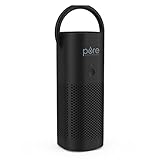
- Personal Air Purifier: Designed for small space use, this convenient, portable travel air purifier cleans 6ft² of air in 12 minutes*, so you can breathe fresher air in your personal space and tackle common issues, such as allergies, sinus problems, colds, nasal swelling, and more.
- True HEPA Filter: The 2-stage filtration system eliminates 99.97% of germs. Stage 1 is an Activated Carbon Pre-Filter that traps odors and harmful gasses, while the Stage 2 True HEPA Filter eliminates dust, dander, pet hair, pollen, mold spores, and smoke in the air.
- CORDLESS & TRAVEL-FRIENDLY: The rechargeable lithium-ion battery lasts up to 12 hours on low setting, so you can use the purifier with or without an outlet. You can even purify the air inside your car for cleaner air to and from any location. Weighing less than 1 pound, it’s a lightweight and portable option for anyone on-the-go.
- Customized Features: The adjustable handle allows you to place the air purifier either upright or on its side to find the best position, or even remove the handle when you don’t need it. Choose from 3 fan speeds (low, medium, or high) to find the air purification that works best for you. Place the fan speed on high and the purifier can even double as your own personal cooling fan.
- 5-Year Manufacturer's Warranty: This mini air purifier comes with a 2-in-1 filter, USB charging cable, and Pure Enrichment’s guaranteed 5-Year Manufacturer’s Warranty. Our customer support team provides daily quality service and peace of mind to millions worldwide all from a brand you can trust. *Coverage area based on AHAM standard of CADR (4 CFM) x 1.55.
- Leave the contaminated area. Do not enter a burning or structurally unsafe building, and do not expose yourself to smoke while retrieving an animal. Ask firefighters or emergency personnel for help if needed.
- Check responsiveness and breathing. Look for chest movement and responsiveness without delaying departure. If the pet is not breathing and you are trained in veterinary first aid, begin the CPR procedure you have been taught while another person arranges transport.
- Go to an emergency veterinary hospital immediately. Call ahead, state that the pet was in smoke, and report any breathing, gum-color, neurologic, or burn findings.
- Keep the airway and body position practical for travel. Avoid tight collars or pressure on the neck. Use a carrier or flat surface that allows easy observation and minimizes struggling.
- Do not postpone care for home treatments. Do not stop to bathe, feed, give over-the-counter medicine, or set up home oxygen. These steps cannot remove inhaled toxins or secure a swelling airway.
Merck identifies the initial clinical priorities as airway maintenance and 100% oxygen. Those interventions require veterinary equipment and monitoring; home oxygen systems are not a substitute for an emergency assessment.
Can smoke inhalation symptoms be delayed in pets?
Yes. Upper-airway swelling can progress after the pet leaves the smoke. Merck reports that airway compromise generally peaks 12–24 hours after injury, with substantial risk of delayed obstruction for at least 24–48 hours. Lung changes on radiographs may not appear until 24–36 hours; VCA notes that radiographic abnormalities can continue to progress over 48–72 hours and may require repeat imaging.
Two toxic gases create additional danger before dramatic breathing signs develop. Carbon monoxide binds hemoglobin and reduces oxygen delivery. Cyanide prevents cells from using oxygen. A pet can therefore have severe systemic toxicity while appearing relatively comfortable. Ordinary two-wavelength pulse oximeters can read falsely high in carbon-monoxide or methemoglobin states, so a veterinary team may use blood co-oximetry when indicated.
For these reasons, an initially normal examination or chest radiograph cannot reliably exclude serious injury. A veterinarian may recommend hospitalization or a defined observation period, repeat examinations, and additional imaging based on exposure circumstances and clinical findings. Follow the discharge monitoring plan exactly and return immediately for any new cough, faster or noisier breathing, weakness, gum-color change, vomiting, confusion, or collapse.
Also popular on Amazon

- Nearby Smoke & Fumes: This smoke purifier for smoking indoors helps draw close-range smoke and light cooking fumes toward the intake. Use it near the source and alongside normal room ventilation
- Rear USB Charging & Cordless Use: The USB port is positioned at the back to keep the charging cable away from the front. Its built-in rechargeable battery supports flexible cordless placement after charging
- 15° Tilt & 2 Fan Speeds: Angle the intake up to 15° toward rising smoke without moving the base. Select from two airflow settings for hot pot meals, light cooking, or other close-range tabletop use
- Washable Grease Filter & Carbon Pad: Use the removable grease filter and activated carbon pad together to help capture grease residue and adsorb some odors. Includes 2 carbon pads; wash the grease filter only
- Removable Oil Collection Cup: The detachable cup makes collecting and cleaning cooking residue more convenient. Compact design for desks, kitchen counters, and RV tables, with no permanent installation required
How does a veterinarian diagnose and treat smoke inhalation?
The team treats smoke inhalation as a combination of airway injury, particulate contamination, heat or chemical burns, and possible systemic poisoning. Assessment and stabilization occur at the same time.
Immediate stabilization
- Airway evaluation and supplemental 100% oxygen
- Early intubation when swelling threatens the airway
- Intravenous access, carefully monitored fluids, pain control, and treatment of shock
- Assessment and treatment of skin, facial, oral, and eye burns
- Consideration of hydroxocobalamin when cyanide poisoning is suspected
Tests and monitoring
- Pulse oximetry interpreted cautiously in suspected carbon-monoxide or methemoglobin exposure
- Blood tests, including co-oximetry when appropriate
- Chest radiographs, with repeat images if signs or the exposure pattern warrant them
- Electrocardiography (ECG) for cardiac effects of hypoxia or toxins
- Ocular examination for corneal or surface injury
Airway and lung procedures
Laryngoscopy and bronchoscopy are the gold-standard methods for directly assessing airway injury. Bronchoscopy can also remove particulate material. Depending on findings, clinicians may use bronchodilators, nebulization, coupage (airway-clearance percussion), and oxygen support. Antibiotics are used for a documented or clinically suspected secondary infection rather than automatically for every smoke exposure.
Which pets are at higher risk from smoke?
Exposure conditions matter as much as the smoky smell on a coat. Enclosed spaces trap heat and toxic gases, while open-air exposure may involve a lower dose but can still be dangerous. Duration and intensity, the material burned, time since exposure, respiratory or neurologic signs, burns or soot, gum color, species, and pre-existing cardiopulmonary disease are the most useful risk axes.
| Higher-risk situation | Why it matters |
|---|---|
| Enclosed room, house, vehicle, or garage | Heat, soot, carbon monoxide, and cyanide can accumulate; oxygen may be displaced. |
| Long or intense exposure | Greater inhaled dose increases airway and lung injury risk. |
| Older, very young, or pregnant animal | EPA identifies these groups as especially vulnerable during smoke or combined smoke-and-heat events. |
| Heart or lung disease | Reduced cardiopulmonary reserve can make a given smoke dose more dangerous. |
| Short-nosed dog | Pugs, bulldogs, and similar brachycephalic dogs may have more difficulty moving air. |
| Bird or other small animal | Merck notes that smaller animals are more susceptible to inhaled toxicants; severe lung injury and sudden death have been reported in birds exposed to polymer fumes. |
During wildfire smoke, keep birds and other small animals in the cleanest indoor air available. Their faster metabolism and smaller airways leave less margin for contaminated air.
Also popular on Amazon
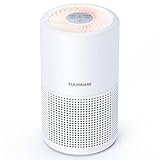
- H13 HEPA 3-Stage Filtration: This air purifier uses a pre-filter, H13 HEPA filter, and an activated carbon layer that work together to filter 99.97% of airborne particles as small as 0.3 microns, including dust, smoke, and pet dander. The carbon layer also helps reduce light household odors from smoke, pets, and cooking. Tested to IEST-RP-CC001.7.
- Fast, Even Coverage up to 1,086 ft²: For air purifiers for home, dual-channel airflow and a 360° air outlet help move clean air quickly and evenly through rooms up to 1,086 ft²(based on 5 air changes per hour). The compact, portable design fits where you need it, so fresh air reaches every corner of the room.
- Quiet Operation at About 20 dB: A quiet option among air purifiers for bedroom use, this unit produces about 20 dB on the lowest fan speed and can run all night, which suits light sleepers. Continuous overnight filtration helps keep bedroom air cleaner while you rest.
- Night Light and 5 Timer Settings: This HEPA air purifier combines air cleaning with a soft night light that provides gentle ambient light in bedrooms and kids' rooms. Choose from five timer settings (2, 4, 8, 10, 12 hours) or continuous mode to match your daily routine; filtration can continue even when you are away.
- Multiple Certifications for Household Use: Supported by CARB, FCC, CE, and RoHS certifications, this air purifier meets applicable performance requirements for household usage, providing peace of mind for daily use.
How can I protect pets during wildfire smoke?
Prevention reduces exposure but does not treat an inhaled dose. Monitor the local Air Quality Index (AQI) and smoke map, keep pets indoors, and limit outdoor trips to brief bathroom breaks when conditions are poor. Keep fresh water available and reduce exertion.
- Close windows and doors when feasible.
- Designate a cleaner-air room away from indoor smoke sources.
- Use a portable air cleaner and compatible high-efficiency HVAC filters; an air purifier reduces indoor particle exposure but does not treat smoke inhalation or replace emergency veterinary care.
- Avoid frying or broiling, vacuuming, candles, fireplaces, woodstoves, smoking, and vaping during smoke events because these add indoor particles.
- Keep carriers, leashes, medications, and veterinary contact details ready for evacuation.
The EPA’s practical warning is: “If you feel the effects of smoke, they probably do, too!” Animals cannot describe headache, throat irritation, or dizziness, so behavior and breathing changes deserve attention even when the pet is not coughing.
What is the prognosis after smoke inhalation?
Outcome depends on inhaled dose, enclosure and fire conditions, airway and lung injury, carbon-monoxide or cyanide exposure, burns, species, and the speed of treatment. VCA Animal Hospitals reports that estimated survival for animals without skin burns is approximately 90%, based on multiple studies (VCA Animal Hospitals/LifeLearn, 2024). That figure should not be generalized to animals with major burns, different smoke mixtures, severe neurologic injury, or other complications.
VCA identifies neurologic signs, extensive skin burns, and deterioration on the second hospitalization day as factors associated with worse outcomes. Delayed airway swelling and progressive lung changes explain why veterinary observation and repeat testing may be recommended even after initial stabilization.
Also popular on Amazon

- 【Portable Car Air Purifier for All Journeys】 Breathe fresh on daily commutes and long drives with our compact car air purifier! It quickly eliminates odors, stale air and airborne pollutants in car cabins, and the built-in aromatherapy pad makes this a car air purifier with fragrance that lets you add favorite essential oils or perfume. Perfectly fits standard car cup holders, creating a clean, inviting car atmosphere effortlessly and helping eliminate new car smell.
- 【True H13 HEPA Filter - 99.97% Purification】 Our hepa car air purifier features a professional True H13 HEPA filter, which captures 99.97% of air pollutants including allergens, dust, pollen, pet hair, dander and cigarette smoke. As an efficient car air purifier for pollen and car air purifier for smoke, it is specially designed for business travelers, pollen allergy sufferers and on-the-go life, delivering fresh clean air in taxis, rental cars, hotels and more. Powered by USB, it also works as a convenient car air purifier usb for daily use.
- 【Pet-Friendly Car Air Cleaner】 Ideal for pet owners on the go, this mini car air purifier doubles as a great car air purifier for pets. It quickly removes stubborn pet odors, dander, and hair from your car cabin, keeping your vehicle interior fresh and clean. Designed to fit standard cup holders, it turns on/off automatically with your car, ensuring effortless odor control and fresh air throughout every journey.
- 【22dB Ultra-Quiet Desktop Air Purifier】 Operating at just 22dB—quieter than a library whisper—this portable air purifier runs almost silently, making it perfect for focused work, studying, or sleep. Its lightweight and stylish design fits seamlessly on your office desk, your child’s study table, or a hotel nightstand, delivering clean air without ever disrupting your peace.
- 【Filter Replacement Indicator & 3 Adjustable Modes】 Built-in filter replacement indicator alerts you with a beep and red flashing light after 360 hours of use, ensuring timely maintenance for consistent purification. 3 adjustable modes for all air needs: Blue (Standard Mode) for daily freshness, Yellow (Fast Mode) for moderate odors, Red (Boost Mode) for stubborn smells—full control of your air quality anywhere, anytime with this versatile car air cleaner.
How should I monitor a pet after the veterinary visit?
Use the discharge instructions as the schedule for rest, medication, rechecks, and activity. Keep the environment free of smoke, dust, aerosols, candles, and strenuous activity while the airway heals. Count or observe breathing only as your veterinarian instructed; a trend toward faster, noisier, or more effortful breathing is more important than a single reassuring moment.
Return to an emergency hospital for open-mouth breathing, gasping, blue, grey, muddy, or cherry-red gums, collapse, seizures, marked weakness, new confusion, worsening cough, black or bloody sputum, or inability to drink. Do not wait for a scheduled appointment when a new emergency sign appears.
Windows Errors? Fix Them Before They Spread
Repair common Windows errors and clear accumulated junk for a smoother, more stable PC - no reinstall needed.Free scan · no reinstallCrashes, No Sound, or Screen Glitches?
Random freezes, missing sound and display glitches usually trace back to one bad driver. Find and replace yours safely.Free scan · under a minuteFrequently Asked Questions
Can a pet recover from smoke inhalation without hospitalization?
Some animals with limited exposure and no objective injury may be discharged after a veterinary examination, but that decision depends on the exposure and serial findings. A pet that was in an enclosed fire scene should not be managed at home solely because it is alert or breathing normally at first.
Should I give my dog or cat milk, food, or water after inhaling smoke?
Do not force food or liquid during transport or while breathing is abnormal, because aspiration is possible. Ask the veterinary team when and how to resume drinking and feeding after the airway has been assessed.
Is a smoky smell on fur proof that my pet inhaled smoke?
No. Odor alone cannot measure the inhaled dose, and a pet can have serious internal injury without a strong smell. Enclosure, duration, breathing signs, neurologic changes, soot, and gum color provide more useful urgency information.
Can carbon monoxide poisoning be missed by a home pulse oximeter?
Yes. Standard two-wavelength devices can display falsely reassuring oxygen saturation when carbon monoxide or methemoglobin is present. Veterinary co-oximetry and the clinical exposure history may be needed to identify abnormal hemoglobin.
Are smoke-related breathing problems contagious to other pets?
Smoke inhalation itself is not contagious. However, every animal exposed to the same fire or smoky environment should be assessed because each may have a different dose, airway anatomy, or underlying disease.





Leave a Reply