
Some links on this page are affiliate links: if you buy through them we may earn a commission, at no extra cost to you.
A Pomeranian offers the more predictable coat, while a Pomchi can be anything from relatively easy to distinctly fluffy. The Pomeranian has a defined, profuse double coat with a dense undercoat, long guard hair, a neck ruff, feathered legs, a skirt and a plumed tail. A Pomchi is a Pomeranian–Chihuahua mix, so its coat can favor either parent. That inheritance affects shedding, brushing, trimming and the amount of professional grooming you will need.
Both dogs need routine coat maintenance, dental care and nail care. The practical difference is certainty: you can plan around a Pomeranian breed standard, but you must assess an individual Pomchi’s coat as it develops.
As an Amazon Associate I earn from qualifying purchases.
What is the coat difference between a Pomchi and a Pomeranian?
The Pomeranian has a standardized double coat; a Pomchi has no single official coat type. That distinction explains why two Pomchis can require noticeably different grooming routines even when they are similar in size.
| Care point | Pomchi | Pomeranian |
|---|---|---|
| Coat definition | Variable; inherited traits may resemble the Chihuahua, the Pomeranian or a combination (PetMD). | Defined double coat with a short, dense undercoat and long, harsh-textured guard hair (American Pomeranian Club standard). |
| Brushing baseline | Multiple times each week to prevent tangles and mats. | Twice weekly, with additional brushing during heavy shedding. |
| General shedding | Often described as low-shedding overall, but the amount depends on which parent’s coat dominates. | Above-average shedding is expected (VCA Animal Hospitals). |
| Trimming | No universal trimming standard; the actual coat should determine the plan. | Trimming for neatness and a clean outline is permitted by the breed standard. |
| Other recurring care | Daily dog-specific tooth brushing, nail care and checks of the eyes and ears. | Nail trimming, infrequent bathing, sanitary trimming when useful and regular professional veterinary dental cleaning. |
The American Pomeranian Club’s AKC standard, effective in 2011, describes the Pomeranian as a 3–7-pound dog with a profuse double coat. PetMD identifies the Pomchi as the offspring of Pomeranian and Chihuahua parents and notes that parent-breed standards can only provide a basis for predictions, not a guarantee for an individual mix.
Popular on Amazon

- Professional Dog & Cat Grooming Brush: Premium slicker brush for dogs and cats designed for daily grooming and coat maintenance. A versatile dog brush and cat brush, also suitable as a pet brush that supports healthy coats and salon-quality grooming at home.
- Removes Mats, Tangles & Loose Hair: Fine wire pins reach the undercoat to remove loose hair before it sheds while gently smoothing tangles and mats. Functions as a dog brush for shedding, deshedding dog brush, and cat brush for shedding to help keep fur off furniture and clothing..
- Gentle on Skin, Tough on Tangles: Rounded stainless-steel pin tips glide smoothly through sensitive areas while removing light mats and tangles without scratching. A safe, comfortable cat hair brush and dog grooming brush for pets with delicate or sensitive skin, including seniors.
- Designed for All Coat Types & Breeds: Effective on long, short, curly, thick, or fine coats — including poodles, doodles, goldendoodles, mixed breeds, kittens, adult cats, and rabbits. One versatile slicker brush for dogs and cats that delivers consistent grooming results.
- Durable & Groomer-Approved: Built with rust-resistant stainless steel pins and a non-slip ergonomic handle for comfort and control. Trusted by professional groomers and pet owners as a dependable dog brush and cat brush for complete at-home grooming.
How variable is a Pomchi’s coat?
A Pomchi’s coat can lean toward the Chihuahua’s lower-maintenance texture, the Pomeranian’s dense fluff, or an intermediate combination. You cannot assign one brushing schedule, shedding level or haircut to every Pomchi without examining the dog’s actual coat.
Why the parents matter
PetMD explains that a Pomchi inherits traits from two breeds with very different coats. A Chihuahua may contribute a short, smoother coat that takes less effort, while a Pomeranian parent may contribute a thick undercoat and longer outer hair that catches tangles. The mix can also have different textures on different parts of the body.
What to assess on your own dog
- Length: Longer hair around the ears, chest, legs or tail usually catches more debris and forms knots sooner.
- Density: A packed undercoat needs thorough section-by-section brushing, not just a quick pass over the top.
- Texture: Fine, soft hair can knot tightly; coarser guard hair may shed visibly while still hiding tangles underneath.
- Problem areas: Check behind the ears, under the collar or harness, in the armpits, around the hind legs and at the tail base.
Use the dog in front of you as the guide. If the coat remains smooth with a short brushing session, maintenance can be lighter; if it mats quickly, increase the frequency or arrange help from a groomer who understands small double-coated dogs.
How often should I brush a Pomchi?
Plan on brushing a Pomchi multiple times a week, with the exact frequency set by coat density and how quickly tangles appear. PetMD’s specific guidance is to brush multiple times weekly to prevent tangles and mats.
A practical brushing method
- Choose a calm time. Put the dog on a secure, non-slip surface and work in short sessions so brushing remains a routine rather than a restraint struggle.
- Separate the coat into sections. Start at the neck or shoulder and expose the hair close to the skin. Continue around the body instead of repeatedly brushing only the visible surface.
- Use a small dog slicker brush suited to the coat. Work gently, especially on thin-skinned areas, and stop if the dog shows pain. A metal comb can help you check whether you reached through the hair, but it should glide rather than pull.
- Pay extra attention to friction points. Behind the ears, beneath a harness, in the armpits and around the tail are common places for knots to start.
- Finish with a hands-on check. Feel for compact patches that a brush skipped. A mat close to the skin can be easy to miss visually.
When a Pomchi needs a groomer
Book a coat-specific professional when mats are tight, widespread or painful to work through, or when you cannot safely see the skin beneath them. Tell the groomer that the dog is a Pomchi and ask how the proposed trim will preserve the coat’s functional protection. Because there is no single Pomchi standard, an experienced groomer should evaluate the individual texture rather than apply a preset haircut.
What brushing is preventing
The goal is mat prevention, not a particular show-ring outline. Mats trap moisture and debris, pull at the skin and make later grooming more stressful. Regular, gentle sessions also let you notice changes in the skin, ears or eyes early enough to ask a veterinarian for advice.
Windows Errors? Fix Them Before They Spread
Repair common Windows errors and clear accumulated junk for a smoother, more stable PC - no reinstall needed.Free scan · no reinstallCrashes, No Sound, or Screen Glitches?
Random freezes, missing sound and display glitches usually trace back to one bad driver. Find and replace yours safely.Free scan · under a minuteHow often should I brush a Pomeranian?
A Pomeranian needs brushing and combing at least twice weekly, with more work during periods of heavy shedding. VCA Animal Hospitals states that this schedule is necessary to prevent matting.
Why the Pomeranian coat takes planning
The American Pomeranian Club standard calls the Pomeranian a double-coated breed. Its short, dense undercoat supports the long, harsh-textured guard hair, while the ruff, leg feathering, skirt and tail plume add areas where loose hair can collect and knot.
Also popular on Amazon

- 【Easy Desheding】: Swihauk self cleaning dog brush for long haired dogs with release bottom helps effortlessly reduce shedding. A must have dog brush for short haired dogs, cat brush for indoor cats, cat brush for shedding, slicker brush for dogs.
- 【Safe Design】: Soft and protective plastic round head bristles creating a comfortable feeling while deshedding without hurting your pet. Ideal puppy brush for small dogs, dog brush for shedding and grooming.
- 【Sturdy & Durable】: Premium stainless steel metal and compact design make our product sturdy and durable for long term use.
- 【Ergonomic Design】: Press bottom for easy cleaning, high-quality & lightweight TPR handle make your grooming effortlessly.
- 【Effective to Remove Loose Fur】: Swihauk pet grooming brush is effective to remove loose fur, suitable for dogs, cat with long and short hair, perfect for your lovely pet like puppies, golden retriever, rabbit, kitten, bunny, yokie and more.
How to work through the coat
- Brush in small sections so the tool reaches the undercoat instead of skimming the guard hair.
- Check the ruff, behind the ears, the feathering on the legs, the skirt and the tail plume separately.
- Increase the amount of brushing when loose undercoat is coming out heavily; waiting for visible clumps to accumulate makes mat prevention harder.
- Keep sessions comfortable and inspect the skin after removing loose hair. Stop for veterinary advice if you find persistent redness, sores or unusual sensitivity.
The breed’s coat is supposed to look full. Removing loose undercoat and preventing mats is different from trying to flatten the coat or cut away its defining layers.
Do Pomchis shed, and do Pomeranians shed more?
PetMD characterizes Pomchis generally as low-shedding, but qualifies that the amount depends on which parent’s traits the dog inherited. VCA characterizes Pomeranian shedding as above average, so a Pomeranian usually produces a more predictable and noticeable volume of loose hair.
Do these 3 things before closing this tab:
1Fix the driver behind crashes, sound loss and screen glitches2Clear out junk files and repair common Windows errors3Scan for outdated or missing drivers - takes under a minuteWhat “low-shedding” does and does not mean
Low-shedding is not the same as no-shedding. A Pomchi with a dense, Pomeranian-like undercoat can release more hair than a short-coated Pomchi, and seasonal changes can alter what you see on brushes and bedding. Base expectations on the individual dog, not only on the mix’s name.
Managing loose hair at home
- Keep the brushing routine consistent instead of waiting until hair is visibly collecting.
- Wash bedding and clean favorite resting areas regularly.
- Use grooming tools gently; aggressive scraping can irritate skin without solving an undercoat problem.
- If shedding changes suddenly or comes with bald spots, itching, odor or skin lesions, contact a veterinarian rather than treating it as ordinary coat turnover.
Can I trim or shave a Pomchi or a Pomeranian?
Trimming for neatness may be appropriate, but shaving away a double coat should not be treated as a guaranteed shortcut to less shedding or easier care. The available breed guidance supports tidy outline work for Pomeranians and individualized, coat-specific advice for Pomchis.
What the Pomeranian standard permits
The American Pomeranian Club standard says, “The Pomeranian is a double-coated breed,” and that “Trimming for neatness and a clean outline is permissible.” In practice, that wording supports tidying stray hair and maintaining a clean silhouette; it does not establish that removing the guard coat is necessary or beneficial.
How to approach a Pomchi trim
A Pomchi has no official trimming standard. Show the groomer the dog’s actual coat and discuss whether the goal is sanitary cleanup, removing a specific mat, or shortening length for management. A professional familiar with small double-coated dogs can explain what will be removed and how much brushing will still be required afterward.
Quick wins for a faster PC:
Clear out junk files and repair common Windows errorsFree Scan →Fix the driver behind crashes, sound loss and screen glitchesFind Drivers →Why shaving is not a promise of simpler ownership
Neither the cited breed standard nor the veterinary and PetMD guidance establishes that shaving permanently changes shedding or eliminates future matting. Hair will continue to grow, and the dog will still need skin checks, brushing as the coat returns, nail care and dental care. Treat a close clip as a specific grooming decision, not as proof that routine maintenance is no longer needed.
What other care do Pomchis and Pomeranians need?
Coat care is only one part of the routine. Both dogs need attention to teeth, nails, ears, eyes and hygiene, while the exact dental emphasis differs in the available guidance.
Also popular on Amazon

- SLICKER BRUSH FOR CAT DOG - Gently removes loose undercoat, eliminates tangles, knots, dander and trapped dirt, perfect cat dog deshedding brush, fits long and short hair coat
- ROTATABLE DOG BRUSH - turn this dog grooming brush pins in "^" shape, you can use it for grooming; in "V" shape, for massaging, suitable for yorkie poodles puppy and other pet
- CAT DOG MASSAGE BRUSH - Doing massage for your pet is good for preventing skin disease and increasing blood circulation
- GROOMING BRUSH - Grooming Brush is really able to groom the undercoat well without scratching your pet's skin. Practical grooming brush for yorkie maltese guinea pig rabbit and other pet
- PET MASSAGE BRUSH - massage for your pet is good for preventing skin disease,Massaging particles won't scratch your pet,and increasing blood circulation
Pomchi dental, eye and ear care
PetMD recommends daily brushing with dog-specific toothpaste and a dog toothbrush. Check the eyes and ears regularly, and seek veterinary advice for persistent discharge, redness, odor, head shaking, scratching or other abnormalities. A sudden change in eating, chewing or mouth odor also warrants a professional examination rather than home scraping.
Pomeranian nails, bathing and sanitary trimming
The American Pomeranian Club owner guide advises keeping nails trimmed, bathing infrequently and using sanitary trimming around the paw pads and anus when useful. Brush out loose coat before bathing so knots do not tighten, and dry the dense coat thoroughly according to your groomer’s or veterinarian’s instructions.
Free tools Windows power users keep installed
One-click scans. No signup required.
Pomeranian dental care
The club guide notes that Pomeranians tend to accumulate tartar and recommends regular professional veterinary dental cleaning. Home brushing supports oral hygiene, but it does not replace an examination or a professional cleaning when tartar and dental disease are present.
Shared maintenance checklist
- Inspect the skin while brushing, especially under dense hair and around friction points.
- Keep nails short enough that they do not click persistently on hard floors or alter the dog’s footing.
- Use only products labeled for dogs; human toothpaste is not a substitute for dog-specific toothpaste.
- Ask a veterinarian about any persistent eye, ear, skin or mouth problem instead of masking it with fragrance or extra bathing.
Which dog is easier to groom?
If predictability is your priority, the Pomeranian is easier to plan for because its coat type and baseline routine are defined. A Pomchi may be easier when it inherits a short Chihuahua-like coat, but it may demand Pomeranian-level brushing when it inherits dense fluff.
| Your priority | More predictable choice | What to verify before deciding |
|---|---|---|
| A known coat structure | Pomeranian | Whether you can commit to regular brushing and above-average shedding. |
| Possibly lighter coat work | Pomchi | The adult coat’s length, density and tendency to mat; puppy coat alone may not show the full routine. |
| Minimal shedding in every individual | Neither can guarantee it | Shedding varies in Pomchis, while Pomeranians are expected to shed above average. |
| Simple haircut rules | Neither is maintenance-free | Pomeranians allow neat outline trimming; Pomchis require an individualized plan. |
Temperament, training, health and access to grooming support should also influence the decision. Coat convenience alone cannot predict whether a particular dog will tolerate brushing or professional handling.
What does a workable grooming schedule look like?
Build the routine around prevention and observation rather than waiting for a visible problem.
The Tool Desk
Outbyte PC Repair FREEClear out junk files and repair common Windows errorsFree Scan →Outbyte Driver Updater FREEFix the driver behind crashes, sound loss and screen glitchesFind Drivers →- Several times each week: Brush a Pomchi thoroughly enough to prevent tangles. For a Pomeranian, use the twice-weekly baseline and add sessions when shedding is heavy.
- Daily for a Pomchi: Brush teeth with dog-specific supplies, checking the mouth for discomfort or changes.
- Throughout the week: Look at the ears, eyes and skin during calm handling. Record anything persistent so you can describe it accurately to your veterinarian.
- As needed: Trim nails, arrange sanitary trimming and bathe when the coat or veterinary advice calls for it. The Pomeranian owner guide specifically describes bathing as infrequent.
- When mats appear: Do not yank or cut blindly at a mat close to the skin. Ask a qualified groomer to assess it, particularly on a dense or anxious dog.
- Regularly with your veterinarian: Arrange professional dental care for a Pomeranian as recommended, and seek veterinary evaluation for dental, ear, eye or skin abnormalities in either dog.
What grooming mistakes cause the most trouble?
Most avoidable problems come from treating a variable coat as if it had a fixed schedule or from postponing care until a knot is obvious.
Brushing only the top layer
A fluffy surface can hide compacted hair underneath. Section the coat and check that a comb or your fingers can move through the hair close to the skin without catching.
Also popular on Amazon
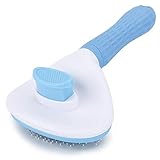
- Clean Pets, Clean House: Depets cat & dog brush for shedding can easily remove loose hair, shedding mats, dander and dirt of your pet, which not only keep your pet clean, but also provide you with a clean and hygienic home environment
- Great Brush, Healthy Pets: The cat grooming brush with round beads can do massage for pets and prevent scratching. The stainless steel needles of dog brush are designed with a 60 degree bend to better reach pet's skin and promote blood circulation
- One-click Cleaning Button: Cat brush with release button, you just have to simply push the button and the hair will be super simple removed from the cat hair brush. And our dog grooming brush is washable, which can be kept in clean
- Comfortable and Nonslip Handle: Our cat shedding brush is designed with a comfort-grip and nonslip handle, and this self cleaning cat brush also has a massage function for your hand and you won't get tired easily when you brush your pet
- Enjoyable Brushing Experience: Grooming your pet can promote bonding with your pet. Our pet brush is suitable for long-haired or short-haired pets (non-applicable types: curly-haired, wire-haired, hairless pets). With Depets dog and cat shedding brush, your beloved pet will enjoy the time of grooming
Waiting for visible mats
By the time a mat is easy to see, it may already be tight and painful. Preventive sessions are kinder than a long, forceful detangling session.
Using a haircut as a substitute for care
Shorter hair does not remove the need to inspect skin, maintain nails or brush teeth. Discuss the purpose of any clip with the groomer and keep the post-trim routine.
What’s actually slowing this PC down?
Pick the symptom - the matching free tool is one click away.
Ignoring a change in shedding or skin condition
Normal coat turnover should not be used to explain persistent itching, odor, bald patches, sores or sudden changes. Those signs belong in a veterinary consultation.
How long do the parent breeds typically live?
PetMD’s 2024 information lists a typical lifespan of 12–16 years for the Pomeranian parent and 14–15 years for the Chihuahua parent. Those figures are population ranges, not a promise for an individual Pomchi or Pomeranian, but they underline why a manageable dental and coat routine matters over many years.
Frequently Asked Questions
Is a Pomchi recognized as an official AKC breed?
No. PetMD describes the Pomchi as a Pomeranian–Chihuahua mix rather than an AKC-recognized breed, so there is no AKC Pomchi coat standard that dictates an exact trim or grooming schedule. Any plan should be based on the individual dog’s inherited coat.
How can I tell whether a mat is too tight to remove at home?
If a comb will not pass gently between the mat and the skin, or the dog flinches when you touch it, stop trying to pull it apart. A groomer can determine whether careful clipping is safer than prolonged detangling and can check the skin hidden underneath.
Recommended Free Tools
What should I do if my Pomchi suddenly sheds much more than usual?
First look for accompanying signs such as itching, redness, odor, bald areas or sores. A sudden change with any of those symptoms should be discussed with a veterinarian instead of being managed solely by adding stronger brushing.
Does professional dental cleaning replace brushing at home?
No. Professional veterinary cleaning addresses tartar and dental disease under clinical supervision, while home brushing helps control daily buildup. The American Pomeranian Club specifically highlights regular professional cleaning for Pomeranians, and PetMD recommends daily dog-specific brushing for Pomchis.
Will a Pomchi’s coat always stay the same after puppyhood?
Not necessarily. Because the mix can inherit different traits from each parent, the texture and density you manage may change as the adult coat develops. Reassess brushing and grooming with the coat you have rather than relying on an early puppy appearance.





Leave a Reply