Do these 3 things before closing this tab:
1Clear out junk files and repair common Windows errors2Fix the driver behind crashes, sound loss and screen glitches3Repair Windows errors before they cause bigger problemsA Poochon can be an affectionate, intelligent companion, but it is not a low-maintenance small dog. Plan for regular brushing and professional grooming, deliberate dental care, daily interaction, reward-based training, preventive veterinary visits, and a careful approach to puppy socialization. Because “Poochon” describes a cross between a Bichon Frise and a Poodle rather than a universally standardized breed, the individual dog’s adult size, coat, shedding, activity level, and temperament can vary.
The best care plan is therefore based on your dog’s actual coat, body condition, behavior, health, age, and parentage—not on a single breed profile.
What is a Poochon?
A Poochon—also called a Bichpoo or Bichon Poodle—is commonly a cross between a Bichon Frise and a Toy or Miniature Poodle. The name does not describe one breed with a universally enforced standard. Even puppies in the same litter can mature differently depending on their parents and the generation of the cross.
That variation may affect:
- Adult size and body proportions
- Muzzle shape and facial hair
- Coat density, curl, length, and matting tendency
- How much the dog sheds
- Exercise needs and arousal level
- Friendliness toward strangers, children, and other animals
- Comfort with handling and being left alone
Breed descriptions can provide useful context, but they cannot guarantee a particular personality, coat, lifespan, adult weight, or health outcome. Treat any general Poochon profile as a starting point for questions, not a substitute for evaluating the individual dog.
Free tools Windows power users keep installed
One-click scans. No signup required.
#1 Best Overall

- 【Premium Dog Grooming Kit】Owning a professional dog slicker brush and a comb, you can effectively remove tangles, knots, and mats, significantly reducing brushing and drying time. Let you, as the groomer, give your furry companion a shiny, healthy coat , Goldendoodle Must Haves - The Best Dog Gifts - Merry Christmas
- 【Professional Slicker Brush for Dogs】Designed for medium-length and curly-haired pets with thick, difficult-to-manage coats, our slicker brush features extra-long angled pins that penetrate deeply to remove dead hair and loose undercoat. It is the best choice for deep combing undercoat for Goldendoodles, Poodles, Labradoodles, etc.Ergonomic handle minimizes hand and arm fatigue during grooming sessions, making it an essential tool for shedding season
- 【High Quality Dog Comb】Made of high quality stainless steel, this comb is durable, corrosion resistant and will not fade, good for avoiding static electricity.Rounded pin ends are gentle to the skin.it’s perfect to promote blood circulation and massage skin
- 【Optimize Combing Function】Pin Length ≈ 1in,Tilt Angle ≈ 45° Extra-long pins effortlessly reach through dense coats, while the angled design protects sensitive skin. This innovative structure simplifies detangling by effectively accessing the undercoat.Ideal for Poodles, Bichons, Labradoodles, Goldendoodles, and Other Doodle Breeds
- 【2-Year Warranty & Support】As a professional pet care brand, we are committed to providing safe, practical, and affordable solutions. Enjoy peace of mind with our 7*24 customer support and 2-year quality guarantee covering any manufacturing defects
Both parent breeds are generally companion-oriented and responsive to people. A Poochon may suit someone who wants an interactive dog and has time for training, play, grooming, and companionship. It may be a poor match for a household seeking a dog that can routinely entertain itself or remain alone for long periods without preparation.
Personality, exercise, and household fit
What daily life with a Poochon may be like
Many Poochons enjoy learning, playing, following their people around the home, and participating in short activities throughout the day. That sociability can be rewarding, but it also means that attention and interaction are part of the care commitment. Individual behavior is shaped by genetics, early socialization, learning history, health, and environment, so do not assume every Poochon will be quiet, instantly obedient, comfortable with children, or happy when left alone.
Build independence gradually. Give a puppy or adult dog brief, successful periods of settling on a bed or in a safe area, then increase the duration only while the dog remains relaxed. If a dog shows persistent panic, destructive behavior, repeated escape attempts, or other signs of distress when alone, discuss the problem with a veterinarian and a qualified behavior professional rather than simply increasing the time alone.
Exercise and enrichment
Small size does not remove the need for exercise. A healthy adult Poochon may benefit from a combination of:
- Age- and fitness-appropriate walks
- Indoor or outdoor play
- Short reward-based training sessions
- Scent games, such as finding treats or favorite toys
- Food puzzles and supervised enrichment toys
- Calm handling and settling practice
Several brief sessions may be more useful than one strenuous workout, especially for a small dog or a dog that becomes overexcited. Puppies should have age-appropriate activity and should not be pushed through repetitive, high-impact exercise. A dog with an orthopedic, cardiac, respiratory, or other medical condition needs an individualized exercise plan from a veterinarian.
For household fit, consider the dog’s actual behavior rather than relying on the label “small.” A Poochon may adapt well to an apartment if the household provides appropriate walks, play, enrichment, training, and toilet breaks. Conversely, a larger home does not solve boredom, separation difficulty, or a lack of routine. Children should be taught to handle the dog gently, leave it alone while eating or sleeping, and interact under adult supervision.
Rank #2

- 【Easy Desheding】: Swihauk self cleaning dog brush for long haired dogs with release bottom helps effortlessly reduce shedding. A must have dog brush for short haired dogs, cat brush for indoor cats, cat brush for shedding, slicker brush for dogs.
- 【Safe Design】: Soft and protective plastic round head bristles creating a comfortable feeling while deshedding without hurting your pet. Ideal puppy brush for small dogs, dog brush for shedding and grooming.
- 【Sturdy & Durable】: Premium stainless steel metal and compact design make our product sturdy and durable for long term use.
- 【Ergonomic Design】: Press bottom for easy cleaning, high-quality & lightweight TPR handle make your grooming effortlessly.
- 【Effective to Remove Loose Fur】: Swihauk pet grooming brush is effective to remove loose fur, suitable for dogs, cat with long and short hair, perfect for your lovely pet like puppies, golden retriever, rabbit, kitten, bunny, yokie and more.
Coat type and grooming: the biggest practical commitment
Poochon coats can range from relatively loose and wavy to dense and curly. Some dogs shed less visibly than others, but low shedding is not the same as being hypoallergenic. No dog is guaranteed to be hypoallergenic, and individual allergy reactions vary. Anyone with allergies should seek appropriate medical advice and, where possible, spend time with the specific dog before making a commitment.
Grooming needs depend on coat density, length, curl, matting tendency, and how thoroughly the owner can brush. A longer or denser coat may need daily brushing. Depending on the coat and haircut, two or three thorough brushing sessions per week may be workable for some dogs, but it is not a universal rule. Parent-breed guidance commonly recommends professional grooming every four to six weeks; the right interval for a Poochon may be shorter or longer depending on its coat and style.
Regular grooming is not merely cosmetic. Mats can pull on the skin, trap moisture and debris, hide irritation or parasites, and make handling painful. They commonly form behind the ears, in the armpits, and where the legs meet the body. Schedule grooming before the coat becomes difficult to maintain.
How to brush a Poochon correctly
- Choose a calm location and keep early sessions short. A non-slip surface can help the dog feel secure.
- Separate the coat into small sections rather than brushing only the visible top layer.
- Work all the way to the skin with gentle strokes. The goal is to reach the roots without scraping the skin.
- Pay special attention to behind the ears, under the collar or harness, the armpits, groin, legs, and tail.
- Use treats and pauses so the dog learns that brushing is safe and predictable.
- After brushing, use a coarse-medium dog comb where appropriate to check for hidden tangles. A comb is a checking tool, not a replacement for thorough brushing.
For a curly or mat-prone coat, a soft slicker brush for dogs may be useful because it can help work through the coat section by section. Tool choice should match the dog’s coat, and even the right brush can hurt if it is pressed aggressively or used against the skin. Brush out tangles before bathing, since wet hair can make mats harder to address. If a mat is tight, painful, extensive, or close to the skin, do not forcibly pull it apart. Use a qualified groomer or veterinary team, particularly if the dog is already fearful or the skin underneath looks inflamed.
Bathing, ears, nails, and handling
- Bathing: Bathe when the dog is dirty or as recommended by a groomer or veterinarian. Product choice should account for the dog’s skin and coat; more bathing is not automatically better.
- Ears: Check them during grooming. Clean and dry them only as directed by a veterinarian, especially if there is odor, discharge, redness, pain, or repeated head shaking.
- Nails: Trim them regularly so they do not become overgrown or affect the dog’s gait. Ask a groomer or veterinary professional to demonstrate if you are unsure.
- Skin: Look for redness, sores, parasites, unusual odor, or areas the dog persistently licks or scratches.
- Face and feet: Teach the dog to accept gentle handling around the eyes, muzzle, paws, tail, ears, brush, clippers, and dryer.
Start these lessons in puppyhood with very brief exposures, treats, and rest breaks. Introduce the sound and sensation of clippers and dryers gradually; forcing a frightened dog can make future grooming substantially harder.
Dental care should be part of the routine
Small companion dogs can need especially consistent oral care. Bichon Frises can develop early tooth loss or gum infection without regular dental attention. Dental care should begin at home but should not end there.
Recommended Free Tools
Rank #3
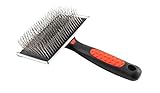
- EXTRA LONG PINS - Crafted from high-quality materials, this professional-grade "Tuffer Than Tangles" brush features extra-long stainless steel pins that easily penetrate deep into your pet's coat, removing dirt and debris from the undercoat.
- COMFORTABLE - The flat slicker design allows for gentle yet effective grooming, while the ergonomic handle ensures maximum comfort and control during use.
- ALL COAT TYPES - The Paw Brothers Extra Long Pin Flat Slicker Brush is suitable for all coat types and can be used on both dogs and cats. It's perfect for pet owners, as well as professional groomers.
- SIZE - Head 4.5in x 3in, Handle length 4.75in, Pins 1in length
- WHY RYAN'S PET SUPPLIES - Established in 1959, we have grown from humble beginnings as a family-operated four-page catalog to an international business featuring top quality products and services for pet professionals and pet lovers alike.
A practical dental routine
- Gradually teach the dog to accept finger handling around the lips and teeth.
- Progress to veterinarian-approved daily tooth brushing when possible.
- Use a dog toothbrush and veterinarian-approved toothpaste; ask your veterinary team which products and dental chews are appropriate for your dog.
- Have the veterinarian examine the mouth during preventive visits and discuss whether professional cleaning is appropriate.
- Watch for bad breath, red or bleeding gums, difficulty chewing, dropping food, pawing at the mouth, loose teeth, or a change in appetite.
Home brushing helps control plaque but does not remove every problem. A complete assessment of periodontal disease may require anesthesia, probing, and intraoral radiography. Anesthesia-free scraping is not equivalent to a veterinary dental procedure: it may remove visible material without allowing a complete examination or treatment below the gumline.
Do not wait for obvious pain. Dogs often continue eating despite significant oral disease, and a mouth that appears acceptable from the front may still have problems that require a professional examination.
Puppy training, socialization, and vaccination precautions
Training priorities
Begin reward-based training early. Useful first skills include:
- Name response and attention
- House training and a predictable toilet schedule
- Recall foundations
- Loose-leash walking
- Gentle bite inhibition and appropriate play
- Settling on a mat or bed
- Alone-time practice
- Cooperative brushing, nail, ear, mouth, and face handling
Keep sessions short and end while the puppy is still succeeding. Reward the behavior you want to see, manage the environment so unwanted behavior is less likely to be rehearsed, and avoid punishment that makes handling or people frightening.
Socialization without unnecessary disease exposure
Socialization means building positive, controlled familiarity with the world—not overwhelming a puppy with every possible person, dog, and noisy environment. Introduce safe surfaces, household sounds, car travel, grooming equipment, different types of people, gentle handling, and calm, healthy dogs at a pace the puppy can manage.
Puppies need repeated vaccines during early life and should be protected from unvaccinated or unknown-status dogs until adequately vaccinated. The exact schedule depends on local disease risk, the puppy’s age, previous records, and lifestyle, so the puppy’s veterinarian should set it.
Rank #4
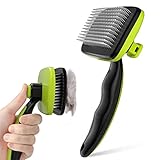
- 1-CLICK SELF-CLEANING GAME-CHANGER: Features an instant hair-ejection button. One swipe after brushing and the loose fur falls off effortlessly. This professional slicker brush is perfect for pet owners seeking a low-effort grooming solution with minimal cleanup—no more tedious manual hair pulling from your traditional pet brushes!
- IDEAL FOR DOUBLE COATS & WHITE FUR: Specially engineered as an essential cat brush and heavy-shedding dog tool. It works wonders for short to medium-haired cats and double-coated dogs (Labs, Goldens, Huskies). Extremely effective on white-coated pets, easily capturing undercoat, dander, and dirt during peak shedding season.
- GENTLE ON SKIN, LOVED BY RESISTANT PETS: The ultimate cat brush for indoor cats and sensitive pups who dread grooming. Designed with fine 135° stainless steel bristles capped with protective massage particles, it stimulates skin circulation without pulling. Even pets that usually resist will love the soothing massage experience!
- ERGONOMIC & COMFORTABLE FOR FREQUENT USE: Weighing only 89g (3.1 oz), this lightweight dog brush with a non-slip TPR handle eliminates wrist fatigue. As a dedicated dog brush for shedding, it's perfect for frequent sessions (2-3 times per week) to eliminate loose undercoat before it ends up on your furniture and floors.
- PREMIUM VALUE & DURABLE DESIGN: Professional-grade grooming results without the salon expense! Built with high-quality TPR, this heavy-duty slicker brush offers exceptional value and long-lasting performance. It is perfectly optimized for standard small to medium pets, removing trapped fur with ease. (Note: Not ideal for tightly curly coats like Poodles).
Socialization does not necessarily have to wait until every vaccine is complete. Ask the veterinarian how to balance infectious-disease precautions with safe early learning. Options may include carrying the puppy in public, using a clean private area, arranging contact with known healthy vaccinated dogs, and attending a well-managed puppy class that follows appropriate health rules.
Preventive veterinary care
A Poochon’s preventive plan should be individualized rather than copied from a generic online calendar. Routine veterinary care commonly includes:
- Physical examinations appropriate to the dog’s age and health
- Vaccination planning and legally required rabies vaccination
- Dental evaluation
- Weight and body-condition assessment
- Diet and treat review
- Microchip placement or verification and contact-information updates
- Year-round parasite prevention suited to local risks and the dog’s medical history
Vaccination recommendations depend on the dog’s age, records, region, travel, boarding, exposure, and health. Rabies rules also follow applicable law. Your veterinarian can recommend appropriate core and risk-based vaccines and timing for the individual dog.
Food, treats, and body condition
Feed a complete and balanced diet appropriate for the dog’s life stage, size, health status, and reproductive status. Because Poochon size can vary, there is no responsible universal serving amount. Measure meals, account for treats and chews, transition foods gradually, and ask the veterinarian about calorie needs or any condition-specific diet.
Use body condition—not a breed-marketing weight target alone—to assess whether the dog is too thin, at an appropriate condition, or carrying excess weight. Have weight and body condition reviewed during routine visits, particularly after sterilization, illness, or a major change in activity. Do not add supplements, switch to a raw or home-prepared diet, or use a parasite product without discussing the decision with a veterinarian.
Independent reader supportYour contribution helps us test, update, and keep practical guides available for everyone.Health considerations and responsible breeder questions
A Poochon may inherit or develop health problems associated with either parent breed, but the mixed-breed label does not provide a precise individual risk prediction. Nor does crossing two breeds guarantee that a dog will be free of inherited disease. The most useful approach is to investigate the actual parents, review verifiable screening, understand the family history, and maintain routine veterinary care.
Best Value

- 【Professional Pet Grooming Kit 】3 Pet grooming tools selected by pet lovers, which can meet daily all the grooming needs of pets. Let you, as the groomer, personally give your furry friend a shiny and healthy coat. This is a must-have beauty product set for pet lovers! The Best Dog Gifts - Merry Christmas
- 【Why Choose Augwind 3PCS ?】 Augwind Pet Grooming Rake makes it easy to remove stubborn, tangled hair. Augwind Self-Cleaning Slicker Brush quickly removes loose hair, dander, and residual dirt. Augwind Flea Comb effectively remove small objects and Dandruff Flakes. Our 3-in-1 Pet Grooming Kit handles all your needs: detangling, hair removal and removes fleas and ticks – The Ultimate Pet Essentials
- 【Dematting and Deshedding Tools】 Augwind Pet Grooming Rake features a double-sided design: The 9-tooth bristle side detangles stubborn knots and mats. The 17-tooth bristle side trims excess pet hair. Augwind self-cleaning dog brush includes a push-button retractable mechanism – simply retract the bristles after use to remove loose hair quickly and effortlessly
- 【Flea Comb】Use this fine-toothed lice comb regularly to effectively remove small debris and dandruff, help keep away fleas and ticks, and maintain your pet’s coat tidy and healthy
- 【2-Year Warranty】We are a professional pet products company, committed to bringing the safest, practical and affordable pet products to pets and owners. We promise to solve it for you at any time if there is any quality within 2 years. We provide 7*24 hours after-sales service, if you have any questions, please feel free to contact us
What screening should a buyer ask about?
Health-screening recommendations differ by parent breed and Poodle variety. For a Bichon Frise parent, ask about the parent’s eye and patella evaluations and any screening recommended by the breed club. For a Miniature Poodle parent, parent-club recommendations include patella, hip, eye, and PRA-prcd testing. These are questions to discuss for the actual parents; they do not establish a single Poochon-specific testing protocol.
Before putting down a deposit, ask the breeder:
- Was the Poodle parent Toy, Miniature, or another variety?
- Can you see the actual parents’ verifiable health records?
- Are results publicly recorded with a recognized registry, where applicable?
- Which eye, patella, hip, DNA, or other tests were performed, and why were those tests chosen?
- Is there a family history of recurring eye, orthopedic, neurologic, bleeding, dental, or other significant problems?
- How were the puppies raised, handled, socialized, and exposed to grooming?
- What veterinary records, vaccination information, and feeding instructions will accompany the puppy?
- Does the written contract explain health commitments, return-to-breeder provisions, and support if the placement fails?
Screening is evidence that a breeder is making informed decisions; it is not a guarantee that a puppy will never become ill. Discuss the dog’s family history and any possible concerns with your veterinarian.
A realistic Poochon care checklist
Every day
- Provide measured meals and fresh water.
- Give age-appropriate movement, play, enrichment, and brief training.
- Practice a small amount of calm handling or grooming cooperation.
- Brush according to the coat’s actual needs; a dense, long coat may need daily brushing.
- Brush the teeth if the dog will tolerate it, working toward daily care.
- Check behavior, appetite, stool, urination, breathing, and energy for meaningful changes.
Several times a week
- Brush thoroughly to the skin and check behind the ears, collar, armpits, groin, legs, and tail.
- Run a comb through appropriate areas to find concealed tangles.
- Inspect the skin, ears, paws, nails, eyes, and mouth.
- Rotate safe enrichment activities and continue positive training.
Periodically
- Trim the coat on a schedule determined by its growth and matting tendency; many Poochons need professional grooming around every four to six weeks.
- Trim nails before they become overgrown.
- Bathe as needed or as advised by a groomer or veterinarian.
- Keep the microchip registration and identification details current.
- Review vaccines, parasite prevention, diet, weight, dental health, and exercise with the veterinarian at the recommended intervals.
When a Poochon needs urgent veterinary help
Seek veterinary or emergency guidance promptly for breathing difficulty, collapse, repeated vomiting or diarrhea, inability to urinate, severe pain, sudden neurologic changes, eye injury, heat illness, or suspected toxin exposure. These problems are not situations for adjusting a grooming, feeding, or training routine at home. If you are unsure whether a symptom is urgent, call a veterinary practice or emergency service and describe what happened, when it began, and what the dog may have eaten or encountered.
This guide provides general care information, not a diagnosis or individualized medical plan. A veterinarian who knows the dog’s history, examination findings, location, lifestyle, and records should make decisions about vaccines, parasite control, diet, exercise restrictions, dental treatment, and health testing.
The Tool Desk
Outbyte Driver Updater FREEScan for outdated or missing drivers - takes under a minuteDriver Scan →Outbyte PC Repair FREERepair Windows errors before they cause bigger problemsFix Now →FAQ
Are Poochons hypoallergenic?
No dog can be guaranteed hypoallergenic. Some Poochons may shed less visibly, but coat traits vary and allergens also come from sources such as skin flakes and saliva. Spend time with the specific dog before adoption if anyone in the household has allergies.
How often should a Poochon be groomed?
The coat determines the schedule. Brush a dense or long coat daily when necessary; some shorter or less curly coats may be manageable with two or three thorough sessions weekly. Many Poochons need a professional trim about every four to six weeks, although the appropriate interval varies.
How much exercise does a Poochon need?
There is no safe universal minute count for every Poochon. Most need a combination of age-appropriate walks, play, training, and mental enrichment. Puppies should not be pushed through repetitive high-impact exercise, and dogs with medical conditions need veterinary guidance.
What should I ask a Poochon breeder for?
Ask which Poodle variety was used, request verifiable health-screening records for both parents, ask about family history and puppy socialization, and review a written contract that includes return-to-breeder or support provisions.
Quick wins for a faster PC:
Fix the driver behind crashes, sound loss and screen glitchesFind Drivers →Repair Windows errors before they cause bigger problemsFix Now →The Bottom Line
A well-cared-for Poochon is an engaging companion when the household is prepared for the full commitment: frequent coat maintenance, ongoing dental care, daily interaction, early training, individualized preventive medicine, and close monitoring of weight and health. Choose the routine—and the dog—based on the individual’s coat, temperament, parentage, and veterinary needs rather than assuming every Poochon is identical.
Quick Recap
Product prices and availability are accurate as of the date/time indicated and are subject to change. Any price and availability information displayed on Amazon at the time of purchase will apply.




