What’s actually slowing this PC down?
Pick the symptom - the matching free tool is one click away.
Pufferfish are not all freshwater or all saltwater fish: the group includes species from freshwater rivers and lakes, brackish estuaries, and the sea. The right aquarium depends on the exact species—not the word “puffer” or a store’s label. Identify the species before buying, then match its salinity, adult size, diet, and temperament.
Do puffer fish need saltwater?
Some do, but there is no single answer for all pufferfish. They occupy marine, brackish, and freshwater habitats, and only a minority are considered strictly freshwater. SeaWorld’s fact sheet describes the broader range as tropical and subtropical oceans as well as brackish and fresh water (SeaWorld).
As an Amazon Associate I earn from qualifying purchases.
Freshwater species occur in river systems in Southeast Asia, parts of India and Bangladesh, the Amazon basin, and African rivers such as the Congo and Nile. Some inhabit lakes, including Lake Tanganyika. Estuaries, where fresh and salt water mix, are home to brackish-water species. Marine puffers are associated with reef environments. Aqueon specifically warns that Figure Eight and Green Spotted puffers are often sold as freshwater fish even though they are brackish-water species (Aqueon).
“Freshwater vs. saltwater” is therefore not enough to choose a puffer. Some species use more than one kind of environment during their lives, and aquarium-trade labels may obscure the conditions a fish actually needs. Confirm the species and its life-stage-specific requirements with a reliable species care source before purchase.
#1 Best Overall
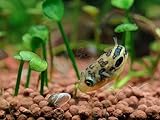
- Meet the Carinotetraodon travancoricus, or the pea puffer—a tiny fish with a big personality! These vibrant, greenish-brown puffers with yellow spots add a burst of life to nano aquariums
- Meet the Carinotetraodon travancoricus, or the pea puffer—a tiny fish with a big personality! These vibrant, greenish-brown puffers with yellow spots add a burst of life to nano aquariums. Known for their intelligence and feisty nature, they're a joy to watch. Plus, they're handy snail hunters, making tank maintenance a breeze. Perfect for both beginners and seasoned aquarists, the pea puffer brings charm and liveliness to any underwater world.
- The pea puffer, scientifically known as Carinotetraodon travancoricus, thrives in freshwater aquariums. To ensure their well-being, maintain water parameters within the following ranges:
- Temperature: Keep the water temperature between 74°F to 82°F (23°C to 28°C). Pea puffers are sensitive to temperature fluctuations, so aim for stability.
- Water Hardness: Aim for a water hardness of 5 to 20 dGH. This range mimics their natural habitat conditions.
How freshwater, brackish, and marine setups differ
Salinity is only one part of the decision. Adult size, aquarium dimensions, temperature, pH, filtration, flow, food, and social behavior also vary by species. Do not apply one parameter chart or tank size to every puffer.
| Habitat type | What it means for the aquarium | Key caution |
|---|---|---|
| Freshwater | Use freshwater conditions appropriate to the identified species, with stable water and effective filtration. | Some puffers sold as freshwater actually need brackish conditions; “freshwater puffer” is not a species identification. |
| Brackish | Fresh water mixed with salt water; the required salinity depends on the species. | Measure salinity with suitable equipment and follow species-specific guidance rather than guessing from a generic label. |
| Marine | A marine aquarium with appropriate salinity, filtration, and regular water testing. | Marine puffers may eat small fish or invertebrates, so do not assume they are reef-safe. |
OATA’s general brackish-water categories are low brackish up to 1.005 specific gravity, medium brackish from 1.005 to 1.015, and high brackish from 1.015 to full seawater at approximately 1.026. These ranges describe OATA’s broad guide, not a target to use for an individual fish without species-specific direction (OATA freshwater puffer care).
Rank #2
Water quality, temperature, and tank size
Use care-sheet ranges as orientation, not a universal recipe
OATA’s general freshwater puffer guidance gives 22–27°C, pH 6.5–8.0, ammonia at zero, nitrite at zero, and nitrate no more than 20 mg/L above normal tap-water levels. OATA explicitly says these are group-level values and that species requirements should be checked. Aqueon’s freshwater guide instead gives 74–78°F and pH 7.0–7.6. The differing ranges are a reminder to verify the exact species’ needs rather than average the figures or pick whichever seems convenient.
Aqueon advises against adding aquarium salt to freshwater puffers except as disease treatment, and distinguishes Figure Eight and Green Spotted puffers as brackish-water fish. Salt is not a general puffer additive; use it only when the identified species’ care requirements call for brackish or marine conditions.
Rank #3

- Striking Appearance: Featuring a vivid green body with bold black spots, Leopard Puffers bring exotic beauty and personality to any tank.
- Highly Active and Intelligent: These puffers are curious, interactive, and full of character—often recognizing their owners and exploring their environment constantly.
- Freshwater to Brackish Transition: Young puffers can start in freshwater, but thrive long-term in brackish water. Ideal for intermediate to advanced aquarists.
- Species with Personality: Semi-aggressive and territorial, best kept alone or with fast, non-aggressive tank mates in a species-specific or carefully planned setup.
- Carefully Shipped with Live Arrival Guarantee: Your puffers are packed in oxygenated water, insulated containers, and shipped with care to ensure safe arrival.
Size the tank for the adult fish
There is no one puffer tank size. OATA’s examples range from an 80-litre aquarium for a small group of pygmy puffers to a tank at least 240 cm long for an Mbu puffer. For marine puffers, OATA gives at least 100 litres for a single smaller puffer under 10 cm as a general recommendation, with larger species requiring much bigger aquariums (OATA marine puffer care). These are guide examples, not universal minimums for every species in those broad categories.
Use a suitable filter and test water regularly. Larger aquariums generally help keep conditions stable, but filtration and flow must also suit the fish: OATA notes that some freshwater puffers are not strong swimmers and may not tolerate fast currents. Check both adult length and the aquarium’s usable swimming space when planning the setup.
Rank #4
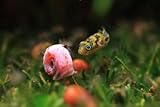
- Care Guide: Water Parameters: pH 6.5-7.5, Temperature 74-80°F. Diet: Carnivorous—prefers live or frozen foods such as bloodworms, brine shrimp, and snails. Tankmates: Best kept in species-only tanks or with peaceful, fast-moving fish to avoid fin-nipping. Tank Setup: Requires plenty of plants, hiding spots, and open swimming space for natural behavior.
- Features: Tiny & Unique: Small, active fish with individual personalities and striking golden-green coloration. Freshwater Compatible: Fully freshwater species that thrive in well-maintained nano aquariums.
- These Mini Pea Puffers are an excellent choice for aquarists looking for small, intelligent, and interactive freshwater fish in their nano aquarium!
What do puffer fish eat, and why do they need hard food?
Many puffers are carnivorous, and some may reject prepared foods. OATA’s freshwater guidance lists meaty frozen foods such as daphnia, bloodworm, and brine shrimp for smaller examples; larger puffers may need foods such as cockle, mussels, or shrimp. Its marine guidance also lists meaty frozen feeds and whole clams for larger individuals. The appropriate food and amount depend on species and size, and uneaten protein-rich food can quickly foul aquarium water.
Puffer teeth continue growing throughout life. OATA says the correct diet needs to help grind them down; shellfish in the shell, such as cockle, can provide resistance as the fish opens it. Hard-shelled prey is not a complete diet by itself, so follow species-specific feeding advice and remove leftovers.
Best Value
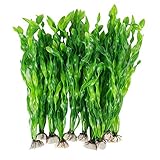
- MyLifeUNIT Aquarium Seaweed Plastic Plant, made of eco-free non-toxic material PVC , ceramic base, won't contaminate water, color won't fade
- Soft won't scratch fishes, plants will swing with the water which looks real
- Note: Plastic water plants may get squeezed and deformed during packaging, put into 104 - 140 Fahrenheit degree warm water get restored
- Size: Artificial aquarium plants measures 1.4''L x 1''W x 12''H, suitable for larger aquariums such as 30-gallon, 40-gallon, 50-gallon, or even larger fish tanks. Main Color: Green
- NOTE: To ensure aquatic plants stand upright in the aquarium, please maintain a water level above 14 inches and bury the base in gravel. Avoid placing plants near the aquarium's air outlet.
Are puffer fish aggressive or safe with tankmates?
Compatibility varies, but many puffers nip fins, prey on small fish, or behave aggressively. OATA says most freshwater puffers are best kept in species-only aquariums, while acknowledging exceptions. Marine puffers may prey on small fish or invertebrates, so a puffer should not be presumed reef-safe. Research any proposed tankmates for the exact puffer species; no companion fish is universally compatible.
Why do puffer fish puff up?
Inflation is a defensive response, not a trick to encourage. OATA describes puffing as a stress response used to avoid predation and advises against provoking a fish to make it inflate. United Parks & Resorts says an inflated puffer can reach up to three times its normal size, but this describes potential inflation—not a routine or desirable behavior (United Parks & Resorts fact sheet). A puffed fish is less maneuverable and ordinarily seeks cover, according to the same fact sheet.
Puffer fish facts: how many kinds are there?
Aqueon estimates approximately 150 pufferfish species, with fewer than 30 considered strictly freshwater. Treat this as Aqueon’s estimate rather than a definitive census. United Parks & Resorts notes that the broader order Tetraodontiformes contains more than 300 species; that larger count includes other groups of fish, not just puffers. The distinction helps explain why a single “puffer care” profile cannot fit the whole group.
Quick Recap
Product prices and availability are accurate as of the date/time indicated and are subject to change. Any price and availability information displayed on Amazon at the time of purchase will apply.




