The Tool Desk
Outbyte Driver Updater FREEFix the driver behind crashes, sound loss and screen glitchesFind Drivers →Outbyte PC Repair FREERepair Windows errors before they cause bigger problemsFix Now →For a healthy dog, neither a raised nor a floor-level water bowl has been shown to be universally better for drinking. The best choice is the height your dog can reach, swallow from, and use comfortably and consistently. Research on raised feeders concerns meals and gastric dilatation-volvulus (GDV, commonly called bloat), not controlled comparisons of drinking-bowl height. It does not show that elevating water prevents bloat or improves hydration.
The short answer
Are raised dog bowls better for drinking? The available evidence does not establish that they improve comfort, swallowing, hydration, or water intake for healthy dogs. It also does not establish that a floor-level bowl is harmful, including for large dogs. A practical decision should start with your dog’s observed posture and ability to drink, then account for any diagnosis or recommendation from your veterinarian.
As an Amazon Associate I earn from qualifying purchases.
For dogs at concern for GDV, do not raise a water bowl as a preventive treatment. The studies often cited in this discussion examined feeding bowls, produced conflicting observational results, and found no evidence that a raised feeder reduces GDV risk. Louise Anne Buckley’s 2017 Veterinary Evidence review states: “No studies found that feeding from a raised feeder reduced the risk of GDV relative to feeding from the floor.” That conclusion is about feeding and GDV, not about which height feels better for drinking.
Free tools Windows power users keep installed
One-click scans. No signup required.
The absence of a proven winner does not mean bowl setup is irrelevant. A bowl that slides, tips, forces a painful stance, or sits in a busy passage can make drinking harder. Those are access and comfort problems, not proof that one height is medically superior. If your dog uses one arrangement calmly and consistently, that practical observation is a reasonable basis for choosing it while you remain alert for symptoms.
#1 Best Overall
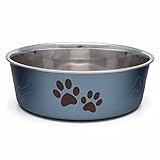
- STAINLESS STEEL & DURABLE - This Bella Bowl (27 oz, 6.75" x 2") features a stainless steel design with a poly-resin exterior great for dog food mat, which makes them dish washer safe and easy to keep clean and hygienic. Perfect cat food bowl or dog water bowl for home & travel.
- REMOVEABLE RUBBER BASE - This feature prevents and ensures no spill water bowl for dogs. It’s perfect for puppy food and makes an excellent addition to your dog feeding station. Watch the bowl stand steady on your pet food mat, making it a great complement to your dog mat and other dog stuff.
- PATENTED AWARD-WINNING DESIGN – Bella Bowls are renowned for being the bestselling bowls in the pet industry. The Bella Bowl Stainless Steel Bowls come in a variety of sizes, making this versatile dog food bowl perfect for all pets—from puppy bowls and small bowls to dog bowls large breed and everything in between! These bowls are also ideal for use as a cat water bowl, with smaller sizes being highly recommended for cat bowls for indoor cats.
- REAL STEEL STYLISH & COLORFUL DOG FEEDER – Available in a wide range of vibrant colors, this dog bowl seamlessly complements any pet supplies collection or dog accessories and makes a fantastic addition to your home’s décor. The Bella Bowls come in beautiful hues like blueberry and artichoke, making them a perfect fit for your dog bowl mat or cat food mat.
- VETERINARIAN RECOMMENDED – This stainless steel dog bowl and stainless steel cat bowls have all the benefits of stainless steel making them hygienic and clean. Bella bowls are truly a must-have for any cat feeding station and essential addition to your dog supplies.
What is actually known about drinking-bowl height?
A direct comparison would need to assign healthy dogs to floor-level and raised water bowls, then measure drinking comfort, swallowing, water consumption, and adverse outcomes. The reviewed literature does not provide that evidence. The search identified no study establishing a universal best drinking height, a reliable increase in water intake, or a comfort advantage for one arrangement.
A 2009 paper titled “Effects of body positioning on swallowing and esophageal transit in healthy dogs” appears in the record, but the retrieved information does not expose its findings. Its title alone cannot support a recommendation for a raised bowl, and it should not be presented as proof that one height is safer.
That leaves an individual-fit question rather than a one-size-fits-all rule. Watch whether your dog can approach the bowl without stretching, crouching, slipping, coughing, repeatedly stopping, or abandoning water. Those observations can guide a practical choice, but they are not evidence that one height prevents disease.
Do these 3 things before closing this tab:
1Clear out junk files and repair common Windows errors2Fix the driver behind crashes, sound loss and screen glitches3Repair Windows errors before they cause bigger problemsMarketing often turns a simple ergonomic idea into a health promise. Claims about “optimal shoulder height,” guaranteed hydration, or prevention of swallowing disorders require direct evidence that has not been established here. Size, neck length, joint comfort, footing, bowl diameter, location, and the dog’s habits can all affect what looks comfortable. Because those factors vary, copying a stand height used by another dog is not a reliable medical prescription.
Raised and floor-level bowls compared
The meaningful differences are practical and dog-specific. No reviewed study establishes a medically superior bowl height or a winning material.
| Decision factor | Floor-level water bowl | Raised water bowl |
|---|---|---|
| Reach and posture | Requires the dog to lower its head and neck toward the floor. | Places the rim higher; the right height depends on the individual dog and stand. |
| Evidence for healthy dogs’ drinking | No universal benefit demonstrated. | No universal benefit demonstrated. |
| GDV implications | Floor placement is the cautious default in Buckley’s evidence summary when discussing raised feeders and dogs considered at risk. | No evidence shows that raising a bowl prevents GDV; the relevant studies concern feeding, not drinking. |
| Diagnosed swallowing or esophageal disease | May or may not suit the dog; posture should follow veterinary advice. | May be recommended for an individual condition, but not automatically for every dog. |
| Stability and spills | Usually simple to place on a nonslip mat; a low bowl can still be pushed or tipped. | Depends on the stand’s footprint, weight, and construction; an unstable stand can spill or frighten a dog. |
| Cleaning and space | Usually easy to lift, wash, and fit into a small area. | Requires cleaning the bowl plus the stand and needs additional floor space. |
| Changing the setup | Easy to move or provide as a backup during a trial. | May require assembly, a transition period, and a second bowl if the dog rejects it. |
These comparisons support a household decision, not a promise of a health outcome. A heavy floor bowl may be more stable than a lightweight raised stand, while a well-designed stand may keep a bowl from sliding for a dog that pushes it. Evaluate the complete setup rather than the label “raised” or “floor-level.”
What the GDV research does—and does not—say
GDV is a life-threatening emergency in which the stomach dilates and may twist. Raised-feeder advice is often justified by claims that elevation prevents bloat, but the evidence reviewed does not support that claim.
Recommended Free Tools
Rank #2

- Safe Drinking Dispenser: Features an internal gravity system for a continuous, fresh water supply. The extra-wide, anti-tipping base ensures maximum drinking stability. Crafted with a detachable premium 304 stainless steel bowl—100% BPA-free, rust-resistant, hygienic, and dishwasher-safe. Unlike ordinary plastic alternatives, it ensures a safer, cleaner, and healthier drinking experience for pets.
- Large Capacity Water Tank: Holds up to 1 Gallon (3.85L) of water, making it perfect for small to medium dogs and cats. The gravity-fed system automatically refills the bowl as your pet drinks—say goodbye to constant manual refills! Ideal for busy owners and weekend travelers. No need to worry about your pets running out of fresh water while you’re at work or away on a trip.
- Upgraded Outlet Filter: Unlike ordinary pet dispensers, ours features an upgraded filter built directly into the outlet cap. It effectively filters out partial impurities and odors while reducing dust from entering the tank—ensuring the water is clean and safe for pets to drink.
- Non-Slip & Stable Base: Designed with a widened base and non-skid rubber pad to stop sliding or tipping while the pet drinks. The water tank locks seamlessly onto the base, while the Deepening bowl prevents overflows—keeping your floors clean and dry.
- Easy Assembly & Cleaning: Simply twist the water tank to secure or detach it from the base—no tools required! Detailed user manual and step-by-step video guides are provided on the product page for quick setup.
Glickman et al. cohort findings
In a 2000 cohort study summarized by Buckley, large and giant breed dogs were classified by feeding height. The reported adjusted relative risk for raised feeding in the combined population was 2.10. The study summary also reported 18 versus 40 GDV cases per 1,000 dog-years for floor-fed versus raised-fed large breeds, and 17 versus 34 per 1,000 dog-years for floor-fed versus raised-fed giant breeds.
These are cohort findings, not universal probabilities for an individual dog. The study was observational: it found an association, not proof that a raised feeder caused GDV. Buckley notes limitations including uncertain feeder use over time and incomplete follow-up information. Feeder height was part of feeding behavior in these dogs; the study did not test water-bowl height or drinking comfort.
The numbers also should not be converted into a prediction such as “raising this dog doubles its personal risk.” A relative risk from a particular cohort reflects that study’s population, definitions, follow-up, and possible differences between households. It cannot answer whether a water bowl at a certain height changes a dog’s risk.
Pipan et al. findings
A 2012 study reviewed by Buckley did not report a statistically significant association between raised feeding and GDV. The review notes that the article supplied little numerical information for evaluating that result. The two studies therefore conflict, and neither demonstrates that raising a bowl lowers risk.
The clinically relevant conclusion
Buckley’s 2017 Veterinary Evidence knowledge summary brings the findings together: “No studies found that feeding from a raised feeder reduced the risk of GDV relative to feeding from the floor.” If your dog is a breed or individual your veterinarian considers vulnerable to GDV, ask for a prevention plan based on that dog’s risk factors. Until then, floor placement is the cautious default described in the review—not a proven anti-bloat treatment.
Keep the scope clear when discussing this evidence with family members or a product seller: it concerns the height of a food feeder and GDV outcomes. It does not demonstrate that water from a raised bowl is easier to swallow, that water from a floor bowl causes bloat, or that either setup changes hydration.
When a medical condition changes the question
A veterinarian may recommend a particular posture for a diagnosed problem. That is different from claiming that every healthy dog should drink from a raised bowl.
Rank #3

- AUTOMATIC REFILL: The automatic dog water dispenser gradually dispenses water into the water bowl, reducing the need for frequent refills; suitable for busy pet parents, it holds 3 gallons
- SPILL-FREE DESIGN: Equipped with easy-grab cutouts, this spill-free dog water bowl allows for lifting without spills; its wide-mouth bottle is easy to remove from the base for convenient washing
- CONVENIENCE FOR PET OWNERS: Petmate Pet Cafe Dog Water Bowl Dispenser provides a source of fresh water for pets, making it easier for pet parents to make sure their pets stay hydrated
- VERSATILE WATER STATION: Available in four sizes, from 1/4 to 3 gallons, this water bowl for dogs and cats suits pets of all sizes and is suitable for multi-pet homes
- PETMATE RELIABILITY: Petmate has over 50 years of experience in pet care, and have made a variety of pet products; Petmate is passionate about all furry friends, and have produced plenty of products that pets and owners love
Megaesophagus
Haines and colleagues studied 12 dogs with megaesophagus using contrast videofluoroscopy while the dogs were upright in Bailey chairs. The 2019 report, available in its PubMed record, found substantial individual variation in esophageal clearance. The results were used to inform individualized recommendations for some dogs.
Windows Errors? Fix Them Before They Spread
Repair common Windows errors and clear accumulated junk for a smoother, more stable PC - no reinstall needed.Free scan · no reinstallCrashes, No Sound, or Screen Glitches?
Random freezes, missing sound and display glitches usually trace back to one bad driver. Find and replace yours safely.Free scan · under a minuteMegaesophagus management may involve a carefully selected posture, food consistency, feeding schedule, and monitoring plan. A household raised water bowl is not a substitute for that assessment. Do not generalize findings from 12 dogs with a diagnosed esophageal disorder to healthy dogs, and do not change a prescribed posture without speaking with the treating veterinarian.
“Upright” in a Bailey chair is a controlled clinical position, not simply placing a dish on a short stand. The angle, duration, food or liquid offered, and observation of transit can all matter. A dog with megaesophagus may need separate instructions for water, meals, and rest; ask the treating team rather than improvising from a general bowl-height chart.
Swallowing, neck, or mobility problems
A dog with pain, weakness, arthritis, neurological disease, coughing while drinking, or repeated regurgitation may struggle with either height. A higher rim could reduce the amount of neck flexion for one dog, while another may be less stable or may drink too quickly from it. The useful question is whether a veterinarian has identified a posture that supports this particular dog’s swallowing and movement.
Persistent coughing, gagging, regurgitation, or a sudden change in drinking is a reason for an examination, not a reason to keep adjusting the stand. A clinician can distinguish a bowl-access issue from an esophageal, airway, neurological, orthopedic, or systemic problem and can specify whether a posture change is appropriate.
How to choose a height for a healthy dog
Use a short, controlled observation rather than a health claim. Keep water available throughout; never restrict access to make a dog “test” a bowl.
- Record the current setup. Note whether the bowl is on the floor or elevated, where it sits, whether it slides, and whether your dog approaches and finishes drinking normally. Observe several ordinary drinking events rather than relying on one unusual moment.
- Check the dog’s posture. Look for a relaxed neck, steady footing, and a normal pace. Coughing, gagging, repeated pauses, regurgitation, obvious pain, panic, or refusal are reasons to stop experimenting and contact a veterinarian.
- Offer a second option without removing the first. Place a stable floor-level water bowl and a stable raised bowl in separate, quiet locations. Keep water fresh and use the same bowl style where possible so height is the main change.
- Control practical variables. Put both bowls on nonslip surfaces, away from loud appliances and crowded doorways. Clean them on the same schedule and keep water temperature and refill frequency similar.
- Observe over multiple days. Compare approach, stance, spills, pauses, coughing, and willingness to return to each bowl. A dog may choose a location for reasons unrelated to height, such as noise, glare, or traffic, so interpret the pattern rather than a single choice.
- Keep the arrangement your dog uses comfortably. If one option is clearly easier and there are no medical concerns, use it. This is an individual comfort decision, not proof that the height prevents disease.
- Escalate medical signs. Seek veterinary advice for persistent changes in drinking, repeated vomiting or regurgitation, coughing during or after drinking, breathing difficulty, abdominal enlargement, unproductive retching, collapse, or marked restlessness. Suspected GDV is an emergency.
Do not make a stand progressively taller in pursuit of a supposed ideal measurement. If a change is needed, make one modest adjustment at a time, retain the original bowl, and watch for the signs above. A dog that drinks only when pressured, rushes repeatedly, or avoids both bowls needs assessment rather than more equipment.
Rank #4

- Less Refills: 101oz/3L capacity dog water bowl, large enough to provide your pets with daily water, especially for large dogs. Keep your furry friends hydrated even when you're out all day, ensuring their health.
- One-piece Molded Floating Disk: Upgraded floating disk, no water seepage, never get dirty, no need to pry open for cleaning.
- Diaphanous Design: Transparent bowl allows you to check water quality and the water level reminder helps you monitor your pet's water consumption, so that your pet can always drink clean and healthy water.
- Anti-Spill, No Mess: Innovative design features a floating disk and silicone plugs to slows down the pet’s drinking speed, thus to keep the pet's fur dry, also avoid chocking and splashing.
- Save Your Time: No need to open the floating disk for cleaning, just rinse under water and wipe with a soft cloth, or put the whole bowl in dishwasher, very easy and fast. Dishwasher safe.
Is it bad for a large dog to drink from a bowl on the floor?
There is no reviewed evidence showing that a large dog is harmed simply by drinking from a floor-level bowl. Large and giant breeds were included in the observational GDV feeding research, but those studies did not test drinking height and did not show that a raised bowl prevents GDV.
If a large dog drinks comfortably, keeps a steady stance, and shows no swallowing or mobility problem, floor placement is not established as dangerous. If the dog has a diagnosis, pain, repeated regurgitation, or a veterinarian’s posture recommendation, follow that individualized plan instead of applying a breed-size rule.
Breed size alone is therefore a poor reason to purchase an elevated stand. Consider the dog’s conformation and movement, the bowl’s stability, the household space, and whether the dog can reliably reach clean water. Those factors are observable even though a universal medical height is not.
Independent reader supportYour contribution helps us test, update, and keep practical guides available for everyone.Setting up either type safely
For a floor-level bowl
- Use a broad, stable base or a nonslip mat so the bowl does not chase the dog across the floor.
- Leave enough clearance for the dog’s paws and muzzle; avoid corners where the dog must twist its neck.
- Keep the area dry to reduce slipping, especially for older, arthritic, or neurologically impaired dogs.
- Wash the bowl routinely and refill with fresh water; a clean, accessible bowl matters more than an unproven height advantage.
- Keep a spare floor-level bowl available if a raised stand is being tested or cleaned.
For a raised bowl
- Choose a stand that cannot rock or tip when the dog leans on it.
- Check that the rim does not force the dog to reach upward or stand on tiptoe.
- Secure the stand on a level, nonslip surface and leave room for the dog to approach squarely.
- Clean the bowl and the stand’s surrounding surfaces, where spilled water and food residue can collect.
- Keep a floor-level backup during the transition so the dog always has an easy alternative.
- Inspect feet, joints, and fasteners periodically; looseness can turn a previously stable stand into a spill or startle hazard.
These steps address access, stability, hygiene, and comfort. They should not be marketed as a way to prevent GDV or cure a swallowing disorder. Material, color, and price do not establish a medical advantage; choose a product that is easy to clean, stable in the available space, and acceptable to the dog.
Common claims to question
“Raised bowls prevent bloat.”
The reviewed GDV evidence does not support this. One observational cohort reported an association between raised feeding and GDV, another did not find a significant association, and neither found a protective effect. The studies also concern feeding rather than drinking.
“Every dog should drink at shoulder height.”
No reviewed study establishes a universal shoulder-height target. Dogs differ in size, conformation, mobility, and medical history, and the available evidence does not show that a particular measurement improves hydration or swallowing in healthy dogs.
Quick wins for a faster PC:
Fix the driver behind crashes, sound loss and screen glitchesFind Drivers →Clear out junk files and repair common Windows errorsFree Scan →Scan for outdated or missing drivers - takes under a minuteDriver Scan →“A floor bowl forces dangerous neck flexion.”
A floor bowl requires head and neck lowering, but that fact alone does not demonstrate harm. If lowering causes pain, instability, coughing, or refusal, have the dog examined rather than assuming a stand is the solution.
Best Value

- Premium 304 Stainless Steel & Easy Maintenance. Crafted from high-quality 304 stainless steel, this pet fountain offers a durable, premium build. It’s easy to clean — all water-contact parts are top-rack dishwasher safe and completely BPA-free. With a generous 108 oz (3.2 L) capacity, it provides plenty of fresh water while reducing the need for frequent refills.
- Quick Snap-Together Assembly & Large Water Window. Set up in minutes with the intuitive four-step, snap-together design. The large viewing window, enhanced by an optional blue LED light, makes it easy to check water levels and doubles as a soothing night glow — turning hydration time into your pet’s favorite moment of the day.
- Ultra-Quiet Suspended Pump Design. The advanced suspended pump operates at a whisper-quiet 25 dB, ensuring peaceful operation throughout your home. Its innovative design delivers stable, low-noise performance even with continuous, long-term use.
- Multi-Stage Filtration for Cleaner Water. The high-efficiency filter captures hair, food debris, and impurities while helping inhibit biofilm growth to keep water fresh and clean. For best performance, use softened or filtered water. Although the fountain features stainless steel construction, clean the fountain and pump weekly, and replace the filter and pre-filter sponge every 2 weeks.
- Leak-Proof Structure for Peace of Mind. Built with robust materials and a fully sealed construction, this fountain is reliably leak- and spill-proof, protecting your floors from unwanted messes.
“A raised bowl is always safer for a giant breed.”
Giant-breed data in the GDV discussion do not justify that conclusion. The reported rates came from a feeding cohort and should not be converted into an individual dog’s drinking risk.
“The most expensive stand must be healthier.”
Price and construction can affect stability and cleaning, but no reviewed study identifies a superior product material, brand, or stand design for healthy dogs’ drinking. Buy for secure placement and easy hygiene, not an implied disease-prevention claim.
Questions to take to your veterinarian
- Does my dog’s diagnosis or body condition call for a specific drinking posture?
- Are coughing, regurgitation, gulping, or slow drinking signs that require an examination?
- Does my dog have GDV risk factors that change feeding management, and what evidence-based steps should we take?
- If a raised setup is advised, what height and stand design are appropriate, and how should we monitor the dog?
- How should water access be managed if my dog uses a Bailey chair or another prescribed upright position?
- Should food-bowl and water-bowl recommendations be different for this dog?
Bottom line for choosing a bowl
For routine drinking by a healthy dog, choose the stable bowl your dog uses willingly and comfortably. A floor-level bowl is not proven harmful for large dogs, and a raised bowl is not proven to improve hydration, swallowing, or GDV prevention. Medical conditions such as megaesophagus require individualized veterinary guidance; the 2019 study of 12 affected dogs demonstrates why a single height rule is inadequate. When signs of swallowing difficulty, pain, or possible GDV appear, veterinary assessment matters more than changing bowl height.
Frequently Asked Questions
Are raised dog bowls better for drinking?
No universal advantage has been demonstrated for healthy dogs. Choose the stable setup your dog uses comfortably, unless a veterinarian prescribes a specific posture.
Should my dog’s water bowl be raised?
Only if your dog clearly uses it more comfortably or a veterinarian recommends elevation for a diagnosed condition. Do not raise it as a proven way to prevent GDV.
Is it bad for a large dog to drink from a bowl on the floor?
There is no reviewed evidence that floor-level drinking is inherently harmful to large dogs. If the dog drinks comfortably and has no medical problem, floor placement is not established as dangerous.
Can a raised water bowl prevent bloat?
No. GDV studies evaluated raised feeding bowls, not drinking bowls, and none showed that elevation reduced GDV risk.
Does megaesophagus mean every dog needs a raised bowl?
No. A 2019 study of 12 dogs with megaesophagus found substantial individual variation while dogs were upright in Bailey chairs. Posture and water management must be individualized by the treating veterinarian.
What signs mean I should stop changing bowls and call a veterinarian?
Coughing, gagging, repeated regurgitation, obvious pain, breathing difficulty, persistent drinking changes, abdominal enlargement, unproductive retching, collapse, or marked restlessness warrant veterinary advice; suspected GDV is an emergency.
The Bottom Line
For a healthy dog, use the stable water bowl the dog can reach and use comfortably. Neither raised nor floor-level placement has been proven generally superior for drinking, hydration, swallowing, or GDV prevention. Follow veterinary guidance for megaesophagus, mobility problems, swallowing signs, or individual GDV concerns.
Quick Recap
Product prices and availability are accurate as of the date/time indicated and are subject to change. Any price and availability information displayed on Amazon at the time of purchase will apply.
What’s actually slowing this PC down?
Pick the symptom - the matching free tool is one click away.




