
Some links on this page are affiliate links: if you buy through them we may earn a commission, at no extra cost to you.
Separation anxiety is distress that occurs when a dog is left alone, not simply bad behavior or disobedience. The most useful clues are timing and context: signs begin as you prepare to leave or soon after departure, focus on exits or windows, and are largely absent when you are home. Record the dog when alone, arrange a veterinary examination to rule out pain and other explanations, and prevent repeated panic while treatment begins. A plan usually combines management, reward-based relaxation work and very gradual absences that stay below the dog’s anxiety threshold. In moderate or severe cases, a veterinarian may add medication to make learning possible; medication is not a substitute for behavior modification.
How do I know if my dog has separation anxiety?
Look for a consistent, absence-specific pattern rather than one isolated incident. A dog with separation-related distress may react to departure cues, become distressed shortly after you leave, and show little or none of the behavior when you are present.
As an Amazon Associate I earn from qualifying purchases.
Signs that occur during an absence
- Persistent barking, whining or howling.
- Urination or defecation despite otherwise reliable house-training.
- Chewing, digging or destruction, especially at doors, windows, crates or other exit points.
- Attempts to escape, including scratching, pushing or biting at barriers.
- Drooling, panting, shaking, pacing, vigilance or other signs of escalating arousal.
ASPCA, Cornell University College of Veterinary Medicine and Merck Veterinary Manual all describe these behaviors as possible anxiety signs. Destruction directed toward exit routes and distress that starts around departure cues are more suggestive than random chewing or ordinary puppy exploration.
Why timing matters
Note what happens before you leave, how long the dog remains calm, and when the first sign appears. A dog that settles after a brief complaint may have a different problem from one that escalates into frantic escape attempts. A dog that follows family members from room to room is not, by itself, proof of separation anxiety; the defining evidence is distress linked to being alone.
Popular on Amazon
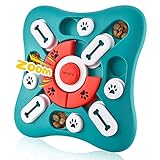
- 【PRODUCT SIZE】10 inch*10 inch*1.3 inch.
- 【3 WAYS TO PLAY, UPGRADE SLOW FEEDER】Our dog mental stimulation toys have a unique squeak button in the middle, which make it easier to attract the attention of dogs and cats. Three different difficulty designs and the 16-hole dog treat dispenser design maximize slow feeding time, even beyond 20 minutes.
- 【FUNNY STIMULATING TOYS】All kinds of dogs and cats love the puzzle game of Spin & Slide and the Seek & Hide with their smell sense and paw skills to find food. Combining circular orbit sliding game and linear orbit sliding game, smart dog and cat must move the slider correctly to get the food reward hidden in the maze.
- 【NON-REMOVABLE PARTS DOG PUZZLE】Our dog treat puzzle is made of non-toxic materials, very durable and suitable for pets to play for a long time. This dog toy has no removable parts because the design has built-in play parts that fold tightly and won't fall off easily.
- 【ANTI-SLIP & EASY TO CLEAN】: The four corners of the bottom are equipped with four anti-skid pads, which can be well fixed during the dog's slow food process; It is easy to clean, also dishwasher safe.
Why does my dog destroy things only when I leave?
Absence-only destruction can be an anxiety response, but it can also result from incomplete housetraining, exploratory play, scavenging, outside sounds or confinement distress. A veterinary history and physical examination are needed before labeling the behavior.
Factors that can contribute
The American Animal Hospital Association identifies routine changes, traumatic experiences, limited socialization and individual predisposition as possible contributors. A move, a new work schedule, a household loss or another abrupt change may precede symptoms, but a clear trigger is not required.
Outdated Drivers Are Slowing You Down
One free scan finds every outdated or missing driver and matches the right update for your exact hardware.Free scan · exact hardware matchPC Slower Than It Used to Be?
A free scan shows the junk files, broken settings and background clutter dragging Windows down - then fixes them in one click.Free scan · Windows 10 & 11Conditions to rule out
- Medical problems or pain: illness can produce elimination, vocalization or restlessness. Merck recommends examination and indicated testing before a behavioral diagnosis.
- Noise aversion or outside stimuli: construction, sirens, neighbors or wildlife may trigger episodes that occur even when the dog is not truly alone.
- Confinement anxiety: a dog may panic in a crate or closed room but remain comfortable when loose. Confinement can therefore amplify a separation problem or be the primary trigger.
- Incomplete housetraining: accidents that occur at other times are less specific to separation.
- Exploratory play or scavenging: these behaviors are usually not paired with the autonomic signs and frantic escape attempts typical of panic.
How is separation anxiety diagnosed?
The most reliable practical evidence is a recording of the dog home alone. The American Veterinary Society of Animal Behavior says video of a dog while home alone is the most effective and accurate way to tell whether separation anxiety is present.
Make a useful recording
- Position an indoor camera or phone so it shows the dog’s resting area and likely exit points. Video recording is optional equipment, but the recording itself is important evidence.
- Capture the first part of an ordinary absence, including departure preparations such as picking up keys or putting on shoes.
- Record the time of the first vocalization, pacing episode, elimination, destructive act or escape attempt.
- Check whether the dog remains calm, settles after an initial response, or escalates continuously.
- Share the recording and a written timeline with your veterinarian.
Video can also reveal another trigger, such as a noise, and lets you judge whether a training absence stayed below the dog’s threshold. If even a very short departure causes escalating distress, stop lengthening absences and obtain veterinary behavior guidance.
Also popular on Amazon

- SLOW FEEDER FOR FAST EATERS — Narrow the food flow, and a 30-second gulp stretches into a 5-to-60-minute meal.
- SPIN TO EAT — Your dog spins the clear top with a paw, kibble drops into the center bowl, and every bite is earned.
- YOU SET THE DIFFICULTY — Open the outlet for beginners, narrow it for pros. One bowl your dog never outgrows.
- HOLDS A FULL MEAL, 4 CUPS — Room for a Lab's dinner, not a handful of treats, so it replaces the everyday bowl.
- SMALL, MEDIUM, AND LARGE DOGS — Wider than a dinner plate and low to the floor, it feeds Chihuahuas to Great Danes.
What should I do immediately to prevent panic?
Management is the first part of treatment: reduce the number of absences that trigger a full panic response while you build new skills. Repeated episodes can worsen fear and make later training harder.
Arrange temporary care
When possible, use a professional sitter, trusted friend, family member or dog daycare so the dog is not left alone beyond its current tolerance. Merck lists sitters and daycare as useful options when owners cannot bring a dog to work. This is a management bridge, not a cure; continue the behavior plan while those arrangements are in place.
Do these 3 things before closing this tab:
1Scan for outdated or missing drivers - takes under a minute2Clear out junk files and repair common Windows errors3Fix the driver behind crashes, sound loss and screen glitchesSet up a comfortable environment
- Provide a quiet rest area only if the dog already chooses and relaxes there. Do not force a crate or closed room if confinement increases distress.
- Meet age- and breed-appropriate exercise needs and offer food-based independent activities, such as a puzzle feeder, treat-dispensing toy or safe chew. These items are optional enrichment, not treatment by themselves.
- Keep departures and arrivals low-key and predictable. Avoid dramatic goodbyes that make the departure event more salient.
- Use reward-based interaction and a consistent daily routine so rest and independent activity are practiced before an absence.
How do I train a dog to stay alone?
Behavior modification teaches that brief, predictable separations are safe. Every repetition must end before anxiety rises; pushing through panic is not desensitization.
For mild separation-related distress
Begin relaxation training while you are still home. Reward the dog for settling on a mat, resting at a distance or engaging quietly with a food activity. Pair short periods of independent activity with food so being apart predicts something positive. Gradually add distance and duration only while the dog remains loose-bodied and calm.
Also popular on Amazon

- 2 Levels in 1 Toy: start your pups off with a level 1 puzzle, add some treats in the base compartments and watch your dogs get their tasty reward by nudging the lids. For dogs who have mastered level 1, for added challenge in level 2, just put some treats in the top compartments, teach your dogs to press the top cover to dispense treats down into the base compartments and finally enjoy their reward
- Slow Feeder: The large capacity top transparent granary saves you the hassle to refill dog food frequently. The product can also be used as a slow feeder utensil for your dogs, which promotes healthy ingestion by slowing down eating speed by over 10x. Great for large and small dogs
- Not Easy to Tip Over: 4 non-slip rubber mats and weighted base hold the dog puzzle toy firmly in place when dogs eat and nudge and prevent the toy from tipping over
- We Prioritize Safety: the dog puzzle toys are designed with your pet’s health in mind, made of durable food-grade PP materials. Non-removeable parts make it safe and easy to clean. And you can give puzzles toy to your dog or directly out of the box, just no assembly!!
- Trains Dog’s Intelligence: interactive treat puzzle game challenges your puppies to get their reward of treats, works your dog's mind while reducing boredom and destructive behavior like chewing, digging and excessive barking. Size: 4.2 inch height
For moderate or severe distress
Use graduated departures, ideally with guidance from a veterinarian experienced in behavior. Choose a novel safety signal, such as a particular phrase or object, and present it only before successful calm absences.
- Identify a starting absence that the recording shows the dog can tolerate without distress; this may be only a few seconds.
- Give the safety signal, leave quietly and return before the dog crosses its anxiety threshold.
- Review the video after every repetition. If pacing, whining, panting, vigilance or another early sign appears, shorten the next absence.
- Increase duration in small, varied steps rather than doubling it automatically. Include easy repetitions so calm behavior remains reliable.
- Practice departure cues separately when needed: pick up keys, put on a coat or open the door, then remain home until the dog stays relaxed.
Merck cautions that a graduated protocol can take months. Progress is measured by calm behavior and recovery, not by a fixed calendar. A veterinary behaviorist can design the sequence when the dog cannot remain below threshold for even brief absences.
The Tool Desk
Outbyte Driver Updater FREEScan for outdated or missing drivers - takes under a minuteDriver Scan →Outbyte PC Repair FREERepair Windows errors before they cause bigger problemsFix Now →Does my dog need medication for separation anxiety?
Medication is a veterinary decision. It may be appropriate when distress is moderate or severe, when panic prevents any learning, or when management cannot avoid necessary absences. The goal is to lower anxiety enough for behavior modification to work, not to sedate the dog or replace training.
Medications described for canine separation anxiety
| Option | What the cited veterinary sources establish | How it fits the plan |
|---|---|---|
| Fluoxetine | Merck Veterinary Manual and VCA describe it as an FDA-approved U.S. canine separation-anxiety medication. | Used under veterinary supervision with a comprehensive behavior program. |
| Clomipramine | Merck Veterinary Manual and VCA describe it as an FDA-approved U.S. canine separation-anxiety medication. | Used as an adjunct to behavior modification, with veterinary monitoring. |
| Tessie (tasipimidine oral solution) | The U.S. Food and Drug Administration approved it on May 6, 2026, for canine separation anxiety and noise aversion. It is prescription-only, typically given one hour before the expected trigger, and may be given up to three times in 24 hours with at least three hours between doses. | Discuss trigger timing, other medicines and safety with the prescribing veterinarian; do not copy a dose from another dog. |
The FDA describes Tessie as the first FDA-approved treatment for both noise aversion and separation anxiety in dogs. Approval and labeling apply in the United States; availability and approved products can differ elsewhere. Never give a human medication, change a dose or combine products without the treating veterinarian.
Also popular on Amazon

- Four Challenges & Levels 1-3: Multiple games with a flip game and a linear track sliding game, all requiring dogs to learn steps and find treats. This puzzle is designed to be more fun and difficult, with more unique ways to play. It can enhance your dog's IQ and train their sense of smell
- Prolong the Feeding Time: The 14-hole food storage slow feeder has four ways to play, which is effective in slowing down the dog's eating speed. It is also beneficial to the dog's physical and mental health by increasing the time and difficulty of acquiring food, thus avoiding gastrointestinal issues caused by indigestion
- Safe Materials & Cleanable: Furry friends can safely play with this toy, which is made of food-safe and long-lasting materials. Additionally, it is easy to clean with warm water and soap after use
- Six Silicone Anti-Slip Pads: Six silicone anti-slip pads with high resistance ensure a firm grip and prevent the item from sliding to one side during feeding
- Warm Tips: When playing with the puzzle, please keep your dog with you to prevent any possible destruction of the toy. The toy has a tight design of built-in game components, so you don't need to worry about them being easily dislodged and swallowed by your dog
What should I avoid doing?
Do not scold or punish barking, destruction or house-soiling after you return. The dog cannot connect a delayed punishment with the earlier behavior, and punishment can increase fear. The American Veterinary Society of Animal Behavior warns that both punishment and repeated panic can worsen the problem.
- Do not force a crate, room or other confinement that reliably triggers escape behavior.
- Do not leave the dog alone for progressively longer periods in the hope that it will “get used to it.”
- Do not treat a camera, toy, supplement or pheromone product as a standalone cure.
- Do not interpret quiet video as proof of recovery if the dog is frozen, hypervigilant or unable to eat; discuss the full pattern with your veterinarian.
When should I contact a veterinarian or veterinary behaviorist?
Arrange a veterinary appointment when the pattern is new, severe, unclear or not improving with carefully managed training. A physical examination is especially important for sudden behavior changes, older dogs or any sign of pain or illness.
Free tools Windows power users keep installed
One-click scans. No signup required.
Seek prompt help for self-injury, severe escape attempts, vomiting, refusal to eat, collapse, or distress that prevents even the shortest training absence. A veterinary behaviorist is appropriate when medical causes remain possible, confinement and separation triggers are difficult to distinguish, or a well-monitored plan is not progressing. Bring the video, an absence log and a list of all medications and supplements.
How should I monitor progress?
Keep a simple log with the departure cue, planned absence, first sign of tension, peak behavior, recovery time and whether food was accepted. Review recordings regularly rather than relying on the condition of the house when you return. A successful step is one in which the dog remains below threshold and can resume normal rest or eating; if that changes, return to the last easy step and consult your veterinarian if setbacks persist.
Also popular on Amazon

- 【Size】: L9.44" * W9.44"* H1.14" suitable for cats, puppies and small dogs.
- 【Interactive Dog Toys】This is a interactive puppy puzzle , which can easily become the closest companion and toy for your puppies and cats, and will release pressure for dogs. Find food by sliding parts to improve eating pleasure and IQ.
- 【Slow Feed Bowl】This encourages pets to eat at a slower speed, helps to slow down the feeding time to help the dog digest, and can provide your dog with a variety of healthy snacks.
- 【Slow Feede toys】 Use this educational game toy to exercise the dog’s brain, which will help meet the dog’s instinct needs, train the pet’s sense of smell, and let the dog enjoy feeding when using the nose or paw to move the slider, while providing spirit stimulate.
- 【Dog toys】No toy is indestructible. Do not leave toys with unsupervised pets. Remove and replace toy if damaged.
Frequently Asked Questions
Can separation anxiety and noise aversion happen in the same dog?
Yes. A dog may panic when alone, react to a specific sound, or experience both triggers. Recordings that capture the environment can help distinguish the trigger, and your veterinarian can choose a plan that addresses each problem rather than assuming every episode is separation-related.
Is a crate helpful for every dog with separation anxiety?
No. A crate is suitable only when the dog already treats it as a safe resting place. If confinement produces frantic scratching, escape attempts or heavier panting, use a larger safe area and have the veterinarian assess confinement anxiety.
What’s actually slowing this PC down?
Pick the symptom - the matching free tool is one click away.
Can daycare replace treatment?
Daycare can prevent panic during unavoidable absences, which protects the training process. It does not teach the dog to remain calm alone, so pair the arrangement with graduated-departure work and periodic veterinary review.
What information should I bring to a behavior appointment?
Bring recordings from the first minutes alone, a timeline of departure cues and symptoms, recent routine changes, medical records, and every drug or supplement the dog receives. Note whether the dog eats, sleeps and eliminates normally when someone is home; that context helps separate anxiety from medical or environmental causes.





Leave a Reply