For most households, no. A Patagonian cavy—more commonly called a Patagonian mara—is a 8–16-kilogram (15–35-pound), fast, nondomesticated rodent that may live for about 14 years in human care. It needs extensive secure space, a carefully managed social arrangement, specialized nutrition, experienced veterinary support, and lawful documented sourcing.
Keeping one may be possible in an exceptional sanctuary or zoological-style facility. For an ordinary family looking for a manageable companion, a domesticated species is the more responsible choice.
As an Amazon Associate I earn from qualifying purchases.
Why a mara is not an oversized guinea pig
The Patagonian cavy is also called the Patagonian mara. Its scientific name is Dolichotis patagonum, and it belongs to the cavy family, alongside guinea pigs and capybaras. That relationship can make a mara look like an unusually large pet guinea pig, but the comparison is misleading: guinea pigs are domesticated companion animals, while maras are large, fast, nondomesticated rodents adapted to open landscapes.
Do these 3 things before closing this tab:
1Fix the driver behind crashes, sound loss and screen glitches2Clear out junk files and repair common Windows errors3Scan for outdated or missing drivers - takes under a minuteAdult maras commonly weigh about 8–16 kilograms (15–35 pounds), depending on the individual and source. Zoo profiles report a captive lifespan of roughly 14 years, with some estimates extending to 14–15 years. Bringing one home is therefore a decade-plus commitment to an animal that may remain behaviorally demanding throughout its life.
#1 Best Overall

- 🐹 Protective Liner – This guinea pig cage is designed with a waterproof liner placed outside the frame, effectively preventing pets from chewing and ensuring long-lasting use.
- 🌟 Escape-Proof Design – This bunny cage features a fully enclosed structure with ultra-dense 0.6'' wire mesh, creating a highly secure enclosure that prevents small pets from escaping while effectively blocking external disturbances.
- 🚪 Convenient Door Opening – The waterproof liner includes a reserved space for the cage door, allowing it to open smoothly so pets can freely enter and exit without obstruction.
- 🧩 Secure Hook Connection – The liner attaches with hooks, keeping it stable while making removal and reinstallation simple. Smart design makes cleaning your rabbit cage faster and easier.
- 🔧 Customizable Layout – Create the perfect habitat with freely connectable panels. Whether you need a spacious guinea pig cage, a compact rabbit cage, or an expandable bunny cage, the modular design adapts to your space and your pet’s needs.
Long legs, powerful hindquarters, and a bounding or “stotting” gait help the species move quickly across the arid grasslands and scrublands of central and southern Argentina. Those adaptations are useful clues about what the animal needs. A mara is built to travel, graze, seek shelter, and interact with a bonded companion—not to spend most of the day in a cage or ordinary indoor exercise pen.
The space requirement is the first major obstacle
No validated minimum private-pet enclosure size was established in the available species guidance. That means it would be irresponsible to give a precise square-footage figure and present it as an accepted standard. It does not mean that a small enclosure is acceptable.
The scale of the mara’s natural environment shows why. The Smithsonian reports that a pair’s drifting home range can reach approximately 242 acres, or 98 hectares, depending on food availability. A private facility cannot reproduce a wild home range, but this comparison demonstrates that sustained movement is part of the animal’s ecology. It is not a recommendation to provide 242 acres, nor a substitute for a professional enclosure assessment.
The Tool Desk
Outbyte PC Repair FREEClear out junk files and repair common Windows errorsFree Scan →Outbyte Driver Updater FREEFix the driver behind crashes, sound loss and screen glitchesFind Drivers →A responsible facility would need substantially more than a rabbit hutch, dog kennel, backyard pen, or large indoor cage. It would need to provide:
- Room for sustained running and exploration: Mara care should be planned around movement, not merely around the animal’s ability to stand, turn, and lie down.
- Secure boundaries: The enclosure must prevent escape and withstand an athletic animal that can move quickly and may dig or push against weak points.
- Predator exclusion: The animal needs protection from predators and other household or neighborhood animals.
- Shelter and weather protection: Outdoor housing must include safe areas for resting and protection from unsuitable weather and temperature conditions.
- Naturalistic opportunities: Digging, denning, grazing, browsing, and foraging opportunities should be considered rather than treating the enclosure as an empty run.
- Separate holding space: Animals may need to be separated during introductions, illness, incompatibility, breeding management, transport, or emergencies.
- Cleanable feeding and sanitation areas: The design must allow daily observation, cleaning, water management, and removal of spoiled food or waste.
The enclosure should be designed and inspected before the animal arrives. Buying the mara first and attempting to expand a pen later creates an immediate welfare and escape risk.
Maras usually need a carefully managed social plan
Patagonian maras generally travel in bonded male-female pairs. Zoo sources describe them as monogamous or strongly pair-oriented. A solitary mara may therefore lack an important part of its normal social environment, but purchasing two animals is not a complete care plan.
Pair compatibility matters. So do accurate sex identification, age, introduction procedures, access to separate spaces, and a reliable plan to prevent unwanted breeding. Two unfamiliar animals cannot simply be placed together and assumed to bond safely. Conversely, separating a compatible pair whenever convenient can create its own welfare problem.
Recommended Free Tools
The species also has unusual communal breeding behavior. Females generally produce one to three young after a gestation of approximately 100 days. Young from several pairs may be raised in shared burrow systems. Captive animals can reproduce more frequently than wild animals, so accidental breeding can quickly become a housing and placement crisis.
Rank #2

- Two Story Double Unit Design: Features 4-tiers durable frame cage with full middle floor and 1/2-inch wire spacing, allowing pets to access between floors with ladder and durable wrought iron construction that is easy to assemble
- Tight Horizontal Wire Spacing: Narrow 1/2-inch wire spacing recommended for a wide variety of small animal critters to prevent escape and getting stuck, while allowing pets to fulfill their instinct to climb and explore in a secure environment
- Durable Front Access Doors: Features double large hinged front doors measuring 15 inches by 18 inches with improved safety lock, top hook door for easy access from the top measuring 8 inches by 9 inches, and includes 2 easy adjustable washable solid platforms and 2 anti-slip solid ramps safe for small animals
- Large Spacious Dimensions: Measures 24-inches long, 17.5-inches wide, and 53.5-inches high when placed on the rolling stand, providing ample space for small animals to move and play
- Complete Accessories Package: Includes 1 hammock, 1 water bottle, and 1 food bowl to provide everything needed for your small pet's comfort and care
Before acquiring any mara, an owner would need answers to questions such as:
- Are the animals confirmed to be male and female, or are they same-sex companions?
- How will introductions and bonding be managed?
- Where will an incompatible animal be housed?
- How will breeding be prevented if a mixed-sex pair is not intended for reproduction?
- What will happen to offspring if breeding occurs?
A qualified exotic-animal veterinarian or experienced zoological professional should guide the social and breeding plan. Neither forced solitude nor indiscriminate co-housing is a responsible default.
Diet is specialized, even though the species eats plants
Maras are herbivores. In the wild they primarily consume grasses and other plant material. Zoo diets may include hay, greens, vegetables, fruit, browse, and institution-specific formulated feeds. The Smithsonian also describes coprophagy—the consumption of feces—as part of normal nutrient recovery in the species. That behavior is normal and should not be suppressed simply because it looks unpleasant to people.
Crashes, No Sound, or Screen Glitches?
Random freezes, missing sound and display glitches usually trace back to one bad driver. Find and replace yours safely.Free scan · under a minuteWindows Errors? Fix Them Before They Spread
Repair common Windows errors and clear accumulated junk for a smoother, more stable PC - no reinstall needed.Free scan · no reinstallHowever, “herbivore” does not make a generic rabbit or guinea-pig feeding chart appropriate. Merck’s guidance on exotic and zoo-animal nutrition notes that species-specific requirements can be uncertain and that diets need to account for anatomy, feeding ecology, life stage, and body condition. A mara’s actual ration should be developed with an appropriately qualified veterinarian or zoo/exotic-animal nutrition professional.
A prospective owner should expect to manage:
- a consistently high-fiber, grass-oriented feeding strategy;
- fresh, clean water and hygienic feeding equipment;
- careful monitoring of appetite, feces, body weight, and body condition;
- dental observation, since continuous plant-based feeding and normal tooth growth make oral health important;
- safe browse and produce selected for the individual animal and its care plan;
- sanitation and prompt attention to changes in gastrointestinal function; and
- parasite prevention and other preventive care determined by the veterinarian.
There is not enough species-specific evidence in the available sources to responsibly prescribe pellet amounts, vitamin supplements, fruit limits, medication, or a complete home ration. A seller’s generic chart should not replace professional nutritional planning.
Veterinary access must be arranged before acquisition
Finding a clinic after the animal becomes sick is too late. Before acquisition, find an exotic-mammal veterinarian who will explicitly discuss care for an adult Patagonian mara. Not every clinic that treats dogs, cats, rabbits, or guinea pigs will have the facilities, equipment, experience, or willingness to treat a large nondomesticated caviid.
Ask the veterinarian or referral hospital whether it can provide or coordinate:
Quick wins for a faster PC:
Fix the driver behind crashes, sound loss and screen glitchesFind Drivers →Clear out junk files and repair common Windows errorsFree Scan →- routine examinations and body-condition monitoring;
- diagnostic imaging and laboratory work;
- safe handling and anesthesia for a large, fast exotic mammal;
- emergency treatment for gastrointestinal, traumatic, dental, or musculoskeletal problems;
- parasite prevention and nutrition support; and
- referral to a zoo-and-wildlife specialist when the case exceeds the clinic’s expertise.
Merck identifies housing, diet, veterinary care, and social interaction as recurring welfare pressure points for exotic and nontraditional pets. In practical terms, veterinary availability is a precondition for ownership, not an optional benefit to investigate later. If no qualified veterinarian agrees to treat the animal, the proposed home is not ready.
Rank #3
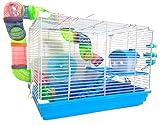
- 2-Levels Blue Base With White Wire Body: Small animal critter cage with crossover entrance tube tunnel with 2.36 inch (6mm) diameter; cage allows for expansion with various other brands accessories
- Narrow Bar Space Design: 3/8-inch bar spacing with horizontal and vertical bars for crawl exercises
- Front Access Door: Convenient 5.5 x 5.5-inches front access door for easy interaction with your pet
- Quality Constructions: Ensures safe home environment with size 19 x 12 x 15 inches height and 3-inches deep tray for extra bedding and playing area
- Complete Set of Accessories Included: 1 x 5-inch exercise running wheel; 1 x hide house; 1 x water bottle with auto watering solution; 1 x transparent clear food bowl; 1 x crossover tube tunnel
Can you legally own a Patagonian mara?
There is no responsible nationwide yes-or-no answer for the United States. Legality can depend on federal rules, state wildlife law, county or city ordinances, zoning, animal-welfare requirements, and exotic-animal permits. Rules can also change, and a property that allows one type of exotic animal may prohibit another.
Federal wildlife-import and trade rules may become relevant if the animal is imported, exported, transported across borders, or connected with regulated wildlife commerce. State and local requirements may apply even when the animal was legally bred in the United States. The presence of maras in a regulated zoo does not prove that a private household may keep one: an institution may operate under different permits, professional standards, and inspection requirements.
Before paying a seller or arranging transport, request written confirmation from the relevant authorities. Depending on the location and circumstances, that may include:
- the state wildlife or natural-resources agency;
- the county and city animal-control or permitting offices;
- the local zoning office, including any rules for agricultural or residential property;
- the applicable animal-welfare authority; and
- the USDA or another federal authority, where the activity and jurisdiction make that relevant.
Do not rely on a seller’s statement that maras are “legal everywhere,” on a social-media listing, or on the fact that another private owner has one. Keep permits, correspondence, purchase records, transport documents, and provenance records with the animal’s permanent files.
Provenance and conservation should affect the decision
The Smithsonian identifies habitat loss, hunting, and competition with agriculture as important threats to Patagonian maras and reports a near-threatened classification in the conservation assessment it cites. That does not justify claiming that every captive mara was taken from the wild, nor does it mean private ownership automatically harms wild populations. It does mean that undocumented or opportunistic sales deserve particular caution.
A responsible source should be able to explain the animal’s:
- lawful origin and whether it was captive-bred;
- parentage and identifying records;
- health and veterinary history;
- sex, age, and social history;
- legal status and required paperwork; and
- placement or surrender plan if the owner can no longer provide care.
If a seller cannot document where the mara came from, whether it can legally be transferred, or what happens if the placement fails, walking away is the responsible choice.
Free tools Windows power users keep installed
One-click scans. No signup required.
Use this suitability test before considering one
A private owner should be able to answer “yes” to every item below before even beginning an acquisition search:
Rank #4
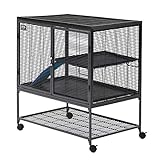
- SPACIOUS HABITAT: Measures 36 x 25 x 38.5 in. with a main level and upper shelf for comfortable living space. The 1/2" horizontal wire spacing safely contains chinchillas, rats, ferrets, sugar gliders & degus while allowing natural climbing behavior.
- DURABLE CONSTRUCTION: Sturdy metal wire design with a gray quartz hammertone finish, Critter Nation resists everyday wear. Complete with removable base pan, textured ramp with cover, and a full-width resting shelf, it's ready for years of use.
- CUSTOMIZE YOUR HABITAT: Height-adjustable design lets you customize the perfect setup for your pet, with a wide expanse shelf and full-width plastic pan floor to maximize play space. Compatible with our Add-On Unit for additional room.
- BUILT FOR DAILY LIFE: Full-width double doors provide maximum accessibility, with a swing-up locking ramp that lets you separate pets or section off areas during cleaning and feeding. Bottom level shelf provides storage area for pet accessories.
- BECAUSE LIFE GOES BETTER WITH PETS: A family-owned business based in Indiana, MidWest Homes for Pets brings over 100 years of pet product expertise and a commitment to quality, rigorous safety testing, and excellent US-based customer service.
- Legality: Written confirmation allows possession at the exact property and under the exact proposed arrangement.
- Facility: A secure, spacious, predator-resistant, weather-protected enclosure with running space and separate holding areas is already complete.
- Social management: There is a species-appropriate companionship plan, a safe introduction process, and a breeding-prevention strategy.
- Veterinary care: A willing veterinarian with relevant exotic-mammal experience has agreed to routine and emergency care.
- Nutrition: A professional has helped develop a high-fiber feeding plan rather than a generic small-pet diet.
- Money and time: The household can fund specialized food, enclosure upkeep, diagnostics, anesthesia, emergency treatment, and daily observation without relying on a best-case budget.
- Records: The animal’s legal origin, health history, social history, and transfer paperwork are complete.
- Lifetime placement: There is a realistic plan for travel, illness, housing changes, incompatibility, offspring, and permanent surrender if necessary.
If any answer is “no,” do not acquire the animal. If every answer is “yes,” the situation may still be more appropriate for a sanctuary, rescue, or professional zoological-style facility than for an ordinary home.
Independent reader supportYour contribution helps us test, update, and keep practical guides available for everyone.Why generic pet products are not the solution
The central problem is not finding a large enough cage or choosing the right bag of pellets. No species-specific private-pet enclosure standard or fully validated home-care shopping list was established in the available evidence.
Generic rabbit and guinea-pig supplies may be used in some professional facilities, but that does not make a rabbit hutch, exercise pen, harness, litter product, hay, pellet, or fencing system automatically suitable for a mara. Recommending one as a normal purchase could falsely suggest that the animal’s needs are understood and met.
The same caution applies to online care manuals. A product marketed for a related species is not a substitute for mara-specific veterinary and facility planning. The right first investment is not a shopping cart; it is legal verification, a professionally reviewed enclosure, and an established veterinary relationship.
Who might realistically keep one?
A highly experienced keeper might be able to provide appropriate care when the animal is housed in a lawful, professionally supported facility designed for exotic or zoological species. That keeper would need more than enthusiasm or experience with rabbits and guinea pigs. They would need the resources, staff or support network, property, documentation, and contingency planning to manage a large nondomesticated mammal for approximately 14 years.
For an average family seeking a friendly, manageable companion, a domesticated species is the more responsible choice. A mara may look appealing and charismatic, but appearance does not predict suitability as a household pet.
Bottom line
For most people, you should not keep a Patagonian cavy as a pet. Its size, speed, pair-based social life, need for extensive secure space, specialized diet, long lifespan, veterinary demands, legal complexity, and conservation context place it well outside normal companion-animal care.
In an exceptional sanctuary or zoo-style setting, keeping a mara may be possible after a detailed regulatory and husbandry assessment. That is a specialized animal-management decision—not a normal pet-shopping decision.
Best Value
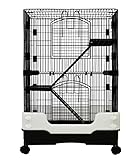
- Small Animal Cage: This 3-tier critter cage measures 25"L x 17"W x 38"H with a 0.65-inch wire spacing, perfect for housing small pet rodents such as rats (including fancy and Dumbo rats), ferrets, chinchillas, guinea pigs, and small rabbits/bunny (such as Holland Lop, Netherland Dwarf, and Lionhead)
- Anti-Spill Guard Design: The rat cage bottom features a splash guard that keeps bedding, urine, and food debris neatly contained. It helps prevent messes, reduces cleaning frequency, and keeps your home clean
- Non-Slip Ramp & Spacious Platform: The wide platform offers a comfortable resting area for your pet, while the non-slip textured ramp ensures safety. Its gentle incline prevents falls and injuries, helping your pet climb with confidence and stay active and healthy
- Easy to Clean: Equipped with detachable, paw-friendly plastic floor grates that filter out food debris and waste, keeping the habitat clean and your pet tidy. The 1-inch removable tray holds more litter, while the rounded-corner base eliminates dead spots for effortless cleaning. All parts of the chinchilla cage are fully detachable—simply release the clips and lift the wire frame to separate the base for quick, thorough maintenance
- Escape-Proof Door Lock: Features a wide front door that allows easy access for your furry friends. The upgraded two-finger locking system of ferret cage provides double protection—preventing clever escapes and keeping your pet safe from other animals, so you can stay worry-free
Source note: The animal-history and husbandry points above draw on zoo profiles from the Smithsonian and other zoological institutions. General exotic-pet welfare and nutrition cautions reflect Merck Veterinary Manual guidance; legal considerations reflect U.S. Fish and Wildlife Service and USDA National Agricultural Library resources. Requirements vary by jurisdiction and should be verified with the relevant authorities and veterinarian.
Frequently Asked Questions
Can a Patagonian cavy live inside a house?
A Patagonian mara is not an indoor pet in the usual sense. Its size, speed, need for sustained running, and need for a secure outdoor-style facility make a house or ordinary indoor enclosure unsuitable as a complete home. An exceptional zoological or sanctuary facility may incorporate indoor shelter, but it would still need substantial secure space and professional care.
Does a Patagonian mara need a companion?
Maras are generally pair-oriented and often described as monogamous or strongly bonded to a mate. However, simply buying two animals is not enough. Compatibility, introductions, sex, breeding prevention, and separate housing for emergencies must all be planned. Solitary housing can conflict with their social biology, while forced co-housing can cause injury or unwanted reproduction.
How large should a mara enclosure be?
No reliable species-specific minimum enclosure size was established in the available guidance. The animal’s reported wild home range—up to about 242 acres for a pair depending on food availability—is ecological context, not a private-housing requirement. It does show why a rabbit hutch, dog kennel, or ordinary exercise pen is not an adequate baseline.
Is it legal to own a Patagonian cavy?
There is no universal U.S. answer. Federal wildlife rules may apply in some circumstances, while state, county, city, zoning, animal-welfare, and exotic-animal permit rules may be more restrictive. Obtain written confirmation from the relevant wildlife agency and local authorities before acquisition or transport.
What does a Patagonian mara eat?
Maras eat grasses and other plant material, and zoo diets may include hay, greens, vegetables, fruit, browse, and formulated feeds. The actual ration should be developed with a veterinarian or qualified zoo/exotic-animal nutrition professional. A generic rabbit or guinea-pig feeding chart should not be assumed to be correct.
The Bottom Line
Usually, no. A Patagonian cavy is a large, fast, nondomesticated, pair-oriented animal requiring a specialized enclosure, professional nutrition and veterinary support, lawful documented sourcing, and a lifetime placement plan. It may be manageable in an exceptional zoological or sanctuary setting, but it is not a practical pet for an ordinary household.
What’s actually slowing this PC down?
Pick the symptom - the matching free tool is one click away.
Quick Recap
Product prices and availability are accurate as of the date/time indicated and are subject to change. Any price and availability information displayed on Amazon at the time of purchase will apply.




