
Some links on this page are affiliate links: if you buy through them we may earn a commission, at no extra cost to you.
The most reliable clue that an older rescue dog hurts is a change from that dog’s own normal routine, not necessarily a cry. New stiffness, reluctance to rise or use stairs, altered posture, panting at rest, appetite or toileting changes, disturbed sleep, withdrawal, or sensitivity to touch all deserve attention. Dogs may still wag, greet you, or have normal-looking vital signs while painful. Arrange a veterinary appointment for any new or persistent change; go to an emergency animal hospital for breathing difficulty, pale or blue gums, collapse, seizures, major trauma, poisoning, a swollen painful abdomen with dry retching, or sudden inability to stand.
How can I tell if my older rescue dog is in pain?
Compare your dog with its recent baseline. Pain often appears as several small deviations—moving less, taking longer to stand, sleeping differently, avoiding handling, or losing interest in food—rather than one dramatic symptom. A dog’s normal behavior, history, and home environment matter because stress at a clinic can hide signs and because chronic pain may leave vital signs looking normal.
As an Amazon Associate I earn from qualifying purchases.
Write down what changed, when it started, and whether it is constant or comes and goes. A short video of the behavior at home can show your veterinarian something that does not happen during an appointment.
Which movement and posture changes suggest pain?
Mobility changes are among the most useful clues, especially in an older dog whose reduced stamina might otherwise be dismissed as aging.
Popular on Amazon

- 【 Sturdy & Stable Dog Car Ramp 】The large dog's pet ramp is made of high-grade aluminum which makes the folding dog ramp stairs sturdy but more lightweight, our latest upgraded and improved version of the ramp includes an internal load-bearing crossbar to ensure long-lasting stability and support up to 250 lbs. Its mechanically designed structure provides strong support. Perfect for small, medium & large dogs' indoor and outdoor use when getting into a vehicle, car, SUV, truck, couch, or high bed
- 【 Anti-slip & Comfortable Dog Ramp 】Our folding dog ramp features a non-slip gray carpet surface, it is made of dense anti-tear plastic fibers with Loofah-like texture grip, provides plenty of traction, and absorbs the impact as the dog steps on, relieves the pressure on the paws and joints and reduce the pet's muscle ache and joint tension caused by jumping. The top of each step has an anti-slip rubber-like surface, which ensure that your pet will not slip while walking in any weather conditions
- 【 Longer Length for Gentle Angle】 The length of dog car ramps is increased to 63 inches, and a width of 17.3 inches, allowing for a smoother angle between the pet ramp and the car, better reducing the dog's muscle and joint straining caused by jumping, easing pain and better protecting against injury. Complete with a safety rope and stainless steel buckles, this ramp offers extra security
- 【 Four-Fold for Portability & Multifunctional 】: The dog ramp with extra long length of 63 inches and a width of 17 inches. Unlike other dog loading ramps on the market can only be two-fold or three-fold, our dog vehicle ramps can be quadruple folded into a convenient size of 17.5*17*5.5inch. The dog ramp stair is perfect for your dog's entering cars, SUVs, trucks, high beds, and couches
- 【 Easy to Store & Carry 】: The outdoor dog ramp can be folded flat, only 5.5 inches high, and weighs 13.5 pounds when folded, making it very easy to store for storage. You can easily store it in your car, living room, and bedroom without taking up too much space. Plus the padded foam handle and lightweight design are more convenient to carry anytime and anywhere. so you can easily carry it indoors or outdoors. Have your best friend join you on vacation with no trouble
Watch walking, stairs, and transitions
- Limping, stiffness, or repeatedly shifting weight from one leg to another.
- Reluctance to walk, play, climb stairs, jump, sit, lie down, or get up.
- Shorter walks, less endurance, or stopping sooner than usual.
- Difficulty on slick floors, hesitation at thresholds, or using the front legs to pull the body upright.
Record your dog walking toward and away from the camera, rising from a bed, turning, and negotiating a familiar step. Do not make the dog repeat a movement that appears painful just to obtain a video.
Look at the back, head, and tail
- An arched or hunched back, low head carriage, or a tucked or unusually held tail.
- Sitting on one hip or standing with an uneven stance.
- A guarded posture in which the dog avoids fully loading a limb or keeps the body rigid.
These signs identify a change that needs assessment; they do not identify the exact joint, muscle, nerve, or internal organ involved.
Recommended Free Tools
What behavior and interaction changes should I watch for?
Pain can alter how a dog settles, sleeps, communicates, and accepts ordinary contact. A friendly dog may become withdrawn, while another may become unusually clingy.
Restlessness, withdrawal, or irritability
- Pacing, repeatedly changing position, or being unable to settle.
- Sleeping substantially more or less than usual.
- Withdrawing from family, becoming unusually needy, or losing interest in normal interaction.
- Growling, snapping, irritability, or resistance to brushing, lifting, or other handling that was previously tolerated.
Vocalization and self-directed behavior
- Whining, whimpering, groaning, yelping, or a sudden increase in vocalization, particularly when touched or lifted.
- Licking or chewing one area repeatedly.
- Stopping normal grooming.
Some dogs vocalize very little. Silence is not evidence that a dog is comfortable, and a wagging tail or enthusiastic greeting does not rule out pain.
Which changes in appetite, breathing, face, or toileting matter?
Daily habits can reveal discomfort even when a dog’s walk looks almost normal.
Also popular on Amazon
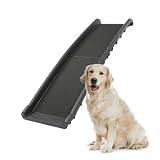
- Folding Travel Ramp: Designed to fit most SUV, van, car and truck models, this foldable lightweight ramp weighs only 10 lbs but is sturdy enough to support small, medium, and large dogs up to 150 pounds; Full dimensions 62" L X 16" W X 4" H
- Safe and Portable: Safety tested featuring high-traction treads, side rails and rubber feet to ensure stability and prevent wobbling, this ramp folds in half and locks with a safety latch for convenient storage between excursions
- Mobility Solutions: We carry a whole line of supplies to help your senior pet get to their favorite spots, including ramps, lift harnesses, collapsible travel crates and truck/SUV hitch steps
- Your Pet Deserves The Best: Explore all our products including leashes and harnesses, bark collars and wireless fences, pet doors, self-cleaning litter boxes and accessories, fountains and feeders, dog and cat toys and more
- Unleash A Lifetime Of Joy: Since 1998 we’ve been on a mission to create places and spaces where pets are happy, healthy and safe; Our US-based customer care experts are available to answer your questions by phone, email or chat
Eating, drinking, weight, and activity
- Reduced appetite or drinking, including eating changes associated with nausea.
- Unexplained weight or activity decline.
- Panting at rest or breathing that is unusual for that dog.
Note when the change occurs and whether it follows meals, movement, rest, or handling. Panting after exertion has a different context from panting while lying quietly, but either can warrant a call if it is new or unexplained.
Facial expression
- Squinting, flattened ears, grimacing, or a worried look.
- A glazed, vacant, or unusually tense expression.
Urination, defecation, and house training
- New house-training accidents.
- Straining to urinate or defecate.
- Changes in how often or comfortably the dog eliminates.
These signs can also occur with illnesses that are not primarily painful, so they are reasons for veterinary evaluation rather than a diagnosis by themselves.
Is my dog slowing down because of age or because something hurts?
Gradual decline is not automatically “just old age.” Chronic pain persists beyond normal tissue healing and is commonly associated with conditions such as arthritis. It can slowly reduce stamina, make rising or stairs difficult, and change sleep or social behavior before an owner sees an obvious limp.
Older dogs may compensate for a long time. A dog that still eats, wags, or greets visitors can nevertheless hurt. Merck notes that vital signs can be normal in chronic pain and can also be altered by fear, anxiety, anemia, or other illness, so a home pattern is more informative than a single temperature, pulse, or breathing observation.
Schedule an examination when a decline is new, progressive, or affecting ordinary activities. A veterinarian can combine your history with observation, palpation, and a physical examination, then decide whether radiographs, blood work, or other diagnostics are appropriate.
What’s actually slowing this PC down?
Pick the symptom - the matching free tool is one click away.
Also popular on Amazon

- Telescoping Travel Ramp: With adjustable sizing to fit any car, minivan, truck or SUV, this ramp extends from 39-72"; Weighing just 13 lbs, it's sturdy enough to support small, medium, and large dogs up to 400 lbs; Full dimensions 72" L X 17" W X 4" H
- Safe and Portable: Safety tested featuring rubber feet, high-traction surface and side rails to prevent slipping or falling; This ramp slides inward and locks with a safety latch for convenient storage between excursions
- Mobility Solutions: We carry a whole line of supplies to help your senior pet get to their favorite spots, including ramps, lift harnesses, collapsible travel crates and truck/SUV hitch steps
- Your Pet Deserves The Best: Explore all our products including leashes and harnesses, bark collars and wireless fences, pet doors, self-cleaning litter boxes and accessories, fountains and feeders, dog and cat toys and more
- Unleash A Lifetime Of Joy: Since 1998 we’ve been on a mission to create places and spaces where pets are happy, healthy and safe; Our US-based customer care experts are available to answer your questions by phone, email or chat
Does being a rescue dog change the pain signs?
Rescue status does not create a separate, validated pain-sign checklist. The practical difference is that previous medical records and the dog’s former routine may be incomplete, so establish a current baseline now.
Build a simple baseline
- How far and how often your dog walks comfortably.
- Whether it uses stairs, jumps, or gets into the car without hesitation.
- Typical appetite, drinking, sleep, grooming, and social interaction.
- Normal tolerance for brushing, touching paws, lifting, and harnessing.
- Usual urination, defecation, and house-training pattern.
Use that baseline to identify deviations. If you recently adopted the dog, several observations over the first weeks can help distinguish a settling-in behavior from a later change; tell the veterinarian what is known and what is uncertain about the prior history.
When should I call the regular veterinarian?
Call or book an appointment for any new or persistent change in mobility, posture, appetite, sleep, elimination, vocalization, touch sensitivity, breathing pattern, or personality. Do not wait for a dramatic cry: dogs can mask pain, and chronic signs may be subtle.
Prepare information before the visit
- Write the date or approximate time the change began.
- Describe what makes it better or worse, and whether it is constant or intermittent.
- List changes in walking, rising, stairs, car entry, rest, eating, drinking, sleep, interaction, and toileting.
- Take short, unedited videos at home of the relevant behavior, including a normal activity for comparison when safe.
- Bring prior records if available and tell the clinic about any medication or supplement your dog receives.
Home photos and videos can reveal movement or responses that are not reproduced in a stressful clinic. A veterinarian will use the history and examination to develop a tailored plan rather than relying on a single owner-completed pain score.
Free tools Windows power users keep installed
One-click scans. No signup required.
Should I use routine care, same-day urgent care, or an emergency hospital?
Choose the fastest level of care that matches breathing and circulation, consciousness and ability to stand, abdominal findings, trauma or toxin exposure, and how quickly the signs developed.
Also popular on Amazon

- Premium Solid Wood Material for Safe Weight Support: This dog ramp is made of durable solid wood with a sturdy structure that ensures stability and safety. Our adjustable dog ramp for couch is perfect for small dogs, short legged dogs, and elderly pets. The safe metal buckle can prevent collapse and sliding during use, always ensuring the safety of your pet.
- 5 Adjustable Height: Pawaboo dog ramp for couch has 5 adjustable heights: 9.8", 13.8", 16.5", 18.5" and 20.5", you can choose the appropriate height according to your needs, helping pets get up and down sofa, and step with ease. As a reliable pet step for dogs to get on sofa, Pawaboo dog ramps for small dogs work for multiple scenarios, easily fitting couch, sofas, windowsills, low bed and chairs to meet your pet’s daily climbing needs.
- Gentle Stairs for Short-legged & Small dogs: Our dog stair helps short-legged dogs and small breed dogs safely climb up and down sofas and steps, protect their spine and joints, and avoid joint pressure caused by dogs jumping. For short legged or small breed puppies, this dog step is the safest alternative that can turn every climb into a comfortable and safe experience.
- Foldable & Portable Design: Featuring a folding design, this lightweight dog ramp measures 16.5" x 12.6" x 5.5" when folded for easy storage. When not in use, the dog stair for couch can be placed under the sofa or bed, stood upright in a closet or leaned against the wall to save space. Its light weight and side handles also make it convenient to carry.
- High Traction & Slip Resistance: The pet dog step ladder is covered with wear-resistant striped fabric carpet. Excellent traction prevents furry friends from slipping or falling while walking on the ramp. It also comes with 5 crossbars to boost slip resistance during climbing for safe ascent.
| Situation | Best next step | Why |
|---|---|---|
| New but stable limp, stiffness, reluctance to rise, appetite or sleep change, touch sensitivity, or personality change | Call the regular veterinarian and arrange an appointment; ask about same-day availability if the change is worsening | Persistent or progressive signs need an examination even when the dog is still alert and comfortable between episodes |
| Noticeable deterioration over hours, repeated vomiting, inability to settle, or pain that is difficult to control while the dog remains conscious and breathing normally | Call a veterinarian or urgent-care service the same day for triage | The speed and severity of the change may make waiting for a routine slot unsafe |
| Breathing difficulty, abnormal gum color, collapse, seizures, sudden inability to stand, major trauma, uncontrolled bleeding, suspected poisoning, or a swollen painful abdomen with dry retching | Go to an emergency animal hospital now; call ahead while transporting if possible | These signs can indicate a rapidly life-threatening problem |
Telehealth or nurse triage may help with direction where legally available, but it is not a substitute for emergency examination when red flags are present.
What dog pain signs mean I should go to an emergency vet?
Seek emergency care immediately for any of the following:
- Labored, noisy, rapid, or open-mouth breathing; pronounced abdominal effort; or weakness associated with breathing.
- Blue, gray, white, or very pale gums.
- Collapse, unresponsiveness, sudden severe weakness, paralysis, or inability to stand.
- Seizures.
- Major trauma, uncontrolled bleeding, or suspected poisoning.
- A swollen or very painful abdomen, especially with repeated unproductive retching, heavy panting, a hunched posture, pale gums, weakness, or collapse. This combination can occur with gastric dilatation-volvulus (bloat).
Keep the car cool and let a dog in respiratory distress use the position that makes breathing easiest. Minimize handling, avoid forcing food or water, and call the hospital for transport instructions if the dog cannot walk safely.
The Tool Desk
Outbyte Driver Updater FREEFix the driver behind crashes, sound loss and screen glitchesFind Drivers →Outbyte PC Repair FREERepair Windows errors before they cause bigger problemsFix Now →What should I avoid inferring from one sign?
No single observation proves or excludes pain. A limp can reflect an orthopedic, neurologic, or paw problem; panting can accompany pain, fear, heat, or illness; and an appetite change can have many causes. Normal-looking vital signs, a wagging tail, and a friendly greeting are not clearance to wait when the overall pattern is abnormal.
No owner-completed tool is validated as a stand-alone diagnosis of acute pain. Use checklists, notes, and videos to support a veterinary assessment, not to replace it.
Also popular on Amazon
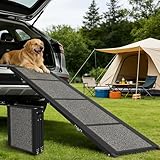
- Non-Slip Rug Surface: This folding dog ramp for car features a high-traction fabric rug with Loofah-like texture grip that keeps paws secure in any weather. The surface absorbs impact with each step, reducing pressure on joints and providing a comfortable, slip-free climb every time. Whether used as a pet ramp for cars or a dog ramp for SUV, your furry friend will enjoy steady footing on every ascent.
- Joint-Friendly 63" Incline: Eliminate dangerous jumps that strain hips and spines. This extra-long pet ramp creates a gradual 63-inch incline that minimizes muscle tension, making it ideal for senior dogs, pets with mobility issues, or breeds prone to joint problems. A safety rope with stainless steel buckles adds extra security during use, ensuring this dog steps for car or vehicle provides peace of mind with every trip.
- Heavy-Duty Aluminum – Supports 250 lbs: Built from high-grade aluminum with an internal load-bearing crossbar, this pet loading ramp delivers exceptional stability without the weight. The reinforced frame eliminates shaking, giving large dogs the confidence to walk up and down safely—whether used as a dog ramp for car, SUV ramp for dogs, or access aid for high beds. Unlike flimsy alternatives, this pet ramp for large dogs is engineered to last.
- Quad-Fold & Easy to Stores: Unlike standard two- or three-fold ramps, this innovative dog ramp folds into four sections, collapsing down to just 5 inches thick. It stores effortlessly in trunks, closets, or under furniture, and the padded foam handle makes it easy to carry wherever your adventures take you. This portable pet ramp for vehicles is always ready when you need it, never in the way when you don't.
- Versatile Use for Indoors & Outdoors: Perfect for more than just vehicles, this multi-purpose dog stairs helps your dog access couches, beds, or elevated surfaces at home. Lightweight yet sturdy, it's the all-in-one solution for keeping your furry friend mobile, independent, and comfortable in any environment. Whether you need a dog ramp for car travel or a reliable pet ramp for daily use at home, this ramp delivers unmatched versatility.
How can I make my dog safer while arranging care?
Reduce activities that clearly trigger discomfort: block unsafe stairs, prevent jumping on or off furniture, and provide secure footing on slippery surfaces. A ramp may reduce stair or jumping demands while you arrange care, but it does not treat the cause and must not delay a veterinary visit. A supportive bed may make settling easier, yet no particular bed has been established as a treatment.
Do not give human pain medicine, leftover prescriptions, or a new supplement unless a veterinarian specifically directs you. Keep a quiet resting area, handle the dog gently, and stop any maneuver that causes struggling or vocalization.
Quick wins for a faster PC:
Clear out junk files and repair common Windows errorsFree Scan →Fix the driver behind crashes, sound loss and screen glitchesFind Drivers →Repair Windows errors before they cause bigger problemsFix Now →Frequently Asked Questions
Can a dog’s pain be intermittent rather than constant?
Yes. Arthritis and other conditions can produce good and bad periods, so a dog may look comfortable during an appointment or at one time of day. Note the timing, triggers, duration, and recovery of each episode and show the pattern to the veterinarian.
What if my dog’s symptoms disappear before the appointment?
Keep the appointment if the change was significant or recurrent. Bring dated videos and notes; resolution between episodes does not explain why the behavior occurred or rule out a condition that needs treatment.
Can I transport a painful dog in a normal car?
If the dog is alert and breathing normally, use a stable, non-slip surface and have another person support it when possible. A dog with breathing difficulty, collapse, or inability to stand needs emergency transport advice; call the hospital first and avoid forcing it into a position that worsens breathing.
How will the veterinarian determine what hurts?
The veterinarian combines your home history with observation, palpation, and a physical examination. Depending on those findings, the clinic may recommend radiographs, blood work, or other tests to identify the underlying problem and tailor treatment.





Leave a Reply