What’s actually slowing this PC down?
Pick the symptom - the matching free tool is one click away.
Symptoms of congestive heart failure in cats most often involve faster or labored breathing at rest, but open-mouth breathing, blue or gray gums, collapse, or severe effort mean emergency care now. Cats may have serious heart failure without coughing. A resting rate of 15–30 breaths per minute is described as normal, but visible distress overrides any number.
Breathing difficulty can result from congestive heart failure, asthma, pleural effusion, infection, trauma, airway obstruction, or another serious disease. Only a veterinary examination and appropriate testing can determine the cause.
Key takeaways
- Rapid, labored, or uncomfortable breathing at rest is the most common presenting feature of congestive heart failure in cats and requires prompt veterinary assessment.
- Open-mouth breathing in a resting cat is not normal; blue or gray gums, collapse, severe weakness, or obvious breathing effort require emergency veterinary care immediately.
- Cats with heart failure may not cough, so the absence of coughing does not rule out serious cardiac disease.
- VCA describes 15–30 breaths per minute as a normal resting or sleeping rate for cats, but a persistent increase from the cat’s baseline or any visible breathing effort matters more than a single number.
- Echocardiography is the principal test for characterizing feline cardiomyopathy, while chest imaging and other tests help identify fluid buildup and non-cardiac causes.
- Treatment may include oxygen, diuretics, drainage of accumulated fluid, and other prescription medicines, but the correct plan depends on the cat’s diagnosis, disease stage, kidneys, blood pressure, heart rhythm, and response.
What symptoms of congestive heart failure in cats should you watch for?
The most important symptoms are changes in breathing, especially breathing that becomes faster, harder, or visibly uncomfortable while the cat is resting. ACVIM cardiomyopathy guidelines and veterinary references describe respiratory distress as a central presentation of feline heart failure, but similar signs can also result from asthma, pleural effusion, pneumonia, trauma, airway obstruction, or other emergencies.
| Sign | What the sign can mean | What to do |
|---|---|---|
| Faster-than-usual breathing while asleep or calmly resting | Possible fluid accumulation, heart disease, pain, lung disease, or another problem; a trend is more useful than one count | Contact a veterinarian promptly, especially if the rate remains elevated or is increasing |
| Labored breathing, abdominal effort, extended head or neck, or inability to settle | Significant respiratory compromise, which may involve pulmonary edema or fluid around the lungs | Go to an emergency veterinary hospital now |
| Open-mouth breathing in a resting cat | Severe respiratory compromise; normal panting after exertion is not the relevant comparison | Emergency care immediately |
| Blue or gray gums, collapse, or profound weakness | Potentially life-threatening oxygen or circulation failure | Emergency care immediately; minimize handling during transport |
| Hiding, lethargy, reduced appetite, weakness, or reduced interaction | Possible heart failure but also common in many other illnesses | Arrange veterinary evaluation; urgency increases when breathing is abnormal |
| Sudden painful hind-limb weakness or paralysis | Possible arterial thromboembolism, or blood clot, associated with feline cardiomyopathy | Emergency care immediately |
| Coughing | Cough can occur with respiratory disease, but cats with heart failure are less likely to cough than dogs | Do not use the absence of coughing to rule out heart failure |
How does breathing look when a cat is in distress?
A distressed cat may breathe rapidly with visible movement of the abdomen, hold the body upright or crouched rather than lie comfortably, extend the head and neck, or repeatedly change position because settling is difficult. Pulmonary edema can cause rapid, labored breathing and sometimes open-mouth breathing. Pleural effusion restricts lung expansion and may produce diminished breath sounds low on the chest when a veterinarian examines the cat. Merck’s reference on pulmonary edema in cats explains why fluid in the lungs can make breathing difficult.
Recommended Free Tools
#1 Best Overall

- Pet Carrier: 17.5” L x 11” W x 11” H, Recommended max load of 16 lbs cats small dogs. Please do not choose your carrier based on weight--please reference your pet's length and height in selecting a pet carrier size.
- Fits for under-seat dimensions of most airlines. Every airline has a specific set of rules and regulations, please contact with airline before flying with your cats small dogs.
- Mesh windows for ventilation, top and side entry with locking zippers for safety. Carrying handles, adjustable shoulder strap which can also be used as seatbelt, and back strap can fasten the pet carrier to your luggage.
- Pet carrier comes with a removable base insert, which creates a solid surface for your pet to stand on, along with a removable & hand washable cozy fleece pet bed, which offers a cozy sleeping space for your traveling cats small dogs.
- "Toys for pets, of textile materials". Mostly used as a Toy of Fabric Pet Home for pets playing and relaxing.
Breathing difficulty is not specific to congestive heart failure. Asthma, infection, trauma, airway obstruction, fluid around the lungs, and other serious conditions can look similar at home. Owner observation can identify an emergency, but owner observation cannot determine the cause safely.
What does congestive heart failure mean in a cat?
Congestive heart failure is a syndrome in which heart disease becomes severe enough to impair circulation and create abnormal pressure and fluid accumulation. Left-sided disease can cause fluid to collect in the lungs as pulmonary edema. Right-sided disease can cause fluid to collect around the lungs or in the abdomen. Merck Veterinary Manual’s overview of heart failure in cats describes these fluid-buildup patterns.
| Heart-failure pattern | Where fluid may collect | Possible effect | Important qualification |
|---|---|---|---|
| Predominantly left-sided congestion | Inside the lungs | Rapid, labored, or uncomfortable breathing caused by pulmonary edema | Breathing signs still require testing because lung disease can look similar |
| Predominantly right-sided congestion | Space around the lungs or the abdomen | Restricted lung expansion or abdominal fluid accumulation | Fluid location alone does not establish the underlying cause |
Which heart disease most often leads to feline CHF?
Hypertrophic cardiomyopathy, commonly called HCM, is the major myocardial disease discussed in feline cardiology, but cats can develop different cardiomyopathy phenotypes and non-cardiac illnesses can produce similar breathing signs. The 2020 ACVIM consensus statement emphasizes that feline cardiomyopathies are heterogeneous and that disease staging affects management.
According to the American College of Veterinary Internal Medicine consensus statement (2020), HCM was estimated to affect approximately 15% of the general cat population and up to 29% of older cats in some studies after hypertension and hyperthyroidism were excluded. The same consensus statement reported a five-year cumulative incidence of cardiac mortality of approximately 23% in cats with HCM, independent of age at diagnosis. These are population figures, not a prediction for a particular cat with or without heart failure.
Quick wins for a faster PC:
Repair Windows errors before they cause bigger problemsFix Now →Scan for outdated or missing drivers - takes under a minuteDriver Scan →Clear out junk files and repair common Windows errorsFree Scan →What should you do if your cat is breathing with its mouth open?
Open-mouth breathing in a resting cat is an emergency. Keep the cat calm, avoid unnecessary handling, call an emergency veterinary hospital while preparing to leave, and transport the cat promptly. Cornell’s guidance on feline dyspnea advises immediate veterinary care whenever there is a question about a cat’s ability to breathe comfortably.
Rank #2
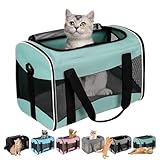
- [PRODUCT DIMENSIONS] Pet travel carrier size : 17x11x11 inches, recommended up to 15 lb pets, it is suitable for large, medium cats and small dogs. Please don't choose your airline cat carrying case based on weight, please refer to your pet's length and height when choosing a pet carrier size.
- [AIRLINE APPROVED] This cat carrier is designed with airline approved, it can fit comfortably under most flight seats, we can take our pets wherever we want. Dog travel carrier offers two attachment loop handles that can be used as a dual harness or as a luggage strap for balanced carry and secure transport.
- [EXCELLENT MATERIAL] Collapsible cat carrier is made of polyester fabric, supported by a steel ring, washable, wear-resistant and durable. The three sides and the top of this pet carrier are nylon mesh, scratch-resistant and not easy to damage, it can not only check your pet in real time, but also ensure enough air circulation.
- [SAFE AND COMFORTABLE] Dog travel bag has metal zippers on the top and side entrances, durable and not easy to deform, it allows your pets to enter and exit easily. The cat carrying case is equipped with an anti-escape safety buckle, which can effectively prevent pets from accidentally falling. It is suitable for car rides and vet rides.
- [PORTABLE AND FOLDABLE] Pet travel carrier comes with a detachable and hand washable wool pet bed, it can provide a comfortable sleeping space for your traveling pet. The cat travel case comes with an adjustable shoulder strap and handle for easy portability. When not in use, you can fold it up for storage.
- Open-mouth breathing at rest
- Blue or gray gums
- Collapse, severe weakness, or obvious distress
- Breathing that is visibly hard work, regardless of the counted rate
- Sudden painful weakness or paralysis, especially in the hind limbs
- Keep the environment quiet and keep the cat as calm as possible.
- Do not chase the cat, repeatedly restrain the cat, or perform a prolonged home examination.
- Call the regular veterinarian or an emergency hospital while getting ready to leave. Do not wait for the breathing to improve before seeking advice.
- Place the cat in a secure, well-ventilated soft-sided cat carrier. A carrier with a removable top may reduce handling, but do not force a distressed cat through a small opening if doing so makes breathing worse. A carrier supports safe transport; a carrier does not treat heart failure.
- Do not give human drugs, leftover medicine, extra diuretic doses, supplements, food, or water by force unless a veterinarian specifically instructs you.
- Tell the hospital when the breathing change began, whether the breathing is worsening, which medicines the cat currently receives, and whether the cat has known heart disease, kidney disease, hyperthyroidism, or recent fluid therapy.
Merck’s emergency-care guidance supports minimizing stress and handling while arranging urgent veterinary treatment. Do not delay transport to count breaths, determine whether the problem is cardiac, or search for a home treatment.
How can you check a cat’s resting breathing rate?
Count a cat’s breaths only while the cat is asleep or resting calmly, not while purring, playing, immediately after handling, or recovering from activity. Watch the chest rise and fall: one rise and one fall equals one breath. Count for 30 seconds and multiply by two, or count for a full minute, then record the date, time, and result.
| Resting observation | Meaning and next step |
|---|---|
| 15–30 breaths per minute while resting or asleep | VCA describes this as a normal resting or sleeping range for cats; continue watching the cat and record trends if heart disease is known |
| A persistent increase above the cat’s usual resting baseline | Contact the veterinarian because an increasing resting rate can be an early clue of worsening heart failure |
| Visible effort, open-mouth breathing, abnormal gum color, collapse, or severe weakness | Seek emergency care immediately; do not delay for a respiratory-rate count |
According to VCA Animal Hospitals (reviewed 2026), the stated normal resting or sleeping respiratory rate for cats is 15–30 breaths per minute, and an increase can be an early clue of heart failure. A normal-looking number is not a safety guarantee: a cat that is visibly struggling needs emergency care even if the count is below any particular threshold. VCA’s home breathing-rate instructions explain how to count and record the trend.
According to the American College of Veterinary Internal Medicine consensus statement (2020), one cited study found that a respiratory rate above 80 breaths per minute, a temperature below 37.5°C, or a heart rate above 200 beats per minute was associated with a greater likelihood of congestive heart failure among cats evaluated for respiratory distress. Those findings describe a study population and are not a safe at-home diagnostic cutoff.
How do veterinarians diagnose congestive heart failure in cats?
Veterinarians first assess the cat’s breathing and stabilize the cat if necessary, then use examination, imaging, cardiac testing, and laboratory information to distinguish heart failure from other causes of respiratory distress. A cat in crisis should not be made to wait while an owner tries to decide whether the problem is cardiac or respiratory.
Rank #3

- High Quality Design:Sturdy steel cage structure and wooden support board maintain good spatial stability and shape. Breathable mesh windows on four sides,which can ensure good air circulation and views,make pets have a comfortable and safe travel.It can also be easy for you to check on your pets.There is a front pocket to store pet toys,treats,etc.
- Dimension and Weight:Made of durable tear-resistant fabric.Four easy entrances for pets. Dimensions: 17 inch x 11 inch x 11 inch (L*W*H), suitable for pets up to 16 lbs.Please don't choose your carrier based on weight only,consider your pet's length and height when choosing a carrier.
- Airline Approved & Safty:Can be placed under the seats of most airplanes(Four non-slip feet on the bottom to prevent movement), and comfortably on the seat next to you in a car or bus.It has a adjustable shoulder strap.Can also be fastened to the car seat with a safety belt or shoulder strap to keep your pet safe.
- Easy to Clean :You can clean the stains and dirt on the surface with a soft cloth.Soft mat inside the pet carrier is removable and washable.You can take it out and wash it easily to solve all stains.
- Easy to Collapsible & Lightweight:When not in use,fold it into a flat,space saving and easy to store.Only 2.2lbs,it's easier to carry around.It can also used as a toy of pet house,allowing pets to play in a safe space to relax and rest.
| Veterinary test or assessment | What it helps evaluate | What it cannot do alone |
|---|---|---|
| Physical examination | Breathing effort, heart and lung sounds, pulse quality, gum color, temperature, and general stability | It may identify an emergency but usually cannot fully characterize the cardiomyopathy |
| Chest radiographs | Pulmonary edema, pleural effusion, and changes in the cardiac silhouette | Radiographs do not replace echocardiography for defining heart structure and function |
| Echocardiography | Heart structure, wall thickness, chamber size, motion, and function | It must be interpreted with the cat’s clinical presentation and other results |
| Electrocardiography | Heart rhythm and electrical abnormalities | A rhythm tracing alone does not explain every cause of breathing difficulty |
| Blood-pressure measurement | Hypertension or low blood pressure that can influence diagnosis and treatment | Blood pressure alone cannot confirm CHF |
| Laboratory tests and cardiac biomarkers | Kidney function, complicating illness, and cardiac stress when clinically appropriate | Other diseases can affect results, so results require clinical context |
Cornell calls echocardiography the gold standard for diagnosing feline cardiomyopathies in its feline cardiomyopathy information. Chest radiographs are particularly useful when the immediate question is whether fluid is present in the lungs or around them, while ECG and blood-pressure testing help identify rhythm and pressure problems.
“Any time there’s a question about an animal’s ability to breathe comfortably, get it to a veterinarian right away.” — Daniel Fletcher, DVM, assistant professor of emergency and critical care, Cornell University College of Veterinary Medicine; Cornell’s dyspnea guidance
Special offer. See more information about Outbyte and uninstall instructions. Please review EULA and Privacy policy.
Daniel Fletcher, DVM, also explains the limit of home assessment: “Only a veterinarian is equipped to do a proper examination and to run the basic tests that will determine the source of the dyspnea and the proper treatment for it.” The quotation appears in the same Cornell veterinary resource.
How is congestive heart failure in cats treated?
Treatment is individualized and may begin with oxygen and medication to reduce fluid accumulation. The veterinary team chooses medicines and doses according to the cause and severity of heart disease, kidney function, blood pressure, rhythm, fluid status, and response to treatment.
| Possible treatment | Why a veterinarian may use it | Why owners must not self-adjust it |
|---|---|---|
| Oxygen supplementation | Supports a cat that is struggling to oxygenate while the underlying problem is assessed | Respiratory distress can worsen with handling, and oxygen does not identify or cure the cause |
| Diuretics | Help remove excess fluid in appropriate cases of congestion | The dose affects hydration, kidney function, and electrolytes; do not give an extra dose without veterinary direction |
| Other cardiac medicines | Selected cats may receive positive inotropes, ACE inhibitors, vasodilators, beta-blockers, or calcium-channel blockers | The correct drug depends on the cat’s phenotype, blood pressure, rhythm, kidney status, and stage |
| Drainage of chest or abdominal fluid | Some cats need fluid removed when accumulation restricts breathing or causes discomfort | Drainage is a veterinary procedure and is not replaceable with home medication |
| Long-term medication and monitoring | May reduce recurring congestion or manage the underlying cardiac problem after stabilization | Follow-up testing and dose changes may be needed as kidney function, fluid status, or disease stage changes |
| Antithrombotic treatment | May be considered for cats with a history of CHF and moderate-to-severe left-atrial enlargement | Antiplatelet or anticoagulant treatment is veterinarian-directed; do not give human aspirin or another drug independently |
Merck’s treatment reference lists diuretics as commonly used to remove excess fluid and describes other cardiac medicines for selected cases. The ACVIM consensus statement’s recommendations on thromboembolism prevention are also available through the Journal of Veterinary Internal Medicine.
Rank #4

- AIRLINE APPROVED CARRIER - With airline-approved design, you can take your pet to go to everywhere. This pet carrier provides two connecting loop handles for balanced carrying as a dual seat belt or luggage strap to secure transport
- SAFETY DESIGN - The adjustable shoulder strap help you hands-free carrying and makes it more safe and convenient pet carrier bag for your travel
- DURABLE - This cat carrier is made of durable and lightweight polyester fabric. The four-side mesh will not only give a safe and comfortable travel for your pet, but also easy for you to check on your pet
- PORTABLE & FOLDABLE - This dog carrier is easy to carry and store, which has a padded shoulder strap and handles
- BOTH SIZES AND WEIGHTS - The mediun cat carrier is designed for small and medium pets within 15" x 9" x 9"(smaller than product) and 15 lbs. Please do not choose your carrier only based on weight. Reference your pets' length and height in selecting a carrier size.If carried on board, the maximum dimensions should not exceed 18IN*11IN*11IN.
A low-sodium diet or taurine supplementation may be appropriate in particular veterinary circumstances, but neither should be assumed to treat CHF. Do not replace prescribed treatment with a supplement, diet change, home oxygen device, or over-the-counter product.
Crashes, No Sound, or Screen Glitches?
Random freezes, missing sound and display glitches usually trace back to one bad driver. Find and replace yours safely.Free scan · under a minuteWindows Errors? Fix Them Before They Spread
Repair common Windows errors and clear accumulated junk for a smoother, more stable PC - no reinstall needed.Free scan · no reinstallCan a cat recover from congestive heart failure?
A cat may stabilize after emergency treatment and may have meaningful additional time with individualized medication and monitoring, but congestive heart failure is a serious syndrome and stabilization is not the same as a permanent cure. No single survival time applies to all cats.
Outcome depends on the cardiomyopathy phenotype and stage, the severity of pulmonary or other fluid accumulation, the response to treatment, kidney function, recurrence, arrhythmias, and the risk of arterial thromboembolism. The 2020 ACVIM consensus statement describes feline cardiomyopathies as heterogeneous, which is why a population statistic cannot reliably predict an individual cat’s prognosis.
How is CHF different from asthma, pleural effusion, or infection?
Congestive heart failure cannot be reliably distinguished from asthma, pleural effusion, pneumonia, airway obstruction, or trauma by watching the cat at home. The conditions overlap in their breathing signs, so the table below provides context rather than a home diagnostic algorithm.
| Possible explanation | Onset and breathing pattern | Other possible clues | How veterinarians investigate it |
|---|---|---|---|
| CHF with pulmonary edema | May develop gradually or become an acute crisis; rapid, labored breathing and an upright posture may occur | Known cardiomyopathy, weakness, reduced appetite, collapse, or no cough at all | Physical examination, chest radiographs, echocardiography, blood pressure, ECG, and appropriate laboratory testing |
| Asthma | May cause respiratory effort or wheezing; severity can vary between episodes | Airway-disease context; signs can overlap substantially with cardiac disease | Veterinary examination and imaging or other testing selected for the presentation |
| Pleural effusion | Can restrict lung expansion and cause labored or shallow breathing | Fluid is around the lungs rather than inside the lung tissue; breath sounds may be diminished ventrally on examination | Chest imaging and examination to identify fluid and investigate its cause |
| Pneumonia or another infection | Breathing may become faster or harder; onset may follow illness or exposure | Fever, appetite loss, lethargy, or weakness may occur, but none is specific | Physical examination, chest imaging, and laboratory testing when appropriate |
| Airway obstruction or trauma | Often sudden and potentially severe, with obvious breathing difficulty | Possible choking, injury, pain, collapse, or sudden weakness | Immediate stabilization and veterinary examination, followed by targeted testing |
VCA’s discussion of congestive heart failure in cats and Cornell’s dyspnea guidance both stress that respiratory signs need professional assessment. Risk context such as known cardiomyopathy, older age, hyperthyroidism, hypertension, recent illness, trauma, or possible toxin exposure can help a veterinarian, but risk context cannot diagnose CHF.
Free tools Windows power users keep installed
One-click scans. No signup required.
Best Value
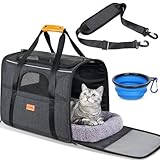
- 【 Spacious & Comfortable Cat Carrier 】The large cat carrier provides ample space for your feline friend to move, turn, and stretch during travel. Measuring 17.3 x 12.2 x 13.4 inches, it is wider and taller than most cat carriers, ensuring your pet feels comfortable and at ease while on the go.
- 【Balanced Mesh Design】Unlike other cat carrier hard, our cat carrier soft strikes the perfect balance with 40% mesh surface area. This ensures your pet can observe the surroundings and breathe easily while feeling safe and secure at the same time. The cat carrier large is suitable for pets in all kinds of situations.
- 【Built-in Dual-Sided Cushion】The detachable pad offers two distinct comforts: a cool side for summer and a super-soft, warm side for winter. You can easily flip it to match the season, providing the perfect temperature for your pet in any weather.
- 【Includes Foldable Bowl】Designed for on-the-go use, our foldable bowl carries 410g of food or 20oz of water. After use, simply collapse it and attach it directly to your pet's collar or leash, perfect for keeping your pet fueled and hydrated anywhere.
- 【Safe & Durable】Safety is our top priority, and the pet carrier for cat is equipped with a secure buckle to prevent your pet from escaping. The cat carrier soft is made of reinforced snow silk fabric and hard mesh material, ensuring durability and preventing any tearing during long-distance travel.
Frequently Asked Questions
Can a cat have congestive heart failure without coughing?
Yes. Cats with congestive heart failure are much less likely to cough than dogs, so a cat can have serious cardiac disease without coughing. Breathing rate and effort are more important warning signs than cough alone.
Can a cat recover from congestive heart failure?
A cat may stabilize after treatment and live for a meaningful period, but congestive heart failure is serious and there is no single recovery time or survival estimate that applies to every cat. Prognosis depends on the cardiomyopathy, stage, fluid accumulation, kidney function, recurrence, rhythm problems, and clot risk.
What is a normal resting breathing rate for a cat with heart disease?
Count breaths only while the cat is asleep or resting calmly, not while purring or after activity. Watch the chest rise and fall for 30 seconds and multiply by two, or count for a full minute; VCA describes 15–30 breaths per minute as a normal resting or sleeping range, but visible distress requires emergency care regardless of the number.
What should I do if my cat is breathing with its mouth open?
Open-mouth breathing in a resting cat requires emergency veterinary care. Keep the cat quiet, minimize handling, place the cat in a secure, well-ventilated carrier, call an emergency hospital, and leave promptly; do not give unprescribed medicine or force food or water.
The Bottom Line
Bottom line: Fast or labored breathing in a resting cat deserves veterinary attention, and open-mouth breathing, blue or gray gums, collapse, severe weakness, or visible effort requires an emergency hospital immediately. Keep the cat calm, transport the cat in a secure carrier, and do not give unprescribed medication or delay care to count breaths.
Quick Recap
Product prices and availability are accurate as of the date/time indicated and are subject to change. Any price and availability information displayed on Amazon at the time of purchase will apply.




