Skunk spray is a sticky, oily secretion made mostly of volatile organosulfur compounds—not one chemical and not simply “sulfur.” Its smell is so difficult to remove because several thiols, thioacetates, and related compounds evaporate readily, are detectable by people at parts-per-billion concentrations, and cling to fur, fabric, upholstery, and other porous surfaces.
Skunk spray is a sticky, oily secretion made mostly of volatile organosulfur compounds—not one chemical and not simply “sulfur.” Its smell is so difficult to remove because several thiols, thioacetates, and related compounds evaporate readily, are detectable by people at parts-per-billion concentrations, and cling to fur, fabric, upholstery, and other porous surfaces.
The most effective cleanup combines two jobs: remove the oily secretion physically, then chemically change the odor-active sulfur compounds. A fresh, carefully used peroxide-based treatment may help on suitable fur or washable materials, while a purpose-made skunk odor remover is often the more practical choice for pets, carpets, clothing, floors, and other household surfaces. No method is automatically safe for every animal, fabric, finish, or exposure.
What is skunk spray made of?
Skunk spray is an oily defensive secretion produced by glands near the anus. Analytical work on hooded skunk secretion identified seven major volatile components that together accounted for 99% of the measured volatile fraction. These included both thiols and thioacetates.
Do these 3 things before closing this tab:
1Scan for outdated or missing drivers - takes under a minute2Repair Windows errors before they cause bigger problems3Fix the driver behind crashes, sound loss and screen glitchesAs an Amazon Associate I earn from qualifying purchases.
Important odor-active compounds identified in that work include:
- (E)-2-butene-1-thiol
- 3-methyl-1-butanethiol
- S-(E)-2-butenyl thioacetate
- S-3-methylbutenyl thioacetate
This profile should not be treated as an exact formula for every skunk or every spray event. The published analysis cited here concerns hooded skunk secretion. More broadly, the important point is that skunk odor comes from a mixture. It is inaccurate to say that one molecule alone causes the smell.
#1 Best Overall
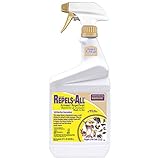
- Keep animals out of your yard and garden with Repels-All Animal Repellent from Bonide! This special formula naturally deters a wide variety of garden pests including deer, mice, chipmunks, squirrels and more!
- Natural ingredients act as a deterrent that will not cause harm to critters. The strong scent will cause animals to naturally avoid your garden and go elsewhere.
- When used as directed, this product is safe for use around people and pets. Biodegradable ingredients will not harm ornamentals, edibles or other desirable plants in your yard and garden.
- Apply animal repellent concentrate wherever you need protection. This product can be safely applied to structures, plants and more. Use as a perimeter around your yard to prevent new pests from arriving.
- This product arrives conveniently ready-to-use in a spray nozzle bottle! Apply directly to foliage, bulbs, seeds or hard surfaces of structures to protect and control. For best results, follow the detailed instructions on the product label.
Why does skunk odor smell so powerful?
Three chemical and physical properties work together.
1. The compounds are highly volatile
Volatile compounds readily move from a liquid into the air. That allows a small amount of secretion to contaminate the surrounding air quickly, even when the visible spray seems limited.
2. People detect the odor at extremely low concentrations
The thiols in skunk spray can be detected at concentrations around parts per billion. In practical terms, the nose can notice tiny quantities long before a surface looks heavily contaminated.
3. The secretion is oily and adhesive
The spray does not merely remain in the air. Its oily carrier coats fur and skin and can soak into clothing, carpet, upholstery, bedding, vehicle interiors, unfinished wood, and other porous materials. Washing away the visible residue without addressing the odor-active compounds may therefore leave a lingering smell.
The same oily quality also explains why immediately adding water is not always the best first move for a pet. Water alone may spread the secretion over a larger area before the oil has been lifted or treated.
PC Slower Than It Used to Be?
A free scan shows the junk files, broken settings and background clutter dragging Windows down - then fixes them in one click.Free scan · Windows 10 & 11Outdated Drivers Are Slowing You Down
One free scan finds every outdated or missing driver and matches the right update for your exact hardware.Free scan · exact hardware matchHow the peroxide, baking soda, and dish-soap treatment works
The familiar homemade treatment uses household-strength 3% hydrogen peroxide, baking soda, and a small amount of liquid dish detergent. Its chemistry is best understood as a combination of physical cleaning and oxidation:
- Dish detergent helps remove the oil. It can emulsify or lift the oily secretion so it can be rinsed away rather than redistributed.
- Hydrogen peroxide creates an oxidizing environment. It can alter odor-active thiols into less odorous sulfonic-acid compounds.
- Baking soda contributes alkalinity. It supports the cleaning mixture but should not be described as the ingredient that independently neutralizes the odor.
A useful summary is: detergent removes the oily carrier; peroxide changes some of the sulfur chemistry; baking soda helps create the conditions for the treatment.
Make this type of mixture fresh and use it promptly. Once combined, it is not a shelf-stable treatment. Do not store it in a closed container, and do not mix it with bleach, ammonia, or other household cleaners.
Rank #2

- GETS RID OF and KEEPS AWAY Skunks, Raccoons, Rats, Mice, Deer and Nuisance Pests & Critters From Unwanted Areas Such As Homes, Yards, Flowers, Gardens and Landscaping
- INDOOR/OUTDOOR USE - For Indoor Applications Use Inside Your Home, Garages, Sheds & Patios. For Outdoor Applications Use Sidewalks, Driveways, Outdoor Plants & Gardens
- EASY TO USE JUST SHAKE AND SPRAY - Comes With Comfortable Heavy Duty Trigger Sprayer That Is Guaranteed Not To Clog. Covers Approximately 1,000 square feet. Product is Waterproof and Lasts Up To 90 Days and Doesn't Wash Off Easily
- NATURAL INGREDIENTS - DOESN'T STINK! Peppermint Scent.
Important limitations and safety precautions
- Never apply a peroxide mixture to the eyes, inside the mouth, or other mucous membranes.
- Keep it away from wounds, irritated skin, and sensitive areas.
- Hydrogen peroxide can bleach dark fur and discolor clothing, towels, upholstery, wood, and other materials.
- Spot-test an inconspicuous area before treating fabric, carpet, furniture, or a finished surface.
- Do not use a household recipe simply because it is familiar; follow veterinary or product-label guidance for the particular animal and material.
- Do not repeatedly apply peroxide to already irritated skin or a coat that has not been thoroughly rinsed.
For a pet, a veterinarian-supported commercial treatment may be preferable, especially when the spray has reached the face, the animal has sensitive skin, or the coat is dense and difficult to rinse.
Does tomato juice neutralize skunk spray?
There is no good evidence that tomato juice chemically neutralizes skunk spray. It remains popular largely because people may experience olfactory fatigue: after continuous exposure to a strong odor, the nose becomes less responsive and the smell seems weaker.
That reduced perception does not mean the sulfur compounds have been destroyed or removed. Someone who leaves the contaminated area and returns later may notice that the odor is still present. Tomato juice can also add its own color and smell, making cleanup more difficult on light-colored fur or fabrics.
A safe cleanup workflow after a skunk encounter
1. Keep the contaminated pet outside or in an easy-to-clean area
Move the pet away from sofas, beds, carpets, and other porous surfaces. If possible, keep the animal in a garage, mudroom, bathroom, or other area that can be cleaned—provided it is safe, ventilated, and comfortable. Avoid allowing the pet to rub against furniture or shake through the house.
2. Check the eyes and mouth before treating the coat
Look for direct exposure to the eyes or mouth. If the eyes were sprayed, flush them with room-temperature water. Do not put peroxide, detergent, or a deodorizing product in the eyes or mouth.
The Tool Desk
Outbyte Driver Updater FREEScan for outdated or missing drivers - takes under a minuteDriver Scan →Outbyte PC Repair FREEClear out junk files and repair common Windows errorsFree Scan →Persistent eye pain, redness, swelling, coughing, or breathing difficulty requires medical or veterinary assessment. For dogs and other pets, prompt veterinary advice is particularly important if there is marked drooling or vomiting, lethargy, weakness, or pale or brown gums. Heavy exposure can rarely be associated with more serious systemic problems in dogs.
3. Choose a treatment for the specific material
For a pet’s coat, use a veterinarian-supported commercial skunk shampoo or a fresh treatment that is appropriate for the animal and exposure. For clothing, bedding, carpet, upholstery, vehicle interiors, and hard surfaces, use a product labeled for that material and follow its directions.
A skunk odor remover designed for pets and household surfaces is a practical commercial alternative when several materials need treatment. Nature’s Miracle’s official product information describes its skunk odor remover for use on pets, clothing, fabrics, carpets, floors, and other contaminated surfaces, with instructions to avoid the eyes, nose, mouth, and ears, spot-test fabrics and surfaces, and repeat treatment when necessary. Those are manufacturer directions and claims, not independent comparative test results, so follow the current label rather than assuming it is suitable for every species or finish.
Rank #3
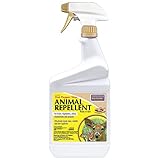
- Hot Pepper Wax Spray effectively repels critters like deer, rabbits and squirrels from your yard and garden.
- Made from Cayenne Pepper and capsaicin, Bonide Hot Pepper Wax Spray is an irritant that produces a burning sensation that makes your garden unattractive to pests.
- This product is a ready-to-use liquid spray that features an easy to use spray bottle nozzle. To use, apply until foliage is completely wet and repeat application for 2-3 weeks, or until control is established.
- This long-lasting formula can be applied directly to vegetables, ornamentals, structures and more! Hot Pepper Wax Spray will keep animals away from your flowers and out of your yard & garden.
- Hot Pepper Wax Spray for plants deters deer, rabbits and squirrels from your lawn, garden and any outdoor space. Keep animals away
4. Remove the oily contamination
Use dish detergent or a purpose-made product where the label permits it. Work carefully through the affected coat or material instead of aggressively scrubbing, which can irritate skin or force contamination deeper into fibers.
Quick wins for a faster PC:
Repair Windows errors before they cause bigger problemsFix Now →Scan for outdated or missing drivers - takes under a minuteDriver Scan →Clear out junk files and repair common Windows errorsFree Scan →On a pet, protect the eyes, mouth, nose, and ears. Apply only to appropriate areas, then rinse thoroughly. If the animal is distressed, has broken skin, or cannot be safely handled, stop and contact a veterinarian or professional groomer.
5. Ventilate and launder separately
Open windows and doors where practical, while preventing the pet from escaping. Wash contaminated clothing, towels, and bedding separately according to their care labels. Do not combine contaminated laundry with the rest of the household wash until the odor is under control.
Keep peroxide, detergent, commercial cleaners, and treated materials away from children and pets. Never mix bleach with ammonia or incompatible cleaning products: dangerous irritating or toxic fumes can result.
6. Repeat cautiously if needed
One treatment may not remove every trace from dense fur, porous upholstery, vehicle interiors, unfinished surfaces, or heavily contaminated fabrics. Follow the product label if a repeat application is allowed. Do not keep reapplying peroxide or other chemicals to irritated skin merely because a faint odor remains.
Pet-specific considerations
Dogs are the pets most often associated with skunk encounters, but the same safety principles apply to cats and other animals: protect the eyes and mouth, avoid unapproved chemicals, and use only products labeled or professionally recommended for the species.
A commercial skunk shampoo or shampoo-and-conditioner system can be useful for a pet’s coat because it is formulated for this particular contamination problem. It is not automatically interchangeable with a household surface cleaner. Check the label for the intended species, application area, contact time, rinsing instructions, and warnings.
Call a veterinarian promptly if the pet has direct eye or mouth exposure, significant respiratory signs, repeated vomiting, severe drooling, weakness, lethargy, pale or brown gums, or unusual behavior. Seek advice rather than attempting repeated home treatments when the animal has a skin condition, open wounds, is very young or elderly, or cannot be safely restrained.
Rank #4
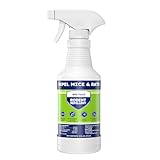
- Safe for People and Pets: Formulated with natural ingredients for use around children and pets when used as directed, providing a solution without harsh chemicals
- Long-Lasting Coverage: Extra-strength formula provides coverage for up to 90 days with one application, offering extended protection against unwanted rodents
- High-Quality Ingredients: Features high-grade peppermint essential oil, locally sourced from quality farms, known for its strong scent that rodents find unpleasant
- Versatile Indoor and Outdoor Use: Suitable for use in homes, garages, gardens, and vehicles, providing coverage for approximately 1,000 square feet per application
- Easy Application: Comes with a user-friendly trigger sprayer that prevents clogging, simply shake the bottle and spray desired areas to create a dry-spray barrier with a fresh peppermint scent
What about clothes, carpets, rooms, and cars?
Clothing and bedding
Separate contaminated items, check their care labels, and spot-test any cleaner in a hidden area. Wash them separately and repeat only according to the fabric-care instructions. Peroxide-containing treatments may lighten dyes.
Recommended Free Tools
Carpet and upholstery
These materials can retain oily compounds below the surface. Blot rather than spread wet contamination, use a product labeled for the specific material, and test first in an inconspicuous location. A second treatment may be necessary, but saturation can damage backing, padding, adhesives, or upholstery components.
Hard floors and finished surfaces
Use a labeled cleaner compatible with the finish. Unfinished wood and porous masonry can hold odor longer than sealed surfaces. Avoid assuming that a product safe for a dog’s coat is safe for flooring, painted surfaces, metal, or wood.
Indoor air
Ventilation helps reduce airborne odor, but it does not remove the secretion absorbed into fabric or fur. Air fresheners may mask the smell temporarily and can add another irritant or fragrance. Source removal remains the important step.
A deeper look: can skunk odor be neutralized in another way?
Oxidation is not the only possible chemical strategy. A 2019 study examined a fungal natural product called pericosine A and synthetic analogues that react with skunk-spray thiols and thioacetates in water-based conditions. The reaction produced stable thioethers, offering an example of targeted chemical neutralization rather than simply masking the odor.
What’s actually slowing this PC down?
Pick the symptom - the matching free tool is one click away.
The researchers also reported deodorizing activity when the compound was formulated with supporting cosmetic ingredients. This is scientifically interesting, but it does not establish that a broadly available consumer product containing pericosine A is superior to peroxide-based treatments or commercial removers. It should be understood as research into a possible chemical approach, not as a universal household recommendation.
Independent reader supportYour contribution helps us test, update, and keep practical guides available for everyone.How to choose a commercial skunk odor remover
Look for a product whose label clearly identifies the surfaces or animals it is intended for. Useful label details include:
- Whether it is for pets, fabrics, carpets, floors, or other hard surfaces
- Species restrictions and instructions for avoiding the eyes, nose, mouth, and ears
- Spot-testing requirements
- Contact time, rinsing, ventilation, and repeat-treatment instructions
- Warnings about colorfastness, finishes, porous materials, and damaged skin
Commercial products are not all the same, and there is no basis here for claiming that every commercial product outperforms the peroxide mixture. Their main advantage is that a purpose-made formula comes with material-specific directions and may be easier to use correctly during an unpleasant cleanup.
Best Value

- STRONG REPELLER - This unique blend of ingredients causes mild irritation to animal's nasal passages. When an animal touches, tastes, or smells Repels-All Animal Repellent, it triggers the natural instinct to escape/avoid and the pest leaves.
- ANIMALS AFFECTED - Our granules repel species of squirrel, deer, rabbit, chipmunk, mouse, skunk, rat, beaver, raccoon, porcupine, bird, groundhog and more rodent species.
- DEFEND YOUR GARDEN AND HOME - Apply around homes, gardens, garbage cans, barns, swimming pools, sheds, woodpiles, decks, patios, and campsites to prevent grazing, chewing, gnawing, nibbling and browsing damage to plants and property.
- BIODEGRADABLE - Repels-All granules are biodegradable and will not harm animals, lawns, gardens, flowerbeds, or other desirable plants when used as directed.
Preventing another skunk encounter
Cleanup solves the immediate problem; prevention reduces the chance of repeating it. Make the area around the home less attractive and less accessible by reducing exposed food sources, securing garbage and pet food, limiting easy shelter, and addressing gaps beneath decks, sheds, porches, or other structures.
Do not seal an opening if a skunk may still be inside. Wildlife exclusion is safest when the animal’s presence and exit route have been assessed first. For a persistent problem, a licensed wildlife professional can help identify access points and install exclusion measures appropriate to local rules and the species involved.
The bottom line
Skunk spray is a mixture of volatile, oily organosulfur compounds whose odor thresholds are extraordinarily low. Several thiols and thioacetates contribute to the smell, persistence, and distinctive character. Effective cleanup is not just about covering the odor: it requires lifting away the oily secretion and, where appropriate, chemically altering odor-active compounds.
Tomato juice has not been shown to neutralize the spray. A fresh peroxide, baking soda, and dish-detergent treatment can be useful on suitable materials, but it can bleach or irritate and must never contact the eyes or mouth. A labeled skunk odor remover is often the most practical product choice for pet and household cleanup, while concerning eye, breathing, or systemic symptoms take priority over odor removal.
Frequently Asked Questions
Does tomato juice really remove skunk smell?
No. Tomato juice has not been proven to neutralize skunk spray. The apparent improvement may result from olfactory fatigue, in which the nose temporarily becomes less sensitive to a persistent odor.
Free tools Windows power users keep installed
One-click scans. No signup required.
Why does hydrogen peroxide help with skunk odor?
A fresh mixture of 3% hydrogen peroxide, baking soda, and a small amount of dish detergent can help on suitable fur or materials. Detergent helps remove the oily secretion, while peroxide can oxidize odor-active thiols. It must not touch the eyes or mouth, may bleach surfaces, and should not be stored after mixing.
What should I do if skunk spray gets in a pet’s eyes?
Flush the eyes with room-temperature water and do not apply peroxide, detergent, or deodorizer to them. Persistent pain, redness, swelling, coughing, or breathing problems require medical or veterinary assessment.
Are commercial skunk odor removers safe for pets and carpets?
Yes, but use only a product labeled for the particular animal and material. Check species restrictions, avoid the eyes, nose, mouth, and ears, spot-test fabrics and surfaces, and follow contact-time and rinsing instructions.
The Bottom Line
Skunk spray is powerful because a small amount of oily secretion contains several volatile sulfur compounds that people can detect at parts-per-billion levels. Remove the oil first, then use an appropriate chemical treatment; do not rely on tomato juice, and treat eye, mouth, breathing, or serious pet symptoms as a medical or veterinary issue.
Quick Recap
Product prices and availability are accurate as of the date/time indicated and are subject to change. Any price and availability information displayed on Amazon at the time of purchase will apply.




