No single age or calendar tells you when a dog or cat needs a dental. Timing depends on what a veterinarian finds during an oral exam, the pet’s age, and risk factors such as species, size, and breed. The American Animal Hospital Association (AAHA) says in its owner guidance that most pets need a professional cleaning every one to two years, and that cats, small dogs, and some breeds may need one more often. Treat that as a general guide, not a mandatory schedule. Home brushing is valuable prevention, but it cannot diagnose or treat disease below the gumline, and it does not replace a professional dental.
Signs that mean a veterinary visit now
Oral disease is hard for owners to spot, and many pets with it show few outward signs. A pet that keeps eating is not proof that its mouth is comfortable or healthy. AAHA’s owner guidance lists the following as reasons to start a conversation with your veterinarian:
- Bad breath that persists or worsens
- Drooling, or a wet chin or front legs
- Red, swollen, or bleeding gums
- Discolored teeth, including visible brown or dark tartar
- Blood on chew toys
- Dropping food while eating, or chewing on one side only
- Nasal or oral discharge
- Facial swelling
What a professional dental involves
A professional dental is a veterinary procedure, not a single cleaning step. Per AAHA’s owner article, the sequence usually runs as follows:
- Awake oral exam and health assessment. The team looks at the mouth and reviews the pet’s overall health.
- Pre-anesthetic planning. The veterinarian may recommend blood work and an anesthesia plan tailored to the pet.
- Monitored general anesthesia. The pet is monitored throughout the procedure.
- Dental X-rays. Radiographs show structures that cannot be seen by looking. AAHA’s owner article notes that more than half of a tooth’s structure sits below the gumline and is visible only on X-rays.
- Scaling above and below the gumline, then polishing.
- Periodontal probing around each tooth.
- Treatment of damaged teeth when disease is found.
AAHA’s clinical guidelines state that a full oral assessment includes radiographs under general anesthesia and emphasize pain management. Anesthesia is what makes this assessment and treatment possible. Its risk is not zero, so it must be judged for each pet based on health status and the monitoring and support the clinic provides. No veterinarian can honestly promise that anesthesia carries no risk.
#1 Best Overall

- CLEANS DOG & CAT TEETH, & HELPS FIGHT PLAQUE – Get teeth sparkly clean and gums in great shape between vet visits with this dog and cat teeth cleaner and dental care solution. Both our water additive and pet toothpaste feature exclusive, non-toxic Oxygene to help fight plaque and freshen breath.
- GOODBYE TO BAD PET BREATH – Say goodbye to dog and cat bad breath with our gentle fresh breath treatment for puppies, dogs, kittens, and cats. Beats breath bones and dental chews that only mask odors temporarily! Made in the USA, this non-toxic formula freshens breath without harsh ingredients.
- PERFECT FOR THE WHOLE PACK – Our premium dental care formulas are gentle, non-toxic, and safe for dogs and cats alike. Tasteless and odorless, even the pickiest of picky pets will love it! Because when it comes to fresh breath and happy tails, Oxyfresh is perfect for the whole furry family.
- EASIEST DOG & CAT DENTAL KIT – Everything you need for a simple, effective pet dental routine at home! This complete kit includes our fresh breath water additive (just add to their bowl), dental gel toothpaste, and 3 gentle finger toothbrushes for easy, stress-free care.
- APPROVED & LOVED BY PET PARENTS – Our amazing Pet Dental Kit features safe, trusted ingredients you can always feel good about. So if you've tried everything else, it's time to try something that works.
Why anesthesia-free cleaning is not a substitute
AAHA considers nonanesthetic dentistry inappropriate because an awake animal cannot stay still enough for a full oral exam, diagnostic radiographs, probing, or cleaning below the gumline. Scaling only the visible tooth surfaces can make a mouth look and smell better, while leaving disease under the gums undiagnosed and untreated. AAHA’s Emily Singler, VMD, AAHA Veterinary Content Specialist, put it this way: “without anesthesia, there’s no way to fully assess and address your pet’s dental health. Non-anesthetic dental cleanings may make your pet’s teeth look and smell better in the short term, but they create a false sense of security and don’t really make your pet’s mouth healthier.”
Home care that actually helps
Start slowly, especially with cats
Home care works best when it is introduced gradually and paired with rewards. The 2025 Feline Veterinary Medical Association (FelineVMA) guideline supports caregiver participation in home care, including brushing or wiping, using products that are safe and effective. AAHA’s October 2026 article suggests beginning with wipes and gentle handling of the face and muzzle, then working toward the teeth over time.
Rank #2
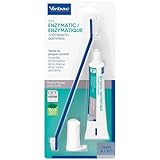
- #1 BRAND CHOSEN BY VETERINARIANS: Proven effective and trusted for over 30 years, C.E.T. is the top recommended dental brand by veterinary professionals to reduce plaque & tartar buildup
- Dual-sided toothbrush designed specifically for canine mouths with soft bristles for comfortable brushing
- Long handle with reverse angle allows for easy use and soft bristles for comfortable brushing while the finger-brush slips over finger for ease of use and better control
- Great tasting poultry-flavored toothpaste is ideal for dogs and cats that quickly build up plaque and tartar
- Complete kit with everything pet owners need to start a program of regular oral hygiene for their dog or cat. Ideal to help acquaint dogs/cats and their owners with the tooth brushing experience
Daily brushing routine
- Choose a soft-bristle toothbrush designed for pets and a toothpaste made for pets.
- Never use human toothpaste. Human products may be toxic to pets.
- Brush in short sessions at the same time each day, and reward the pet afterward.
- Lift the lip and brush the outer surfaces of the teeth, where plaque most often builds up.
- Stop if the pet resists strongly, and do not force the brush into a painful mouth.
Daily brushing is the preferred home routine for plaque control. Veterinary dentist John Lewis, VMD, DAVDC, FF-OMFS, co-owner of Veterinary Dentistry Specialists, said in AAHA’s 2026 article: “Daily brushing is by far the most effective and the least expensive method to decrease the likelihood of future extractions.”
What brushing cannot do
Brushing removes plaque. It does not remove calculus (tartar) that has already hardened on the teeth, so it cannot clear an existing problem. If the gums are inflamed, brushing may hurt and create aversion. Check with your veterinarian before brushing a painful mouth, because the cause of the pain may need treatment first. Brushing does not rule out the need for a professional exam, radiographs, or therapy.
Recommended Free Tools
Rank #3

- VOHC ACCEPTED FOR TARTAR CONTROL IN DOGS: The only naturally derived pet toothpaste with the VOHC Seal of Acceptance. Validated in two independent, randomized controlled studies. Reduces calculus, reduces plaque, freshens breath.
- EVERYTHING NEEDED FOR A COMPLETE DENTAL ROUTINE: Includes a 3 oz. tube of PRO CARE toothpaste, a soft-bristle toothbrush, and a finger brush. One kit, one daily habit.
- GRADUATE AT YOUR DOG'S PACE: Start with a finger application your dog can lick. Move to the finger brush. Then the toothbrush. A natural progression that builds trust over time.
- DRAWING ONLY ON INGREDIENTS FROM NATURE: Formulated with coconut oil, miswak, malic acid, zinc citrate, and kaolin clay. Free from parabens, artificial dyes, sulfates, sweeteners, and animal by-products.
- FOUNDED ON DECADES OF PREVENTIVE DENTISTRY SCIENCE: Developed from the research legacy of Dr. George K. Stookey, a founding member of the Veterinary Oral Health Council and one of the pioneering figures in modern preventive dentistry.
Choosing home-care products
The Veterinary Oral Health Council (VOHC) lists accepted products by species and category. Its seal relates to the plaque or tartar claim shown for a listed product, so read the claim before you buy. The list changes over time, so check the current listing and ask your veterinarian which option fits your pet’s species, size, and dental status.
| Product type | What to check on the current VOHC listing | Limits to know |
|---|---|---|
| Toothbrush and pet toothpaste kit | The plaque or tartar claim, the species, and any size range. For example, the VOHC page lists a HealthyMouth toothpaste and brush kit for medium and large dogs. | Brushing is the preferred daily routine, but it removes plaque only and does not treat disease below the gumline. |
| Pet-specific wipes | Listed for dogs and cats; confirm the species on the label and listing. | Useful for starting out with cats and nervous pets. Not stated as a replacement for brushing or veterinary care. |
| Dental diets and treats | Species and accepted claim, as listed by VOHC. | Not a replacement for exams. Use only as the listing directs. |
| Dental chews | Match the chew to the dog’s body weight. | Supervise the dog while it chews to reduce obstruction risk. Chews do not replace exams. |
| Water additives, gels, and sprays | Species, claim, and listing status. | Effectiveness depends on the product’s listed claim. Not stated as a substitute for brushing or professional care. |
Do not assume a product is the only effective option, and do not assume any product prevents the need for veterinary care.
Rank #4

- Patent-Pending Design: Paw Science's dental finger wipes are hypoallergenic and pH balanced for your pet's oral cavity.
- Fast & Easy Cleaning: Convenient no-rinse dental wipes replace toothbrushes and toothpaste.
- Freshens Breath & Promotes Dental Health: With regular use, removes plaque, helps fight tartar buildup, and supports healthy gums.
- Vet-Formulated with Simple Ingredients: Vet-approved ingredients that gently clean your cat's and dog's teeth.
- Suitable for both small and large breeds, including puppies, kittens, cats, and large dogs.
Dogs and cats need different attention
The prevention message applies to both species, but cats need attention to conditions beyond ordinary periodontal disease. The 2025 FelineVMA guideline covers periodontal disease, tooth resorption, endodontic disease, trauma, feline chronic gingivostomatitis, developmental abnormalities, and oral masses. It stresses regular veterinary oral evaluations and states that full-mouth intraoral radiographs are essential to identify early root-only lesions and to characterize tooth resorption.
Tooth resorption is especially easy to miss. AAHA’s October 2026 article describes it as starting at the roots and potentially staying hidden until the crown is involved. A cat with white-looking teeth or no change in eating does not prove its mouth is healthy.
Free tools Windows power users keep installed
One-click scans. No signup required.
Best Value

- HELPS SUPPORT PLAQUE AND TARTAR CONTROL – Help target plaque and odor-causing buildup with our advanced pet dental water additive, featuring our specialized formula that promotes easier daily oral hygiene
- EFFORTLESS DAILY ROUTINE – Save time and energy with this alternative to tooth brushing kits. Just add to their water and measure using the built-in measuring cap
- TASTES JUST LIKE PLAIN WATER – Help keep your pets hydrated with a completely flavorless and scent-free dog and cat dental water additive. Free from sugar and artificial flavors
- VET-RECOMMENDED FOR CATS AND DOGS – Share this daily water additive across your entire house. It is specially formulated to effortlessly support the general dental care of both cats and dogs
- TRUSTED USA QUALITY SINCE 1999 – Get the same reliable dog and cat dental care formula manufactured locally in the US, trusted by pet parents nationwide for their pets' daily maintenance
When a cat will not let you brush
- Begin with wipes and gentle handling of the face, paired with treats or praise, before attempting the teeth.
- Keep sessions very short and end on a positive note.
- Work at the cat’s pace. Forcing the mouth open creates aversion that makes later care harder.
- If the cat resists strongly, shows pain, or the gums look inflamed, stop and book a veterinary exam.
- Ask your veterinarian about cat-accepted products and whether radiographs are needed, since hidden resorption can progress without obvious signs.
What the prevalence figures mean
- AAHA’s 2026 article, attributing the figures to Dr. Brook Niemiec, reports that about 80% of dogs and 70% of cats show signs of periodontal disease by age three. The estimate reflects what is visible during a routine oral exam. The article does not name the original study, so treat it as AAHA’s reported estimate rather than a newly verified primary figure.
- AAHA’s 2019 clinical guidelines state that by three years of age, most dogs and cats have some level of periodontal disease.
These figures describe populations, not individual pets. A visual exam can miss disease below the gumline, which is why the professional steps above matter.
Quick Recap
Product prices and availability are accurate as of the date/time indicated and are subject to change. Any price and availability information displayed on Amazon at the time of purchase will apply.




