What’s actually slowing this PC down?
Pick the symptom - the matching free tool is one click away.
Yes, cattle can graze standing corn, but it is a feed option—not a complete, automatically safe ration. Before turnout, identify the crop’s grain and maturity, check pesticide-label restrictions, assess nitrate risk, and plan cattle adaptation, fencing, water, supplements, and backup feed. Whether it makes sense depends on your field, herd, local conditions, and the value of harvesting the crop instead.
What grazing standing corn means
Standing corn is an unharvested crop grazed in the field, potentially including ears, leaves, husks, and stalks. This is different from grazing corn residue after grain harvest: residue systems leave a different mix and amount of feed, so advice for residue should not automatically be applied to standing corn.
University of Nebraska–Lincoln guidance describes low-yield or drought-affected standing corn as a possible feed option when forage is short, provided it is managed carefully. That does not establish it as a universal replacement for hay, silage, or a balanced ration. The decision depends on crop yield and maturity, grain development, crop stress, cattle class and production stage, and the resources needed to manage access.
Check field safety before turnout
Review pesticide and herbicide labels
Check the labels for every product applied to the field for restrictions on grazing or feeding treated crops. The label—not a general rule of thumb—governs the permitted use. UNL and the University of Georgia Extension both call attention to label restrictions; UGA’s guidance also addresses row-crop residues, which are not interchangeable with standing corn. UNL Panhandle Extension guidance; UGA Extension guidance.
#1 Best Overall

- Wider Application: Electric fence wire tester measurement range is to (200 volts to 15,000 volts) pulse voltage.
- LCD Display Screen: Large screen with back light clearly show voltage, current and current direction. Help you quickly locate fault and maintence fence.
- Multiple Function: Pressing the button and allowing the metal top to make contact quickly and easily locates faults in electric fence lines such as steel wire, aluminum wire, polyethylene wire, rope, tape and braid.
- Humanised Design: The fence tester contains a back buckle, can be easily hung on the waist, easy to carry.
- Replaceable 9V battery included.
Assess crop stress and nitrate risk
Drought and other stresses can raise concern about nitrate in corn. Concentrations may be greater in lower stalk portions, so a plan that eventually forces cattle to eat down into the stalks deserves particular scrutiny. Consider forage testing when crop conditions or expected grazing make nitrate risk a concern. Use a qualified laboratory and ask a local extension specialist or veterinarian to interpret the result for the specific sample and feeding situation; a result or threshold cannot be assumed to apply to every field and ration. UNL advises testing stalks before cattle are forced to consume lower portions. UNL CropWatch guidance; UNL Panhandle Extension guidance.
Keep clean, fresh water available. UNL Extension educator Aaron Berger specifically notes that water helps reduce nitrate risk. It is a useful safeguard, not a substitute for evaluating the crop or managing exposure.
Rank #2
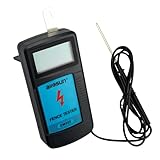
- 【allsun Digital Electric Fence Tester & Fault Finder】 Quickly locate breaks and weak spots with this digital electric fence tester. As a precise electric fence fault finder and reliable fence voltage tester, it saves you hours of troubleshooting. The clear LCD instantly shows readings from 300V to 9.9kV, ensuring your electric fence wire is live and operating at optimal power. Checking voltage on electric fence.Simply drive the probe into the ground or on one of the ground wires and touch the hook over the one you want to test. In just a few seconds, you start to read the actual volts at that point.
- 【Smart Power-Saving Electric Fence Checker】 Experience hassle-free operation. This electric fence checker features Smart Power technology, waking upon detecting a pulse and shutting down after 4 seconds of inactivity. This fence tester not only extends battery life but is always ready for use, making it a superior voltage tester electric fence solution.Pulse Rate: one pulse every 0.5 sec to 2 secs. Saving battery power. Low power consumption about 0.03W, Keep one on hand for regular fence line maintenance.
- 【Rugged Electric Fence Wire & Voltage Tester】 Built for demanding farm conditions. This rugged electric fence wire tester and electrical fence tester features an integrated finger guard and insulated probe for maximum safety. Simply drive the probe into soil, attach the hook, and get a secure reading every time with this dependable fencing tester. It can be matched to any animal control situation, offering both budget and design flexibility. You can use it fixing your electric fence or works well for testing your fence voltage. Auto-power off.
- 【Easy-Read Digital Fence Meter & Tester】 Get clear, unambiguous readings from the user-friendly LCD screen. This digital electric fence tester acts as an accurate electric fence meter, eliminating the guesswork of analog models. It displays in kV (e.g., 6.0 = 6.0kV) for precise assessment of your fence's performance, a core function of any true electric fence tester digital.Battery Not Included: Voltage Tester Electric Fence, please kindly note it, battery NOT included, Comes with a zipper bag so the cord doesn't tangle with the other items in your fence repair bucket.English manual instruction, one fence tester.
- 【Electrical Fence Tester】 Your complete solution for perimeter security. This electrical fence tester is suitable for routine fence voltage testing and diagnosing issues across all electric fencing. An essential fence fault finder for every landowner to protect livestock and pastures.quick easy read electric fence tester can be used in daylight vs led light testers that you can't see light up in daylight. Reads the zap strength as a number and holds the number on the screen making it much easier to read.
Adapt cattle and control how much corn they can eat
Cattle may select ears first, making grain intake a central management concern when ears have developed. Do not turn hungry cattle onto standing corn. Adapt cattle to grain before offering substantial access, and use a controlled fresh allocation rather than opening the entire field at once.
UNL CropWatch’s 2022 guidance recommends giving no more than a two-day supply at once, with a one-day supply especially useful for younger growing cattle. Treat that as a management example, not a universal stocking rate or allowance: actual allocation should account for measured forage and grain, cattle class, and observed intake. UNL CropWatch.
Recommended Free Tools
Rank #3

- 8KV Precision Electric Fence Voltage Tester:Neoteck fence tester with 700V to 8000V measurement range, every 0.5-2s pulse frequency, accurately determine its voltage level,promptly detect voltage attenuation caused by vegetation short circuits or aging of the lines. The fence tester features a low-impedance design, enabling precise voltage level identification and accurate readings, which facilitates daily maintenance and troubleshooting of fence lines
- Easy To Use: To use the fence tester, simply hang the top metal ring hook on the wire or fence and insert the probe into the ground,the operation is convenient. The fence voltage checker requires an operating environment of 0°C to 50°C with 75% relative humidity, and storage conditions of -20°C to 60°C with less than 85% relative humidity.It can withstand cold climates, making daily inspections and fence voltage diagnostics fast, easy, and reliable in any season
- 8 Neon Indicator Lights:Neoteck electric fence fault finder with 8 neon indicator lights. These lights can withstand thousands of volts and offer better readability in shaded conditions. This fence tester operates without batteries, and the neon lights have a lifespan of up to 20,000 uses, saving time and Reducing the hassle of battery replacement.Please note,under bright sunlight, shading the lights with your hand is recommended for optimal visibility
- Anti-Slip and Sturdy: This fence voltage checker features a side panel with a wave-textured design and a matte ABS material casing, providing a firm, non-slip grip and reducing finger fatigue. At the same time, the fence tester is compact and can be carried in a pocket, making it convenient for on-the-go troubleshooting,ideal for daily patrols and inspections
- Usage Precautions: It is recommended to verify the electric fence voltage tester’s working condition using an electronic fence with a known voltage before use. In low-voltage environments, strong light exposure may make the lights difficult to observe, which is a normal phenomenon.Before conducting any electrical measurements,ensure that your body is isolated from the ground, and wear insulated gloves, protective clothing, and rubber shoes
Build a ration around the crop and the cattle
The ears, husks, leaves, and stalks do not necessarily provide the right balance of fiber, protein, energy, and minerals for every class of cattle or production stage. UNL notes that additional forage may be needed to provide rumen fiber and that protein supplementation may be appropriate depending on crop maturity and cattle requirements. Have a nutritionist or extension specialist evaluate the ration rather than choosing a supplement from a general recommendation.
Plan fencing, water, labor, and weather backup
Strip grazing or cross-fencing lets a producer control access, limit trampling waste, and move cattle onto a fresh allocation. A portable electric fence setup can be useful, but the configuration depends on the herd, training, and field. Maryland Extension notes that cattle accustomed to electric fencing may be managed with two hot wires or polywire; that is not a guarantee that the same setup will work in every situation. Maryland Extension.
Rank #4

- Widely Application: The electric fence tester can only be used to test standard duty, low impedance electric fences. You can use it checking power on the electric fence around the garden, small enough to carry in a pocket. You have to hide it or put something over the top of it like that to see the light because in direct sunlight the neon light will not show up very well.The higher the voltage, the brighter the neon lamp.
- Easy To Use: The electric fence voltage checker can test voltage levels on your fence line and fence controller,finding fence faults. Hook the metal loop on top to the wire, stick the probe in the earth. Just hang it on the fence and stick the probe in the ground under the fence. This product is only suitable for use in environments with temperatures ranging from 0 ℃ to 40 ℃ and relative humidity ≤ 80%; At the same time, the storage conditions of the equipment must meet the requirements of temperature -20 ° C~50 ° C and relative humidity ≤ 85%.
- Neon Lamps, Not LED: The electric fence voltage tester, neon lamps indicates voltage levels from 0.6kv to 7kv (600 volts to 7000 volts). It uses neon bulbs, not LEDs to show voltage, neons are durable and can handle thousands of volts, much easier to read in shade or in evening light.
- Dim Lights And Neon Principle: The electric fence testers have a pulse low voltage wire fence, make sure the wires are not touching anything metal by using plastic insulation to attach wires to your fence posts. The tester does not use batteries, and thus works on the principle of the fence high voltage exciting a neon bulb. As such, the light will never be bright, due to the technology of the bulbs. You CAN use it in sunlight, please kindly use your hand to shade the lights and it did the trick-- they will NOT be bright, but they ARE visible. Keep one on hand for regular fence line .
- Tips Before Use: ALLOSUN fence tester can be matched to any animal control situation, offering both budget and design flexibility. You got to remember not the hits that touch the poly wire before you test. It is recommended to verify the tester's operation by measuring a known electric fence before use. Low voltages may be the issue that not being able to see the lights in bright sunshine.
- Fencing and cattle moves: account for equipment, setup, time, and the labor of moving the fence and herd.
- Water: confirm cattle can reach an adequate supply wherever the grazing allocation is located.
- Weather: identify how cattle will be fed during snow, ice, or other conditions that prevent grazing, and have alternate feed available. NDSU Extension highlights fencing and water as limitations and recommends a weather contingency. UNL Panhandle Extension.
Independent reader supportYour contribution helps us test, update, and keep practical guides available for everyone.
Compare grazing with the alternatives
There is no established universal economic winner. Compare the total cost and expected animal performance of grazing with harvesting the crop for hay or silage, feeding purchased hay, or using another available forage. Include the value the crop could bring if harvested, not just the apparent value of feed left standing.
Do these 3 things before closing this tab:
1Repair Windows errors before they cause bigger problems2Scan for outdated or missing drivers - takes under a minute3Clear out junk files and repair common Windows errorsSpecial offer. See more information about Outbyte and uninstall instructions. Please review EULA and Privacy policy.Best Value
 GOGONFLY Electric Fence Voltage Tester, 12KV Portable Fence Testing Tool with 8 Indicator Lights Fault Finder for Farm
- MEASURING RANGE: The electric fence wire tester measures voltages in the range of 2kv -12kv, neon display, and the service life of the ordinary strobe light is up to 20,000 times. No need to add batteries
- 8 INDICATOR LIGHTS: The fence voltage tester has 8 neon indicator lights corresponding to the detected voltage, which are easy to observe and use to find faults in the fence wire. You can keep 1 for regular fence wire maintenance because it is designed for low impedance and standard working fence controllers
- EASY TO USE: Just embed the copper probe into the ground and let the top hook touch the wire or tape. It will display the reading range of the voltage. The reading is different from the LED. The small design allows you to put it in your pants and it will not take up much space
- PORTABLE & CONVENIENT: This fence voltage tester is lightweight, compact and easy to carry, allowing you to use it anytime and anywhere.
- WIDE APPLICATION: This fence tester can quantify voltage on various metals, polyethylene wires, ropes and polyethylene tapes as well as fence wires, power supplies, grounding systems, connecting wires and fence components. Helps to find fence wire faults
Decision factor What to include Feed and crop value Expected usable feed and animal performance; the crop’s foregone harvest value; and the cost of purchased hay or other feed as an alternative. Grazing setup Fencing and water equipment, installation, maintenance, labor, and time spent moving cattle. Ration and safety Potential forage, protein, or other supplementation; crop maturity and grain proportion; pesticide-label restrictions; and the response to nitrate risk. Operating conditions Cattle class, soil and weather conditions, available labor, and alternate feed if grazing is interrupted. UNL Beef gives a feed-cost figure of $145 per ton on a dry-matter basis in its 2026 discussion. The article says fencing, supplements, management, and care must also be included to determine total cost per day, so the figure is not a current universal market quote or a complete grazing cost. UNL Beef.
A University of Maryland Extension article published in 2024 describes a 16-year University of Nebraska study that reported no compaction from fall or early-spring grazing and no impact on soil nutrient content in that study. Those findings do not establish the same outcome on wet soils, all soil types, or under every grazing system. Maryland Extension.
A practical go/no-go sequence
- Confirm the crop and objective. Establish whether this is unharvested standing corn or post-harvest residue, and whether the aim is to bridge a forage shortage or use a low-yield crop. Compare grazing with harvest and other feed options.
- Clear field restrictions and evaluate risk. Review product labels, examine crop stress, and arrange forage testing or local advice if nitrate exposure is a concern—especially if cattle may consume lower stalks.
- Set the adaptation and allocation plan. Avoid turnout with hungry cattle; account for grain; decide how much fresh crop cattle can access at a time; and monitor intake.
- Balance the ration. Match forage and supplements to crop maturity and the cattle’s production needs with qualified nutrition advice.
- Cost and equip the system. Confirm fencing, water, labor, weather backup, and alternate feed, then compare total costs and expected performance with the foregone crop value and other feed choices.
The cited extension guidance is primarily U.S.-based. Field-specific pesticide labels, forage tests, local conditions, and veterinary or nutrition advice should govern the decision for a particular farm.
Quick Recap
Bestseller No. 4Product prices and availability are accurate as of the date/time indicated and are subject to change. Any price and availability information displayed on Amazon at the time of purchase will apply.
Special offer. See more information about Outbyte and uninstall instructions. Please review EULA and Privacy policy.




