The transparent blobs in the widely shared UK beach photographs were identified in BGR’s June 7, 2021 report as sea gooseberries, or comb jellies (Pleurobrachia pileus). They are small ocean predators, not aliens or a newly discovered species. The exact beach and event details were not established in the accessible report, so the identification should be understood as that report’s account.
What were the tiny clear blobs?
They were reported as Pleurobrachia pileus, commonly called sea gooseberries. This species belongs to the comb jellies, a group distinct from true jellyfish. The name “comb jelly” comes from rows of cilia arranged in comb-like plates. The plates beat in sequence, producing the animal’s slow, coordinated movement through the water.


The animals described in the report had a body about an inch long. Their fine tentacles could extend nearly two feet and help capture small prey such as plankton and larvae.
Why did they end up on the sand?
BGR’s account suggests a combination of limited swimming ability and tidal transport. Sea gooseberries can remain near the surface when feeding, and a tide may carry them toward shore before they can move away. The report also describes a general pattern in which they gather in shallow water at night and move deeper during daylight as prey distribution changes. That is natural-history context, not a measurement made during this particular beaching.
Quick wins for a faster PC:
Clear out junk files and repair common Windows errorsFree Scan →Fix the driver behind crashes, sound loss and screen glitchesFind Drivers →Repair Windows errors before they cause bigger problemsFix Now →#1 Best Overall
No event-specific count, bloom explanation, climate cause, or verified population increase was established in the report. The photographs show an extensive stretch of transparent organisms, but they do not by themselves establish how many animals were present or why that event occurred.
Are sea gooseberries dangerous?
Compared with strongly stinging jellyfish, the comb jelly described by BGR poses little threat to swimmers. That does not make an unidentified beach organism safe to touch. Stranded animals can be difficult to identify from photographs, and other jelly-like species may have very different defenses. Keep children and pets from handling them, and follow local beach advisories.
Rank #2

- 500-page reference detailing 1,600 animals with 2,000 photographs
- text focuses on mobile species, highlighting crustaceans, mollusks, worms and echinoderms
Are comb jellies the same as jellyfish?
No. Both groups are gelatinous marine animals, but comb jellies are not true jellyfish. Comb jellies propel themselves with ciliary comb rows, whereas jellyfish typically swim by contracting their bell. The sea-gooseberry identification therefore should not be used as a blanket label for every clear blob found on a beach.
How to tell this UK sighting from blue Pacific “blobs”
Later reports from the Pacific Coast describe a different animal: the by-the-wind sailor, Velella velella. Those colonies are blue and have a visible sail, unlike the small, transparent comb-jelly bodies reported in the UK story.
Do these 3 things before closing this tab:
1Scan for outdated or missing drivers - takes under a minute2Clear out junk files and repair common Windows errors3Fix the driver behind crashes, sound loss and screen glitchesRank #3
| Feature | UK report (2021) | Pacific reports (2025–2026) |
|---|---|---|
| Species | Sea gooseberry, Pleurobrachia pileus | By-the-wind sailor, Velella velella |
| Appearance | Transparent, gelatinous body with comb rows and long tentacles | Blue, sail-bearing floating colony |
| Reported location | Somewhere on a UK beach; the exact beach was not established in the accessible account | Pacific Coast beaches in California, Oregon and Washington |
| Transport explanation | Likely tides carrying weak swimmers shoreward while near the surface | Wind- and current-driven drift associated with seasonal conditions |
Jennifer Stock, an education specialist at Greater Farallones National Marine Sanctuary, explained the Velella pattern to Live Science on April 4, 2025: “The true start/end of that season shifts every year based on a wide set of variables, but the presence of velellas indicates a shift in winds and currents, and the velellas, which are propelled by wind/current alone, get directed to the beaches.” That statement applies to Velella, not to the UK sea-gooseberry event.
Chrissy Piotrowski, senior collections manager of invertebrate zoology at the California Academy of Sciences, similarly told Smithsonian Magazine on May 19, 2026: “They wash ashore en masse, because that’s sort of how they move around in the ocean.” She was discussing Velella strandings, not Pleurobrachia pileus.
Rank #4

- Used Book in Good Condition
What the photographs can—and cannot—show
- They can suggest: a transparent, gelatinous animal consistent with a comb jelly and an unusually broad area of stranding.
- They cannot establish: the exact species without examination, the total number of animals, the cause of the event, or whether the sighting represented an unusual population surge.
- They should not be compared by color alone: blue Velella colonies and clear sea gooseberries are different animals from different events.
The “alien” description reflects the animals’ unfamiliar appearance in photographs. The reported identification is more ordinary—and more interesting: a small comb jelly whose feeding behavior and weak swimming made it vulnerable to being carried onto shore.
Quick Recap
Best Value
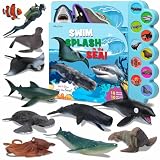
- OCEAN THEME TOY SET: 10 PCS different sea toys with 1* sounds book and 1*diver contains high quality PVC dinosaur books for kids, non-toxic spray paint and detailed realistic shape design allows children to in the animal scene to obtain spatial imagination, animal identification ability, multi-sensory stimulation, sea animals toys and books with the perfect match to make learning more image, so that children enjoy the visual, auditory, tactile intuitive experience!
- UNIQUE SHAPED DESIGN: Dinosaur book with sounds is different from the traditional flat book design for animal head raised design, unique shaped interlaced design makes the figures more vivid and intuitive, attracting the attention and interest of kids.Die-cut pages design - each picture jumps off the page - perfect for preschool education. 10 exciting sound buttons, colorful illustrations of ocean animals, a professional and fun text, and an interactive experience for children to learn about sea animals
- DURABLE MATERIALS: Kids dinosaur sound books are made of high quality paper, smooth surface and edges to ensure the safety of children's use, enough thickness and ABS cover make the book more thick and not easy to damage, suitable for long-term use. Suitable size and weight for carrying or storing on the go.Includes an on/off switch on the back cover to extend battery life.Small ocean figures size is very suitable for children's hands to grasp
- ABOUT THE AUTHOR: Anna is a senior illustrator and graphic designer. She has been over 20 years of experience in the education industry. Illustration is a great passion and on the basis of educational , significancefinds it an effective and creative way to convey a message or emotion. Inspired by her three and five year old boys who love different kinds of animals, she created this board book with the aim of bringing joy to children while educating them
- PERFECT GIFT FOR CHILDREN: iGRATENS specializes in making children's developmental toys, sound books with sea animal figures are perfect for birthdays, Christmas, holidays, Halloween or other important days as a gift or reward. create a world of fun and education that will leave children beaming
Product prices and availability are accurate as of the date/time indicated and are subject to change. Any price and availability information displayed on Amazon at the time of purchase will apply.




