Fossils from Mammoth Cave and nearby Alabama formations have revealed two previously undescribed ancient shark species: Troglocladodus trimblei and Glikmanius careforum. The National Park Service announced the discovery in 2024. The sharks lived in a shallow sea about 325 million years ago; they were not living animals found in the cave, and Mammoth Cave’s passages formed much later.
What the discovery includes
The fossils belong to ctenacanths, an extinct group of cartilaginous fishes related to sharks. The National Park Service (NPS) estimates that each species reached about 10–12 feet (3–3.6 metres) long. Those are estimates based on fossil evidence, not measurements of complete skeletons.
The announcement describes two new-to-science species, not three. Fossils attributed to both were found in Mammoth Cave and in formations in northern Alabama. The NPS release does not establish a population count or the number of individual sharks represented.
How the two species differ
| Species | Fossil evidence | Estimated size | What the fossils suggest |
|---|---|---|---|
| Troglocladodus trimblei | Adult and juvenile teeth from Mammoth Cave’s St. Louis and Ste. Genevieve formations and Alabama’s Bangor Formation. The first specimen was a tooth found by Mammoth Cave Superintendent Barclay Trimble in 2019. | About 10–12 feet, estimated by NPS in 2024; NPS compares its size with an oceanic whitetip shark. | The teeth identify it as a ctenacanth shark. The available evidence does not establish a specific hunting strategy. |
| Glikmanius careforum | Primarily teeth from several Mammoth Cave and Alabama formations, plus a young individual represented by a partial jaw and gills. | About 10–12 feet, estimated by NPS in 2024; NPS compares its size with a lemon shark. | Its jaw shape suggests a powerful bite. NPS says likely prey included smaller sharks, bony fish, and squid-like orthocones. |
The jaw and gills attributed to a young G. careforum are particularly informative because shark skeletons are mostly cartilage, which rarely fossilizes. They provide unusual anatomical evidence, but they are not a complete shark body. The fossil record for T. trimblei described in the announcement consists of teeth.
#1 Best Overall
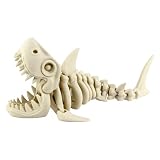
- Museum-Inspired Fossil Replica – Expertly 3D printed to capture the intricate skeletal structure and realistic proportions of prehistoric dinosaurs, creating a display-worthy piece for enthusiasts and fossil fans alike.
- Collector-Grade Display Quality – Designed with hobbyists and collectors in mind, this piece offers crisp detail and a professional finish that elevates any dinosaur or fossil collection.
- Durable & Lightweight Construction – Made from premium PLA material for a sturdy yet easy-to-handle structure, ensuring long-lasting enjoyment without the fragility of real fossils.
- Versatile Display Options – Ideal for showcasing on desks, bookshelves, display cases, or as part of themed décor in offices, libraries, or dedicated hobby rooms.
- A Unique Conversation Starter – Whether placed in a home, workspace, or collection room, this fossil replica is sure to spark curiosity and admiration from anyone who sees it.
What the ancient sea was like
About 325 million years ago, during the Mississippian, much of the region now occupied by Kentucky and Alabama lay beneath a shallow, near-shore sea. NPS describes an ancient seaway connecting parts of what are now eastern North America, Europe, and northern Africa, before Pangaea formed.
The fossil-rich limestone formed in that marine setting. NPS says at least 70 species of ancient fish have been identified at Mammoth Cave. Paleontologist and shark fossil specialist John-Paul Hodnett has described a diverse assemblage of cartilaginous fishes, from large predators to small sharks living among seafloor crinoids.
Rank #2

- IT FROM XUQCAH MATERIAL AND FOIMOJSK PAR ENT AND Thurder LOVER
- Museum Quality Replica
- Please thoroughly read discription
Why the fossils are in a cave younger than the sharks
The age of the fossils and the age of Mammoth Cave’s passages are different. The fossils were preserved in limestone roughly 325 million years old. NPS says the cave passages began developing about 10–15 million years ago, as weakly acidic water dissolved limestone along cracks. The fossils were therefore in ancient rock long before cave formation exposed them in passage walls and ceilings; they were not inside an existing cave for 325 million years.
Mammoth Cave is the world’s longest known cave. NPS reported 426 miles of mapped passages in 2022, after six miles were added to the survey. Mapped totals can change as exploration continues, so that figure should be read with its reporting year.
Outdated Drivers Are Slowing You Down
One free scan finds every outdated or missing driver and matches the right update for your exact hardware.Free scan · exact hardware matchWindows Errors? Fix Them Before They Spread
Repair common Windows errors and clear accumulated junk for a smoother, more stable PC - no reinstall needed.Free scan · no reinstallRank #3
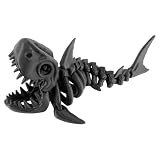
- Museum-Inspired Fossil Replica – Expertly 3D printed to capture the intricate skeletal structure and realistic proportions of prehistoric dinosaurs, creating a display-worthy piece for enthusiasts and fossil fans alike.
- Collector-Grade Display Quality – Designed with hobbyists and collectors in mind, this piece offers crisp detail and a professional finish that elevates any dinosaur or fossil collection.
- Durable & Lightweight Construction – Made from premium PLA material for a sturdy yet easy-to-handle structure, ensuring long-lasting enjoyment without the fragility of real fossils.
- Versatile Display Options – Ideal for showcasing on desks, bookshelves, display cases, or as part of themed décor in offices, libraries, or dedicated hobby rooms.
- A Unique Conversation Starter – Whether placed in a home, workspace, or collection room, this fossil replica is sure to spark curiosity and admiration from anyone who sees it.
What “sea monsters emerge” really means
“Sea monsters” and “emerge” are vivid headline language, not literal descriptions: these were extinct marine animals, and their fossils were identified in ancient rock exposed inside Mammoth Cave. Some specimens can appear strikingly well preserved, but that appearance is not evidence that they are recent or that a particular preservation process has been proven. The discovery announced by NPS in February 2024 concerns the two species described above.
Sources: National Park Service, “Two New Shark Species” (February 1, 2024); NPS Mammoth Cave paleontology; NPS Mammoth Cave cave formation; NPS, mapped cave length (2022); Live Science coverage (February 7, 2024).
Quick Recap
Best Value

- Museum Quality Replica
- 5.5 inches
- Please thoroughly read discription
Rank #4

- Museum-Inspired Fossil Replica – Expertly 3D printed to capture the intricate skeletal structure and realistic proportions of prehistoric dinosaurs, creating a display-worthy piece for enthusiasts and fossil fans alike.
- Collector-Grade Display Quality – Designed with hobbyists and collectors in mind, this piece offers crisp detail and a professional finish that elevates any dinosaur or fossil collection.
- Durable & Lightweight Construction – Made from premium PLA material for a sturdy yet easy-to-handle structure, ensuring long-lasting enjoyment without the fragility of real fossils.
- Versatile Display Options – Ideal for showcasing on desks, bookshelves, display cases, or as part of themed décor in offices, libraries, or dedicated hobby rooms.
- A Unique Conversation Starter – Whether placed in a home, workspace, or collection room, this fossil replica is sure to spark curiosity and admiration from anyone who sees it.
Product prices and availability are accurate as of the date/time indicated and are subject to change. Any price and availability information displayed on Amazon at the time of purchase will apply.




