Two extinct shark relatives have been identified from fossils preserved in rock at Mammoth Cave—but they did not swim through the cave, and no living “sea monsters” emerged from its passages. The animals lived in shallow seas about 325 million years ago, during the Mississippian Period. Their remains were buried in marine sediment that eventually became limestone. Much later, groundwater dissolved parts of that limestone and formed the modern Mammoth Cave system.
Two extinct shark relatives have been identified from fossils preserved in rock at Mammoth Cave—but they did not swim through the cave, and no living “sea monsters” emerged from its passages. The animals lived in shallow seas about 325 million years ago, during the Mississippian Period. Their remains were buried in marine sediment that eventually became limestone. Much later, groundwater dissolved parts of that limestone and formed the modern Mammoth Cave system.

As an Amazon Associate I earn from qualifying purchases.
The 2024 discovery revealed two species new to science: Troglocladodus trimblei, a new genus and species, and Glikmanius careforum, a new species in the previously known genus Glikmanius. Both were ctenacanthiforms—extinct cartilaginous fishes related to the broader shark-and-ray lineage.
What was actually discovered?
The fossils were identified through the National Park Service’s Paleontological Resources Inventory at Mammoth Cave National Park in Kentucky. Additional specimens came from Late Mississippian marine formations in northern Alabama. The formal study was published online on February 1, 2024, in the Journal of Vertebrate Paleontology.
#1 Best Overall
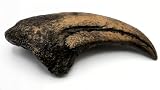
- Museum quality fossil cast replica from an acrocanthosaurus hand claw
- Claw is roughly 4.5 inches long
- Original was found at the Antlers Formation around the Oklahoma/Texas border
The evidence is not a pair of complete skeletons. Most of the material consists of isolated teeth, although researchers also found partial jaw and visceral-arch material from a young Glikmanius careforum in Mammoth Cave. That distinction matters: scientists can estimate the animals’ size and infer aspects of their feeding anatomy, but details such as coloration, exact body shape, swimming behavior, and specific prey attacks remain unknown.
Troglocladodus trimblei: the shark with branching teeth
Troglocladodus trimblei represents both a new genus and a new species. Researchers identified it from isolated adult and juvenile teeth found in the St. Louis and Ste. Genevieve Formations at Mammoth Cave, as well as in Alabama’s Bangor Formation.
Its name reflects its discovery setting and tooth structure: “Troglocladodus” refers to a cave and branching tooth. The teeth have broad central cusps, pronounced longitudinal ridges, several intermediate cusps, and relatively short bases. In plain language, they were complex, multi-cusped teeth rather than the simple triangular teeth many people associate with modern sharks.
The first specimen was a single tooth found in 2019 by Barclay Trimble, then superintendent of Mammoth Cave National Park, during an early inventory trip. Based on the available fossil evidence, the National Park Service estimates that the adult animal reached approximately 10 to 12 feet long—roughly comparable in scale to an oceanic whitetip shark. That is an informed estimate, not a measurement from a complete skeleton.
Glikmanius careforum: the species with preserved jaw material
Glikmanius careforum was also identified from isolated teeth found in Mammoth Cave and in several Alabama formations. Its most important material, however, is a partial jaw and visceral arch from a juvenile animal. Those structures provide anatomical information that isolated teeth cannot.
Rank #2
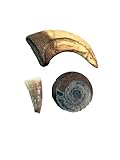
- Three-Item Fossil Set – Includes one Velociraptor claw replica, one Mosasaur tooth (B-grade), and one genuine small ammonite fossil
- Educational and Collectible – A great hands-on way to explore prehistoric life and paleontology
- Genuine Fossils Included – Both the Mosasaur tooth and ammonite are real fossil specimens
- Realistic Replica Claw – Velociraptor claw cast features high quality texture and curvature
- Ready for Display or Teaching – Great for collectors, educators, or science-themed gifts
The partial jaw includes elements of the palatoquadrate and Meckel’s cartilage. Their shape and proportions help distinguish this species from related Glikmanius forms. The species name honors the Cave Research Foundation, whose members helped explore the cave and locate the jaw material.
The National Park Service estimates that mature G. careforum individuals reached about 10 to 12 feet, approximately the size of a lemon shark. Its short-headed jaw and robust anatomy suggest a powerful bite. Researchers interpret that structure as potentially suitable for eating smaller sharks, bony fish, and orthocones—extinct, squid-like cephalopods with straight shells. This is a morphology-based ecological interpretation, not evidence that scientists observed a particular meal or bite mark.
The Tool Desk
Outbyte PC Repair FREEClear out junk files and repair common Windows errorsFree Scan →Outbyte Driver Updater FREEFix the driver behind crashes, sound loss and screen glitchesFind Drivers →Were the sharks really trapped inside Mammoth Cave?
No. The sharks were preserved in marine rock; they were not swimming in a cave that already existed 325 million years ago.
The sequence is easier to understand in stages:
- Ancient shallow sea: Around 325 million years ago, shallow marine waters covered what is now Kentucky and Alabama.
- Death and burial: Fish remains settled into marine sediments along with the remains of other sea life.
- Limestone formation: Over geological time, those sediments hardened into marine limestone. The fossil-bearing St. Louis, Ste. Genevieve, Haney, Hartselle-equivalent, and Bangor units preserve evidence of those former marine environments.
- Geological change: The seaway disappeared as continents shifted and assembled into Pangaea. The region was uplifted and reshaped over immense spans of time.
- Cave formation: Much later, groundwater moved through soluble limestone, enlarging cracks and creating the passages that now make up Mammoth Cave.
The oldest parts of the modern Mammoth Cave system are estimated to have begun forming around 10 million years ago—hundreds of millions of years after the sharks lived. Cave passages can expose or intersect fossil-bearing layers, allowing modern explorers and scientists to study rocks that formed beneath an ancient seafloor.
Why is Mammoth Cave called the world’s largest cave?
“World’s largest cave” is a popular but imprecise description. Mammoth Cave is more accurately known as the world’s longest known cave system, measured by surveyed passage length.
Rank #3

- Utahraptor was a large theropod dinosaur that lived during the Early Cretaceous period, known for its sharp claws and hunting abilities
- This replica is based on a real Utahraptor fossil discovered in Utah, accurately capturing the shape and detail of the original claw
- The Utahraptor’s curved claw was used for gripping and slashing, making it a key tool for hunting prey
- Cast in durable resin, this 5.5-inch replica offers museum-quality detail and texture
- Made in the USA, this fossil reproduction is perfect for collectors, educators, and dinosaur enthusiasts
The National Park Service reports more than 426 miles—about 685 kilometers—of mapped passage. That figure can change as explorers survey additional passages. The system’s enormous size is one reason it has been such a productive setting for paleontological and geological research, but the newly identified sharks were found in rock associated with the cave, not in an ancient underground ocean.
How were the fossils found?
The project began at Mammoth Cave in November 2019 as part of the National Park Service Paleontological Resources Inventory. Ancient-shark specialist John-Paul Hodnett worked with the NPS Paleontology Program, Mammoth Cave personnel, the University of Alabama’s Geological Sciences Department, and the Cave Research Foundation.
The collaboration was especially important because cave fossils can be difficult to reach, document, and preserve. Exploration and mapping provide access to passages and rock exposures; paleontologists then compare specimens, document their geological settings, and determine whether the anatomy represents a known animal or a taxon new to science.
Trimble’s discovery of the first Troglocladodus tooth provided the initial clue. Cave Research Foundation members helped locate the partial jaw material that made Glikmanius careforum especially informative. The inventory has identified at least 70 species of ancient fish from more than 25 surveyed caves and passages at Mammoth Cave.
Independent reader supportYour contribution helps us test, update, and keep practical guides available for everyone.Why the discovery matters to paleontology
The find is significant for more than its dramatic setting. The two species expand the known diversity of ctenacanthiforms, an extinct order whose fossil history extends from the Late Devonian to the Middle Permian. Ctenacanths displayed a wide range of tooth forms and body sizes, and the new specimens add evidence to that diversity.
Glikmanius careforum is particularly important because the jaw and visceral-arch material preserve anatomy beyond isolated teeth. Those structures help researchers compare the new species with related forms and support a clearer understanding of ctenacanth relationships. According to the National Park Service, the discovery also pushes the known origin of this Glikmanius lineage more than 50 million years earlier than previously expected.
The study further supports recognition of three major lineages within Ctenacanthiformes. That does not mean either animal was the direct ancestor of a particular living shark species. Ctenacanthiforms were an extinct branch of cartilaginous fishes, and the available fossils are better evidence for ancient diversity and relationships than for a simple, direct line from one of these animals to modern sharks.
A modern cave exposing an ancient marine world
Mammoth Cave is famous for its underground passages, but its rocks preserve a much older story. The newly described fossils connect a present-day Kentucky landscape with a shallow Carboniferous sea, when sharks, bony fish, and orthocones occupied marine environments that no longer exist.
What’s actually slowing this PC down?
Pick the symptom - the matching free tool is one click away.
So the headline’s “sea monsters” are real only in the colorful journalistic sense. What emerged from the depths was not a living animal or an intact body, but scientific recognition of two extinct shark relatives preserved in ancient marine limestone: Troglocladodus trimblei and Glikmanius careforum.
Best Value
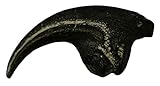
- The allosaurus was a large, theropod predator that lived roughly 156 to 130 million years ago and may have grown up to 39 feet (12 m) long
- Cast of the large toe ungual from the towering bipedal carnivorous dinosaur of the Jurassic
- The original claw was unearthed in the Morrison formation at the Cleveland-Lloyd Quarry in central Utah
- Detailed cast replica. 7 inches. Museum quality resin cast made in the USA
Frequently Asked Questions
Were the two sharks trapped inside Mammoth Cave for 325 million years?
No. The animals lived in shallow marine waters about 325 million years ago. Their remains were buried in sediment that became limestone, while the modern Mammoth Cave passages formed much later through groundwater erosion.
What are the two new “sea monsters” found at Mammoth Cave?
The two species are Troglocladodus trimblei and Glikmanius careforum. Both were extinct ctenacanthiforms, an order of cartilaginous fishes related to the broader shark-and-ray lineage.
Is Mammoth Cave the world’s largest cave?
Mammoth Cave is more accurately the world’s longest known cave system, with more than 426 miles, or about 685 kilometers, of surveyed passage. The total may change as additional passages are mapped.
Quick wins for a faster PC:
Clear out junk files and repair common Windows errorsFree Scan →Fix the driver behind crashes, sound loss and screen glitchesFind Drivers →The Bottom Line
Bottom line: Two new extinct ctenacanth sharks were identified from roughly 325-million-year-old marine fossils found in Mammoth Cave and related Alabama formations. The sharks lived in an ancient shallow sea; the modern cave formed much later and exposed the fossil-bearing limestone. The discovery expands knowledge of early shark-relative diversity and pushes the known history of one lineage more than 50 million years backward.
Quick Recap
Product prices and availability are accurate as of the date/time indicated and are subject to change. Any price and availability information displayed on Amazon at the time of purchase will apply.




