Outdated Drivers Are Slowing You Down
One free scan finds every outdated or missing driver and matches the right update for your exact hardware.Free scan · exact hardware matchPC Slower Than It Used to Be?
A free scan shows the junk files, broken settings and background clutter dragging Windows down - then fixes them in one click.Free scan · Windows 10 & 11The “two new sea monsters” found in material from Mammoth Cave National Park were extinct sharks, not living animals emerging from the cave. Named Troglocladodus trimblei and Glikmanius careforum, they lived in ancient seas that covered parts of what are now Kentucky and Alabama more than 325 million years ago. Their fossils were identified in marine limestone long after those seas disappeared.
What were the two prehistoric sharks?
Both sharks belonged to Ctenacanthiformes, an extinct group known from the fossil record. The National Park Service announced the two names on February 1, 2024, after taxonomic work published in the Journal of Vertebrate Paleontology. The paper was accepted on December 5, 2023.
Their names reflect different contributions to the discovery. Troglocladodus trimblei is a newly identified genus and species; its species name honors Mammoth Cave National Park superintendent Barclay Trimble. Glikmanius careforum is a new species within the already known genus Glikmanius; its name honors the Cave Research Foundation.
How do the sharks compare?
| Feature | Troglocladodus trimblei | Glikmanius careforum |
|---|---|---|
| Taxonomic status | New genus and species | New species in an existing genus |
| Fossil evidence | Identified chiefly from teeth | Teeth, plus partial jaw and visceral-arch material, including gill structures |
| Estimated adult length | About 10–12 feet, according to the National Park Service in 2024 | About 10–12 feet, according to the National Park Service in 2024 |
| Notable anatomy | Branching or forked teeth | A robust jaw and short-headed form |
| Name honors | Barclay Trimble | The Cave Research Foundation |
How old are the fossils, and what did the age mean?
The newly named sharks are from Middle to Late Mississippian marine sediments, more than 325 million years old. During that period, shallow seas covered parts of present-day Kentucky and Alabama. The age describes the ancient marine setting and fossil-bearing rock—not the age of Mammoth Cave as a modern cave.
The Tool Desk
Outbyte PC Repair FREEClear out junk files and repair common Windows errorsFree Scan →Outbyte Driver Updater FREEFix the driver behind crashes, sound loss and screen glitchesFind Drivers →#1 Best Overall
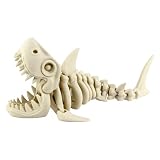
- Museum-Inspired Fossil Replica – Expertly 3D printed to capture the intricate skeletal structure and realistic proportions of prehistoric dinosaurs, creating a display-worthy piece for enthusiasts and fossil fans alike.
- Collector-Grade Display Quality – Designed with hobbyists and collectors in mind, this piece offers crisp detail and a professional finish that elevates any dinosaur or fossil collection.
- Durable & Lightweight Construction – Made from premium PLA material for a sturdy yet easy-to-handle structure, ensuring long-lasting enjoyment without the fragility of real fossils.
- Versatile Display Options – Ideal for showcasing on desks, bookshelves, display cases, or as part of themed décor in offices, libraries, or dedicated hobby rooms.
- A Unique Conversation Starter – Whether placed in a home, workspace, or collection room, this fossil replica is sure to spark curiosity and admiration from anyone who sees it.
A separate, previously reported Glikmanius fossil from Mammoth Cave was dated by the National Park Service to approximately 335–340 million years ago. That figure applies to that older specimen and should not be treated as a precise age for every fossil assigned to the newly named species.
Did the sharks really resurface inside Mammoth Cave?
No. “Resurface” is a headline metaphor for fossils being found, studied, and formally named. The sharks lived in an ancient sea; they did not swim through the modern cave. Their remains became part of marine carbonate rocks, and Mammoth Cave formed much later as water cut through those rocks.
Rank #2

- IT FROM XUQCAH MATERIAL AND FOIMOJSK PAR ENT AND Thurder LOVER
- Museum Quality Replica
- Please thoroughly read discription
How big were they, and what might they have eaten?
The National Park Service estimated both species at about 10–12 feet long in its 2024 announcement. These are estimates, not measurements of complete skeletons: the fossils are fragmentary, and the sharks’ anatomy is reconstructed from preserved remains.
Troglocladodus trimblei
Its distinctive forked or branching teeth are the key feature used to recognize it. The available evidence supports identifying the shark from its teeth, but does not establish a detailed diet or a specific hunting behavior.
Rank #3
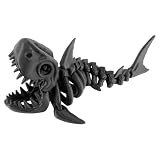
- Museum-Inspired Fossil Replica – Expertly 3D printed to capture the intricate skeletal structure and realistic proportions of prehistoric dinosaurs, creating a display-worthy piece for enthusiasts and fossil fans alike.
- Collector-Grade Display Quality – Designed with hobbyists and collectors in mind, this piece offers crisp detail and a professional finish that elevates any dinosaur or fossil collection.
- Durable & Lightweight Construction – Made from premium PLA material for a sturdy yet easy-to-handle structure, ensuring long-lasting enjoyment without the fragility of real fossils.
- Versatile Display Options – Ideal for showcasing on desks, bookshelves, display cases, or as part of themed décor in offices, libraries, or dedicated hobby rooms.
- A Unique Conversation Starter – Whether placed in a home, workspace, or collection room, this fossil replica is sure to spark curiosity and admiration from anyone who sees it.
Glikmanius careforum
Its robust, short-headed jaw suggests a powerful bite. The researchers proposed that it may have preyed on smaller sharks, bony fish, and orthocones—extinct, straight-shelled relatives of squid and other cephalopods. That is an interpretation from anatomy, not a directly observed diet.
Why are shark fossils in Kentucky, and what makes Mammoth Cave significant?
Kentucky was not always landlocked. The fossil-bearing Mississippian rocks formed in an ancient marine environment. Those limestone exposures preserve evidence of the animals that lived there, even though the sea is long gone.
Rank #4

- Museum-Inspired Fossil Replica – Expertly 3D printed to capture the intricate skeletal structure and realistic proportions of prehistoric dinosaurs, creating a display-worthy piece for enthusiasts and fossil fans alike.
- Collector-Grade Display Quality – Designed with hobbyists and collectors in mind, this piece offers crisp detail and a professional finish that elevates any dinosaur or fossil collection.
- Durable & Lightweight Construction – Made from premium PLA material for a sturdy yet easy-to-handle structure, ensuring long-lasting enjoyment without the fragility of real fossils.
- Versatile Display Options – Ideal for showcasing on desks, bookshelves, display cases, or as part of themed décor in offices, libraries, or dedicated hobby rooms.
- A Unique Conversation Starter – Whether placed in a home, workspace, or collection room, this fossil replica is sure to spark curiosity and admiration from anyone who sees it.
Shark skeletons are usually hard to preserve because they are made mostly of cartilage, which decays more readily than bone. Teeth fossilize more often, so finding jaw, gill, or other cranial-cartilage structures is especially informative. An earlier Mammoth Cave Glikmanius specimen preserves parts of the upper and lower jaws, gill structure, and teeth; the National Park Service dated that specimen to about 335–340 million years ago.
Independent reader supportYour contribution helps us test, update, and keep practical guides available for everyone.How were the new species identified?
The National Park Service’s Paleontological Resources Inventory documented fossil material in Mammoth Cave and in formations in Alabama. Researchers compared diagnostic tooth shapes to distinguish the species. The Glikmanius material also includes partial jaws and visceral arches; the National Park Service described the associated cartilage fossil set as the first of its kind known for that genus.
Free tools Windows power users keep installed
One-click scans. No signup required.
Best Value

- Museum Quality Replica
- 5.5 inches
- Please thoroughly read discription
The work involved the University of Alabama and Cave Research Foundation participants. As Trimble said in the National Park Service’s February 1, 2024, announcement, “Every new discovery at Mammoth Cave is possible due to collaborations.”
Are researchers still finding new sharks at Mammoth Cave?
Yes. The two species announced in 2024 are part of continuing paleontological work, not a one-time discovery. On March 10, 2025, the National Park Service announced another shark new to science from Mammoth Cave: Clavusodens mcginnisi, identified from fossil teeth in the Ste. Genevieve Formation.
Quick Recap
Product prices and availability are accurate as of the date/time indicated and are subject to change. Any price and availability information displayed on Amazon at the time of purchase will apply.




