Recommended Free Tools
A cat that strains in the litter box may have a bacterial urinary tract infection (UTI), but infection is only one possibility. Feline idiopathic cystitis, bladder stones, urethral plugs, cancer, and a blocked urethra can cause nearly identical signs.
The most urgent warning is repeated straining with little or no urine. This can indicate a urethral obstruction, particularly in male and neutered male cats, and requires emergency veterinary care rather than home treatment.
What is a urinary tract infection in cats?
A UTI is a bacterial infection affecting part of the urinary system. In cats, it most often involves the bladder or urethra. A bacterial infection that reaches the kidneys is called pyelonephritis and can make a cat seriously ill.
True bacterial UTIs are less common in young and middle-aged cats than many online articles imply. Cornell University estimates that bacteria cause approximately 1–3% of lower urinary tract disease cases in young to middle-aged cats and about 10% of cases in cats over 10 years old. Most cats with urinary symptoms have another condition, such as feline idiopathic cystitis (FIC), stones, or obstruction.
Windows Errors? Fix Them Before They Spread
Repair common Windows errors and clear accumulated junk for a smoother, more stable PC - no reinstall needed.Free scan · no reinstallOutdated Drivers Are Slowing You Down
One free scan finds every outdated or missing driver and matches the right update for your exact hardware.Free scan · exact hardware match#1 Best Overall

- THEY’LL BE GOOD TO GO: With our urinary tract health supplements for cats go time is going to be a great time. These cat treats support the urinary tract system & promote urinary tract health, while helping to maintain normal pH for cats & strengthen their immune system. Our cat immune support & cat digestive support help your pet feel their best by supporting normal bladder function, plus, they’re designed specially for cats by cat lovers, so you know it will be love at first bite.
- FROM THE INSIDE OUT: Pet Honesty’s Cat Urinary Health are crunchy, creamy supplements that support urinary health with cranberry for bladder which is a natural antioxidant that helps counter bad bacteria in the urinary tract, glucosamine for cats to support urinary tract function, as well as prebiotics, probiotics & fiber to support gut health. This is supplement support that’ll help put an extra pounce in your pet’s step & help them feel their best.
- PURPOSE-BUILT FOR PETS: With Pet Honesty’s Cat Urinary Health your little one will experience real results because our crunchy, creamy supplements are built on wholesome, natural ingredients like barley, brown rice, & fish oil that help your cat feel in top form so you can have happier, healthier years together.
- DROOL-WORTHY TASTE: Not only do our kidney and bladder support chews promote urinary tract health, they’re a crunchy, creamy supplement that tastes great too! In fact 9 out of 10 cats love the taste. So, in addition to giving your cat something that's good for them, you'll also be giving them something they’ll enjoy.
- THE HONEST DIFFERENCE: Our products are made with clean, science-backed ingredients for results you can trust, & with no fillers, artificial preservatives, colors, or flavors, you'll have no doubt your dog is getting the best. Proudly supporting pets in need nationwide & using recycled plastic in our packaging, there's also no doubt that we're committed to doing our best. -- All products are made in the U.S.A. | NASC Member Company
That is why urinary symptoms alone cannot confirm a UTI. A veterinarian may need a urinalysis and urine culture to establish whether bacteria are actually causing the problem.
Signs of a possible cat UTI
Contact your veterinarian if your cat develops any of these changes:
- Frequent trips to the litter box
- Passing only small amounts of urine
- Straining or squatting for a long time
- Crying, whining, or appearing painful while urinating
- Blood in the urine
- Repeated licking of the genital area
- Urinating outside the litter box
- Choosing cool, smooth surfaces such as a bathtub, tile floor, or sink
Some older cats and cats with other illnesses may show few obvious urinary signs, even when bacteria are present. Conversely, these same signs can result from sterile bladder inflammation, stones, urinary plugs, cancer, or other problems. A cat that improves after antibiotics does not necessarily have had a UTI; noninfectious urinary conditions can improve on their own.
When a cat needs emergency treatment
Go to an emergency veterinarian immediately if your cat repeatedly strains but produces little or no urine. Do not wait overnight to see whether the problem clears up.
A blocked urethra prevents urine from leaving the body. It is more common in male cats because their urethra is longer and narrower. Signs may include:
Rank #2

- HELPS NORMALIZE BLADDER MUSCLE FUNCTION + SUPPORT KIDNEY HEALTH: Give your pup total comfort and long-term vitality! Our advanced cranberry for dogs urinary tract support formula provides essential daily defenses for proper waste elimination. By helping to maintain normal bladder control and renal health, these chews reduce occasional accidents and support aging pets needing heavy-duty leakage or incontinence support.
- SUPPORT NORMAL KIDNEY DETOXIFICATION: Keep their internal filtration system running smoothly. These high-potency cranberry dog treats feature premium D-Mannose to help flush out impurities and keep the renal system functioning efficiently. By promoting a normal, healthy urinary environment and supporting kidney health, your dog can comfortably process and eliminate waste every day.
- SUPPORT FROM THE INSIDE OUT: MADE FROM NATURALLY DERIVED INGREDIENTS: We choose functional superfoods over synthetic fillers. Our formula leverages organic Marshmallow Root to soothe the urinary lining and balance urine pH levels, reducing the likelihood of crystal formation. Powered by a premium postbiotic blend (Brewer's Yeast) to reinforce immune health, it delivers clean, uncompromised wellness with zero corn, wheat, or soy.
- SOFT CHEWS FOR ALL DOG BREEDS + SIZES: No messy powders or difficult tablets to hide in their food! These soft, bite-sized cranberry bites for dogs make supplement time an absolute breeze. Specifically crafted for easy everyday compliance, our delicious natural bacon flavor appeals to all breeds, sizes, and even highly selective eaters who need daily, sustainable bladder strength maintenance.
- THE HONEST DIFFERENCE: Invest in the clinical-grade wellness your furry family member deserves. Formulated by animal health experts and proudly Vet-Recommended, our premium chews are manufactured in the USA with elite, globally sourced ingredients with no fillers, artificial preservatives, colors, or flavors, you'll have no doubt your dog is getting the best. Proudly supporting pets in need nationwide & using recycled plastic in our packaging. As a proud NASC-compliant brand, we offer an all-natural, highly reliable routine for long-term urinary care you can trust.
- Repeated unsuccessful litter-box visits
- Increasing distress, restlessness, or vocalization
- Frequent genital licking
- Vomiting
- Weakness, depression, or collapse
- A painful or tense abdomen
A complete obstruction can cause dangerous fluid and electrolyte abnormalities and may be fatal in less than 24–48 hours without treatment, according to Cornell. A blocked cat needs emergency veterinary treatment; the veterinarian may use sedation or anesthesia, urinary catheterization, fluids, and hospital monitoring. It is not a routine UTI and cannot be safely managed with water, supplements, or leftover antibiotics.
Which cats are more likely to get a bacterial UTI?
Bacterial infection becomes more likely when a cat has a condition that changes urine flow, bladder defenses, or immune function. Risk factors include:
- Older age
- Diabetes mellitus
- Chronic kidney disease
- Hyperthyroidism
- Feline leukemia virus or feline immunodeficiency virus
- Long-term steroid treatment or another weakened immune state
- Urinary stones or an abnormal urinary tract
- Retained urine
- Recent urinary catheterization or urinary surgery
These factors increase the reason to investigate infection, but they do not prove that a UTI is present.
How veterinarians diagnose a cat UTI
1. Physical examination
The veterinarian will assess hydration, temperature, pain, bladder size, and general condition. A large, firm, painful bladder may raise concern about obstruction. The cat’s age, sex, medical history, medications, and previous urinary episodes also affect the testing plan.
2. Urinalysis
A urinalysis can show blood, inflammatory cells, crystals, glucose, protein, urine concentration, and other clues. It can also point toward kidney disease, diabetes, stones, or inflammation. However, urinalysis alone does not reliably distinguish a bacterial UTI from other causes of cystitis.
Rank #3

- Urinary tract harmony - Supports the natural cleanliness and health of your dog's entire urinary tract, promoting a comfortable and healthy flow.
- Bladder health maintenance - Provides targeted nutrients to help maintain a strong and resilient bladder, reducing the likelihood of common bladder concerns.
- Optimal kidney function - Aids in supporting your dog's vital kidney functions, which are crucial for filtering waste and maintaining overall internal balance.
- Balanced urine ph - Helps maintain a normal urine pH level, which is essential for creating an environment less conducive to the formation of crystals and discomfort.
- Natural defense support - Cranberry and Apple Cider Vinegar work synergistically to help flush undesirable elements from the urinary system, supporting natural defenses.
3. Urine culture
When bacterial cystitis is suspected, an aerobic urine culture is the preferred way to confirm infection. The veterinarian commonly collects the sample by cystocentesis: passing a sterile needle directly into the bladder. This avoids many contaminants found in urine collected from a litter box, floor, or container.
Culture can identify whether bacteria are present, determine the bacterial species, and provide susceptibility testing to show which antibiotics are likely to work. Bacteria in a free-catch sample may reflect contamination rather than infection. Bacteria without compatible clinical disease may be subclinical bacteriuria, which does not automatically require antibiotics; the veterinarian should interpret culture results alongside signs and the cat’s health.
4. Additional testing
Bloodwork may be appropriate for an older, dehydrated, or systemically ill cat, or when kidney disease or diabetes is possible. X-rays can identify some stones, while ultrasound can examine the bladder, kidneys, ureters, and surrounding structures. Recurrent or persistent cases may need repeat urine testing and a search for an underlying cause.
How a cat UTI is treated
Culture-guided antibiotics
A confirmed bacterial UTI is treated with a prescription antimicrobial chosen according to the culture and susceptibility results, infection location, kidney function, and the cat’s other illnesses. The medication and duration are not interchangeable between cats.
The 2025 iCatCare consensus guidance commonly recommends 3–5 days for a first infection or reinfection and 7–14 days for persistent or relapsing infection. Kidney infections and complicated cases require a different veterinary plan. Your veterinarian may adjust treatment based on follow-up results.
Rank #4

- ✅FELINE & CANINE URINARY TRACT INFECTION TREATMENT - Urinary tract control with cranberry that only treat the symptoms of kidney failure and disease, our superior all natural supplement provides pain relief with no side-effects and without harming your cat’s other healthy organs. EXP DATE ON THE PACKAGE (BOX)
- ✅PROMOTES KIDNEY & BLADDER HEALTH - Help flush toxin build up from the kidney & bladder for comfort urination, & include anti-inflammatory properties. This medication is especially formulated to help flush out kidney stones, strengthen the immune system, prevent kidney failure, and relieve inflammation associated with urinary tract infections for dog and cats.
- ✅STOP FREQUENT URINATION - Especially designed for pets, our renal care homeopathic uti medicine has been proven to strengthen the renal system and remove deterrents, waste and toxins from your pet’s body. Keep this critical filtration system healthy to optimize lungs, heart, and liver health.
- ✅FOR CATS AND DOGS FROM 3 MONTHS OF AGE: - Recommended dosage: pets under 10 lbs – ½ dropper, 10–20 lbs – 1 dropper, 20–35 lbs – 2 droppers, 35+ lbs – 3 droppers (1 dropper = 1 ml). The product can be given directly by mouth (slowly and gently) or mixed into food (do not mix with water). Use daily for up to 4 weeks, or as recommended by your veterinarian.
- ✅THE INGREDIENTS OF THE REMEDY target different areas: Cranberry Extract (supports urinary tract, helps prevent stones and reduces inflammation), Pumpkin Seed Extract (has antioxidant properties & strengthens the body) , Couch Grass (helps support digestive health & involved in the treatment of problems with urinary tract), Marshmallow Root (relieves pain, has antimicrobial properties).
Do not give leftover antibiotics, human prescriptions, or medication prescribed for another pet. Do not change the dose or stop treatment early unless the veterinarian tells you to. Incorrect treatment can fail to clear the infection and contribute to antibiotic resistance. Long-acting antibiotic injections, including cefovecin, are not automatically the best routine choice. The 2025 iCatCare consensus advises against empiric cefovecin without urine culture; treatment should be selected by a veterinarian based on the clinical situation and test results.
Quick wins for a faster PC:
Fix the driver behind crashes, sound loss and screen glitchesFind Drivers →Repair Windows errors before they cause bigger problemsFix Now →Pain relief and supportive care
Urinary disease can be painful. A veterinarian may prescribe cat-safe pain relief and treat dehydration, nausea, electrolyte problems, or other complications. Never give acetaminophen, ibuprofen, naproxen, or other human painkillers to a cat; some can cause severe poisoning or death.
Treatment for the underlying problem
Antibiotics alone may not prevent recurrence if stones, diabetes, kidney disease, an anatomical abnormality, or retained urine is contributing to the infection. Stones may require a therapeutic diet, flushing, or surgery depending on their type and location. A urinary obstruction needs emergency veterinary procedures, not a standard antibiotic course.
Independent reader supportYour contribution helps us test, update, and keep practical guides available for everyone.What you can do at home
Home care supports veterinary treatment but does not replace diagnosis or antibiotics when a culture confirms infection.
- Provide fresh water. Keep several clean water sources available. Wet food may help increase water intake if it suits your cat and your veterinarian agrees.
- Give every prescribed dose. Follow the schedule and ask the clinic what to do if your cat vomits or spits out medication.
- Do not make abrupt diet changes. Use a urinary or prescription diet only when recommended for your cat’s specific condition.
- Improve litter-box access. Keep boxes clean, quiet, and easy to reach. Cornell recommends generally one box per cat plus one extra.
- Record changes. Note litter-box visits, approximate urine volume, blood, appetite, vomiting, energy, and medication doses.
- Report deterioration promptly. Call the veterinarian if signs continue, worsen, or return. Seek emergency care for little or no urine.
Stress reduction, predictable routines, play, hiding places, and environmental enrichment can help cats prone to feline idiopathic cystitis. They do not replace antibiotics for a confirmed bacterial infection.
Best Value
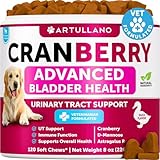
- VETERINARIAN RECOMMENDED CRANBERRY CHEWS: Premium soft chews specially formulated to support dogs' natural urinary balance and daily wellness.
- ADVANCED CRANBERRY BLADDER CHEWS: Reliable soft chews with cranberry extract to help maintain your dog's bladder comfort and overall wellness.
- NATURAL D-MANNOSE URINARY CHEWS FOR DOGS: Featuring D-mannose, cranberry, fish oil and pumpkin to help maintain your dog's routine balance and digestive wellness.
- IRRESISTIBLE DUCK FLAVOR: Delicious soft alternative to pills, with premium cranberry for everyday use.
- FORMULATED BY VETS: Formulated by veterinarians, our cranberry for dogs chews are made to the highest standards of quality and consistency. They are free from starches, grains, gluten, artificial components, or fillers
UTI symptoms: what they may mean
| Observed sign | Possible explanations | What to do |
|---|---|---|
| Frequent small urinations | UTI, FIC, stones, irritation, or early obstruction | Arrange prompt veterinary assessment |
| Blood in urine | Inflammation, stones, infection, trauma, or rarely cancer | Contact your veterinarian |
| Straining with no urine | Possible urethral obstruction | Emergency veterinary care immediately |
| Fever, vomiting, weakness, or marked lethargy | Severe infection, kidney involvement, obstruction, or another systemic illness | Urgent veterinary care |
| Bacteria in a sample without urinary signs | Contamination or subclinical bacteriuria, not always an infection requiring treatment | Let the veterinarian interpret the culture and clinical findings |
Common mistakes to avoid
- Assuming every straining cat has a UTI: obstruction and sterile cystitis can look the same.
- Relying on a urinalysis alone: culture is often needed to confirm bacterial cystitis.
- Treating any bacteria found in a home-collected sample: contamination is possible, and bacteria without disease signs do not automatically need treatment.
- Using cranberry, urinary supplements, or over-the-counter remedies as a cure: evidence is limited, and some products may be unsuitable for cats with kidney disease or stones.
- Waiting for antibiotics to work when urine output is falling: a blocked urethra is a time-critical emergency.
Sources and further reading
Useful veterinary references include Cornell Feline Health Center guidance on feline lower urinary tract disease, Cornell’s discussion of suspected recurrent UTIs, the Merck Veterinary Manual, and the 2025 iCatCare consensus guidance. These resources support the distinction between urinary symptoms and a confirmed bacterial infection.
FAQ
How can I tell if my cat has a UTI?
You cannot confirm a UTI from symptoms alone. Frequent small urinations, straining, blood, pain, genital licking, and urinating outside the litter box can occur with infection, cystitis, stones, or obstruction. A veterinarian may use urinalysis and a properly collected urine culture to identify a bacterial infection.
Can a cat UTI go away without antibiotics?
A true bacterial UTI may need prescription treatment, but many cats with urinary signs do not have a bacterial infection. Symptoms that improve without treatment—or after antibiotics—do not prove the cause. Have the cat evaluated rather than trying supplements or leftover medication.
What should I do if my cat keeps going to the litter box but produces no urine?
Treat this as an emergency, especially in a male or neutered male cat. A blocked urethra can become fatal in less than 24–48 hours, according to Cornell. Go to an emergency veterinarian immediately and do not wait for a routine appointment.
The Tool Desk
Outbyte PC Repair FREERepair Windows errors before they cause bigger problemsFix Now →Outbyte Driver Updater FREEFix the driver behind crashes, sound loss and screen glitchesFind Drivers →Can I give my cat human pain medicine for urinary discomfort?
No. Acetaminophen, ibuprofen, naproxen, and many other human medicines can seriously poison cats. Ask a veterinarian for an appropriate pain-control plan.
The Bottom Line
A cat with urinary symptoms needs veterinary assessment because a suspected UTI may actually be sterile cystitis, stones, or a life-threatening obstruction. Urinalysis helps investigate the problem, while a properly collected urine culture is the preferred way to confirm bacterial cystitis. Any cat straining repeatedly while producing little or no urine needs emergency care immediately.
Quick Recap
Product prices and availability are accurate as of the date/time indicated and are subject to change. Any price and availability information displayed on Amazon at the time of purchase will apply.




