Quick wins for a faster PC:
Clear out junk files and repair common Windows errorsFree Scan →Fix the driver behind crashes, sound loss and screen glitchesFind Drivers →Yes. USDA evidence supports cow-to-cow transmission as one part of H5N1 spread among dairy cattle. That does not mean the virus began in cows: evidence from the 2024 outbreak points to an initial bird-to-cow spillover, followed by spread among cattle, and later independent spillovers from wild birds have also been identified.
What USDA’s evidence says about cow-to-cow spread
The first U.S. dairy-cattle detection in the outbreak analyzed in a 2024 study was confirmed in Texas on March 25, 2024. The analysis described a likely initial avian-to-cattle transmission, limited local transmission, and onward lateral spread of H5N1 clade 2.3.4.4b genotype B3.13. The peer-reviewed paper was published in Nature on October 15, 2024, in volume 637, pages 913–920: USDA ARS publication record.
USDA Agricultural Research Service (ARS) also reported a controlled challenge experiment at a BSL-3 agricultural facility in Ames, Iowa. Four yearling heifers received respiratory exposure to the virus, while two non-pregnant lactating cows were inoculated through the mammary gland. The heifers became infected but showed minimal clinical signs. The inoculated cows developed signs within 48 hours, including reduced appetite, reduced rumen movement, lower milk production, and thick, yellowish milk. The experiment reproduced disease features in cattle, but it was small and did not test every possible natural transmission route. ARS described further studies as underway in its July 29, 2024 account of the challenge study.
ARS said the challenge experiment and other unpublished data supported its conclusion that respiratory transmission was not a primary route of infection within farms. That is an agency assessment from 2024, not proof that respiratory spread is impossible. The study’s authors also described a more complex field picture: transmission between farms was linked to movement of live lactating cows, while resident cows on farms showed spread within days or weeks of such movement without a consistent transmission pattern across all farms.
#1 Best Overall

- DETAILED & REALISTIC. Crafted with precision and authentic detail to create a lifelike toy that teaches and inspires toddlers and kids; helps introduce children to animals. From the first sketch to the intricate finishing touches, we see value in every detail.
- HEALTHY IMAGINATIVE PLAY. The Holstein Cow from Schleich is carefully designed to inspire safe and creative pretend play for children as both a single toy or part of a larger collection.
- PART OF A GROWING PLAY WORLD. The Holstein Cow is part of the Farm World collection of figurines and playsets from Schleich. Great for gifting, this figurine can stand alone or fit into a larger, modular play world.
- GET READY FOR FUN IN FARM WORLD - What did the cow say to the pig? You're hogging all the grass! In this world of farm animals and barnyard buddies, sheep can be friends with ducks while horses race across the ranch.
- IMAGINATION WITHOUT LIMITS - Schleich toys come in all shapes and sizes to bring stories to life. We value sustainability which is why we created worlds of durable toys that can be treasured for generations to come
How cattle spread differs from bird-to-cow introductions
There are two distinct questions: how H5N1 first reaches a herd, and how it moves after cattle are infected. For the B3.13 outbreak analyzed in the 2024 paper, the evidence supported a likely avian introduction followed by cattle-to-cattle spread. Those findings are not contradictory; a virus can enter a herd from birds and then spread among cattle.
Separate spillovers have also occurred. In February 2025, APHIS reported H5N1 clade D1.1 in Arizona cattle and said sequencing indicated a separate introduction from wild birds, the third identified spillover into dairy cattle. This is why cow-to-cow transmission should be described as a factor in spread, not as the single origin or explanation for every infected herd. See APHIS’s February 14, 2025 spillover announcement.
Rank #2

- DETAILED & REALISTIC. Crafted with precision and authentic detail to create a lifelike toy that teaches and inspires toddlers and kids; helps introduce children to animals. From the first sketch to the intricate finishing touches, we see value in every detail.
- HEALTHY IMAGINATIVE PLAY. The Simmental Calf from Schleich is carefully designed to inspire safe and creative pretend play for children as both a single toy or part of a larger collection.
- PART OF A GROWING PLAY WORLD. The Simmental Calf is part of the Farm World collection of figurines and playsets from Schleich. Great for gifting, this figurine can stand alone or fit into a larger, modular play world.
- GET READY FOR FUN IN FARM WORLD - What did the cow say to the pig? You're hogging all the grass! In this world of farm animals and barnyard buddies, sheep can be friends with ducks while horses race across the ranch.
- IMAGINATION WITHOUT LIMITS - Schleich toys come in all shapes and sizes to bring stories to life. We value sustainability which is why we created worlds of durable toys that can be treasured for generations to come
How bird flu moves between dairy farms
APHIS identifies cattle movement and routine farm operations as important pathways for spread between herds. Its guidance names movement of livestock and the movement of people, vehicles, and equipment between premises; its dairy-herd FAQ also discusses milk handling. These are identified risk pathways, not proof that a particular person, vehicle, item of equipment, or shipment caused an individual farm’s infection. See APHIS Secure Our Herds and APHIS’s dairy-herd bird flu guidance.
Field investigations, genomic evidence, and controlled experiments answer different questions. A challenge study can show that animals exposed by a specific route become infected and develop signs; it cannot by itself establish how every natural infection occurred. Field and sequencing evidence can help trace likely introductions and movement, but the available findings do not establish one complete transmission mechanism for every case.
Rank #3
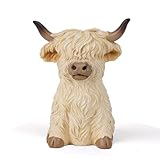
- Charming Hand-painted highland cow figurine is made of solid resin which will stand up against multiple storms.
- Realistic highland bull with detailed craftsmanship, Natural carved Scotland highland cow with glossy black finish .
- Perfect Size: Each one fits right in the palm of your hand, 4" tall is a perfect size to set on shelf, desk top, bathroom, table centerpieces or mini garden.
- Gift :Make a delightful addition to to any farmhouse or rustic-themed decor ,and it will be a good gift idea for cow lovers.
- Country Decor:It looks great on farmhouse-themed tiered tray. A great little shelf sitter and brings a playful vibe to any setting.
Signs of illness and steps farms can take
APHIS says infected cows may have reduced milk output, thicker or more concentrated milk, reduced appetite, abnormal feces, lethargy, fever, or dehydration. Its guidance advises isolating sick animals and reporting concerns to a veterinarian or state and federal animal-health officials.
APHIS recommends making biosecurity part of routine farm operations. Measures include:
Rank #4

- Detailed Representation: Our Holstein Cow toy figurine captures the essence of a real dairy cow, complete with collar and bell, an intelligent face, and realistic sculpting. The iconic black-and-white markings are accurately represented.
- Educational and Fun: This figurine provides a fun way for kids to learn about the vital role of dairy farming, offering a tangible aid for imaginative play and education about this prodigious milk producer.
- Safe and High-Quality: Constructed from durable, non-toxic, and BPA-free PVC, this Holstein Cow figurine guarantees safe play and long-lasting durability.
- Dimensions: The Holstein Cow figurine measures 5 inches long, slightly longer than a pop can, making it easy to handle and play with.
- Part of a Collection: This Holstein Cow is a part of the Safari Farm collection, offering a wide array of farm animals for a comprehensive educational and play experience.
- Limiting visitors and sharing of equipment.
- Disinfecting vehicle and trailer tires before they enter the farm.
- Using farm-dedicated boots and coveralls.
- Keeping different animal species separated.
- Seeking USDA support for planning and implementing enhanced biosecurity.
USDA describes the National Milk Testing Strategy as a way to improve surveillance of the milk supply and dairy herds, support biosecurity, and inform farmworker protections. APHIS also says federal movement-testing requirements have helped limit spread to new states. Program details and case counts can change; consult APHIS’s live HPAI livestock updates for current information rather than relying on an undated total.
What this means for people and pets
The cattle-transmission findings concern spread among animals; they do not, by themselves, establish the risk to people or pets. APHIS’s September 2026 guidance describes the current public-health risk as low and says CDC, USDA, and other agencies are monitoring people with animal exposures. Because public-health assessments can change, readers should check current guidance from health authorities for advice on a specific exposure or concern.
Quick Recap
Product prices and availability are accurate as of the date/time indicated and are subject to change. Any price and availability information displayed on Amazon at the time of purchase will apply.




