Food puzzles make an animal work a little to find or release food. They can add foraging and choice to mealtimes, but they are optional enrichment—not a replacement for a suitable diet, exercise, social needs, or veterinary care. Start with an easy, species-appropriate option, keep the animal’s usual food routine in view, and let the animal decide whether to participate.
What a food puzzle can—and cannot—do
A food puzzle puts some or all of an animal’s food behind a small foraging or problem-solving task. Depending on the animal and design, it may provide activity, encourage food-seeking behavior, or slow access to a meal. It does not guarantee a health or behavior outcome, and a puzzle is not necessary for every pet.
Choose an approach that fits the animal’s species, size, abilities, chewing or manipulation style, diet, and preferences. A simple scatter or a homemade cardboard activity may be more suitable than a purchased feeder. If the animal seems frightened, frustrated, or uninterested, make the task easier, change the approach, or stop.
How to introduce a puzzle without making meals stressful
- Begin with familiar food and an easy task. Choose food the animal already eats, and make it readily accessible at first.
- Let the animal watch or explore. A dog may benefit from a demonstration; a bird may also need to see how a toy works. Allow a cat or rabbit to investigate without pressure.
- Keep a familiar option available. For a cat that is wary of change, offer the puzzle beside the usual bowl at the usual feeding time, rather than abruptly replacing the familiar method.
- Observe the first sessions. Check that the animal can reach the food and is not chewing, swallowing, guarding, or becoming distressed around the item.
- Adjust gradually—or stop. Increase difficulty only if the animal is comfortable and successful. Participation should remain voluntary.
These gradual-introduction principles are consistent with guidance from the American Veterinary Society of Animal Behavior’s dog puzzle guide, VCA’s enrichment and activity toy guidance, and the 2016 veterinary review Food puzzles for cats: Feeding for physical and emotional wellbeing.
#1 Best Overall

- 2 Levels in 1 Toy: start your pups off with a level 1 puzzle, add some treats in the base compartments and watch your dogs get their tasty reward by nudging the lids. For dogs who have mastered level 1, for added challenge in level 2, just put some treats in the top compartments, teach your dogs to press the top cover to dispense treats down into the base compartments and finally enjoy their reward
- Slow Feeder: The large capacity top transparent granary saves you the hassle to refill dog food frequently. The product can also be used as a slow feeder utensil for your dogs, which promotes healthy ingestion by slowing down eating speed by over 10x. Great for large and small dogs
- Not Easy to Tip Over: 4 non-slip rubber mats and weighted base hold the dog puzzle toy firmly in place when dogs eat and nudge and prevent the toy from tipping over
- We Prioritize Safety: the dog puzzle toys are designed with your pet’s health in mind, made of durable food-grade PP materials. Non-removeable parts make it safe and easy to clean. And you can give puzzles toy to your dog or directly out of the box, just no assembly!!
- Trains Dog’s Intelligence: interactive treat puzzle game challenges your puppies to get their reward of treats, works your dog's mind while reducing boredom and destructive behavior like chewing, digging and excessive barking. Size: 4.2 inch height
Choosing and using puzzles by species
Dogs
For a dog, match the puzzle to body size, dexterity, and chewing strength. Choose an item that cannot be swallowed and is unlikely to break into swallowable pieces. Supervise at first, and inspect it for damage. In a home with multiple pets, feed separately if another animal could interfere or take the food. VCA notes that food-filled toys can trigger guarding; separate pets and seek professional advice if guarding is aggressive.
The AVSAB guide describes examples including stuffed toys, treat balls, snuffle mats, slow-feeder bowls, and lick mats. These are examples of formats, not tested or endorsed product recommendations. Its suggested DIY approaches include hiding food in cardboard or a perforated bottle; use only a safe, intact item with smooth edges, and watch the dog while it is in use.
Rank #2

- Medium slow feeder dog bowl – helps slow down eating up to 10X; this SLOW level feeder is designed for small to medium dog breeds who need to slow their pace a little
- Holds 2 cups of dry or wet dog food – this shallow bowl has a simple puzzle feeder maze design and can fit a full meal for medium-sized dogs
- Mindful mealtime – encourages slower eating and longer engagement, helping pups enjoy every bite while making mealtime more fun and interactive
- Multiple sizes, maze patterns, and 3 SLOW levels to choose from – Slow, Slower, or Slowest – to slow your dog down as much as needed; pick the perfect size and design for your unique pet
- Non-slip, food-safe, and easy to clean – our puzzle feeders are top-rack dishwasher-safe and made without BPAs, PVCs, lead, or phthalates
If the dog is unsure how a puzzle works, show how food comes out. Start with the easiest setting and a small amount of familiar food. If the dog succeeds comfortably, you can gradually use more of its meal if that food and format suit the dog.
Cats
Food puzzles can offer a cat a way to engage with food-seeking behavior, but cats differ in their response to change. For a hesitant cat, put an easy puzzle beside the familiar bowl and use the cat’s usual food. Do not force a sudden switch from the familiar feeding method.
The Tool Desk
Outbyte PC Repair FREEClear out junk files and repair common Windows errorsFree Scan →Outbyte Driver Updater FREEFix the driver behind crashes, sound loss and screen glitchesFind Drivers →Rank #3
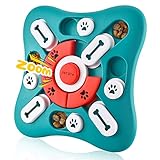
- 【PRODUCT SIZE】10 inch*10 inch*1.3 inch.
- 【3 WAYS TO PLAY, UPGRADE SLOW FEEDER】Our dog mental stimulation toys have a unique squeak button in the middle, which make it easier to attract the attention of dogs and cats. Three different difficulty designs and the 16-hole dog treat dispenser design maximize slow feeding time, even beyond 20 minutes.
- 【FUNNY STIMULATING TOYS】All kinds of dogs and cats love the puzzle game of Spin & Slide and the Seek & Hide with their smell sense and paw skills to find food. Combining circular orbit sliding game and linear orbit sliding game, smart dog and cat must move the slider correctly to get the food reward hidden in the maze.
- 【NON-REMOVABLE PARTS DOG PUZZLE】Our dog treat puzzle is made of non-toxic materials, very durable and suitable for pets to play for a long time. This dog toy has no removable parts because the design has built-in play parts that fold tightly and won't fall off easily.
- 【ANTI-SLIP & EASY TO CLEAN】: The four corners of the bottom are equipped with four anti-skid pads, which can be well fixed during the dog's slow food process; It is easy to clean, also dishwasher safe.
The 2016 veterinary review notes that the evidence base is relatively new and that more research is needed to compare puzzle approaches. Treat a puzzle as an optional enrichment choice, not a proven treatment or a guaranteed way to improve health or behavior. VCA also recommends using part of a pet’s regular food for enrichment and checking with a veterinarian about food suitability in its food enrichment guidance.
Rabbits
Foraging is a natural rabbit behavior. RSPCA suggestions include scattering greens or the daily pellet ration, hiding food in boxes or cardboard tubes, wrapping pellets in brown paper, hanging greens, and offering food balls or puzzle feeders. Keep hay and/or grass central to the diet; a feeder should not displace those core dietary needs. See the RSPCA’s guidance on rabbit enrichment and rabbit diet.
Rank #4
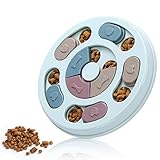
- 【Size】: L9.44" * W9.44"* H1.14" suitable for cats, puppies and small dogs.
- 【Interactive Dog Toys】This is a interactive puppy puzzle , which can easily become the closest companion and toy for your puppies and cats, and will release pressure for dogs. Find food by sliding parts to improve eating pleasure and IQ.
- 【Slow Feed Bowl】This encourages pets to eat at a slower speed, helps to slow down the feeding time to help the dog digest, and can provide your dog with a variety of healthy snacks.
- 【Slow Feede toys】 Use this educational game toy to exercise the dog’s brain, which will help meet the dog’s instinct needs, train the pet’s sense of smell, and let the dog enjoy feeding when using the nose or paw to move the slider, while providing spirit stimulate.
- 【Dog toys】No toy is indestructible. Do not leave toys with unsupervised pets. Remove and replace toy if damaged.
When introducing a feeder, supervise to ensure the rabbit can reach the food and that openings stay clear. Avoid staples, tape, heavy dyes, and toxic glue. In a group, provide one feeder per rabbit to reduce monopolization. Enrichment food should come from the ordinary daily amount, not be an extra ration. Keep a familiar feeding routine when the rabbit expects food at a regular time, and remove a new item if it causes fear or stress.
Birds
Birds naturally forage, but suitable food and toys vary by species. The RSPCA describes parrot pipe feeders and puzzle feeders, plus paper and cardboard DIY methods; it also suggests scattering food or offering smaller meals in different places. Adapt any approach to the bird’s species and diet, and do not assume foods used for dogs or cats are suitable for birds. The RSPCA’s pet bird enrichment guidance offers bird-specific examples.
Free tools Windows power users keep installed
One-click scans. No signup required.
Best Value

- Interactive Level 2 Cat Puzzle Toy: 13" x 9.5" cat puzzle feeder that triggers hunting and foraging instincts. Level 2 adjustable difficulty for beginner to advanced cats.
- Indoor Cat Enrichment: Keeps indoor cats engaged, minimizes boredom, and delivers rewarding treat-finding play that supports daily stimulation.
- Level 2 Slow Feeder Puzzle: Holds 1/4 cup food or treats across 16 compartments. Promotes slower eating and positive feeding habits with adjustable challenge.
- Multiple Ways to Play (Level 2 Adjustable): Easy mode: treats in base compartments only. Hard mode: add treats into sliding cups via top holes so cats must push and move pieces to release rewards.
- Safe, Durable & Easy Clean: No removable parts. Made without BPA, PVC, lead, or phthalates. Wipes clean quickly for everyday use.
VCA says owners may need to demonstrate how a foraging toy works and cautions that bird toy manufacturing lacks quality controls or regulations. Check material, construction, size, and how the individual bird interacts with the toy; no toy should be assumed safe for every bird. See VCA’s bird toy guidance.
Independent reader supportYour contribution helps us test, update, and keep practical guides available for everyone.Food, materials, and supervision: a practical safety check
- Account for the food. When appropriate, use part of the animal’s regular daily food rather than adding extra treats. Track what is offered, particularly when treats are involved.
- Check ingredients for the species. Do not offer human foods without confirming they are appropriate. The FDA lists xylitol among potentially dangerous items and says avocado can be severely toxic or potentially deadly to birds and rabbits, as well as horses and ruminants. Consult its potentially dangerous items for pets guidance.
- Inspect the puzzle. Remove damaged items and watch for loose or swallowable pieces, sharp edges, blocked openings, or materials the animal is chewing or ingesting.
- Manage access between animals. Separate pets if competition, interference, or guarding occurs.
- Ask for tailored advice when needed. Consult a veterinarian about appropriate foods, weight management, or health conditions. For a species-specific toy or material concern, seek advice from a qualified specialist.
Commercial puzzle, DIY, or no puzzle?
A purchase is only one route. Before choosing, consider the food the feeder accepts, how easily the animal can use it, whether its size and materials suit that species, how it can be cleaned and inspected, and whether the animal can use it without stress or competition. Bird toys merit particular scrutiny because manufacturing oversight is not established as a quality-control safeguard.
Simple household methods can be enough: dog food hidden in a safe cardboard setup, rabbit hay or pellets placed in cardboard or brown paper, or bird-appropriate food presented in paper and cardboard. Supervise homemade items whenever swallowing, sharp edges, or unsuitable materials are possible. If an animal dislikes the activity, its ordinary feeding method is a perfectly valid choice.
Quick Recap
Product prices and availability are accurate as of the date/time indicated and are subject to change. Any price and availability information displayed on Amazon at the time of purchase will apply.




