
Recommended Free Tools
Some links on this page are affiliate links: if you buy through them we may earn a commission, at no extra cost to you.
Choose the scratcher that matches how your cat already scratches: a cat that reaches up and pulls at couch arms, chair legs, or curtains is more likely to use a tall, stable vertical post; one that scratches rugs or carpets is more likely to use a horizontal scratcher. If you are unsure, offer both orientations and watch which your cat chooses voluntarily.
Why does my cat scratch?
Scratching is normal feline behavior, not a habit to eliminate. Cats scratch to maintain their claws, stretch their bodies, leave visible marks and scent, and communicate. The practical goal is to redirect scratching to an appropriate surface that suits your cat.
As an Amazon Associate I earn from qualifying purchases.
Should I get a vertical or horizontal cat scratcher?
Match the scratcher’s orientation to your cat’s chosen target and movement. Upright scratching usually calls for a vertical surface; scratching along the floor usually calls for a horizontal one.
| Feature | Vertical scratcher | Horizontal scratcher |
|---|---|---|
| Best clue from current behavior | Cat reaches up and pulls down on furniture or curtains | Cat stretches along and scratches rugs or carpet |
| Common forms | Upright post or scratching panel | Flat mat, corrugated-cardboard lounge, or log placed on its side |
| Key fit | Enough usable height for a full-body stretch; a base that stays steady | Enough scratchable area for the cat’s motion; a unit that does not slide |
| Other possible use | Some designs include levels for climbing | Curved designs may double as a lounge |
Orientation is only part of the choice. Texture matters too: cats may prefer sisal, cardboard, carpet, wood, or upholstery. Start with a material resembling the surface your cat already seeks, then let its use guide the choice.
Popular on Amazon
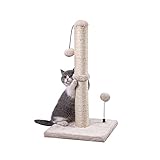
- Premium Quality Materials - This product is made of 100% natural sisal hemp.The base and top is a weighted MDF covering the carpet.Nature High Quality Sisal Safe Plush Long Lasting Usage Stable basement, never tip over easily.
- Protect your furniture - Grab sticks and plush toys combine to attract cats to play and grab, natural sisal is suitable for cats to grab, effectively preventing cats from grabbing furniture
- Designed for indoor use - Neutral colors work well with existing decor in your home.ideal for any living room, bedroom, or home office
- 22"Tall Cat Scratching Post -11.8 x 11.8 x 22 Inches,design for kitties or smaller cats.
- Easy Assemble - ust screw all parts together,Assemble needed, all tools and instructions included.Please contact us if you have any further questions.
How tall should a vertical cat scratching post be?
A vertical post should let your cat stretch fully without running out of scratchable surface. Professional guidance recommends a post at least as long as the cat’s body; a review summary describes an ideal post as at least 3 feet tall with two or more levels. These are selection guides, not proof that every cat needs the same design.
Check the usable scratching height, not just the product’s advertised overall height. A sisal-wrapped post offered in 22-inch and 31-inch sizes, for example, may have less usable sisal height than its total height suggests. Stability matters just as much: choose a wide or heavy base that does not wobble when the cat pulls down.
Windows Errors? Fix Them Before They Spread
Repair common Windows errors and clear accumulated junk for a smoother, more stable PC - no reinstall needed.Free scan · no reinstallCrashes, No Sound, or Screen Glitches?
Random freezes, missing sound and display glitches usually trace back to one bad driver. Find and replace yours safely.Free scan · under a minuteWhat should I look for in a horizontal scratcher?
Choose a surface with enough room for the cat’s usual stretch and pull, and make sure it stays in place during use. Options include flat corrugated cardboard, cardboard lounges, carpet mats, and logs laid on their sides.
Also popular on Amazon
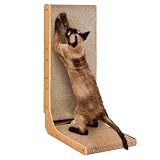
- HIGH QUALITY MATERIALS: The surface of the cat scratching board is made of non-toxic and high-density corrugated paper, which is durable enough to withstand cat scratching.
- INNOVATIVE DESIGN: Our cat scratcher for indoor cats features an L-shaped design. Please place it against wall and sofa to protect your furniture. The L-shaped cat scratcher provides more scratching area for cats to scratch in a variety of positions.
- MULTIFUNCTIONAL USE: Cats can scratch, relax and stretch on our cardboard cat scratcher. Our cat scratch pad also comes with a toy ball to play with. It provides a safe and comfortable environment for cats.
- FLEXIBLE SIZE OPTIONS: Available in multiple size options to suit different cat sizes and indoor spaces. Choose the right fit for your cat and home to create a comfortable and convenient scratching space.
- EASY INSTALLATION: Our cat scratching board adopts a simple installation method and comes with instructions and necessary tools. We also provide an installation video so that you can install it quickly and easily.
Curved cardboard designs can combine scratching with lounging. For reference, a curved cardboard lounge is listed at 33.9 × 10.5 × 10.5 inches, while an enclosed, reversible honeycomb-cardboard design with replaceable parts measures 13.5 × 21.5 × 4.75 inches externally. Compare the scratchable area and footprint with your available space and your cat’s preferred movement; exterior dimensions alone do not establish how much usable surface a cat will have.
Where should I put a scratcher?
Place it beside the furniture or floor area your cat already scratches, rather than expecting the cat to discover a substitute in a hidden corner. Cats also commonly scratch after waking and in prominent areas, so consider these locations:
- Beside the current scratching target, such as a couch arm or rug.
- Near a sleeping area, where your cat can stretch after waking.
- Along a prominent route, such as near a room entrance.
- In several locations in a multi-cat home, so cats have more than one option.
Once your cat uses a scratcher reliably, you can move it gradually if needed. Moving it before it has become an established choice may make it less likely to be used.
Also popular on Amazon

- Scratching post provides a place for cats to sharpen their claws and keep nails healthy
- Includes a single pillar scratching post in neutral colors with a replaceable dangle toy
- Natural jute fiber provides an optimal scratching surface
- Sturdy wood base helps prevent the post from tipping
- Ideal for redirecting cats away from scratching household carpet or furniture; spot clean as needed
How can I tell which type my cat prefers?
If the answer is not obvious, try a short, low-pressure comparison. Keep the options near the existing target, reward voluntary use, and do not force your cat’s paws onto a surface.
- Note whether your cat scratches upright objects, floor surfaces, or both.
- Offer a vertical and a horizontal option near the area being scratched. If possible, vary the material as well, such as sisal and cardboard.
- Leave both available for several days and observe which one your cat chooses without prompting.
- Reward voluntary scratching. Once one option is used reliably, move it only if necessary, and do so gradually.
This is a practical way to learn an individual cat’s preference; there is no established universal preference for one orientation across all cats.
Why does my cat ignore the scratching post and use the couch?
A nearby post does not guarantee that it matches what the cat wants. The orientation, texture, height, stability, location, or amount of usable scratch surface may be wrong for that cat. Compare the post with the couch target: if the cat reaches up and pulls down, try a taller, steadier vertical surface; if it scratches horizontally, add a floor-level option. Test a different texture and place the alternative beside the couch before moving it elsewhere.
Also popular on Amazon
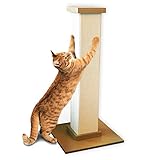
- 32″ height allows cats to stretch fully and tone muscles
- Sturdy 16″ by 16″ base eliminates tipping and wobbling
- Fibrous and durable woven sisal naturally inspires scratching
- Superior to carpeted posts that may snag nail
- Assembles with two included screws
A review summary reports that 55% of surveyed owners provided a scratching post, while 70% still reported inappropriate scratching when a post was nearby. These are figures summarized in a review, not a new current survey. They underline why simply providing one post may not be enough; fit and placement matter.
Quick wins for a faster PC:
Clear out junk files and repair common Windows errorsFree Scan →Fix the driver behind crashes, sound loss and screen glitchesFind Drivers →What type of cat scratcher is best?
The best choice is the one your cat uses: orientation and texture should follow the cat’s existing behavior, and the unit must stay secure during scratching. If you are choosing without a clear preference, offering more than one orientation—and, if practical, more than one texture—is a better test than assuming every cat wants the same post.
Frequently Asked Questions
Can I use a vertical and horizontal scratcher in the same home?
Yes. Offering both lets a cat choose between different scratching motions, and is especially useful when its preference is unclear or it scratches both furniture and floor surfaces.
Will trimming my cat’s claws stop it from scratching furniture?
Scratching serves purposes beyond claw maintenance, including stretching and marking. The behavior may continue, so provide an appealing, appropriate surface rather than expecting claw care alone to redirect it.
Should I put catnip on a new scratcher?
The guidance here supports matching location, orientation, and material to your cat’s preferences; it does not establish catnip as necessary or effective for every cat. Observe whether your cat uses the scratcher voluntarily before changing the setup.
What’s actually slowing this PC down?
Pick the symptom - the matching free tool is one click away.





Leave a Reply