Do these 3 things before closing this tab:
1Repair Windows errors before they cause bigger problems2Fix the driver behind crashes, sound loss and screen glitches3Clear out junk files and repair common Windows errorsBegin weaning at about three to four weeks, when kittens are steady on their feet and ready to explore food. Offer kitten milk replacer if needed, then soft gruel made from complete kitten food; gradually reduce the liquid as they learn to eat. Most kittens complete the transition around eight to ten weeks. Keep them with their mother if possible, and contact a veterinarian if a kitten will not eat, is not gaining weight, or seems unwell.
1. Check age and readiness
Weaning is gradual, not a single feeding or a reason to force solids. ASPCA guidance says the process normally starts around four weeks and is usually complete by eight to ten weeks. Merck describes weaning at five to eight weeks, so treat these as typical ranges rather than a deadline for every kitten. Look for readiness: ASPCA describes kittens with eyes open and focused and steady on their feet.
As an Amazon Associate I earn from qualifying purchases.
VCA places the start of offering solids at roughly three and a half to four and a half weeks. If a kitten is younger, unsteady, or not interested, continue its appropriate milk-feeding routine and ask a veterinarian if you are unsure about its development or feeding needs.
Quick wins for a faster PC:
Clear out junk files and repair common Windows errorsFree Scan →Fix the driver behind crashes, sound loss and screen glitchesFind Drivers →Repair Windows errors before they cause bigger problemsFix Now →2. Keep the mother involved when possible
Let kittens stay with their mother while they learn to eat, if she is healthy and caring for them. They learn eating and other behaviors by watching her, and beginning solids does not mean they are ready for immediate separation. Merck identifies the early socialization period as important to later behavior; gradual weaning supports a less abrupt transition.
#1 Best Overall
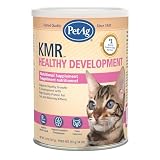
- NUTRITIONAL SUPPLEMENT - KMR Healthy Development supports healthy growth and development with high-quality protein for cats weaning to 6 years.
- SUPPORTS COGNITIVE DEVELOPMENT – With DHA (Omega 3 fatty acids) and Vitamin E, our formula supports visual & cognitive development.
- CONTAINS OMEGA 6 FATTY ACIDS - Our powder contains Omega 6 fatty acids to support a healthy skin and coat.
- GREAT TASTE - KMR Healthy Development is formulated with a great taste cats love. Supports transition to solid foods for weaning kittens.
- ABOUT US - PetAg is a trusted leader in pet wellness, with science-backed formulas in our milk replacers, health supplements, and grooming products helping pet owners to proactively enhance the lives of their pets, for more healthy years together.
If the mother is ill, absent, rejecting the litter, or may not be producing enough milk, seek veterinary guidance. Orphaned and hand-fed kittens have different feeding needs from kittens nursing normally.
3. Set up a safe feeding area
Use a low, shallow dish that a small kitten can reach, and offer food in a clean, warm area. Keep fresh water available. A kitten still taking a bottle can continue its familiar feeding routine while it learns to lap; early attempts are often messy, so keep the kitten warm and dry and clean food or formula from its coat.
Rank #2

- PATE WET FOOD DESIGNED JUST FOR KITTENS 4+ WEEKS OLD - Tiki Cat Baby Pate is made with recipes that have real, finely minced chicken, duck, salmon, tuna and organ meats that are easy on tiny tummies.
- CONTAINS DHA & ADDED TAURINE AND PREBIOTICS TO SUPPORT GROWING KITTENS - Support your growing kitten by giving them the omega-3 fatty & amino acids that will support healthy brain & nervous system development.
- GRAIN & POTATO FREE - Minimally processed kitten food that is made without carrageenan, tapioca and fillers.
- SOFT, SMOOTH TEXTURE FOR TINY MOUTHS - Smooth paté wet food texture helps new kittens ease their way into solid food and gives them the hydration they need.
- COMPLETE & BALANCED KITTEN FOOD - Our composition of high proteins and fats are formulated for young cats to support overall health and growth.
4. Teach hand-fed kittens to lap replacer
For an orphaned or hand-fed kitten that needs milk, offer commercial kitten milk replacer in a shallow dish as a bridge to lapping. Follow the product’s directions and your veterinarian’s instructions for the kitten’s individual feeding amounts and schedule. Not every kitten needs formula.
Do not substitute cow’s milk. ASPCA cautions that it can cause stomach upset and diarrhea in some kittens. If a kitten cannot lap or is not taking enough, ask a veterinarian rather than trying to force it.
Rank #3

- For Kittens 4 weeks +
- With DHA for healthy brain development
- Immune System Support
- Balanced Calcium & Phosphorus levels for healthy growth
- Transition to Solids
5. Offer soft kitten-food gruel
Mix complete kitten food with kitten milk replacer until it is soft and easy to lap. Wet kitten food is convenient for this first gruel; a small amount of dry kitten food can also be softened. Place the gruel in the shallow dish and let the kitten investigate at its own pace.
Do not push a kitten’s nose into the food or liquid. ASPCA warns that inhaling liquid can lead to pneumonia or other lung problems. If the kitten is still bottle-fed, continue the appropriate milk routine while it learns to eat solids.
Rank #4

- REAL MEAT FIRST: This Blue Buffalo wet cat food for kittens is made with real, high-quality meat as the first ingredient
- HEALTHY GROWTH FORMULA: The High-Protein and grain-free recipe is enhanced with DHA to support cognitive development in growing kittens
- TWO SAVORY RECIPES: This Baby BLUE kitten food variety pack features tasty chicken and salmon recipes
- HEALTHY, WHOLESOME INGREDIENTS: This natural canned food for cats contains no chicken (or poultry) by-product meals and is free from corn, wheat, and soy
- Contains: Three (3) 3-oz cans of Baby BLUE Natural Kitten Wet Cat Food Chicken Recipe, and three (3) 3-oz cans of Baby BLUE Natural Kitten Wet Cat Food Salmon Recipe (6 cans total)
6. Reduce the added liquid gradually
As the kitten begins eating gruel reliably, use progressively less replacer and moisture so the texture becomes thicker. Expect exploration as well as eating at first. Avoid rushing the change; the pace depends on the kitten’s readiness and intake.
Recommended Free Tools
7. Move to complete kitten food and water
As kittens progress, offer ordinary kitten food rather than relying on gruel. In ASPCA guidance, kittens typically move to lightly moistened food around five to six weeks and unmoistened kitten food around eight to ten weeks. VCA says kittens can eat wet or dry kitten food by six to eight weeks.
Best Value

- FOR KITTENS 4 WEEKS + - Ease your kitten's transition from their mother's milk to solid food with Tiki Cat Baby Mousse to nurture their overall health and development at this critical age where nutrients are essential for healthy growth.
- SPECIALLY FORMULATED FOR KITTENS – With increasing energy, developing digestive & immune systems, kittens need nutrition designed just for them. Tiki Cat Baby Mousse recipes include DHA and supplemental taurine to support brain development and overall health.
- NUTRIENT-DENSE ORGAN MEATS - Chicken liver is a normal part of the feline diet and adds nutrients and flavor to your carnivore's diet. Chicken liver adds essential vitamins & minerals to their diet and helps create a highly palatable texture.
- REAL INGREDIENTS, HIGH PROTEIN RECIPES - Made with real chicken broth, chicken, and liver are the first ingredients, giving your kitten the nutrition they need and the taste they will love.
- GRAIN FREE NUTRITION – Choose from delicious recipes that are full of nutrients that young kittens need to thrive; made without ingredients like potatoes and GMOs.
Choose food labeled complete and balanced for growth or all life stages. VCA says the package should carry an AAFCO nutritional adequacy statement for growing kittens or all life stages. Kitten foods are formulated to supply more calories in a smaller amount and more protein, calcium, phosphorus, and selected nutrients than adult foods. Wet and dry formats can both be appropriate when they meet the label criteria: wet food mixes easily into early gruel, while dry food can be introduced as kittens progress. The cited guidance does not establish one format as universally better.
ASPCA says that by about eight weeks, 80 to 90 percent of a kitten’s total nutrient intake should come from kitten food. This is general guidance, not a guarantee for every kitten; monitor whether each one is eating and growing.
8. Watch growth and know when to call a veterinarian
Observe each kitten’s appetite, behavior, and growth rather than assuming all littermates are progressing equally. VCA states, “Failure to gain weight may indicate a problem and the need for veterinary care.” Excessive crying during or after feeding can also signal illness, inadequate milk, or infected milk, according to VCA.
- Contact a veterinarian if a kitten will not eat, is not gaining weight, cries excessively around feeds, or appears unwell.
- Get individualized advice if the mother is ill, absent, rejecting the litter, or not producing enough milk.
- For orphaned or hand-fed kittens, ask for feeding amounts and follow-up suited to their condition rather than applying a mother-raised kitten’s schedule.
These are general US-oriented animal-welfare and veterinary recommendations, not an assessment of an individual litter. See ASPCA’s weaning guidance, VCA’s kitten-raising guidance, VCA’s kitten-food selection guidance, and Merck Veterinary Manual’s overview of cat social behavior.
Quick Recap
Product prices and availability are accurate as of the date/time indicated and are subject to change. Any price and availability information displayed on Amazon at the time of purchase will apply.




