Do these 3 things before closing this tab:
1Clear out junk files and repair common Windows errors2Fix the driver behind crashes, sound loss and screen glitches3Repair Windows errors before they cause bigger problemsFossil lungfish jaws from Western Australia show that outward appearance alone can be a poor guide to how an animal’s jaw handled biting. In a 2025 study, researchers used CT scans and computer models to compare Devonian lungfish jaws; some slender jaws tolerated modeled stress and strain well, while some robust-looking jaws did not perform especially well. The differences suggest that lungfish in the same ancient community may have used varied feeding strategies. They offer context for vertebrate evolution, but do not show that these fish were the direct ancestors of land animals or that jaw mechanics caused vertebrates to move onto land.
What the Gogo lungfish jaw study found
The study, “Comparison of diverse mandibular mechanics during biting in Devonian lungfishes,” was published in iScience in 2025 by Joshua Bland and colleagues. It examined fossils from the Gogo fossil field in Western Australia, a reef ecosystem described by Flinders University as around 380 million years old.
The researchers found that jaw shape did not translate into a simple strong-versus-weak ranking. Some robust-looking lower jaws were not especially well suited to the biting stresses modeled, while some more slender jaws withstood modeled stress and strain well. That mismatch is a reminder that a fossil’s silhouette cannot, by itself, reveal how it functioned.
Flinders University reports 11 described lungfish species from the Gogo Formation. Their range of skull and jaw forms provides context for the study’s finding of varied jaw performance, but species diversity alone does not establish why those lungfish diversified.
The Tool Desk
Outbyte PC Repair FREEClear out junk files and repair common Windows errorsFree Scan →Outbyte Driver Updater FREEScan for outdated or missing drivers - takes under a minuteDriver Scan →#1 Best Overall
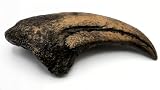
- Museum quality fossil cast replica from an acrocanthosaurus hand claw
- Claw is roughly 4.5 inches long
- Original was found at the Antlers Formation around the Oklahoma/Texas border
How researchers tested fossil jaws
CT scans let the team examine exceptionally preserved three-dimensional fossils and build digital models. They assessed jaw-shape disparity across seven taxa, then applied finite-element modeling to five taxa for which associated crania and lower jaws were preserved. The models estimated stress and strain in the lower jaws during simulated biting.
Finite-element analysis is a way to estimate how a structure responds to applied forces. Here, it supplied modeled mechanical evidence—not a direct observation of ancient feeding behavior. The accessible study summary and university release do not provide the quantified stress values, species-by-species rankings, model boundary conditions, or sensitivity analyses, so those details cannot be compared here.
What the results suggest about ancient feeding
The researchers interpret the range of modeled jaw performance as evidence consistent with diverse feeding adaptations and possible niche partitioning: different animals in one community may have used different food resources or feeding roles. That is a biomechanical interpretation, not direct proof of what each fish ate or how it behaved.
As Professor John Long put it in the Flinders University release, “The results were somewhat surprising, with some ‘robust’-looking lower jaws appearing to not be all that well suited to biting stress, and some of the more gracile or slender jaws appeared to be able to withstand stress and strain very well.” The finding cautions against treating robust jaws as automatically better at biting or slender jaws as automatically weaker.
Rank #2

- Feature: It is real, nature and authentic. Not fake or man-made.
- Size: It is variation 5cm - 8cm. Send by random.
- Note: Coz it is real fossil, each will be slightly different in shape, color, and size. Send by random.
- From: It is from the Hunan Province of China. Time: 450 million years ago silurian period.
- Gift: Memorable gift to friend, kids or family.
How this connects to the origins of land animals
Lungfish matter to the story of vertebrate evolution because genomic evidence identifies them as the closest living relatives of tetrapods, the group that includes land vertebrates. A 2021 Nature study estimated that the lungfish-tetrapod last common ancestor lived around 420 million years ago. That relationship makes fossil lungfish useful for understanding evolutionary history, but it does not mean the Gogo species studied were proven direct ancestors of tetrapods.
The 2025 study is about feeding mechanics in a Devonian lungfish community. It does not identify the first land animals, show that these fish walked on land, or demonstrate that jaw evolution caused terrestriality. The fish-to-tetrapod transition unfolded over time: a 2005 review described it as spanning about 25 million years, with the first truly terrestrial tetrapods appearing around 340 million years ago.
A separate clue from an earlier lungfish
Another study helps place lungfish feeding evolution in a longer timeline, but it examined a different animal and different evidence. A 2022 Nature Communications study used CT data from Early Devonian Youngolepis fossils. It identified a restructured palate, a short and stout hyomandibula, and radiating rows of teeth consistent with processing hard prey. Its Bayesian tip-dating analyses suggest the full suite of lungfish feeding specializations may have arisen in as little as seven million years.
That result concerns the inferred emergence of feeding traits in an earlier taxon; it is not a finding about the Gogo jaws’ modeled performance. Together, the studies offer distinct evidence about how lungfish feeding anatomy developed and varied.
Recommended Free Tools
Quick Recap
What the evidence can—and cannot—tell us
- It can show: fossil jaw forms differed in how they handled simulated biting forces in the models, and appearance alone did not reliably predict modeled performance.
- It supports: the interpretation that Gogo lungfishes may have had varied feeding adaptations and occupied different ecological roles.
- It cannot establish: exact diets or behaviors for each species, direct ancestry of land vertebrates, or a mechanical cause for the move onto land.
Product prices and availability are accurate as of the date/time indicated and are subject to change. Any price and availability information displayed on Amazon at the time of purchase will apply.




