Bats do not all eat the same thing. Many hunt insects, while other species feed on fruit, nectar or pollen; some catch fish or small animals. A small group drinks blood. Insect-hunting bats often find prey by echolocation: they send out high-frequency calls and listen for the echoes that return. The details depend on the bat’s species and the food it is looking for.
What do bats eat?
A bat’s diet depends on its species. Insects are a common food, but “bats eat bugs” is only part of the picture. Bat Conservation International’s FAQ describes bats that eat insects, fruit, nectar, fish, frogs and other small animals, as well as the three vampire bat species that drink blood. The U.S. Geological Survey also describes insect-eating as the majority strategy among bats worldwide, alongside specialized diets such as fruit, nectar, blood, fish and small mammals.
As an Amazon Associate I earn from qualifying purchases.
Bat Conservation International said in a July 22, 2021 article that around 75% of the world’s bats eat insects. That is an attributed, approximate figure from that article, not a claim that every bat eats insects or a fixed count that applies regardless of later changes in species classification. Its FAQ describes more than 1,400 bat species and identifies three vampire bat species; global totals can change as taxonomy changes.
Free tools Windows power users keep installed
One-click scans. No signup required.
Insects
Many bats catch insects, making moths, beetles and other flying insects important prey for insect-hunting species. The exact prey varies by bat and circumstances; the broad fact is that insectivory is widespread, not that every insect-eating bat targets the same insects. Insects are usually hunted in flight at night, and echolocation helps many of these bats detect and track them in darkness.
#1 Best Overall

- Design Level: Beginner Kit
The U.S. Geological Survey estimates that a little brown bat can eat 4 to 8 grams of insects in a night. That number applies to the little brown bat, not to bats as a group. It is a useful indication that a small animal can consume a substantial amount relative to its size, but it should not be converted into a universal nightly allowance or assumed to describe every individual on every night.
Fruit, nectar and pollen
Some bats feed on fruit; others visit flowers for nectar or pollen. These diets connect bats to plants in ways that differ from insect hunting. Fruit-eating bats may disperse seeds, while nectar-feeding bats can pollinate plants as they feed. Those roles belong to the bats and plants involved, rather than to all bats indiscriminately.
Fish and other small animals
Some species take animal prey beyond insects. Bat Conservation International lists fish, frogs and other small animals; the USGS also notes fish and small mammals among specialized diets. These examples show the range of bat feeding strategies, not a menu shared by every species. A bat that catches fish or small animals should not be treated as representative of the many bats that feed primarily on insects, fruit or nectar.
Rank #2

- A BRAND YOU CAN TRUST: Haynes is an instantly recognisable classic British brand which have now put their name to a range of electronic model building kits. Each kit comprises all the components needed to create your own version of classic electronic devices and comes with a clear and concise instruction guide in the style of a Haynes manual.
- BUILD YOUR OWN BAT DETECTOR: Who says you can't hear bats? With the Haynes Build Your Own Bat Detector Kit, you can turn the ultrasonic calls of bats into audible sounds.
- NO SOLDERING REQUIRED: Easy to assemble, with all components and relevant wiring included, you do not require a solder to create your own bat detector. Suitable for children aged 14 and above, the Haynes Build Your Own Bat Detector Kit is the perfect starter project for aspiring engineers and can serve as a wonderful learning tool for those who love electronics and how they work.
- CREATE YOUR OWN BAT DETECTOR: Once built, you will have your very own handmade high-quality ultrasonic detector perfect for tracing these fascinating flight artists. Housed in a cardboard picture box, the completed device will detect not only the sound of bats but also a host of technical devices that emit ultrasonic sounds. You will be surprised how many inaudible acoustical sources surround us Boost your ears: 20 kHz is not enough
- TOOLS REQUIRED: You do not require a solder to create your own bat detector.
Blood
Only three bat species are vampire bats, according to Bat Conservation International’s FAQ, and those species drink blood. Blood-feeding is therefore a specialized diet, not a typical bat food. The word “vampire” can loom large in stories about bats, but it describes a tiny part of the diversity of bat diets.
How do insect-hunting bats find food?
Many insect-hunting bats use echolocation. They emit high-frequency sounds, often above the range people can hear, then listen for sound waves that bounce back from objects. The returning echoes provide information the bat can use to detect and locate prey while flying at night. The National Park Service explains this basic process as ultrasound calls returning to finely tuned ears.
Echolocation is particularly relevant to insect-hunting bats searching for small prey in darkness. It is not a complete explanation of how every bat finds every kind of food. Bats with different diets may use different combinations of senses and feeding adaptations, and the evidence here does not establish one universal method for all bat species.
Rank #3

- Introducing an extraordinary array of cutting-edge bat repellent modes, showcasing our unparalleled Trade Marked functions designed to revolutionize your bat deterrent experience.
- BATONIC - exclusive to Cleanrth CB006 Advanced Ultrasonic Bat Repelling System! Unleash the power of Cleanrth's bespoke Batonic feature. Using two separate speakers, Batonic creates two separate sound channels that dynamically alters the ultrasonic sounds from each speaker, resulting in effective and safe bat removal. Experience the transformative impact of the Batonic feature today.
- Safe for pets and humans: We understand the importance of keeping your family and pets safe, which is why our bat ultrasonic repellent is 100% safe for humans, cats, dogs, and most household pets. There are no harmful powders involved, making it a pet-friendly, humane and hassle free solution.
- Unlock the full potential of bat control with the CB006. Alongside our groundbreaking Batonic technology, this device showcases a range of custom features, including inner-wall electromagnetic repulsion, Bat Power, and Bat Targeting functions. This gives you the customer multiple combinations for dealing with tougher bat issues.
- Water/weather resistance, impressive coverage of up to 7000 sq. ft. (open area). Additionally, benefit from our outstanding customer service and comprehensive step-by-step guides included with every device. We provide expert assistance throughout your journey to safely repel bats away.
From a call to a catch
- Send out calls. A bat makes high-frequency calls as it flies. The sounds travel through the surrounding air and can bounce off objects, including potential prey.
- Listen for returning echoes. The bat’s ears receive the echoes. Changes in the returning sound help it detect that an object is nearby and guide it toward prey.
- Refine the search. When an insect is detected, a bat can produce calls in a rapid sequence known as a “feeding buzz.” The National Park Service describes this burst of calls as helping the bat pinpoint its prey.
- Catch the insect. A bat may swoop toward prey and trap it with its wing or tail membranes, then reach down to take it into its mouth, as described by the USGS. This is one account of insect capture; it does not describe how every bat eats every kind of food.
The feeding buzz is a particularly vivid part of the process: the bat increases the pace of its calls as it closes in on prey. It helps explain how an insect hunter can keep tracking a small, moving target rather than simply flying toward a sound once and hoping to catch it.
Do these 3 things before closing this tab:
1Clear out junk files and repair common Windows errors2Fix the driver behind crashes, sound loss and screen glitches3Repair Windows errors before they cause bigger problemsHow do bats find fruit, nectar or other food?
Echolocation is not a catch-all answer to the title question. The described call-and-echo sequence and feeding buzz explain how many insect-hunting bats locate and capture insects. They do not, by themselves, explain every bat’s search for fruit, nectar, fish or other prey. Those diets involve species-specific ways of finding and taking food, and a single account of insect hunting should not be generalized to all bats.
For a reader trying to identify what a bat eats, the useful first question is which species is involved. A bat feeding at a flower, taking fruit, catching an insect or pursuing fish is drawing on a different food source, and its foraging behavior should be understood in that context. The information available here supports those broad categories and the ecological roles associated with them; it does not provide a species-by-species guide to the senses or techniques used for each food.
Rank #4
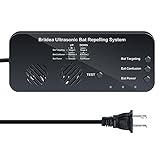
- BAT TARGETING: Dual speakers project two powerful ultrasonic sound streams, creating an unbearable environment for bat. Multiple bat removal options to choose from. Bats will never adapt to variable sounds. The ultrasonic attacks bats' auditory and nervous system, making them unable to navigate, ultimately driving them away
- EFFECTIVE: Continuous use of this ultrasonic bat remover for 16~20 days can achieve obvious results. Bats are creatures with individual differences, the effect varies from place to place, please be patient and persevere. Then we can say goodbye to bats
- HUMAN AND PET SAFE: Eco-friendly, no chemicals, no odor and radiation. Ultrasonic sound is inaudible to human and pets, so it's absolutely harmless
- WIDE COVERAGE AREA: The bat remover covers up to 7000 sq. ft in open areas(meaning areas without walls, doors etc). If there are many obstacles in the way or the bat problem is severe, using multiple units will work great
- SUPER EASY INSTALLATION: Two installation methods, you can use screws to fix, or use strong nano-markless hook sticker to attach directly to the wall. Easy to hang overhead, plug-and-play
Why bat diets matter to ecosystems
A bat’s diet can affect more than the bat itself. The National Park Service describes several ecological roles tied to specific food sources:
- Insect-eating bats consume insects. Insectivorous bats hunt insects, including insects that can eat or damage crops. In a USGS feature, bat researcher Paul Cryan said: “People often ask why we should care about bats, and evidence strongly suggests that bats are saving us big bucks by gobbling up insects that eat or damage our crops,” The feature adds: “It is obviously beneficial that insectivorous bats are patrolling the skies at night above our fields and forests, and these bats deserve help.” These statements concern insectivorous bats and their role in fields and forests; they are not a claim that every bat species provides insect control.
- Nectar-feeding bats pollinate plants. As these bats visit flowers to feed, they can transfer pollen. This service is associated with nectar-feeding bats, not with all bats.
- Fruit-eating bats disperse seeds. Bats that eat fruit can help spread seeds, linking their feeding to plant reproduction and dispersal.
These roles are connected to diet: insect consumption, pollination and seed dispersal are different outcomes of different feeding strategies. Calling bats beneficial can be accurate, but the reason depends on what a particular species eats.
Recommended Free Tools
What the numbers and examples do—and do not—tell you
The available figures are easy to overstate unless their scope stays attached to them. Bat Conservation International’s estimate that around 75% of bats eat insects comes from its July 22, 2021 article. It is an approximate global description, not a statement that all bats are insectivores. The USGS figure of 4 to 8 grams per night is an estimate for a little brown bat, not an average for the world’s bats. And Bat Conservation International’s description of more than 1,400 bat species and three vampire bat species is attributed to its FAQ; the global species total may shift as classifications change.
Best Value

- Advanced Hidden Camera Detection for Maximum Privacy Protection: The JMDHKK K68+ Hidden Camera Detector offers advanced detection capabilities to identify hidden cameras in various environments such as hotels, rental properties, offices, and personal spaces. Whether you're traveling, at work, or at home, this device ensures your privacy is protected by detecting unauthorized surveillance and hidden cameras, giving you peace of mind in any situation.
- Comprehensive Bug Detector for Listening Devices and Eavesdropping Protection: The JMDHKK K68+ is a powerful Bug Detector designed to detect hidden listening devices and eavesdropping tools. Ideal for sensitive environments such as business meetings, confidential discussions, and personal spaces, this device ensures that your conversations remain secure and private, protecting you from unwanted surveillance and maintaining your confidentiality.
- Magnetic Tracker Detection for Discreet Surveillance Devices: Equipped with a powerful magnetic field detection feature, the JMDHKK K68+ can locate hidden devices that utilize magnetic fields, such as magnetic trackers and covert surveillance equipment. This capability is essential for detecting unwanted devices in your home, office, car, or other spaces where security and privacy are a top priority.
- Automatic Signal Observation: Equipped with passive signal observation capabilities, this device continuously monitors its surroundings to identify unusual transmissions. It is particularly effective for detecting signals that appear at longer intervals, offering enhanced coverage compared to manual methods. This function strengthens privacy protection by helping you stay aware of potential threats in various environments.
- Portable, Compact, and Easy-to-Use Privacy Protection Device: The JMDHKK K68+ is designed with portability and ease of use in mind. Compact and lightweight, it's perfect for travelers, business professionals, and anyone seeking reliable privacy protection on the go. Whether you're in a hotel, office, car, or home, this user-friendly device offers quick and efficient detection, ensuring your personal space remains free from unauthorized surveillance.
These examples answer different questions. The approximate percentage describes how common insectivory is across bats; the little brown bat figure gives a species-specific nightly estimate; and the vampire bat count distinguishes blood-feeding specialists from the rest. None should be used to predict the exact diet or nightly food intake of an unidentified bat.
Can you hear a bat finding its food?
People generally cannot hear the high-frequency calls used in echolocation unaided. Bat Conservation International suggests taking an evening walk with a bat detector for those who want to listen to bat calls. A detector is an optional way to observe activity; it is not needed by bats to find food. Calls detected during a walk can show that bats are active, but hearing a call alone does not identify what the bat is eating or prove that it has caught prey.
Bat Conservation International’s article names a personal detector that connects to an Android phone or tablet and records calls through an app. Device availability and compatibility can change, so check current product information and whether the equipment works with your phone before relying on it. A detector is an observation aid, not a substitute for identifying the species or watching its feeding behavior.
How to interpret a bat’s feeding behavior
Seeing a bat fly at night does not reveal its diet by itself. It may be hunting insects, traveling between roosting and feeding areas, or looking for another food source. To make a sound inference, distinguish what is directly observed from what is known about the species:
- If an insect is caught in flight, that observation supports insect feeding in that instance; it does not prove every bat nearby eats the same prey.
- If a bat visits flowers, nectar-feeding is a relevant possibility, and nectar-feeding bats can contribute to pollination.
- If it feeds on fruit, seed dispersal may be part of its ecological role.
- If the species is not identified, avoid assuming its diet from the fact that it is a bat. The group includes multiple feeding strategies.
The most reliable broad rule is to connect diet, foraging behavior and ecological role to the species or feeding group being discussed. Insect hunters, fruit-eaters, nectar-feeders and the few vampire bats are not interchangeable examples.
Quick Recap
Product prices and availability are accurate as of the date/time indicated and are subject to change. Any price and availability information displayed on Amazon at the time of purchase will apply.




