Free tools Windows power users keep installed
One-click scans. No signup required.
Best Friends Podcast episode 67 argues that adoption policies built around an idealized adopter can shut out people who could provide good homes. In a conversation with Lawrence Nicolas, then chief operating officer of Peggy Adams Animal Rescue League, the episode makes the case for replacing blanket exclusions with informed conversations about the fit between an animal and a household.
What is episode 67 about?
Published on June 10, 2021, the episode asks why shelters sometimes make adoption unreasonably difficult by expecting every applicant to meet a narrow standard of a “perfect” pet adopter. Best Friends frames the issue as a tension between screening people out and helping them decide whether a particular animal is right for their household.
| # | Preview | Product | Price | |
|---|---|---|---|---|
| 1 |

|
Desk Pet Adoption Day | $13.90 | Buy on Amazon |
| 2 |

|
Can I Be Your Dog? | $8.19 | Buy on Amazon |
| 3 |

|
My Someone: A Pet Adoption Story | $13.25 | Buy on Amazon |
| 4 |

|
Crouton: One Cat's Adoption Tale | $9.49 | Buy on Amazon |
| 5 |
|
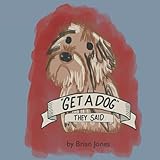
“Get A Dog,” They Said | $12.99 | Buy on Amazon |
As an Amazon Associate I earn from qualifying purchases.
The episode describes applicants being rejected because of factors such as age, rental housing, an unfenced yard, or plans to have children in the coming decade. These are examples in Best Friends’ advocacy argument, not evidence that every shelter uses those rules or that every policy serves no purpose. The episode’s point is that a blanket rule may fail to predict how someone will care for an animal and can discourage potential adopters.
Do these 3 things before closing this tab:
1Repair Windows errors before they cause bigger problems2Fix the driver behind crashes, sound loss and screen glitches3Clear out junk files and repair common Windows errorsAs the episode page puts it, “Every time someone chooses to adopt an animal, we have the opportunity to positively change that person’s life and save the life of an animal.”
#1 Best Overall
Who is the guest, and what does the episode report?
The guest is Lawrence Nicolas, identified on the episode page as chief operating officer of Peggy Adams Animal Rescue League in West Palm Beach, Florida, at the time of publication. The page attributes roughly 6,000 annual placements and a return rate below 4 percent to the organization’s open-adoption process.
Those figures are reported by Best Friends’ episode page; it does not give a definition or calculation method for the return rate, specify its time window, or describe an independent audit. They are therefore a snapshot attributed to the organization, not proof that open adoption caused a particular outcome or a basis for comparing shelters with different reporting methods.
Rank #2
What does “open adoption” mean here?
In this episode’s context, open adoption is a conversation-centered approach: staff share relevant information about an animal, learn about the prospective adopter’s household and expectations, and work together to assess the match. The aim is not to find a checklist reason to reject someone, but to help people make an informed decision while reducing unnecessary barriers.
That does not mean doing away with useful questions or animal-care guidance. A conversation can still explore housing, routines, other pets, children, and the animal’s specific needs. The distinction is between using information to understand fit and treating a broad category of applicants as automatically unsuitable.
Rank #3
How can a shelter make adoption screening more useful?
- Examine blanket exclusions. Ask whether a rule about age, housing, fencing, or future plans actually helps assess care for the animal in question, or simply screens out a whole group.
- Discuss the individual animal. Explain relevant behavior, care needs, and likely adjustments, then invite the applicant to describe their household and plans.
- Make the process easier to navigate. Consider how much time and friction applications create, and whether the steps help people make a sound decision.
- Track outcomes consistently. Placements and returns can inform policy, but organizations need clear, consistent definitions before comparing results or drawing conclusions.
These are practical implications of the episode’s approach, not a universal checklist for every animal or shelter. A sound process can reduce unnecessary obstacles without assuming that every applicant or every match is appropriate.
What resources does Best Friends offer?
The episode page points listeners to an open-adoptions playbook, client-service and open-adoptions training, an adoption barrier study, and a data-use tool. Best Friends also describes support for conversation-based adoption services and materials for animal-welfare agencies. These are organizational resources, rather than consumer pet products.
Rank #4
Did the episode influence another organization?
A later Best Friends episode reports that Rachel Mairose, founder of Secondhand Hounds, listened to episode 67 and reconsidered how inclusive her organization’s adoption process was. That account is an example of a reported response; it is not a controlled evaluation of the episode’s impact or evidence about adoption outcomes across shelters.
The Tool Desk
Outbyte Driver Updater FREEScan for outdated or missing drivers - takes under a minuteDriver Scan →Outbyte PC Repair FREEClear out junk files and repair common Windows errorsFree Scan →Quick Recap
Best Value
Product prices and availability are accurate as of the date/time indicated and are subject to change. Any price and availability information displayed on Amazon at the time of purchase will apply.




