Recommended Free Tools
A dorsal fin is the fin, or set of fins, along a fish’s back. It is an unpaired fin on the body’s midline, and it commonly helps stabilize the fish and resist rolling. Its number, shape, supports, and specialized roles vary among fish.
Where is the dorsal fin?
Dorsal means toward the back or upper side. The dorsal fin runs along the fish’s upper side, on its midline. The University of Hawaiʻi at Mānoa’s Exploring Our Fluid Earth classifies it as a median fin, unlike the paired pectoral and pelvic fins.
The dorsal fin belongs to the broad group of unpaired fins, along with the anal and caudal fins. The pectoral and pelvic fins are paired:
- Dorsal fin: along the back or upper side.
- Pectoral fins: paired fins on the sides, usually near the gills.
- Pelvic fins: paired fins on the underside.
- Anal fin: an unpaired fin on the underside toward the rear.
- Caudal fin: the tail fin at the rear.
- Adipose fin: a small, fleshy, rayless fin found in some fish, often behind the dorsal fin and before the tail.
Fish vary: some have more than one dorsal fin, some have a long dorsal fin, and some lack one. If you are asking which fin is on top, it is generally the dorsal fin.
#1 Best Overall

- Compact: Dimension: 7.9"x5.9"x5.9"; 1 Gallon tank; ideal for small spaces, aquarium beginners caring for a single betta, a few shrimp, snails, or a tiny goldfish. Also works as a temporary hospital tank, quarantine tank, or desktop decor (After deducting the filter part, the actual usable volume is approximately 0.8 gal and it will further decrease after adding substrate)
- Customizable Lighting: features a 3-color LED hood with 10 adjustable brightness levels to showcase your fish and tank décor
- Self-Cleaning Filtration: Hidden filter keeps tank clean for easier maintenance. Note: Clean filter sponge and pump regularly to avoid clogging; regular water changes are required — this small tank does not support zero-maintenance use
- Thoughtful Design: its top feeding hole allows for easy feeding without removing the lid; four silicone feet for stability and quiet operation
- Complete Starter Kit: 1x 1 gallon Fish Tank, 1x Filter Sponge, 1x Adjustable Water Pump, 1x LED Hood (Note: The light requires a power transformer (not included) for use. Compatible transformers include 5V 0.5A, 5V 1A, 5V 1.5A, and 5V 2A)
What does a dorsal fin do?
A common role of the dorsal fin is stabilization. Together, dorsal and anal fins help resist sideways rolling and keep the fish upright, as described by the Western Australia Department of Primary Industries and Regional Development. The dorsal fin can also have specialized roles, but these depend on the fish and its fin structure.
Stability and movement
The dorsal fin gives water a surface to push against when a fish moves. Its shape and position can affect stability and control. The anal fin can contribute to stability too, while other fins and the fish’s body also play roles. The dorsal fin is not the same as a tail or a universal source of forward thrust.
Some dorsal fins can be tucked close to the body, which can reduce drag in fast swimmers. In other species, a very long dorsal fin can contribute to snake-like locomotion. These are examples of adaptations, not functions shared by every fish.
Protection and other specialized roles
In some fish, spiny dorsal fins can help with defense. A locking spine may help a fish brace in a coral crevice, while a flared fin can make a fish look larger. Such features are specific adaptations, not general properties of all dorsal fins.
Do these 3 things before closing this tab:
1Scan for outdated or missing drivers - takes under a minute2Clear out junk files and repair common Windows errors3Fix the driver behind crashes, sound loss and screen glitchesDorsal-fin anatomy: spines and soft rays
Dorsal fins may have stiff spines, soft rays, or both. Spines are generally stiff and unbranched. Soft rays are segmented and branched. The Australian Museum glossary describes a common arrangement: a spinous dorsal at the front and a soft dorsal behind it.
| Part | Position and support | General description |
|---|---|---|
| Spinous dorsal | Anterior portion, supported by spines | Spines are generally stiff and unbranched. |
| Soft dorsal | Posterior portion, supported by soft rays | Rays are segmented and branched. |
Not every fish follows this common pattern. The number and arrangement of dorsal fins and their supporting structures vary. These features can help with identification, but a single fin trait is not enough to identify a species reliably.
Why do some fish have two or more dorsal fins?
Some fish have one dorsal fin, while others have two or more. In a common arrangement, the first fin is a spine-supported section and the following fin is soft-rayed. The Australian Museum notes that many fish have two dorsal fins, with the first usually supported by spines and the second by rays.
Rank #2

- 【𝐀 𝐅𝐫𝐢𝐞𝐧𝐝𝐥𝐲 𝐒𝐭𝐚𝐫𝐭𝐞𝐫 𝐊𝐢𝐭 𝐟𝐨𝐫 𝐅𝐢𝐬𝐡𝐤𝐞𝐞𝐩𝐢𝐧𝐠】Everything you need to start a thriving aquarium is right here: a crystal-clear fish tank, a multi-stage filtration system, a heater, a digital thermometer, a LED light with Timer, a water changer, and a net. It eliminates worries about water quality, temperature, or light, making it the perfect gift for a kid, a beginner, or anyone desiring the serenity of nature without the hassle.
- 【𝐇𝐢𝐝𝐝𝐞𝐧 & 𝐏𝐫𝐨𝐭𝐞𝐜𝐭𝐞𝐝】eWonLife small aquarium features a hidden multi-storage design that neatly tucks away all essential gear, including heaters and filters. This gives you a clutter-free view and allows your curious fish to explore happily, fearlessly, and free from harm from the pump
- 【𝐌𝐨𝐫𝐞 𝐅𝐢𝐥𝐭𝐞𝐫 𝐌𝐞𝐝𝐢𝐚, 𝐅𝐞𝐰𝐞𝐫 𝐖𝐚𝐭𝐞𝐫 𝐂𝐡𝐚𝐧𝐠𝐞𝐬】After the initial sponge filter, we've added ceramic rings and quartz balls to create a paradise for beneficial bacteria. Think of them as a tiny, powerful cleanup crew that constantly removes invisible toxins from fish waste. This creates a clear and stable environment where your aquatic friends can thrive, and far less work for you
- 【𝟕𝟖°𝐅 𝐂𝐨𝐧𝐬𝐭𝐚𝐧𝐭 𝐓𝐞𝐦𝐩𝐞𝐫𝐚𝐭𝐮𝐫𝐞 & 𝐄𝐚𝐬𝐲 𝐑𝐞𝐚𝐝𝐢𝐧𝐠𝐬】The included heater creates a stable, ideal 78°F world for your Betta fish and tropical fish to thrive. The clear LED thermometer instantly confirms the perfect conditions, so you can sit back and enjoy watching your fish swim happily
- 【𝐂𝐨𝐦𝐩𝐚𝐜𝐭 & 𝐂𝐫𝐲𝐬𝐭𝐚𝐥-𝐂𝐥𝐞𝐚𝐫 𝐃𝐞𝐬𝐤𝐭𝐨𝐩 𝐀𝐪𝐮𝐚𝐫𝐢𝐮𝐦】Made from high-clarity, durable plastic, this lightweight tank (15"L x 7.9"W x 8.3"H) fits perfectly on any desk or balcony. The 3.5 gallon swimming space is an ideal home for a Betta, small schooling fish (like Cardinal Tetra or Zebra Danios), and ornamental shrimp (such as Red Cherry or Blue Velvet)
Other fish have three dorsal fins, an elongated dorsal fin, or no dorsal fin. The University of Hawaiʻi at Mānoa’s resource describes these varied forms as examples of fin adaptations, not as a complete classification system. When a fish has multiple dorsal fins, their position, support, and shape can help describe them.
Outdated Drivers Are Slowing You Down
One free scan finds every outdated or missing driver and matches the right update for your exact hardware.Free scan · exact hardware matchWindows Errors? Fix Them Before They Spread
Repair common Windows errors and clear accumulated junk for a smoother, more stable PC - no reinstall needed.Free scan · no reinstallDorsal fin versus adipose fin
An adipose fin is a distinct fin type, not simply another name for a dorsal fin. The Australian Museum defines it as a small, fleshy fin without fin rays. South Carolina DNR places it between the dorsal and caudal fins and notes that it is absent in many fish.
Its function is not settled across all fishes. South Carolina DNR describes its purpose as unknown, and the Confederated Salish and Kootenai Tribes’ anatomy resource says the function is not known for sure. That resource mentions evidence for possible roles in juvenile salmonid swimming and mate preference, but these should not be treated as established functions for every species.
How the dorsal fin helps identify a fish
Dorsal-fin features can help distinguish fish, but use them alongside other characteristics and a guide suited to the species or region. To examine a dorsal fin:
- Count the fins. Note whether there is one, more than one, or none.
- Check the arrangement. Record whether the fin is divided into sections or has a spinous portion followed by a soft-rayed portion.
- Look at the supports. Note whether the supports appear stiff and unbranched or segmented and branched.
- Describe its shape and posture. It may be tucked, elongated, or flared.
- Compare other features. Use body shape, other fins, and a species-specific identification guide rather than relying on the dorsal fin alone.
Common misconceptions about dorsal fins
“The dorsal fin is only for balance.”
Stabilization is a common role, but dorsal fins can have other specialized adaptations. Their functions vary among fish.
Free tools Windows power users keep installed
One-click scans. No signup required.
“Every fish has one dorsal fin.”
Fish can have one dorsal fin, multiple dorsal fins, a long dorsal fin, or no dorsal fin.
“All dorsal fins have the same structure.”
No. Some have spines, some have soft rays, and some have both. Fin number and arrangement also vary.
Rank #3
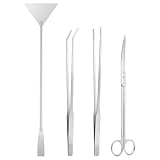
- 4 in 1 Long Aquarium Tools Kits: The aquascape tools kit contains 1 x 10" aquarium scissors, 1 x 10.6" straight long tweezer, 1 x 10.6" curved feeding tongs, and 1 x 12.56" Aquarium substrate spatula. One set of terrarium supplies to help you better manage your aquarium and terrariums. This aquascaping tools are long and slender enough to easily use in any gallon fish tank, good as fish tank accessories. It suits both beginner and experienced people.
- Rust-proof and Stainless Steel Material: The 4pcs of aquarium supplies are made of high-quality stainless steel material, rustproof and corrosion-proof, sturdy, and long-lasting. With the protection of the rustproof coating, every tool has excellent corrosion resistance.
- Multi Functions and Applications: Ohtomber aquascape tools is ideal for all types of grooming, maintaining, and sorting out aquatic plants in water as an aquarium accessories. Aquarium scissors could help you trim the plant, furnish the aquarium landscape with driftwood cornerstones, sand, and aquarium algae scraper could be applied to scrap the algae and smooth out plant stratum substrate. Do use it to maintain a comfortable environment for fish in an aquarium tank now!
- Minimizing interference: Long aquascaping tools can prevent accidental injuries to Aquarium plants and damage to the environment. Long aquarium tweezer can adjust driftwood, and feed little reptiles instead of putting your hands into water. It is very effective in precise operation and avoiding getting your hands wet. Similarly, Long aquarium scissors are suited for small or thin water plants and help trim excess parts. It won't hurt the plant's cross-section.
- Maintenance tips: In order to extend tool life and keep performing well, we recommend that you rinse off the saltwater attached to the tools surface and then wipe up to keep dry.
“The little fin behind the dorsal fin is another dorsal fin.”
Not necessarily. A small, fleshy fin without rays behind the dorsal fin may be an adipose fin, which is a distinct fin type.
Bottom line
The dorsal fin is the fin or fins along a fish’s back. It commonly helps stabilize the fish and resist rolling, but its structure and other roles vary by species.
FAQ
What is the fin on a fish’s back called?
It is called the dorsal fin. It lies along the fish’s back on the body’s midline.
What does a dorsal fin do?
It commonly helps stabilize the fish and resist sideways rolling. Some dorsal fins have additional adaptations, such as helping a fish reduce drag, brace in a crevice, or move with an elongated fin.
Why do some fish have two dorsal fins?
Fin number varies among fish. A common arrangement has an anterior, spine-supported dorsal and a posterior, soft-rayed dorsal, though the form and role depend on the fish.
Are dorsal fins spiny or soft?
They can be spiny, soft-rayed, or divided into a spiny front section and a soft-rayed rear section. Spines are generally stiff and unbranched; soft rays are segmented and branched.
Is an adipose fin a dorsal fin?
No. It is a distinct, small, fleshy fin without rays, often found behind the dorsal fin and before the tail. Its function is not settled across all fishes.
Quick Recap
Product prices and availability are accurate as of the date/time indicated and are subject to change. Any price and availability information displayed on Amazon at the time of purchase will apply.




