
Quick wins for a faster PC:
Repair Windows errors before they cause bigger problemsFix Now →Fix the driver behind crashes, sound loss and screen glitchesFind Drivers →Some links on this page are affiliate links: if you buy through them we may earn a commission, at no extra cost to you.
There is no single temperature that makes every dog walk unsafe. As a practical starting point, some dogs begin to struggle above 20°C (68°F), caution should increase around 25°C (77°F), and heatstroke precautions are warranted above 80°F (26.7°C) or whenever humidity is high. Breed, age, body condition, coat, health, acclimation, exertion, shade, water and the walking surface can all change the decision. Check the ground as well as the air, and stop at the first sign your dog is overheating.
What temperature is too hot to walk a dog?
Temperature guides are decision points, not guarantees. A healthy, acclimated dog may cope with weather that overwhelms an elderly or flat-faced dog, while a sunny asphalt path can be dangerous even when the air feels moderate.
As an Amazon Associate I earn from qualifying purchases.
| Conditions | What the guidance indicates | Safer choice |
|---|---|---|
| Below about 20°C (68°F) | The Scottish SPCA describes this as a rule of thumb; many dogs are comfortable between 15°C and 25°C, but individual response and surface temperature still matter. | Normal walks may be reasonable for a healthy, acclimated dog. Watch behavior and test the route. |
| About 20°C (68°F) | Guide Dogs UK says temperatures over 20°C can begin to affect dogs. | Shorten the walk or move it to a cooler time for sensitive dogs, and favor shade and grass. |
| About 25°C (77°F) | Guide Dogs UK advises greater care at 25°C. | Walk at dawn or in the evening, keep exertion low, provide water and stop frequently. |
| Above 80°F (26.7°C), or any temperature with high humidity | The American Animal Hospital Association (AAHA) says to consider heatstroke risk and use the heat index rather than air temperature alone. | For flat-faced, elderly, overweight, very young or medically fragile dogs, limit outdoor activity to brief toilet breaks or keep them indoors. |
Dogs Trust cautions that there is “no simple answer” and that a dog could overheat even in winter. Treat the figures above as prompts to reassess conditions, not as a promise that a particular temperature is safe.
Why do humidity, sun and exertion change the answer?
Dogs mainly cool themselves by panting. Humid air makes evaporation less effective, so a dog can accumulate heat at a lower air temperature than the thermometer suggests. That is why AAHA recommends considering the heat index whenever humidity is high.
Popular on Amazon
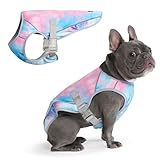
- Advanced Cooling Technology: The Chilltech cooling vest for dogs effectively reduces your pup’s body temperature through evaporative cooling. Just wet the vest, wring it out, and put it on - your dog will feel instant relief. The special fabric retains moisture to provide a long-lasting cooling effect, ideal for hot summer days and outdoor adventures.
- Enhanced Cooling Option: For an extra boost of cooling for dogs, dampen the vest and place it in the freezer before use. This makes it one of the most effective cooling items for dogs, perfect for extremely hot days and heatwaves - keeping your pup comfortable, cool, and protected.
- Safe and Durable Materials: Constructed with premium, lightweight materials, the Chilltech cooling dog vest is safe for your pet—free from harmful chemicals—and built to last. This dog cooling vest for summer offers excellent water absorption, breathability, and flexibility, ensuring all-day comfort during warm-weather adventures.
- User-Friendly Design and Protection: This vest top for dogs features convenient side-release buckles for easy on and off. Perfect for dog walking and dog hiking, it offers SPF 50 UV protection to help prevent sunburn and skin irritation. Reflective materials enhance visibility, keeping your pup safe during outdoor adventures.
- Long-Lasting Cooling Effect: This evaporative cooling vest provides up to 60 minutes of relief, depending on the weather and your dog’s activity level. Just re-wet to reactivate the cooling. It's the perfect cooling vest for dogs for hot weather and extended outdoor fun.
Direct sun, a windless route and sustained running add heat load. A slow, shaded stroll with rests is materially different from a brisk walk, hill climb or game of fetch in full sun. A dog that has not gradually acclimated to warmer weather also has less ability to cope with a sudden change.
- Check the forecast and the route: Note humidity, cloud cover, shade and whether the path is surrounded by heat-reflecting buildings.
- Match effort to conditions: Reduce speed, distance and play intensity as heat and humidity rise.
- Use the dog as the final gauge: Panting that becomes heavy, persistent or accompanied by reluctance is a reason to stop, even when the air temperature is below a guide value.
How hot is too hot for a dog’s paws?
Ground temperature can be up to 40–60 degrees higher than the air temperature, according to AAHA. Asphalt, concrete, sand, metal and artificial turf can burn paw pads, and these surfaces may remain hot after the air begins to cool.
Use a hand test before leaving
- Place the back of your hand on the walking surface for approximately five to seven seconds. Cornell University College of Veterinary Medicine gives a more conservative approximately 10-second version: if you cannot keep your hand there comfortably, the surface is likely too hot for your dog.
- Test the actual route, not only the pavement outside your home. Sun and shade can produce different temperatures, and a route may change from grass to asphalt.
- If the surface is uncomfortable, choose grass, dirt or shade, postpone the walk, or provide indoor enrichment instead.
The hand test is a practical screen, not a guarantee. Paw pads can still be injured by a surface that passes the test, particularly during a long walk, and a dog may overheat even on cool-feeling ground.
Also popular on Amazon

- Instant 3-Hour Heat Relief for Hot Days: Don't let scorching summer heat trap your dog indoors. Engineered with reusable tech ice packs, the SAVIOR COOL dog cooling vest provides 180+ minutes of continuous, deep cooling comfort-even in controlled 95°F extreme heat. Perfect for daily summer walks, beach trips, car rides, and backyard playtime, it allows your pup to romp freely, stay high-spirited, and beat the heat without heavy panting.
- No-Mess Dry-Touch Tech Helps Keep Fur Drier: Say goodbye to soggy, bacteria-prone soak-and-wear vests that ruin your dog's coat. Our advanced cooling dog harness features waterproof-lined, insulated pockets that contain moisture as the ice packs thaw. With 2 built-in cooling pockets and 4 reusable cold packs included for easy rotation, this low-mess design keeps your dog's fur dry, clean, and safe from hot-weather skin irritations.
- Anti-Chafe Fit for Medium & Large Dogs: The SAVIOR COOL cooling jacket for dogs features fully adjustable straps for a secure, rub-free fit. [Size M] fits neck 18-26" & chest 19.5-39"; [Size L] fits neck 19.5-39" & chest 25.5-47". Please measure your dog before ordering-this neck cut is tailored for larger breeds and may be too loose for French Bulldogs or Pugs.
- 2-in-1 Vest & Light Walking Harness: Engineered for relaxed summer outings, this cooling vest for dogs features an integrated D-ring designed strictly for gentle, no-pull walking when your dog is cooling down. It is not rated as a heavy-duty anti-pull harness. The visibility reflective trim wraps around the chest and back, ensuring maximum safety and peace of mind during late-night or early-morning summer walks.
- Rugged yet Lightweight Comfort for Daily Wear: Built for active dogs who love outdoor exploration, the outer layer is made of abrasion-resistant, quick-dry fabric that withstands rough play and scratches. The streamlined, breathable inner mesh allows maximum air circulation, reducing bulk and heat buildup so your large dog can run, jump, and explore with ease.
Which dogs need a lower temperature limit?
Use shorter exposure and a more conservative threshold for dogs that cool themselves less efficiently or have less physiological reserve.
- Brachycephalic (flat-faced) breeds: Pugs, Bulldogs and similar dogs can have restricted airways that make panting less effective.
- Overweight dogs: Extra body fat increases heat retention and effort during movement.
- Elderly dogs: Age-related heart, lung or mobility problems can reduce tolerance for heat and exertion.
- Very young puppies: Their temperature regulation and experience with warm conditions are not fully developed.
- Dogs with heart or respiratory disease: Ask the treating veterinarian for an individualized exercise limit.
- Thick- or dark-coated dogs: Dense insulation and greater absorption of sunlight can increase heat load.
- Unacclimated dogs: A sudden change from cool weather to heat warrants extra-short outings while the dog adjusts.
These categories can overlap. An overweight, flat-faced senior should be managed more conservatively than a fit, acclimated dog at the same temperature.
How should I plan a safe hot-weather walk?
A safer walk reduces heat exposure before the dog begins to struggle. Use this sequence whenever conditions are warm.
Also popular on Amazon

- Keep your dog cool this summer with the Swamp Cooler Vest; It provides sun protection and evaporative cooling for hot weather activities such as hiking, walking, camping, and more
- We’ve updated the external air mesh for greater durability and water absorption; The new construction retains more water in high-exposure zones so they can play and explore more
- To activate, simply soak in water, wear and go; The outer layer reflects heat and facilitates evaporation while the updated middle layer absorbs more water to keep them cool longer
- Features an inner mesh lining keeps your pup dry and comfortable; The relaxed fit provides maximum shade with UPF 50+ to help protect them from the sun; Side-release buckles for easy on and off
- Wear on its own or layer over a harness with the integrated leash portal; Compatible with most harnesses, including Ruffwear’s Front Range, Hi & Light, and Web Master harnesses
- Choose the coolest time. Dawn is often cooler; evening can work once the pavement has cooled. Avoid the hottest late-afternoon period.
- Pick a forgiving route. Prefer grass, dirt and continuous shade over sun-exposed asphalt or concrete. Include a short turnaround so you are never far from shelter.
- Carry water and a collapsible bowl. Offer regular opportunities to drink rather than waiting until the dog is distressed.
- Keep the pace easy. Replace running, hills and vigorous play with a relaxed walk. Stop in shade for breaks.
- Watch continuously. Heavy panting, shade-seeking, whining, reluctance to play or excessive drooling means the walk should end.
- Have an indoor alternative. If the route fails the hand test or humidity is high, use scent games, food puzzles and other enrichment indoors.
- Never use a parked car as a waiting place. Do not leave a dog unattended in a vehicle, even with windows open or for a short errand.
Can I walk my dog in 80-degree weather?
An 80°F (26.7°C) reading is the point at which AAHA says to consider heatstroke risk; it is not a safe/unsafe switch. Humidity, sun, surface temperature and the dog’s health determine whether any outdoor exercise is appropriate.
| Situation | Risk assessment | Practical decision |
|---|---|---|
| 80°F with low humidity, shade and cool grass | Lower risk than the same temperature on hot pavement, but heat can still build during exertion. | Keep the outing brief and easy, carry water and monitor continuously. |
| 80°F with high humidity | Evaporative cooling is impaired; AAHA’s heat-index warning applies. | Prefer indoor enrichment or a brief toilet break in shade. |
| 25°C (77°F) on sunny asphalt | The air is at Guide Dogs UK’s greater-care point while the ground may be dramatically hotter. | Use grass or postpone; do not rely on air temperature alone. |
| Any listed temperature for a flat-faced, elderly, overweight, very young or medically fragile dog | Reduced heat tolerance makes the general guide too permissive. | Keep exposure to brief toilet breaks unless a veterinarian has provided another plan. |
What signs mean I should stop the walk?
Early overheating signs
- Heavy or increasingly rapid panting
- Seeking shade or trying to lie down
- Whining, unusual agitation or reluctance to play
- Excessive drooling
Move to shade, offer water, reduce activity and reassess immediately when these signs appear. Do not encourage the dog to continue to “finish the route.”
Emergency signs
- Breathing difficulty
- Vomiting or diarrhea
- Weakness, confusion or inability to stand
- Seizures or collapse
Cornell reports a normal dog temperature of 100.5–102.5°F and identifies 105°F or higher as heatstroke. A dog with severe signs needs urgent veterinary care regardless of a thermometer reading.
Also popular on Amazon
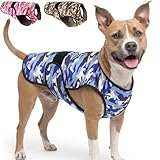
- Goldilocks Cooling Performance: Not too heavy, not too light; just right for summer comfort; dual-layer design made with true cooling microfiber, not mesh; outer layer evaporates while inner layer holds moisture for longer-lasting relief on hot days
- Soft and Durable: Premium quality microfiber feels soft against your dog’s skin and resists snagging better than single-layer alternatives; ideal for those seeking comfort and quality in a lightweight cooling vest
- Fast-Activating Cooling: No ice packs needed; just soak, wring out, and wear; vest activates instantly through evaporative cooling and can be rewetted throughout the day without refrigeration or inserts
- Adjustable and Harness-Friendly Fit: Secure Velcro chest straps ensure a snug, custom fit without restricting movement; can be worn under most walking harnesses and is available in six sizes from XS to XXL for small to large breeds
- Stylish Camo with UV Protection: Available in blue, pink, and green camo patterns; covers your dog’s back and chest for all-day sun protection with dense, tightly woven fabric to help block harmful UV rays
What should I do if I suspect heatstroke?
Heatstroke is a medical emergency. UC Davis and California public-health guidance both recommend immediate veterinary contact while cooling begins.
Do these 3 things before closing this tab:
1Clear out junk files and repair common Windows errors2Fix the driver behind crashes, sound loss and screen glitches3Repair Windows errors before they cause bigger problems- Move the dog to shade or a cool, ventilated room.
- Begin gentle cooling with cool (not ice-cold) water or damp towels. Avoid delaying care while trying to achieve a particular temperature.
- Call a veterinarian or emergency clinic and explain the signs, the activity and the estimated exposure.
- Continue following the clinic’s instructions during transport. Cooling first aid must not postpone professional treatment.
Do booties, paw wax and cooling products make a walk safe?
Products can address a specific hazard, but none removes the need for shade, water, rest and a shorter outing. AAHA lists the following options.
| Option | What it helps with | Limits and safe use |
|---|---|---|
| Well-fitted booties | Create a barrier between paw pads and hot or abrasive ground. | Introduce them gradually, check for rubbing and remove them if the dog shows discomfort. They protect paws, not the dog’s core temperature. |
| Paw wax | Adds a protective coating to paw pads. | It cannot make dangerously hot pavement safe and does not prevent heatstroke. |
| Cooling vest | May assist body cooling during controlled, short outings. | Use with shade, water and rest; do not use it to justify longer exposure. |
| Cooling mat | Provides a cooler resting place at home or during a stop. | It complements, rather than replaces, moving the dog out of heat and seeking veterinary help when needed. |
| Collapsible water bowl | Makes it practical to offer water away from home. | Carry enough water for the route and turn back if the dog will not settle or drink normally. |
What can my dog do indoors when it is too hot outside?
Skipping a walk does not mean skipping enrichment. Short indoor activities can provide mental work without adding heat load.
Also popular on Amazon

- 【Water-Activated Dog Cooling Vest】 Keep your dog comfortable on warm days with this water-activated dog cooling vest. Simply soak or spray the vest with water, wring out excess moisture, and put it on your dog to help provide refreshing cooling comfort during summer walks, hiking, camping, running, and outdoor play
- 【3-Layer Breathable Cooling Fabric】 This dog cooling jacket is made with a 3-layer fabric design: a breathable mesh outer layer, a water-absorbing middle layer, and a soft inner lining. The lightweight dog cooling coat helps retain moisture for evaporative cooling while allowing airflow for comfortable wear
- 【Flip-Up UV Neck Collar】 Designed with a foldable 4 cm neck collar, this summer dog vest offers extra neck coverage when flipped up and a relaxed fit when folded down. The UV neck collar helps reduce direct sun exposure around your dog’s neck during outdoor activities
- 【Adjustable Fit with Leash Opening】 The adjustable side buckle design makes this cooling vest for dogs easy to put on, take off, and secure for a snug fit. A convenient leash opening allows you to connect a leash easily, making it practical for daily walking, travel, park visits, and active outdoor use
- 【Reflective Trim for Better Visibility】 Built with reflective trim details, this breathable mesh dog vest helps improve visibility in low-light conditions. The lightweight structure, secure buckle, and comfortable fit make it a practical dog cooling vest for small, medium, and large dogs in hot weather
- Scent games: Hide a few pieces of the dog’s usual food around one room and let the dog search.
- Food puzzles: Use a veterinarian-approved puzzle or stuffed toy that makes the dog work for part of a meal.
- Training sessions: Practice calm behaviors, recall indoors or simple trick chains for a few minutes at a time.
- Gentle play: Choose low-impact games in a cool room and stop before panting becomes heavy.
These activities are especially useful when humidity is high, the surface fails the hand test or a dog belongs to a higher-risk group.
Frequently Asked Questions
Can a dog overheat when the weather feels cool or is winter weather?
Yes. Dogs Trust notes that a dog can overheat even in winter, so temperature alone cannot rule out danger. Illness, heavy exertion, poor acclimation, direct sun or inadequate ventilation can still create a heat emergency.
Recommended Free Tools
Is the heat index more useful than the thermometer for dog walks?
When humidity is high, yes. AAHA advises using the heat index because moist air reduces evaporative cooling; a seemingly moderate air temperature can therefore require the same caution as a hotter, drier day.
Can hot-weather booties prevent heatstroke?
No. Booties can reduce paw contact with hot ground, but they do not cool the body. A dog wearing them still needs shade, water, rest and a shorter outing, and must be watched for overheating.
Should I test the pavement only once at the start of a walk?
No. Recheck whenever the route changes from shade to sun or from grass to pavement. A surface that felt comfortable near home can be much hotter farther along the route or later in the day.





Leave a Reply