The ASPCA’s Cruelty Intervention Advocacy (CIA) program was a New York City initiative that offered support in some cases where animals were at risk but investigators did not pursue a criminal case. Rather than relying only on removing animals, the program worked with owners and social-service partners to improve care and address the circumstances behind it. ASPCA descriptions of the program date from 2011 to 2014; they do not confirm that it still operates or that its past services and reporting instructions remain available.
What was the ASPCA Cruelty Intervention Advocacy Program?
The ASPCA said the CIA program launched in April 2010 and operated within its Humane Law Enforcement (HLE) department in New York City. It was created to help with animal-hoarding cases and other situations in which companion animals faced possible neglect or abuse across the city’s five boroughs.



Its role was distinct from criminal enforcement. In the ASPCA’s January 2011 description, HLE agents investigated a situation first. If they determined it was not a criminal case, CIA staff could work with the owner and agents on a plan to improve animal care. The program was an intervention option described for certain cases, not a universal alternative to law enforcement or a guarantee that animals would remain with their owner. ASPCA’s January 2011 announcement
How did the intervention work?
Assess the animals and the owner’s circumstances
The ASPCA’s April 2013 account described social workers conducting field assessments that considered conditions such as mental health, substance use, the home environment, and object hoarding. The program also addressed situations in which owners could not adequately care for animals because of financial hardship, domestic violence, or medical or mental-health challenges. These are examples given in the historical account, not a published eligibility checklist.
Recommended Free Tools
#1 Best Overall

- Used Book in Good Condition
Build a case plan and connect the owner with support
Caseworkers could create individualized action plans, make referrals to social-service agencies, and monitor cases over time. ASPCA said a case could be referred back to HLE if conditions deteriorated. The historical model therefore combined attention to animal care with follow-up on circumstances affecting the owner’s ability to provide it. ASPCA’s April 2013 account
Use practical help where appropriate
The 2011 announcement listed education, spay/neuter services, and financial assistance among the program’s tools. It said animals surrendered to the team were often transferred to the ASPCA’s Bergh Memorial Animal Hospital for spay/neuter care, then rehomed through the ASPCA Adoption Center or shelter and rescue partners. For qualifying owners receiving public assistance, the announcement described Partners in Caring grants; it also described no-cost spay/neuter services for remaining pets through ASPCA mobile clinics. These are historical service descriptions, not confirmation of benefits offered today. ASPCA’s January 2011 announcement
Rank #2
What results did the ASPCA report?
The ASPCA published several activity counts at different dates. They measure different things and should not be treated as a single trend or as proof that the program caused a particular outcome.
| ASPCA report date | Reported activity | What the figure describes |
|---|---|---|
| January 2011 | More than 20 animal hoarders assisted; nearly 200 animals rescued | Figures given in the announcement about the CIA program. The same announcement also reported nearly 400 animals rescued through joint HLE and CIA efforts, alongside approximately 4,000 animal-cruelty complaints investigated and 51 arrests in 2010; those broader figures are not CIA-only outcomes. |
| April 2013 | Nearly 4,000 animals assisted in New York City; more than 700 animals given spay/neuter services | ASPCA-reported program activity. |
| March 2014 | More than 4,000 animals assisted since launch | A cumulative figure reported by the ASPCA. |
The ASPCA accounts reviewed do not provide an independent evaluation, comparison group, or clearly described outcome methodology. The 2013 article relayed the program director’s observation of less recidivism and behavioral improvements, but did not cite a formal evaluation. The published counts are best read as dated ASPCA-reported activity, not as evidence of a quantified reduction in cruelty or repeat cases. 2013 ASPCA account · 2014 ASPCA account
Windows Errors? Fix Them Before They Spread
Repair common Windows errors and clear accumulated junk for a smoother, more stable PC - no reinstall needed.Free scan · no reinstallCrashes, No Sound, or Screen Glitches?
Random freezes, missing sound and display glitches usually trace back to one bad driver. Find and replace yours safely.Free scan · under a minuteRank #3
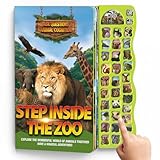
- 【Animal Busy Book with Sounds for Kids 】NEWEST VERSION Animal Busy Book 30 Species Names & Realistic Sounds Interactive Book for Boys Girls Kids 2 3 4 5 6 7 Year Old - learning toys, which helps toddlers to develop cognitive, practical ability, hand-eye coordination, color perception, memory, concentration and basic recognition.
- 【30 Animal illustrated & 6 Themes Writing Pages】Preschool Educational Animal Book covers 30 animal species and sound,which also including dinosaur stickers, maze, numbers.It helps develop hand-eye coordination, color perception, enhance memory and basic recognition.
- 【High-Quality Printing and Materials】: This book is based on large vibrant colors realistic images. The thick board book cover ensures long-lasting usage and cardboard pages prevent it from bending. specially anti-cutting edge and round corner design of every page, prevent the little hands from getting hurt. The book size is 11.8x10.3 inches, bigger than any other dinosaur sound book on the market. ·
- 【Parent-Child Interactive Teaching】Ourr book is suitable as a learning toy for kids 3-5 and playing with the family is a great opportunity to learn to take turns, share and help each other. It is useful to help them understand thinking, perceive colors, and enhance logical knowledge.
- 【Ideal Gifts 】The book is perfect for preschool kids, homeschool, kindergarten. To keep your kid busy. Can be used as birthday gifts, Dinosaur Themed Party, holiday gifts, toy prizes for carnival games. Children can experience the fun of learning in the game.
Was the dog-house project part of the hoarding program?
Not as a treatment for hoarding. In March 2014, the ASPCA described Operation Gimme Shelter, a localized pilot with New York Cares and the NYPD Community Affairs Office for at-risk pets in the 113th Precinct in Jamaica, Queens. The project offered suitable dog houses, ID tags, a bag of dog food, behavioral support, educational materials, and information about ASPCA veterinary and spay/neuter services. The article presented it as help for pets and owners facing resource gaps, not as a CIA hoarding intervention or an ongoing service offer. ASPCA’s March 2014 account
Independent reader supportYour contribution helps us test, update, and keep practical guides available for everyone.How should someone report suspected animal hoarding now?
The historical ASPCA pages do not establish current reporting channels. Their instructions also differ: the 2013 account directed New York City readers to HLE by phone or email and readers elsewhere to a local humane organization or police department; the March 2014 account advised calling 311 or submitting an online complaint for animal cruelty in the five boroughs, and calling 911 for crimes in progress. Because these are source-era directions, check the relevant local government or animal-control agency for current instructions before reporting. Do not rely on the old phone number or email as confirmed current contact details.
Rank #4
The program’s described decision path depended on circumstances rather than a published universal rule: whether there was a criminal case, the animals’ immediate care needs, the owner’s situation and willingness to work with the team, whether support and monitoring were feasible, and whether deterioration required escalation to law enforcement. The sources do not establish a present-day ASPCA eligibility process or confirm that CIA continues to accept cases.
Quick Recap
Best Value
What the historical program does—and does not—establish
- Established by ASPCA accounts: CIA was described as a New York City-based effort combining animal-welfare intervention with work alongside owners, HLE agents, social workers, and animal-welfare organizations.
- Described tools: education, spay/neuter assistance, financial support in some circumstances, case plans, follow-up, and social-service referrals.
- Not established by those accounts: whether the program operates now, current eligibility or benefits, current reporting contacts, or independently verified effectiveness.
Product prices and availability are accurate as of the date/time indicated and are subject to change. Any price and availability information displayed on Amazon at the time of purchase will apply.
The Tool Desk
Outbyte PC Repair FREEClear out junk files and repair common Windows errorsFree Scan →Outbyte Driver Updater FREEScan for outdated or missing drivers - takes under a minuteDriver Scan →



