
Some links on this page are affiliate links: if you buy through them we may earn a commission, at no extra cost to you.
If a dog growls, snarls, snaps, or bites near a toddler, end the interaction immediately, move the child away, and create secure physical separation. Do not punish the dog or test the situation again. Keep them apart while your veterinarian and a qualified behavior professional assess what happened and design a safety plan.
A growl or snap is a warning that the dog needs distance, not a challenge to ignore. Even when no skin is broken, treat the event as a serious safety incident because toddlers cannot reliably read canine signals or control their movements.
As an Amazon Associate I earn from qualifying purchases.
PC Slower Than It Used to Be?
A free scan shows the junk files, broken settings and background clutter dragging Windows down - then fixes them in one click.Free scan · Windows 10 & 11Crashes, No Sound, or Screen Glitches?
Random freezes, missing sound and display glitches usually trace back to one bad driver. Find and replace yours safely.Free scan · under a minuteWhat should I do immediately after a dog growls or snaps?
Stay as calm as you can, end the contact, and put a solid barrier between the dog and toddler. Your first objective is preventing a second interaction while avoiding actions that could increase the dog’s fear or arousal.
- Move the toddler away without reaching into the dog’s space. Pick up or guide the child only if you can do so safely. Do not grab the dog’s collar, pull it away, or put your hands between the dog and child during a tense moment.
- Close the interaction. VCA veterinary guidance says that after a growl, snarl, snap, or bite directed at a child, the interaction should end immediately and further contact must be prevented.
- Use complete physical separation. Put the dog behind a closed door, in a secure pen, or behind a sturdy gate. A gate is appropriate only if the dog can remain calm behind it and the toddler cannot reach through, climb over, or open it.
- Continue adult supervision. A barrier is a management aid, not a substitute for an adult who can notice a change in the dog’s behavior or a child’s attempt to approach.
- Keep them separated until professional assessment. Contact the dog’s veterinarian and arrange help from a veterinary behaviorist, Certified Applied Animal Behaviorist, or another qualified professional experienced with aggression around children.
Do not repeat the setup to see whether the dog “really meant it.” VCA advises avoiding known triggers and not testing a dog’s tolerance.
Popular on Amazon

- 41-Inch Height for Maximum Safety: This extra tall baby gate (30-62.6 inches wide) is perfect for large dogs and toddlers, preventing them from climbing over or bypassing the gate
- Auto-Close & Stay-Open Feature: Features auto-close for hands-free convenience, and a stay-open option for easy access through doorways or hallways
- Pressure-Mounted, No Drilling: No-drill installation with a pressure-mounted system, perfect for renters or anyone looking to avoid wall damage
- Durable & Safe: Made of high-quality metal, this heavy-duty dog gate is built to last, offering security for both kids and pets
- Versatile Use: Fits various indoor locations such as stairs, doorways, hallways, and porches. Ideal for toddler or pet safety
Why is punishing a growl or snap unsafe?
Hitting, yelling, leash corrections, or other punishment can increase fear and aggression while suppressing the warning that gives people a chance to move away. ASPCA warns that punishment may teach the dog that bad things happen when the child is present, creating a more negative association with the toddler.
A dog that stops growling is not necessarily safer. If the underlying discomfort remains but the warning is inhibited, the next response may be a faster snap or bite with less visible notice. Treat the warning as useful communication: create distance, then have the cause evaluated.
Do these 3 things before closing this tab:
1Clear out junk files and repair common Windows errors2Scan for outdated or missing drivers - takes under a minute3Repair Windows errors before they cause bigger problemsWhat body language should adults recognize?
Learn the signs that a dog is uncomfortable before a growl occurs. Fear and stress can be subtle, especially in a busy home.
- Yawning or repeated lip licking
- Trembling, crouching, freezing, or trying to escape
- Ears held back or a tail tucked close to the body
- Looking away, turning the head, or avoiding the child
More urgent warning signs include a rigid body, hard staring, raised hair, threatening barking, showing teeth, snarling, lunging, muzzle punching, snapping, nipping, or biting. A wagging tail does not reliably mean a dog is friendly; tail movement must be read with the whole body and situation.
When you see an early stress signal, calmly increase distance before the dog escalates. Never force the dog to tolerate touching, hugging, cornering, or a child following it.
Why might a dog growl at a toddler?
The exact trigger matters because management depends on what happened immediately before the warning. Several contributors can occur together, and only an in-person assessment can determine which ones apply.
What’s actually slowing this PC down?
Pick the symptom - the matching free tool is one click away.
Also popular on Amazon

- 【Adjustable Height 51"-87"】Stop high-jumping "escape artists" for good! Our extra tall cat gate adjusts from 51 to 87 inches high(floor to doorframe). Whether you need a standard barrier or a floor-to-ceiling jump-proof shield, this gate effortlessly secures doorways, stairs, and rooms.
- 【Suitable for Any Space】Accommodates any layout effortlessly. This gate fits widths from 29.5" to 40.5" with 2 extension kits. Upgraded with new stabilizing brackets to ensure a gap-free, rock‑solid installation at doorways, stairs, and wide openings.
- 【Ultra-Safe 1.57" Narrow Bar Spacing】Engineered for maximum peace of mind. The dense 1.57-inch spacing prevents curious kittens, puppies, and small pets from squeezing through or experiencing dangerous head entrapment. It’s the ultimate safety design for restricted areas.
- 【Two Installation Methods】No drills, no tools, no hassle! Our pressure-mount system installs instantly in hallways, stairways, or bedrooms without damaging your walls or paint. Ideal for users who want a security barrier but don't want permanent holes. Prefer something permanent? We’ve included a Hardware Mount kit for maximum stability. Safety, simplified.
- 【Simple to Operate】Designed for busy hands! Easily operated with one hand, the wide walk-through door allows adults to pass comfortably while providing a safe barrier for pets. This accessible design, paired with a reliable manual locking mechanism, ensures kitchens, fireplaces, and stairs remain off-limits to curious companions.
Fear or unpredictable movement
Toddlers move quickly, fall, squeal, wave objects, and approach at a dog’s eye level. A dog may react defensively when it cannot predict what the child will do or feels trapped with no route away.
Guarding food, toys, or chews
Some incidents occur when a child approaches a bowl, bone, toy, or chew. These resources must be treated as off-limits to the toddler, and the dog should eat and enjoy valued items behind a closed door or another secure barrier.
Sleep, rest, or hiding spaces
Disturbing a sleeping, resting, ill, frightened, or hiding dog can provoke a defensive response. A dog should have a protected resting area that the child cannot enter.
Pain or illness
Physical discomfort can lower a dog’s tolerance for handling or sudden contact. Ear, dental, orthopedic, neurologic, or other medical problems may not be obvious at home, so veterinary evaluation is important after a new or worsening incident.
Free tools Windows power users keep installed
One-click scans. No signup required.
Handling, noise, visitors, or unfamiliar situations
Unexpected touching, loud sounds, unfamiliar people, changes in the home, and frustration can all contribute. Write down what happened just before the growl or snap, including who was present, the dog’s location, what the child did, and whether food, toys, sleep, or handling were involved.
How can I separate a dog and toddler safely?
Choose a management setup that prevents contact even when an adult is distracted for a moment. The right arrangement depends on the dog’s behavior behind a barrier and the child’s ability to reach it.
Also popular on Amazon

- ✅VERSATILE FIT FOR ANY SPACE: Accommodate any home layout effortlessly! Our gate adjusts from 51" to 87" high (floor to doorframe). 27.56" to 37" wide included extension kit (2 short + 2 long) ensures a perfect, gap-free fit at doorways, stairs, and openings, now made even more secure with the new Stabilizing Brackets.
- 👌PEACE OF MIND & TOTAL SAFETY: Keep your curious pets and little ones securely contained. Featuring ultra-safe 1.37" bar spacing, this design prevents escape artists from squeezing through or getting their heads trapped.
- ⚡TOOL-FREE, DAMAGE-FREE INSTALLATION: Set up your gate in 10 minutes, no drill, no tools, no hassle! Pressure mount system installs instantly in hallways, stairways, living rooms, and more without damaging your walls.
- 👌EASY ONE-HANDED ACCESS: Open from either side with a simple latch release—ideal for busy hands. Although the door opens in a single direction, the unified latch mechanism is accessible from both sides for seamless operation. Plus, rest easy knowing your cat stays safely away from fireplaces, kitchens, and pools.
- 💪 HEAVY-DUTY STEELY DURABILITY: Get a gate built to last! Unlike flimsy alternatives, our upgraded, thick-walled steel tubing for superior stability and impact resistance. It‘s designed to withstand years of daily use, outperforming and outlasting standard pet gates.
| Management option | Use when | Critical check |
|---|---|---|
| Closed room door | The dog needs quiet or has a known trigger such as meals, sleep, or visitors. | The toddler cannot open the door, and adults can monitor both sides. |
| Secure exercise pen or crate area | The dog is comfortable in the space and can settle there without distress. | The child cannot put fingers, toys, or food through openings. |
| Extra-tall pet or baby gate | The dog remains relaxed behind the gate and the child cannot climb over or reach through it. | Use a securely mounted gate and maintain adult supervision; it does not guarantee safety by itself. |
| Separate rooms with adults assigned | Triggers are unpredictable or the dog cannot stay calm behind a gate. | Adults must know which person is responsible for the child and dog at all times. |
Use separation proactively during meals, high-value chews, sleep, visitors, noisy activity, and any situation linked to the incident. Keep the dog leashed in public and prevent the child from rehearsing chasing, cornering, or rough play.
What professional help does a dog need after a snap?
Start with the dog’s veterinarian, then seek a veterinary behaviorist, Certified Applied Animal Behaviorist, or another qualified behavior professional with specific experience involving aggression around children.
What the assessment should cover
- The immediate trigger and the dog’s body-language sequence
- Whether the child was familiar to the dog
- Medical conditions, pain, medications, and recent health changes
- Any previous growls, snaps, bites, or near misses
- How predictable the behavior is and whether the dog can settle behind barriers
- The safest arrangement for the toddler, dog, and other household members
Bring a written timeline, video only if it was recorded safely before the incident, vaccination information, and details of earlier warnings. Do not stage another video or exposure for the professional.
What treatment should look like
Behavior change should be individualized and reward-based. VCA describes gradual desensitization and counterconditioning at a distance where the dog remains relaxed, with the professional deciding when to progress. A child should not be used as the “training stimulus,” and parents should not attempt child-involved exposure exercises without direct professional direction.
A plan may combine environmental management, teaching the dog alternative behaviors, and addressing medical contributors. Progress is not measured by forcing closer contact; it is measured by safe, repeatable behavior while the trigger is controlled.
What rules keep a toddler safe around any dog?
Young children require constant, hands-on adult supervision around dogs, including a family dog that has behaved well for years. Supervision means an adult is close enough to intervene, not simply in the same house.
Also popular on Amazon
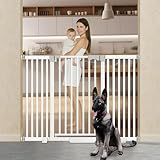
- 41-Inch Height for Maximum Safety: This extra tall baby gate (41 inches) is perfect for large dogs and toddlers, preventing them from climbing over or bypassing the gate
- Auto-Close & Stay-Open Feature: Features auto-close for hands-free convenience, and a stay-open option for easy access through doorways or hallways
- Pressure-Mounted, No Drilling: No-drill installation with a pressure-mounted system, perfect for renters or anyone looking to avoid wall damage
- Durable & Safe: Made of high-quality metal, this heavy-duty dog gate is built to last, offering security for both kids and pets
- Versatile Use: Fits various indoor locations such as stairs, doorways, hallways, and porches. Ideal for toddler or pet safety
- Never allow face-to-face contact, hugging, climbing, tail or ear pulling, teasing, or rough wrestling.
- Keep children away from food bowls, bones, chews, toys, and the dog’s bed or hiding place.
- Teach the child to leave a dog alone when it is eating, sleeping, hiding, sick, frightened, or moving away.
- Give the dog a child-free retreat and make sure every caregiver follows the same boundaries.
- Stop play before either the dog or child becomes overexcited.
Use simple, repeated instructions such as “hands off while the dog eats” and physically guide the toddler away rather than expecting a young child to remember every rule.
What should we do if an unfamiliar dog approaches?
Keep the toddler close, stay still, and avoid escalating the encounter. Do not run, scream, or make direct eye contact with the approaching dog. When there is a safe opening, back away slowly.
If a person or dog knocks the child down, teach the child to curl into a ball and protect the head, neck, eyes, and face. Adults should call for help and avoid grabbing at a strange dog unless necessary to prevent immediate serious harm.
What if the toddler was bitten or scratched?
Separate and restrain the dog only when you can do so without another bite. Check the child immediately, wash the wound thoroughly with soap and water, and contact a healthcare professional promptly.
- Seek emergency help for severe bleeding, major tissue damage, breathing problems, altered consciousness, or other life-threatening symptoms.
- Obtain the dog’s vaccination and owner information when applicable.
- Follow local animal-control and public-health reporting requirements, which vary by jurisdiction.
- Keep the dog separated from the child while medical and behavioral assessments are arranged.
Even a small puncture can require medical advice because infection risk, wound location, vaccination status, and local reporting rules affect the next steps.
Independent reader supportYour contribution helps us test, update, and keep practical guides available for everyone.Can my dog and toddler be together again?
Possibly, but only after professional assessment establishes a management plan that keeps the child safe. A prior calm history does not erase a growl or snap, and no adult should promise unsupervised access again.
Also popular on Amazon

- Upgraded Reinforcement - No Gaps at The Bottom: Our upgraded reinforced retractable baby gates has added support rods to the mesh. There are no gaps at the bottom, effectively preventing babies and pets from lifting up and crawling underneath the extra tall baby gates for doorways.
- Reinforced Support Rods: Our reinforced rods increase the support capacity of the mesh. This allows the mesh to retract smoothly without sagging or wrinkling.
- 42 Inch Extra Tall: Our retractable dog gate can be expanded up to 60 inches wide and adjusted to fit your opening. 42 inches high mesh is taller than most retractable gates on the market. Effectively prevents babies and dogs from climbing or jumping over the mesh baby gate for stairs.
- Retractable to Save Space : The retractable baby gates for dogs can be conveniently rolled up when not in use, saving valuable space for easy access.
- Safety Locking Mechanism: The double locking system is designed to prevent babies from accidentally opening the extra tall pet gate. Adults can easily lock and unlock the tall gate with one hand while holding the baby.
Reintroduction, if recommended, should be gradual, controlled, and reward-based. The professional should specify the distance, barriers, adult roles, warning signs that end a session, and which triggers remain permanently off-limits. If the dog cannot remain relaxed or the household cannot reliably prevent contact, permanent separation within the home or another safety arrangement may be necessary; that decision belongs in an individualized professional assessment.
How should I choose a behavior professional?
Compare services by safety planning and credentials, not by promises of a quick fix.
Recommended Free Tools
| Question to compare | What a strong plan includes |
|---|---|
| Immediate separation reliability | Specific barriers, supervision duties, and trigger controls for meals, toys, handling, visitors, and sleep. |
| Dog’s behavior behind barriers | An assessment of whether the dog can relax, or whether a different arrangement is needed. |
| Credentials and experience | A veterinary behaviorist, Certified Applied Animal Behaviorist, or experienced professional who routinely handles aggression around children. |
| Medical evaluation | Coordination with the dog’s veterinarian to identify pain or illness that could affect behavior. |
| Behavior-change method | Reward-based desensitization and counterconditioning at a pace that keeps the dog below its stress threshold. |
| Family instructions | Written rules, emergency steps, progress criteria, and clear conditions for stopping an exercise. |
How do we prevent another incident?
Make safety routine rather than waiting for another warning. Schedule veterinary care, maintain secure separation during known triggers, and use humane, reward-based training. Do not rehearse the trigger, stage a test, or assume that silence means the dog is comfortable.
Review the plan whenever the child’s mobility changes, a new pet or visitor enters the home, the dog becomes ill, or any stress signal appears. Every caregiver should know where the barriers are, which situations require separation, and how to contact the veterinarian and behavior professional.
Frequently Asked Questions
What details should I write down after a near miss?
Record the date and time, each person’s location, the dog’s distance from the toddler, what the child and dog were doing, nearby food or toys, the dog’s body language before and after, and whether anyone touched or moved the dog. Note witnesses and any physical contact, even if there was no visible injury. This timeline can reveal patterns that are hard to remember during a stressful appointment.
How quickly should I arrange a veterinary appointment after a snap?
Contact the veterinarian as soon as the dog is safely separated, especially if the behavior is new, sudden, or associated with handling. Tell the clinic that a toddler was involved so staff can advise on urgency and recommend an appropriate behavior referral. Do not wait for a second incident to seek help.
Quick wins for a faster PC:
Clear out junk files and repair common Windows errorsFree Scan →Fix the driver behind crashes, sound loss and screen glitchesFind Drivers →Repair Windows errors before they cause bigger problemsFix Now →What should I ask a behavior professional before booking?
Ask about credentials, experience with dog-directed aggression around toddlers, how medical causes are addressed, and what safety measures are expected before any behavior exercises begin. Request a written explanation of supervision, barriers, trigger avoidance, and how progress will be judged. Be cautious of anyone who promises guaranteed results or relies on punishment.
Can a dog be stressed even if it never growls?
Yes. Freezing, turning away, lip licking, crouching, tucked posture, or attempts to leave can indicate discomfort before an audible warning. Treat those signals as a reason to increase distance rather than waiting for a growl.




Leave a Reply