Keep your distance, move people and pets away, and do not touch, feed, chase, or try to capture the animal. If it is sick, injured, acting unusually, or creating a hazard, contact local animal control or the appropriate wildlife authority. If anyone is bitten or scratched, wash the wound and promptly seek medical advice.
What to do first
- Make space. Stay far enough away that you do not need to approach the animal to observe it. Keep children and pets away; do not assume it is safe because it looks calm or healthy. The CDC notes that wildlife can spread germs even when it appears healthy and advises people to keep their distance: CDC wildlife guidance.
- Do not handle or provoke it. Do not touch, feed, corner, chase, capture, or relocate the animal. Unless you are properly trained to take custody of it, leave that to animal rescue or control personnel. OSHA gives the same safe-distance principle for workers responding to wildlife: OSHA workplace guidance.
- Reduce access if you can do so safely. At a business, direct people away from the animal. Staff may use existing cones or temporary barriers to mark the area only if they can place them without approaching the animal. Do not go closer to get a better look or set up a barrier.
- Call for local advice when intervention may be needed. Contact local animal control or the state wildlife agency if the animal is badly injured or very sick, behaves unusually, or presents a hazard. A wildlife rehabilitator or state wildlife office can advise about an injured animal. Procedures and responsibility vary by location and species.
- If it leaves, keep the area uninviting. Continue to keep pets away, and do not leave food or trash accessible. Feeding wildlife can habituate animals to people and attract more wildlife.
Choose the response that fits the situation
| Situation | What to do | Who to contact |
|---|---|---|
| The animal is passing through and no one has been exposed | Keep people and pets back; do not approach, feed, or follow it. If it leaves, avoid attracting it with accessible food or trash. | Contact local animal control or the wildlife authority if it remains, creates a hazard, or needs intervention. |
| The animal appears sick, very injured, or is acting unusually | Do not touch or try to move it. Keep others away from the area. | Local animal control, the state wildlife agency, or a wildlife rehabilitator can advise based on the animal and location. |
| The animal is inside or near a busy business area | Alert coworkers, keep customers away, and limit access only if this can be done without approaching it. | Call local animal control; use emergency services when the immediate danger warrants it under local procedures. |
| A person was bitten or scratched | Wash the wound immediately with soap and water, then seek medical advice. | Contact a health care provider. For possible rabies exposure, contact the local or state health department promptly. |
If a young animal seems abandoned
Do not pick it up based only on appearance. A parent may be nearby, and some young animals are naturally left alone for periods. Baby birds, for example, may spend their first days on the ground while learning to fly. If the animal has clear signs of serious injury or illness, seek advice from a wildlife agency or licensed rehabilitator rather than intervening on sight. See the Massachusetts wildlife agency’s guidance on sick or hurt wildlife; local rules and contacts differ elsewhere.
If the animal is sick, injured, or dead
Do not handle it. For an animal that is badly injured or very sick, contact a wildlife rehabilitator or state wildlife office for instructions. Do not touch a dead animal with bare hands; contact animal control about removal. A wildlife agency can help determine whether an animal needs assistance and what local steps are appropriate.
If someone is bitten or scratched
Wash the wound immediately with soap and water and get medical advice. Seek urgent care for a serious wound, signs of infection, or a bite or scratch from an animal that looks sick or behaves unusually. Ask a health care provider about rabies vaccination and other care. The CDC advises contacting the health department immediately after exposure to an animal that might have rabies: CDC rabies prevention guidance.
#1 Best Overall

- High Quality Materials:SZHLUX Live Animal Cage Trap use low carbon steel wire and medium frequency welding. In this way, the product surface is flat, the welding is firm, and it is not easy to solder off.Weather and rust resistant.
- Convenient Design: Our cat trap is foldable and can be easily loaded into the trunk of the car.It only takes 4 simple steps to set up,from nearly flat to assembled in seconds--no tools needed.
- Humane Live Animal Trap: Our raccoon trap use oblong support frame to secure the cage shape and use fixing clips to fix rear door,smoothed internal edges protect and prevent trapped animal being injured.All you need is some bait to catch and then release them back to the wild.
- User-friendly Design: The top cover guard board of the cage prevents people injured by the trapped animal's mistake.The connecting rod of the pedal mechanism is set inside the cage to prevent animals from touching the mechanism by mistake.A new tool has been designed to extend the safe distance when releasing the animal.
- Dimensions: Product Size: 32inch*10inch*12inch; Package Size: 38.2inch*11.8inch*3.15inch.Excellent choice when attempting to capture smaller animals such as stray cats, raccoons, squirrel, skunk, mole, groundhog, armadillo, rabbit and small dogs.
If there was possible contact but no obvious bite or scratch, ask a health care professional or local or state health department whether it counts as an exposure. Do not try to capture or transport the animal for testing; ask the relevant authorities what to do.
At a business or in a neighborhood
For a business
A manager or designated employee can alert staff, direct customers away, and call animal control or emergency services as appropriate locally. Do not send someone closer to inspect the animal or place a barrier. OSHA’s workplace materials support keeping a safe distance and controlling access in relevant response settings; they are not a universal wildlife emergency protocol.
Rank #2

- HUMANE CAPTURE: This large live animal trap safely captures raccoons, cats, possums, and other small animals with a 1-door design that allows full entry before closing, reducing escape chances for effective pest control
- HEAVY-DUTY CONSTRUCTION: Built with galvanized wire mesh and solid steel door, this raccoon trap resists rust and corrosion while providing long-lasting durability for outdoor use in all weather conditions
- SAFETY FIRST: Features smooth internal edges to prevent animal injuries and protective handle guards for safe handling, making this humane animal trap ideal for both novice and experienced users in wildlife management
- PROFESSIONAL DESIGN: Engineered with a refined trip mechanism specifically calibrated for heavier animals like bobcats and coyotes, this live trap minimizes false triggers while ensuring reliable capture performance
- VERSATILE SOLUTION: Perfect as a feral cat trap, skunk trap, or armadillo trap, this large animal cage trap handles a wide range of pest control situations effectively for comprehensive wildlife management
For a neighborhood
Tell nearby people to keep their distance, and keep pets indoors or leashed and away from the animal. Do not gather a crowd to watch, feed, or chase it. Contact local animal control or the wildlife authority if the animal needs intervention.
Independent reader supportYour contribution helps us test, update, and keep practical guides available for everyone.Which authority should you call?
There is no single nationwide number or one species-specific procedure that applies everywhere. Start with your local animal control agency or state wildlife office and explain where the animal is, whether it appears sick or injured, whether it is behaving unusually, and whether anyone or any pet had contact with it. If a person may have been exposed to rabies, contact a health care professional or health department promptly. Follow the local authority’s instructions rather than attempting to handle or transport the animal yourself.
Quick wins for a faster PC:
Clear out junk files and repair common Windows errorsFree Scan →Scan for outdated or missing drivers - takes under a minuteDriver Scan →Quick Recap
Best Value
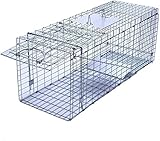
- 32" x 11" x 13" Cage Trap: Ideal for trapping raccons, opossums, cats, rabbits, and other similar-sized undesired animals.
- Built to Last and Space-Saving Storage : Made of sturdy galvanized steel for maximum resistance to rust and corrosion, Collapsible design, easy to fold flat and storage - saves 75% of space immediately.
- Escape-Proof: Senstive trigger ensures the single door to snap shut in micro-seconds eliminating the chance of a quick escape.
- All Safe: Large handle guard offers protection during transportation, smoothed internal edges protect and prevent injuries to animals and to you.
- Kindly Note - We recommend checking with your local authorities to determine the trapping laws in your area before using a live trap.
Rank #4

- Wide Application: Measures 57 * 18.5 * 20.66 inches. Suitable for dogs, foxes, coyotes, bobcats and similar sized animals up to 55 pounds
- Animal Friendly: Trapping cages help you catch wildlife without harming them, ideal for catching and rescuing stray wildlife
- Specialized Design: Sensitive trigger improves capture rates, reduces escapes and ensures animals can't escape, specialized trap gate makes releasing animals easier
- Humanized Design: Easy to install and use, can be folded flat when stored, does not occupy space. Adjustable sensitivity of the mechanism pedal, easier to trigger
- Rugged Construction: Animal traps are made of high-quality rust-resistant galvanized steel for durability and maximum protection against rust and corrosion
Rank #3

- Wide Application: As urban and wilderness ecosystems intertwine, animals may disturb your life. Our cat trap is a versatile solution for various animals, including cats, raccoons, rabbits, groundhogs, armadillos, and opossums. It effectively addresses issues such as farmland invasion, release, and harassment.
- Humanized Designs: We prioritize humane care with our raccoon trap. The L-shaped lever ensures the trap won't harm animals when triggered. The dense mesh prevents escapes and protects against external attacks or stolen food. Smooth wire edges prevent animals from panicking or biting the wire, ensuring their safety.
- Sturdy and Durable: Our animal trap is built to last. It is constructed with sturdy, thickened wires that withstand animal bites and impacts without deformation or cracking. The galvanized coating provides excellent corrosion resistance, ensuring stability and durability in all weather conditions.
- Simple and User-friendly: Our live trap is designed for your convenience. It comes pre-assembled, saving you from tedious setup steps. Just unfold the cage, secure the rear door, and connect the trap mechanism to start using it quickly. This saves time and effort, allowing you to engage in capture work promptly.
- Portable and Easy to Store: Our efficient groundhog trap is portable and easy to store. It features a convenient handle for easy mobility, with an extended design that prevents accidental injuries from animals. The collapsible design allows for easy storage, freeing up space when not in use.
Product prices and availability are accurate as of the date/time indicated and are subject to change. Any price and availability information displayed on Amazon at the time of purchase will apply.




