
Quick wins for a faster PC:
Clear out junk files and repair common Windows errorsFree Scan →Fix the driver behind crashes, sound loss and screen glitchesFind Drivers →Some links on this page are affiliate links: if you buy through them we may earn a commission, at no extra cost to you.
If you can’t keep your cat, start by deciding whether the crisis is temporary or permanent. Call your veterinarian, local shelter or rescue, and people you trust today; ask specifically about food, veterinary bills, behavior, housing, and temporary-foster help. If the cat must leave permanently, try a carefully screened direct rehoming before surrendering to a shelter. Always call the receiving organization before you arrive because appointments, fees, service areas, capacity, and emergency rules differ.
Never abandon a cat outdoors or leave it at an unstaffed facility. If there is an immediate safety, medical, eviction, hospitalization, incarceration, or domestic-violence crisis, say that plainly to animal control, an emergency veterinarian, a shelter, or a crisis-placement program so staff can route the case appropriately.
As an Amazon Associate I earn from qualifying purchases.
What should I do first if I can’t keep my cat?
Stabilize the cat for the next 24 to 72 hours, then identify the obstacle that is forcing the decision. A sudden litter-box problem, aggression, hiding, or appetite change can have a medical cause, while a money, housing, or caregiving problem may be solvable with short-term help.
- Write down the immediate risk. Note when you may lose housing, run out of food or medication, enter hospital, or be unable to provide safe supervision.
- Call your veterinarian. Ask whether illness, pain, medication side effects, or an unaddressed behavioral trigger could explain the problem. Seattle Animal Shelter specifically advises ruling out medical issues with a veterinarian.
- Contact the original organization. If a shelter, rescue, or breeder placed the cat with you, read the adoption contract. It may require the cat to be returned or the organization to be notified before another placement.
- Call local pet-resource services. Ask about food pantries, reduced-cost or emergency veterinary care, payment plans, behavior referrals, supplies, housing assistance, and crisis foster care.
- Tell trusted people. Friends, relatives, neighbors, coworkers, and your veterinarian may know a temporary caregiver or a suitable adopter before a shelter has space.
Keep the cat indoors with food, water, litter, and a quiet room while you make calls. If anyone is at risk of being injured, separate the cat behind a closed door and disclose the behavior to every prospective caregiver.
Popular on Amazon

- Pet Carrier: 17.5” L x 11” W x 11” H, Recommended max load of 16 lbs cats small dogs. Please do not choose your carrier based on weight--please reference your pet's length and height in selecting a pet carrier size.
- Fits for under-seat dimensions of most airlines. Every airline has a specific set of rules and regulations, please contact with airline before flying with your cats small dogs.
- Mesh windows for ventilation, top and side entry with locking zippers for safety. Carrying handles, adjustable shoulder strap which can also be used as seatbelt, and back strap can fasten the pet carrier to your luggage.
- Pet carrier comes with a removable base insert, which creates a solid surface for your pet to stand on, along with a removable & hand washable cozy fleece pet bed, which offers a cozy sleeping space for your traveling cats small dogs.
- "Toys for pets, of textile materials". Mostly used as a Toy of Fabric Pet Home for pets playing and relaxing.
Can I keep my cat with help instead of giving it up?
Often, yes. A temporary problem may have a temporary solution, and keeping a cat with its familiar person usually avoids the disruption of a move. Ask for a specific service rather than a general “help” referral.
When money is the problem
- Ask a clinic about a payment plan, lower-cost treatment, generic medication, or referral to a charitable veterinary fund.
- Call pet-food banks and community resource teams before food runs out. Some distribute litter, carriers, or medication as well as food.
- Explain the exact bill and deadline. A precise request is easier for a provider or friend to evaluate than an open-ended appeal.
When behavior is the problem
Ask a veterinarian to check for pain or illness before treating the behavior as a training failure. Request a referral to a qualified behavior professional, and describe triggers, bite or scratch history, escape attempts, litter habits, and interactions with children or other animals. Do not conceal a bite or aggression incident from a potential caregiver.
Recommended Free Tools
When housing is the problem
Ask your landlord or housing provider for the rule in writing and whether a pet deposit, accommodation, registration, or deadline applies. Local pet-resource teams may know tenant-support or emergency-housing programs. If eviction is imminent, tell a shelter or crisis-foster service the date you must leave; waiting until the last night can eliminate safer options.
How do I arrange temporary foster care?
Temporary foster, boarding, or care by someone you know can bridge hospitalization, military or work travel, domestic-violence relocation, eviction, or a short financial crisis. Confirm that the arrangement is temporary and document how the cat returns or transfers if circumstances change.
Where to ask
- Friends, relatives, neighbors, and coworkers who already know the cat.
- Your veterinarian, who may know a boarding provider or volunteer foster network.
- Local shelters, rescues, animal-control services, and crisis-foster programs.
- Pet-resource teams that coordinate housing or medical emergencies.
What the caregiver needs
Provide written feeding and medication instructions, veterinary records, contact details, emergency authorization, enough familiar food and litter to start, medications in labeled containers, and the cat’s routine. Include hiding places and handling warnings. Agree in writing on the start date, review date, who pays veterinary costs, who may authorize treatment, and what happens if you cannot reclaim the cat.
Ask whether the program has a maximum stay, geographic limit, intake appointment, or cost. Some crisis-foster descriptions mention stays of up to 90 days, but availability and current terms must be confirmed directly with the provider.
Free tools Windows power users keep installed
One-click scans. No signup required.
Also popular on Amazon
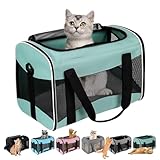
- [PRODUCT DIMENSIONS] Pet travel carrier size : 17x11x11 inches, recommended up to 15 lb pets, it is suitable for large, medium cats and small dogs. Please don't choose your airline cat carrying case based on weight, please refer to your pet's length and height when choosing a pet carrier size.
- [AIRLINE APPROVED] This cat carrier is designed with airline approved, it can fit comfortably under most flight seats, we can take our pets wherever we want. Dog travel carrier offers two attachment loop handles that can be used as a dual harness or as a luggage strap for balanced carry and secure transport.
- [EXCELLENT MATERIAL] Collapsible cat carrier is made of polyester fabric, supported by a steel ring, washable, wear-resistant and durable. The three sides and the top of this pet carrier are nylon mesh, scratch-resistant and not easy to damage, it can not only check your pet in real time, but also ensure enough air circulation.
- [SAFE AND COMFORTABLE] Dog travel bag has metal zippers on the top and side entrances, durable and not easy to deform, it allows your pets to enter and exit easily. The cat carrying case is equipped with an anti-escape safety buckle, which can effectively prevent pets from accidentally falling. It is suitable for car rides and vet rides.
- [PORTABLE AND FOLDABLE] Pet travel carrier comes with a detachable and hand washable wool pet bed, it can provide a comfortable sleeping space for your traveling pet. The cat travel case comes with an adjustable shoulder strap and handle for easy portability. When not in use, you can fold it up for storage.
How do I rehome my cat safely?
If you truly cannot keep the cat, owner-managed placement is usually the next option before shelter surrender. You retain more control over the adopter, timing, records, and transition, but you are responsible for honest disclosure and screening.
Build an accurate profile
Use clear, recent photos and state the cat’s age, sex, sterilization status, vaccination and medical history, medications, diet, litter habits, personality, activity level, and experience with children, dogs, and other cats. Include any bite, scratch, escape, or chronic illness history. Explain why the cat needs a new home without blaming the animal.
Find prospective adopters
Start with people you know and your veterinarian’s network. Reputable owner-to-owner services include Rehome by Adopt-a-Pet, Home To Home, and Pet Rehomer; check whether each service operates in your area and what screening or transfer support it currently provides. A public post should direct applicants to a conversation and screening process rather than handing over the cat to the first respondent.
Screen and verify
- Ask about the household, other animals, children, work schedule, previous pets, landlord permission, and veterinary plan.
- Speak with the household’s veterinarian when the applicant consents, or request another practical reference.
- Verify the destination. A video call or in-person visit can confirm that windows, doors, and other animals can be managed safely.
- Arrange a meeting in a controlled setting. Do not allow pressure to rush the decision.
- Use a written transfer agreement covering ownership, medical disclosure, return expectations, and contact information.
Transfer veterinary records, adoption papers, medications, microchip details, and familiar food or bedding. Contact the microchip registry to update the keeper information after the transfer and retain a copy of the agreement.
When should I surrender my cat to a shelter or rescue?
Surrender may be necessary when no safe home or temporary placement is available, but call first. The ASPCA advises treating relinquishment as a last resort because many shelters are full and may use waitlists. A shelter’s capacity, service area, appointment system, fees, accepted species, and emergency rules are not interchangeable.
Questions to ask before arriving
- Do you accept owner surrenders from my address or only from a defined service area?
- Is an appointment required, and what is the earliest intake date?
- Is there a surrender fee, and can it be waived or deferred during a documented crisis?
- Do you accept cats with medical, medication, bite, or behavior histories?
- Is there a deferred-intake, foster, or rescue-placement option while I keep the cat?
- What identification, ownership proof, records, and emergency documentation are required?
Explain any deadline, safety risk, hospitalization, incarceration, domestic-violence situation, or inability to provide food or treatment. Staff can only apply emergency procedures when they know the urgency.
Also popular on Amazon

- High Quality Design:Sturdy steel cage structure and wooden support board maintain good spatial stability and shape. Breathable mesh windows on four sides,which can ensure good air circulation and views,make pets have a comfortable and safe travel.It can also be easy for you to check on your pets.There is a front pocket to store pet toys,treats,etc.
- Dimension and Weight:Made of durable tear-resistant fabric.Four easy entrances for pets. Dimensions: 17 inch x 11 inch x 11 inch (L*W*H), suitable for pets up to 16 lbs.Please don't choose your carrier based on weight only,consider your pet's length and height when choosing a carrier.
- Airline Approved & Safty:Can be placed under the seats of most airplanes(Four non-slip feet on the bottom to prevent movement), and comfortably on the seat next to you in a car or bus.It has a adjustable shoulder strap.Can also be fastened to the car seat with a safety belt or shoulder strap to keep your pet safe.
- Easy to Clean :You can clean the stains and dirt on the surface with a soft cloth.Soft mat inside the pet carrier is removable and washable.You can take it out and wash it easily to solve all stains.
- Easy to Collapsible & Lightweight:When not in use,fold it into a flat,space saving and easy to store.Only 2.2lbs,it's easier to carry around.It can also used as a toy of pet house,allowing pets to play in a safe space to relax and rest.
What should I bring to a surrender or foster appointment?
Follow the facility’s checklist. The Humane Society of Utah lists government identification, current veterinary records, and a surrender fee, and describes a health and behavior assessment. Bring more information than the minimum so staff can make a safe placement decision.
- Government ID and proof of ownership or adoption.
- Current veterinary records, vaccination dates, diagnostic results, and medication labels.
- Microchip number and registry details.
- Feeding schedule, diet, litter type, routine, and handling instructions.
- Written disclosure of illnesses, allergies, bites, scratches, escape behavior, and compatibility with people or animals.
- A secure, escape-resistant carrier; confirm the facility’s transport requirements in advance.
- Familiar food, bedding, or a toy if the receiving organization permits personal items.
Expect staff to ask detailed health and behavior questions. A complete history is not a reason to refuse help; it is essential information for safe housing and matching.
The Tool Desk
Outbyte Driver Updater FREEFix the driver behind crashes, sound loss and screen glitchesFind Drivers →Outbyte PC Repair FREEClear out junk files and repair common Windows errorsFree Scan →Which option fits my situation?
Use this comparison after checking whether support can keep the cat safely with you.
| Option | Best fit | Chance of reunification | Time and stress | Rules to confirm |
|---|---|---|---|---|
| Stay with support | Food, veterinary, behavior, or housing problem may be solved | Highest | Usually least disruption; help may take repeated calls | Eligibility, funding limits, appointment dates |
| Temporary foster or boarding | Hospitalization, eviction, relocation, or short financial crisis | High if the plan is written | Move is temporary; length and cost vary | Maximum stay, payment, medical authorization, return date |
| Direct rehoming | Permanent change with enough time to screen an adopter | Low after transfer | More control, but interviews and transition take time | Service area, screening, agreement, microchip transfer |
| Shelter surrender | No safe caregiver or an urgent inability to provide care | Depends on the organization’s policy | Can be stressful; intake may be delayed | Appointment, capacity, fees, residency, records, emergency rules |
What if the situation is an emergency?
State the emergency in the first sentence of your call: “I am being evicted on Friday and cannot safely house my cat,” or “I am going to the hospital today and have no caregiver.” Contact local animal control, a shelter, an emergency veterinarian, or a crisis-placement program, and ask where the cat can legally and safely go.
Domestic violence can make ordinary rehoming unsafe. Do not publish identifying details or reveal the cat’s location if doing so could endanger a person. Ask a domestic-violence advocate, shelter, or crisis-foster service about confidential pet placement. In a medical emergency, obtain veterinary care first and explain the financial or custody problem to the clinic.
Never tie a cat outside a shelter, leave it at a closed building, release it outdoors, or give it away without disclosing medical and behavior history. Those actions expose the cat and the public to preventable harm and remove the chance for staff to arrange an appropriate placement.
Also popular on Amazon
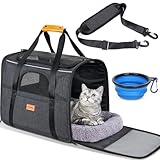
- 【 Spacious & Comfortable Cat Carrier 】The large cat carrier provides ample space for your feline friend to move, turn, and stretch during travel. Measuring 17.3 x 12.2 x 13.4 inches, it is wider and taller than most cat carriers, ensuring your pet feels comfortable and at ease while on the go.
- 【Balanced Mesh Design】Unlike other cat carrier hard, our cat carrier soft strikes the perfect balance with 40% mesh surface area. This ensures your pet can observe the surroundings and breathe easily while feeling safe and secure at the same time. The cat carrier large is suitable for pets in all kinds of situations.
- 【Built-in Dual-Sided Cushion】The detachable pad offers two distinct comforts: a cool side for summer and a super-soft, warm side for winter. You can easily flip it to match the season, providing the perfect temperature for your pet in any weather.
- 【Includes Foldable Bowl】Designed for on-the-go use, our foldable bowl carries 410g of food or 20oz of water. After use, simply collapse it and attach it directly to your pet's collar or leash, perfect for keeping your pet fueled and hydrated anywhere.
- 【Safe & Durable】Safety is our top priority, and the pet carrier for cat is equipped with a secure buckle to prevent your pet from escaping. The cat carrier soft is made of reinforced snow silk fabric and hard mesh material, ensuring durability and preventing any tearing during long-distance travel.
How can I make the transition less stressful?
Keep the cat in a secure carrier during transport, avoid introducing it immediately to unfamiliar animals, and send familiar food and scent items when allowed. Give the receiving caregiver the cat’s normal routine and a quiet decompression space. Ask when you may receive an update, but respect a shelter or foster program’s privacy and workload.
After a permanent transfer, save the signed agreement, confirm the microchip update, and notify the veterinarian and any previous placement organization. If a temporary arrangement fails, contact the original program immediately rather than moving the cat through multiple unplanned homes.
Frequently Asked Questions
Can I surrender my cat without an appointment?
Some facilities accept walk-in emergencies, while others turn away unscheduled owner surrenders or serve only residents of a defined area. Call first, describe the urgency, and ask what happens if no intake slot is available.
Should I charge an adoption fee when rehoming my cat?
A fee policy is not universal. Ask the rehoming service or rescue what it recommends, and prioritize identity, housing, veterinary access, and a safe transition over collecting money.
Do these 3 things before closing this tab:
1Repair Windows errors before they cause bigger problems2Scan for outdated or missing drivers - takes under a minute3Clear out junk files and repair common Windows errorsWhat if my cat has bitten someone?
Tell the veterinarian, shelter, rescue, and every serious adopter exactly what happened, including date, circumstances, injury, and vaccination status. Full disclosure lets professionals decide whether medical evaluation, behavior management, specialized placement, or legal reporting is required.
Can a shelter take my cat’s medications and records?
Most organizations need those items to continue treatment, but acceptance and labeling rules differ. Keep medications in original containers, bring copies of records, and ask whether supplies should travel with the cat or be handed to staff separately.





Leave a Reply