
Some links on this page are affiliate links: if you buy through them we may earn a commission, at no extra cost to you.
If your cat seems stressed after you leave, start by ruling out illness rather than assuming separation anxiety. Sudden hiding, appetite or drinking changes, vomiting, diarrhea, pain, urinary accidents, injury or self-directed damage warrant a veterinary check. If your cat is medically well and the changes are mild, provide a secure retreat, predictable meals and departures, enriching activities, and gradual practice being alone. A pheromone product may be an optional aid, not a cure. Because true separation anxiety is considered uncommon in cats, video evidence and professional assessment are more useful than guessing from an enthusiastic greeting when you return.
Why might a cat seem stressed after you leave?
Being alone can expose a cat to a changed routine, boredom, frustration, an environmental trigger or an illness that is unrelated to your departure. Some cats react to departures themselves; others become unsettled by a moved litter box, construction noise, a new pet, altered feeding times or reduced access to preferred resting places.
As an Amazon Associate I earn from qualifying purchases.
Cats Protection notes that “True separation anxiety is thought to be very uncommon in cats.” A cat that follows you on return, vocalizes at the door or demands attention may simply be responding to a routine change or seeking interaction. Those behaviors do not prove the cat was distressed for the entire absence.
The useful question is not whether your cat looked excited to see you, but what happens while you are away and whether the pattern is intense, repeatable and unsafe. A camera recording can reveal whether the cat settles, sleeps, eats, patrols, hides, vocalizes continuously or shows physical signs of distress.
Popular on Amazon
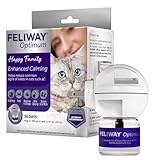
- HELPS REDUCE SIGNS OF STRESS USING A PATENTED PHEROMONE: FELIWAY Optimum is an advanced cat pheromone diffuser that helps reduce signs of stress in cats and helps ease tension between cats.*
- HELPS CATS FEEL CALM IN EVERYDAY SITUATIONS: FELIWAY Optimum is a cat calming diffuser that helps reduce stress‑related behaviors like urine spraying, scratching, hiding, and fearful reactions to change. Cat parents reported noticeable reductions in these behaviors, including a 77% reduction in urine spraying.
- SUPPORTS HARMONY IN MULTI‑CAT HOMES: Helps promote calmer interactions between cats. 72% of cat parents noticed reduced tension between their cats
- SAFE** AND NON-SEDATING: FELIWAY Optimum is not a sedative. It’s safe for use around cats, kittens, people and other pets.
- CONTINUOUS CALMING SUPPORT: This plug‑in cat pheromone diffuser provides 24/7 support when used as directed. To get started, plug into an open outlet with the vents pointed upward, allow at least 4 feet of clearance, and follow the label instructions.
How can I tell whether my cat is stressed?
Stress can be quiet. Look for a cluster of changes in posture, facial expression, activity, appetite and toileting rather than relying on one isolated behavior.
Body-language signs
- Hiding more than usual or seeking unusually high places.
- Crouching, freezing, tense muscles or repeated attempts to flee.
- Flattened or rotated ears, wide or dilated pupils, tense or forward whiskers.
- Tail twitching, rapid tail movement or a tucked tail.
- Defensive hissing, yowling, pacing or reduced interaction.
Behavior and physical changes
- Overgrooming, destructive scratching or frantic escape attempts.
- Eating or drinking less or more than usual.
- Vomiting or diarrhea.
- Urination or defecation outside the litter box.
- Refusing to settle, appearing withdrawn or becoming unusually clingy.
Record when each sign occurs: during departure preparation, immediately after the door closes, throughout the absence or only when you return. That timing helps distinguish a departure-linked pattern from a problem that occurs at other times.
Recommended Free Tools
When should I call a veterinarian?
Arrange veterinary care before behavior work when the change is sudden, marked, persistent or accompanied by physical symptoms. Cats often conceal illness, and pain, urinary disease, gastrointestinal problems and other medical conditions can look like anxiety.
- Reduced eating or drinking, repeated vomiting or diarrhea.
- Straining, accidents, blood or other changes in urination or defecation.
- Signs of pain, limping, injury, breathing difficulty or unusual weakness.
- Self-injury, frantic escape attempts or inability to settle.
- A major personality change with no clear environmental explanation.
Describe the timeline, bring video if possible, and list changes in food, litter, medication, household members, noise and schedule. A veterinarian can investigate medical causes and refer you to a qualified cat behaviorist or veterinary behavior service when a tailored behavior plan is needed. Severe cases may require behavior modification alongside veterinarian-prescribed medication.
Also popular on Amazon

- Complete Calming Solution: This cat calming diffuser kit includes diffusers and refills (48mL per bottle). Each refill delivers a 30-day supply of continuous support to help ease your cat’s anxiety. Ideal for addressing stress triggered by vet visits, traffic noise, fireworks, thunderstorms, or loneliness, this cat pheromone calming diffuser creates a safe and serene environment for felines of all ages and breeds
- Effective Stress & Behavior Support: Our cat pheromone diffuser works to reduce common signs of feline stress such as excessive scratching, urine spraying, hiding, and restlessness. By mimicking natural feline pheromones, this cat calming diffuser provides gentle, drug-free relief, making it a reliable choice for multi-cat households or cats experiencing tension during home changes or new pet introductions
- Long-Lasting & Wide Coverage: Each refill of the cat calming diffuser releases calming pheromones for up to 30 days, with coverage for areas up to 700 square feet. The diffuser features an automatic operation with a simple press of a button, and proper placement (vents facing up) ensures optimal performance and leak prevention, maximizing the effectiveness of your cat diffuser
- Safe & Non-Toxic Formula: The cat pheromone calming diffuser uses an odorless, non-toxic, and chemical-free formula that is safe for both humans and pets. Unlike harsh treatments, this cat calming diffuser does not cause drowsiness and poses no risk to your cat’s health, making it a trusted choice for daily use in any living space
- Easy to Use & Maintain: Setting up the cat calming diffuser is effortless—simply plug it into a standard outlet, keep the bottle upright, and press the button to activate. The heated diffuser and refill system operates quietly and continuously, requiring minimal maintenance; just replace the refill every 30 days to maintain consistent calming support for your feline friend
What should I do before leaving my cat alone?
Set up the environment so your cat can choose distance, rest and activity without needing your help. Do not force a frightened cat out of a hiding place.
Create a safe base
- Offer a quiet room or area away from heavy foot traffic.
- Provide at least one covered hiding place and one elevated perch, such as a stable cat tree or window perch.
- Keep fresh water, regular food, a clean litter resource and familiar bedding accessible.
- Make sure the cat can move between resources without passing a frightening person, animal or noisy appliance.
Some cats prefer a high lookout; others relax only in an enclosed bed or box. Give both options when practical and allow the cat to disengage from interaction.
Keep departures predictable
Feed, play and leave at broadly consistent times when your schedule permits. If work or travel will change the routine, shift meals and activity gradually rather than changing everything on one day. Keep goodbye rituals and returns calm and brief; dramatic departures can make the event more salient.
How do I teach my cat to tolerate alone time?
Use gradual exposure: begin with a separation short enough that your cat remains calm, return before distress escalates, reward relaxed behavior and increase duration in small steps. There is no universal starting duration; the right interval is the one your individual cat can handle without escalating.
Also popular on Amazon

- SPECIFICALLY DESIGNED FOR MULTI-CAT HOMES: FELIWAY MultiCat is a cat calming diffuser that helps reduce tension between cats, including conflict, fighting, chasing, and blocking, supporting a calm home for cats living together
- HELPS CATS GET ALONG BETTER: This cat pheromone diffuser promotes calm interactions and helps ease ongoing tension, supporting more peaceful relationships in multi-cat households
- HELPS REDUCE TENSION BETWEEN CATS: 84% of cat parents noticed improvement in tension and conflict between their cats when using FELIWAY MultiCat
- SAFE* AND NON-SEDATING: FELIWAY MultiCat is not a sedative. It is safe for use around cats, kittens, people and other pets.
- CONTINUOUS CALMING SUPPORT FOR SHARED SPACES: Plug-in cat pheromone diffuser provides 24/7 calming support. To get started, plug into an open outlet with vents pointed upward and allow 4+ ft of clearance, and follow the label instructions.
- Identify a calm baseline. Observe your cat resting independently while you are home. Note the room, distance and activity that allow relaxed behavior.
- Practice room separations. Step behind an interior door for a few seconds, then return while the cat is still settled. Repeat several times rather than making one long attempt.
- Add tiny increments. Increase the interval only when the previous step produces calm behavior on repeated sessions. If vocalizing, scratching, pacing or frantic searching begins, shorten the next attempt.
- Progress to brief exits. Pick up keys, put on shoes or open the door without always leaving, then practice very short exits. This separates departure cues from an unavoidable long absence.
- Reward relaxation. Offer a treat, meal portion, play opportunity or calm attention for choosing the bed, perch or other relaxed behavior. Do not reward frantic behavior by extending the session or creating a dramatic reunion.
- Generalize carefully. Practice at different times and with ordinary variations, but change one factor at a time. A sudden jump from seconds to a full workday can undo progress.
Never punish vocalizing, scratching, clinginess, accidents or other anxiety-linked behavior. PDSA and feline behavior guidance warn that punishment can increase fear and make the unwanted behavior more persistent.
What enrichment can I leave while I am away?
Enrichment should support normal cat behaviors such as foraging, scratching, climbing, resting and watching. It is not a substitute for medical care or behavior treatment, and every item left unsupervised must be safe for that individual cat.
| Enrichment | Natural behavior supported | Safety and practical checks |
|---|---|---|
| Puzzle feeder or treat-dispensing toy | Foraging and problem-solving | Start while you are home; choose a design the cat can use without frustration, and clean it regularly. |
| Interactive play before departure | Stalking, chasing and physical activity | Finish with a calm wind-down; do not leave wand strings or other loose pieces accessible without supervision. |
| Scratching post | Scratching, stretching and scent marking | Use a stable surface and place it near a preferred resting or scratching location. |
| Cat tree or elevated perch | Climbing and observation | Secure it against tipping and provide a landing route that does not force a dangerous jump. |
| Window view and sleeping spaces | Observation and rest | Block access to unsafe windows and provide a quiet retreat if outside activity is overstimulating. |
| Safe toys rotated over time | Exploration and solo play | Inspect for loose parts, swallowed material or damage; remove anything that requires supervision. |
Use a camera to see which options your cat actually uses. Rotate activities instead of filling the room with every toy at once, and keep ordinary food and water available even when a puzzle feeder is offered.
Should I use a cat pheromone diffuser?
A feline pheromone diffuser, spray or collar can be considered as an adjunct when your cat is otherwise medically assessed and the product fits the situation. Cats Protection discusses plug-in diffusers, while VCA notes that non-drug products can have uncertain effectiveness and should be discussed with a veterinarian.
Also popular on Amazon

- Help Your Cat Feel Safe Again: Create a calmer, more comfortable home with advanced calming pheromone technology that helps reduce common signs of stress including hiding, scratching, urine spraying, conflicts between cats, and nervous behavior. Ideal for everyday emotional support
- Continuous 120-Days Comfort: Each refill delivers calming support for up to 30 days when used continuously, package include: 2 diffusers, 4 refills. Designed to cover rooms up to approximately 750 sq ft, making it perfect for bedrooms, living rooms, and multi-cat households
- Supports Positive Everyday Behavior: Whether introducing a new pet, moving into a new home, welcoming visitors, or dealing with loud noises such as fireworks or thunderstorms, the diffuser helps cats feel more secure and adapt to changes more comfortably
- Easy Plug-In, No Daily Effort: Simply plug the diffuser into an open wall outlet and let it work around the clock. No sprays, no pills, no complicated routines—continuous calming support with minimal maintenance
- Trusted Care for Cats of Every Age: Suitable for kittens, adult cats, senior cats, and multi-cat families. Designed to support a peaceful home environment while helping strengthen the bond between cats and their owners
- Choose a format appropriate to the room and follow the label for placement, coverage and replacement.
- Do not spray a product directly on your cat unless the label and veterinarian specifically instruct you to do so.
- Do not use a diffuser to postpone a medical examination or professional behavior assessment.
- Stop and seek advice if your cat shows irritation, respiratory signs or a worsening response.
Compare calming aids by format, label directions, veterinary oversight and the limits of the evidence. A diffuser cannot provide a hiding place, restore a disrupted routine or teach a cat that brief separations are safe.
What should I avoid when my cat is distressed?
- Punishment: Yelling, spraying water or rubbing a cat’s nose in an accident increases fear and does not teach an alternative behavior.
- Forced contact: Pulling a cat from a hiding place or insisting on cuddling removes its ability to create distance.
- Sudden exposure: Jumping from short practice sessions to a long absence can trigger a setback.
- Unsafe confinement: Do not shut a distressed cat in a crate or room unless that space is already familiar and regarded as safe. Confinement worsens distress for some cats.
- Unsupervised hazards: Remove strings, ribbons, small detachable parts and unstable climbing equipment before leaving.
How can a camera and behavior log help?
Place an indoor pet camera for cats where it records the main resting and resource areas without creating a new hazard. Review short clips at departure, during the middle of the absence and just before you return. Note the time of first vocalization, eating, drinking, litter use, pacing, hiding, sleep and recovery.
Quick wins for a faster PC:
Repair Windows errors before they cause bigger problemsFix Now →Scan for outdated or missing drivers - takes under a minuteDriver Scan →Save representative clips for your veterinarian or behaviorist. Video can show whether a cat settles after a brief protest, remains distressed continuously, reacts to an outside noise or never approaches the food and litter resources. Avoid interpreting one unusual day as a diagnosis; look for a repeatable pattern across ordinary absences.
Independent reader supportYour contribution helps us test, update, and keep practical guides available for everyone.How do I decide whether this is separation-related distress?
Consider separation-related distress when signs occur specifically around departure or alone time, are intense or persistent, and create safety, health or household problems. A behavior professional should make the diagnosis because the condition is uncommon and similar signs can arise from boredom, frustration, environmental stress or disease.
Also popular on Amazon

- Valua Pack – This cat pheromone diffuser set includes 3 pack, making it easier to provide a calming environment in multiple rooms or for multiple cats.
- SUITABLE FOR CATS OF ALL AGES – Designed for kittens, adult cats, and seniors, this diffuser helps create a soothing atmosphere. For optimal performance, replace the diffuser head every six months.
- LONG-LASTING SUPPORT – Each refill vial provides continuous use for up to 30 days. The diffuser is odorless, making it a great choice for households sensitive to scents.
- VISIBLE RESULTS IN TWO WEEKS – Many cat owners notice a reduction in common unwanted behaviors such as excessive grooming, meowing, or restlessness within two weeks of use. Individual results may vary.
- EASY TO USE – Simply plug the diffuser into a standard electrical outlet to begin releasing calming pheromones throughout your home. Its compact design makes it suitable for travel or temporary environmental changes.
Bring a complete history: age, health status, household schedule, recent changes, resource locations, behavior when you are home, and camera observations when you are away. The resulting plan may combine environmental changes, gradual separation training, reward-based teaching and, when indicated, medication prescribed and monitored by a veterinarian.
What is a practical first-week plan?
- Day 1: health and evidence. Contact your veterinarian for sudden or serious changes, and begin a simple log. Set up a camera if it can be done safely.
- Day 2: safe base. Arrange hiding, elevation, food, water, litter and bedding in a quiet area. Check that resources are easy to reach.
- Day 3: routine. Stabilize meal, play and departure cues. Add a calm pre-departure play session and remove unsafe toys before leaving.
- Days 4–5: micro-separations. Practice room separations or exits that stay below the distress threshold. Return calmly and reward relaxation.
- Days 6–7: enrichment review. Offer one or two safe activities, inspect what the camera shows, and adjust for the cat’s actual preferences. Do not increase duration if distress is escalating.
If the cat cannot remain calm even during very brief separations, stops eating, injures itself, develops toileting or gastrointestinal problems, or fails to improve, stop increasing exposure and seek veterinary and qualified behavior support.
What’s actually slowing this PC down?
Pick the symptom - the matching free tool is one click away.
Frequently Asked Questions
Does my cat’s excited greeting prove it had separation anxiety?
No. A greeting shows that your return is meaningful, but it cannot reveal what happened during the absence. Video of the period when you are away is more informative than the reunion alone, especially if the cat settles quickly afterward.
Is there a medically safe maximum number of hours to leave a cat alone?
No single maximum applies to every cat. Age, health, temperament, access to food, water and litter, household conditions and the individual response all change what is appropriate, so use your veterinarian’s advice rather than a fixed online number.
What if my cat ignores a puzzle feeder?
Do not withhold normal food or force the cat to solve a difficult toy. Try a simpler design, a different texture or a small amount of familiar food while you are present, and choose another enrichment activity if the cat shows no interest.
Can I leave a pheromone collar or diffuser running without veterinary advice?
Ask a veterinarian if the signs are new, severe or accompanied by physical changes. If you use a non-drug product, follow its label, monitor for irritation or respiratory problems and remember that it does not replace diagnosis or gradual behavior work.
Do these 3 things before closing this tab:
1Clear out junk files and repair common Windows errors2Scan for outdated or missing drivers - takes under a minute3Repair Windows errors before they cause bigger problemsWhat should I do if my schedule changes suddenly?
Keep essential resources in the same locations and preserve meal and play timing as much as possible. Use short practice absences before the first long day when you can, and arrange a trusted person or professional visit if your cat cannot yet cope with the new pattern.





Leave a Reply