
Quick wins for a faster PC:
Fix the driver behind crashes, sound loss and screen glitchesFind Drivers →Clear out junk files and repair common Windows errorsFree Scan →Some links on this page are affiliate links: if you buy through them we may earn a commission, at no extra cost to you.
Stop filming at the first credible sign that your dog is uncomfortable. Put down the phone, switch off lights, remove costumes or props, and give your dog an unblocked route to a quiet, familiar place with water and a comfortable temperature. Never hold a dog in position, corner it, force eye contact, or repeat a take because a trend demands a reaction.
If your dog does not voluntarily re-engage while relaxed, end filming for the day. A simple candid clip your dog can leave is safer than a challenge involving restraint, startling, repeated takes, unsafe surfaces, heat, noise or conflict. Persistent, severe or generalized stress warrants a veterinary assessment.
As an Amazon Associate I earn from qualifying purchases.
How can you tell that a camera or challenge is stressing your dog?
Look for a change from your dog’s normal behavior in the filming context, not one isolated gesture. A yawn, lick or shake can be ordinary in another situation; VCA advises interpreting body language against the dog’s baseline and what is happening around it.
AAHA’s “Table 1: Common Signs of Anxiety/Distress,” published June 28, 2019, includes these possible indicators:
Popular on Amazon

- Loved by Thousands & Pet-Approved: Recognized by thousands of pet owners as the ultimate donut dog bed for medium to large dogs, this round calming pet bed is praised for its ultra-soft fluffy faux fur. It creates a cozy, secure sanctuary for your loyal companion. The entire bed is crafted for comfort, providing a hygienic, spacious retreat for daily snoozes
- Donut Design for Calming Rest: The signature donut dog bed structure provides a soothing sanctuary for pets, while the raised rim supports the head and neck. Its premium filling ensures calming rest, making this calming dog bed a "must-have" for anxious pets adjusting to a new home. The deep crevices allow them to burrow, offering instant security
- Sweet Dreams & Deep Sleep: From quick kitten naps to overnight puppy snoozes, this calming dog bed surrounds your pet in cloud-like comfort. The round bed design creates a 360-degree protective barrier that helps them feel safe, encouraging deeper, restorative sleep to support their healthy growth and energy
- Pet-Safe & Thoughtful Details: Crafted with skin-friendly materials, this calming dog bed is strictly tested to be non-toxic and gentle on sensitive pets. The sturdy, non-slip base keeps the round pet bed securely in place on tile or hardwood, allowing your playful furry friend to hop in and out with confidence and ease
- Effortless Care & Home Decor Match: Machine Washable for easy care. Simply toss the entire bed into the washer (Gentle Cycle) to keep it fresh. Designed in premium neutral hues, this donut pet bed blends seamlessly with any room, elevating your living space while offering a hygienic spot for your pet
| Body or behavior change | What you might see during filming |
|---|---|
| Withdrawal or avoidance | Turning the head or body away, lowered head or neck, inability to meet a gaze, hiding, moving behind furniture or trying to leave |
| Posture and movement | Freezing, muscle rigidity, lowered posture, tucked tail, lowered ears, paw lifting, shifting legs, pacing or scanning |
| Physiological signs | Panting, faster breathing or heart rate, trembling, shaking, urination or defecation, appetite or drinking changes |
| Facial and repetitive signals | Lip or nose licking, grimacing, yawning, head shaking, repetitive activity or unusual grooming |
| Vocal or defensive behavior | Excessive vocalization, increased reactivity, growling, snapping or other aggression that is unusual for the dog |
One clear avoidance or fear signal is a prudent reason to pause. Repeated or intensifying signals, refusal of normally attractive food, escape attempts, freezing, growling or snapping mean the session should end. This is a cautious welfare rule synthesized from the cited guidance, not a scientifically validated numeric threshold.
What should you do the moment your dog shows stress?
Responding quickly lowers the chance that the phone, set or challenge becomes a stronger fear trigger. Use this sequence:
Do these 3 things before closing this tab:
1Scan for outdated or missing drivers - takes under a minute2Clear out junk files and repair common Windows errors3Fix the driver behind crashes, sound loss and screen glitches- Stop the recording. Put the phone down and stop the sound, light, prop, costume, person crowding the dog or other immediate trigger. VCA’s first recommendation for a stressed dog is to remove it from the stressor.
- Open an exit. Do not block a doorway, hold the collar to prevent retreat or follow the dog into its hiding place. Let the dog choose distance and reach a quiet safe area.
- Make the retreat comfortable. Offer water, shade or cooling in hot conditions and warmth in cold conditions. American Humane guidance for sets requires weather protection, water and observation for behavioral changes that indicate discomfort.
- Keep your response neutral and kind. Do not scold, punish, restrain for a retake or use an aversive collar or tool. AAHA strongly endorses positive behavior modification and rejects shock collars, prong collars, cattle prods, alpha rolls and beating.
- Wait for genuine recovery. Relaxed posture, ordinary breathing, normal exploration and willingness to engage are better indicators than simply becoming motionless. If the dog does not freely return to a relaxed state, finish filming for the day.
- Write down what happened later. Once the dog is comfortable, note the trigger, duration, number of takes, setting, body language and recovery time. Save the clip only if it can help a veterinarian understand a recurring episode; do not keep filming to obtain a clearer reaction.
How can you take a dog photo or short clip without forcing participation?
Prepare the environment before bringing out the camera. Choose a quiet room with non-slip footing, remove unnecessary people and equipment, and preserve a clear route to a safe place. Use behaviors your dog already performs willingly rather than introducing a costume, pose or trick for the first time on camera.
Use gradual phone acclimation
Battersea’s Canine Behaviour Team recommends sitting beside the dog, holding the phone at a distance and rewarding calm behavior, then gradually moving the phone closer over separate, brief sessions. A helper can hold a toy attached to the phone to orient the dog without grabbing or turning its head. If the dog becomes tense, increase distance or stop; do not lure it into a position it is trying to leave.
Shorten the time the dog must cooperate
Burst mode can capture several frames without a long pose. When you need to step back for composition, Battersea suggests a timer of at least 10 seconds, but the dog must remain free to walk away during the countdown. A timer is a convenience, never a reason to hold the dog in place.
Also popular on Amazon

- Oprah Daily Award-Winning Comfort:Recognized by Oprah Daily as the perfect donut dog bed for curl-up sleepers, this round calming pet bed is loved for its extra-fluffy faux fur, raised rim for furry heads, and cozy design that blends seamlessly into any home. Petite sizes (XS–M) are fully machine washable for added ease.
- Donut Design for Calming Rest:The signature donut dog bed shape provides a soothing, secure space for pets, while the raised edge supports the head and neck. Its plush filling ensures long-lasting comfort, making this calming dog bed ideal for curl-up sleepers and anxious pets alike.
- Sweet Daydreams, Sounder Nights:From lazy afternoon naps to overnight snoozes, this calming dog bed surrounds your pet in soft, supportive comfort. The round bed design helps them feel safe and secure, encouraging deeper, more restful sleep around the clock.
- Pet-Safe & Thoughtful Details:Crafted with Standard 100 by OEKO-TEX(24.HCN.46956) certified materials, this calming dog bed is made from tested-safe fabrics gentle on pets. The sturdy, non-slip base keeps the round pet bed in place, so your furry friend can hop in and out with comfort.
- Machine Washable:Designed to look as good as it feels, this donut pet bed comes in a range of neutral hues that blend seamlessly into any space. Smaller sizes (XS–M,XL) are fully washable, while larger sizes (L) feature a removable, machine-washable cover for easy cleaning with minimal effort.
Choose opt-in footage
Candid movement, resting, sniffing or a familiar cue usually creates less pressure than repeated demands to stare at the lens. Offer a small training treat only as an aid to gradual phone acclimation; treats do not cure anxiety and should not be used to keep a frightened dog near a trigger. Stop if the dog stops taking food, turns away repeatedly, hides, freezes, vocalizes or escalates.
Outdated Drivers Are Slowing You Down
One free scan finds every outdated or missing driver and matches the right update for your exact hardware.Free scan · exact hardware matchPC Slower Than It Used to Be?
A free scan shows the junk files, broken settings and background clutter dragging Windows down - then fixes them in one click.Free scan · Windows 10 & 11Do not manufacture distress for engagement
Never stage fear, startle responses, unsafe jumps, dog-versus-dog conflict, predatory interactions, fireworks or other frightening scenes. Agriculture Victoria’s Code of Practice for the Welfare of Film Animals says intentional stressing or abuse for entertainment is unacceptable and prohibits special effects used to frighten animals. That code is jurisdiction-specific, but its welfare principle is broadly applicable to home creators.
Which social-media challenges are unsafe for dogs?
Judge an idea by what the dog must endure, not by how harmless the final few seconds look. A challenge deserves to be abandoned when it requires any of the following:
- Restraint, cornering, covering the eyes, holding the muzzle or repeatedly repositioning the body.
- A startle, scream, sudden object, fake threat or staged panic reaction.
- Repeated takes after the dog has turned away, frozen, hidden, stopped eating or attempted to escape.
- Heat, cold, loud music, flashing lights, slippery flooring, unstable furniture, unsafe jumps or restricted access to water.
- Interaction with another animal that could cause chasing, fighting, predation or injury.
- Costumes, props or handling that interfere with breathing, movement, hearing, vision or the ability to retreat.
Do not use a dog’s fear, confusion or defensive reaction as the punchline. If the concept depends on the animal being unable to understand or escape what is happening, it fails a basic voluntary-participation test.
How should planned or commercial filming be managed?
Longer shoots add travel, unfamiliar people, equipment and repetition, so they need formal welfare planning rather than the casual approach used for a quick home clip.
Free tools Windows power users keep installed
One-click scans. No signup required.
Also popular on Amazon

- Calming & Comfortable: Our donut pet bed features a soft, plush faux fur sleeping area for comfort and relaxation. The raised corduroy sides create a calming space that helps reduce anxiety and keeps your fur baby feeling safe
- Excellent support: Crafted with heavyweight fabric and filled with brand-new premium polyfill, this fluffy bed offers 20% more support—perfect for relieving pressure on joints and muscles, especially for large dogs
- Removable Cover & Easy Maintenance: The removable cover is machine washable for convenient cleaning,making it easy to keep your fur baby’s space fresh and clean
- Non-Slip & Durable Base: The anti-slip twill bottom keeps the bed firmly in place, preventing movement on smooth floors. It’s also 50% more tear-resistant than standard non-slip materials, offering long-lasting durability
- Multiple Sizes & Stylish: Available in multiple sizes and colors to suit both your pet's needs and home decor. This round bed fits perfectly in any room, offering a stylish and cozy resting spot for your fur baby
Before the shoot
- Use a knowledgeable handler and assess whether the dog has a calm, socialized temperament and prior conditioning for the required behavior.
- American Humane Society guidance recommends allowing acclimation after travel, limiting rehearsals and takes, providing rest, water and weather protection, and monitoring physical and behavioral changes.
- Personal pets are not preferred for production work, especially when the script calls for unnatural tricks or sustained exposure to unfamiliar conditions.
- For puppies, American Humane’s 2025 guidance recommends a minimum age of at least 16 weeks at the start of filming.
- Plan a quiet retreat, transport breaks, sanitation, non-slip surfaces and a clear decision-maker who can stop the shoot immediately.
The owner’s emotional state matters: American Humane notes that “the owner’s stress compounds the animal’s stress.” Calm handling and an agreed stop authority reduce pressure on both of you.
During the shoot
Keep takes short and count them. Build rest and water breaks into the schedule instead of waiting for a visible crisis. A handler should watch posture, breathing, movement and willingness to approach, while another person manages lights, sound and props so the dog is not surrounded by competing demands.
A veterinarian and appropriately qualified trainer should be available when the scene carries a meaningful risk of distress or injury. Agriculture Victoria’s code requires veterinary or trainer involvement in such circumstances and directs them to withdraw an animal immediately if it becomes sick, distressed or in danger. Its requirements apply in Victoria; they are not a universal law for every production, so check the rules where you are filming.
After travel or an unfamiliar set
Allow time for the dog to acclimate before rehearsing. A dog that appears quiet may be overwhelmed rather than comfortable, so assess ordinary behavior in the retreat area before deciding whether to proceed. End the session if recovery between takes becomes slower or the dog’s signals intensify.
When does filming-related stress need a veterinarian or behaviorist?
Arrange a veterinary appointment when stress is frequent, spreads to many settings, is severe, is associated with aggression or comes with possible illness. Vomiting, diarrhea, pain, collapse, marked breathing changes or other physical abnormalities should not be assumed to be “just nerves.”
Also popular on Amazon
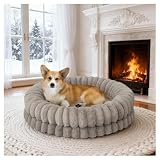
- Size Reminder: To ensure the best fit, please refer to the size guide and measure your pet’s length from head to base of tail before purchasing. Due to compression, slight measurement errors may occur, but always within 5% tolerance
- Superior Support: The bottom of dog bed is filled with a whole piece of egg crate sponge, which always maintains a stable shape. This calming dog bed provides strong support for pets and effectively relieves muscle and joint pain
- Calming & Anti-Anxiety: The fuzzy dog bed features a comfortable supportive edge that offers excellent support for your pet's neck and head. This Donut pillow cater to pets who love to curl up, ensure your pet feels safe and snug
- Non-shedding comfy fabric: This small dog bed is made from non-shedding luxury plush, helping to maintain a cleaner donut bed for small dog, you won't have to worry about loose fibers creating extra mess. Your puppy will feel incredibly comfy and soft
- Anti-Slip Bottom: The calming cat bed features a nonskid bottom, providing stability and preventing it from sliding. Whether cute bed's on the tile floors or hardwood, this feature ensures your pet's safety and comfort
VCA advises veterinary assessment for recurrent stress to rule out a physical cause and determine whether referral to a qualified trainer or veterinary behaviorist is appropriate. AAHA recommends reporting behavior changes and seeking a board-certified veterinary behaviorist for serious anxiety or aggression.
Do not give sedatives or other behavior-altering medication to obtain footage. Agriculture Victoria’s code restricts such medication to veterinary direction and requires a veterinarian for sedation or anesthesia. Medication decisions belong to the treating veterinarian, not a filming schedule.
How can you compare two filming ideas before choosing one?
Score each concept on four welfare questions. The safer idea is the one that preserves choice, uses less intensity and duration, controls fewer hazards and has stronger competent supervision.
| Question | Lower-risk example | Warning signs |
|---|---|---|
| Can the dog opt in or leave? | The dog approaches a phone in an open room and can walk away. | Held poses, blocked exits, forced eye contact or a handler preventing retreat. |
| How intense and repetitive is it? | A short candid clip or one familiar cue. | Startle effects, escalating reactions, many takes or a challenge built around fear. |
| What environmental hazards exist? | Quiet, moderate temperature, water, shade, stable non-slip footing and simple props. | Heat, cold, noise, flashing lights, slippery surfaces, unstable heights or restricted water. |
| Who is supervising? | A calm, competent handler who can stop immediately and obtain veterinary help. | No experienced handler, no rest plan, or pressure to continue despite distress. |
This framework also helps explain why a trend that looks brief online may be unsuitable: the published clip hides preparation, failed takes and the animal’s recovery period.
Independent reader supportYour contribution helps us test, update, and keep practical guides available for everyone.What should you do if your dog is stressed repeatedly after filming?
Stop exposing the dog to the same setup while you seek advice. Keep the home routine predictable, provide the established safe place and avoid “practice” sessions that repeatedly provoke the response. Bring your notes and any already-recorded footage to the veterinarian; a pattern across locations, people, sounds or devices can help distinguish a narrow trigger from a broader medical or behavioral problem.
Also popular on Amazon

- Oprah Daily Award-Winning Comfort:Recognized by Oprah Daily as the perfect donut dog bed for curl-up sleepers, this round calming pet bed is loved for its extra-fluffy faux fur, raised rim for furry heads, and cozy design that blends seamlessly into any home. Petite sizes (XS–M) are fully machine washable for added ease.
- Donut Design for Calming Rest:The signature donut dog bed shape provides a soothing, secure space for pets, while the raised edge supports the head and neck. Its plush filling ensures long-lasting comfort, making this calming dog bed ideal for curl-up sleepers and anxious pets alike.
- Sweet Daydreams, Sounder Nights:From lazy afternoon naps to overnight snoozes, this calming dog bed surrounds your pet in soft, supportive comfort. The round bed design helps them feel safe and secure, encouraging deeper, more restful sleep around the clock.
- Pet-Safe & Thoughtful Details:Crafted with Standard 100 by OEKO-TEX(24.HCN.46956) certified materials, this calming dog bed is made from tested-safe fabrics gentle on pets. The sturdy, non-slip base keeps the round pet bed in place, so your furry friend can hop in and out with comfort.
- Machine Washable:Designed to look as good as it feels, this donut pet bed comes in a range of neutral hues that blend seamlessly into any space. Smaller sizes (XS–M,XL) are fully washable, while larger sizes (L) feature a removable, machine-washable cover for easy cleaning with minimal effort.
The safest creative standard is simple: the dog may participate, may leave and never has to supply a fear reaction for the camera. When those conditions cannot be met, the humane choice is not to film that idea.
Frequently Asked Questions
Can my dog still appear in videos if it takes treats from me?
Taking a treat does not prove that a dog is comfortable; some dogs eat while remaining tense. Check the whole body for loose posture, normal movement and the ability to walk away, and stop if those signs deteriorate.
What’s actually slowing this PC down?
Pick the symptom - the matching free tool is one click away.
Why does my dog seem excited at first and then hide from the camera?
Initial curiosity can fade as equipment, repetition or people increase the pressure. Treat the change as information, remove the setup and give the dog a quiet recovery period rather than interpreting the first approach as consent for a longer shoot.
Are calming sprays, supplements or clothing a safe fix for filming stress?
Products can mask behavior without addressing the trigger, and clothing or wraps may restrict movement or add pressure. Ask your veterinarian before using any supplement or behavior-altering product, and never use one to justify continuing a distressing scene.
How long should I wait before filming again after a stressful episode?
There is no universal recovery timer. Resume only after the dog is back to its ordinary relaxed behavior and a veterinarian or qualified behavior professional has advised you when episodes are repeated, severe or spreading to other situations.





Leave a Reply