
Free tools Windows power users keep installed
One-click scans. No signup required.
Some links on this page are affiliate links: if you buy through them we may earn a commission, at no extra cost to you.
If your newly adopted dog freezes at the shelter door, refuses the leash, or will not walk to the car, treat the behavior as fear and overload—not stubbornness. Keep the exit quiet, prevent escape, offer choices, and let the dog move at its own pace. Do not drag, pull, corner, or force contact. A calm transfer followed by a predictable, low-stimulation first day gives the dog the best chance to settle. If the dog cannot be moved safely, refuses food, shows severe distress, or attempts to bite or escape, ask shelter staff for help and arrange veterinary or qualified behavior support promptly.
Why is my newly adopted dog afraid to leave the shelter?
A shelter dog may be overwhelmed by unfamiliar people, sounds, smells, handling, and the sudden change from kennel to vehicle. The fear you see at the door can continue around new rooms, visitors, traffic, equipment, or routine handling after adoption. The ASPCA notes that dogs showing significant fear in a shelter may be more likely to show fear around new people, places, and things after adoption.
As an Amazon Associate I earn from qualifying purchases.
Freezing, backing away, crouching, or refusing to walk is communication that the situation feels unsafe. It is not evidence that the dog is untrainable or does not want a home. Fear is a normal protective response, and fearful behavior can be treated and managed with careful handling, gradual exposure, and professional help when needed.
What should I do before the dog leaves the shelter?
Make the transfer a safety procedure, not a test of obedience. Prepare the equipment and route before bringing the dog into a busy lobby or parking lot.
Popular on Amazon
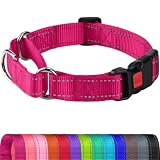
- ESCAPE-PROOF SAFETY FOR HOUDINI DOGS: Tired of your dog backing out of their collar? Our nylon cinch mechanism ensures a secure fit that tightens only when needed, preventing the "slip off" during sudden startles. It’s the ultimate No Slip solution for sighthounds and escape artists during busy street walks
- GENTLE CORRECTION & NO CHOKING: Say goodbye to harsh training. The Joytale nylon design provides a subtle "cinch" feedback that distributes even pressure to stop pulling instantly. It gives you precise control during leash training sessions without the "choking" effect or skin irritation common in chain collars
- 360° VISIBILITY & 13 VIBRANT COLORS: Safety meets style. Choose from 13 vibrant colors to reflect your dog's personality while enhancing daytime visibility. For after dark safety, dual strip reflective stitching ensures your pet is visible from 300+ feet away under headlights.
- HEAVY DUTY & MACHINE WASHABLE: Crafted from high density rip stop nylon and reinforced with a rust proof D-ring. Built for dogs who love hiking or mud rolling. It is machine washable and won't shrink or fade, standing up to the messiest outdoor adventures and daily wear and tear
- SAFETY QUICK RELEASE & PRECISION FIT: Features a safety quick release buckle with a secure lock to prevent accidental unbuckling—ideal for active pups. The tri-glide slider allows for a custom fit. Pro Tip: Ensure a 2 finger gap between the collar and neck for optimal comfort and no slip safety
Ask staff about the dog’s handling history
- Ask what collar, harness, leash, and handling the dog has already tolerated.
- Ask whether staff have seen leash panic, backing out of collars, escape attempts, snapping, or a known bite history.
- Ask whether the dog can walk, enter a carrier, or needs a two-person transfer.
This information lets you choose a safer plan instead of discovering a trigger at the exit.
Fit escape-prevention equipment
Check that the collar is snug enough that the dog cannot pull backward out of it, while still allowing comfortable breathing and swallowing. A correctly fitted martingale collar or an escape-resistant harness can reduce the chance of backing out of a loose collar. Use a leash near traffic, and keep the dog attached during every outdoor transfer.
The Tool Desk
Outbyte Driver Updater FREEFix the driver behind crashes, sound loss and screen glitchesFind Drivers →Outbyte PC Repair FREERepair Windows errors before they cause bigger problemsFix Now →If the dog is too distressed to walk or is likely to panic against lead pressure, do not tighten a slip lead and pull. The ASPCA protocol recommends a buckle collar and leash for a dog too stressed to walk or likely to panic under pressure. Ask staff to help with a carrier, a second leash, or another controlled transfer.
Prepare a quiet vehicle
Park as close as the shelter safely allows, clear the back seat or cargo area, and secure the dog before opening any door. Plan to go straight home without errands or social stops. RSPCA Victoria advises a direct trip because the dog is likely to be overwhelmed by additional destinations.
How do I get a scared rescue dog through the shelter door?
Reduce pressure and give the dog time to make small, voluntary choices. One calm handler is usually better than a group of people surrounding the dog.
- Lower the audience. Ask bystanders to step away. Keep voices low and movements slow.
- Use a nonthreatening posture. Stand or crouch sideways rather than facing the dog head-on. Soften your gaze and avoid leaning over, reaching across, or staring directly at the dog.
- Offer food without bargaining. Place tiny, high-value treats on the ground or toss them nearby. Let the dog decide whether to approach; do not reach for the collar when the dog takes a treat.
- Wait for a small choice. Looking toward the doorway, shifting weight, sniffing, or taking one step is progress. Reward the choice and pause again.
- Keep the route simple. Move toward the quietest exit and vehicle, allowing brief sniffing pauses rather than repeatedly cueing or tugging.
ASPCApro recommends a sideways body position, avoidance of looming and direct eye contact, and scattered or tossed treats so the dog can approach at its own pace. Contact should never be forced. If the dog remains immobile, escalates, or cannot be transferred safely, stop the attempt and ask shelter staff to create a safer plan.
What if my dog freezes, pulls backward, or will not enter the car?
Freezing and backward pressure are signs to reduce difficulty, not to pull harder. A struggle at the doorway can increase panic and create an escape or bite risk.
Also popular on Amazon

- 【Martingale style collars 】 Martingale collars Recommended by vets and trainers as the best design for daily wear. To prevent escape and correct behavior, martingale is perfect for training, give you gentle control over your pet
- 【Durability】Soft nylon dog collar and heavy-duty hardware won't easy loose or fray; Strict pulling test conducted before production. Properly fitted, the martingale dog collar will be comfortably loose whenever the dog is not pulling against the leash
- 【Quick Release Buckle】Can be quickly opened in an emergency. Never leave your dog unattended with a collar on. This dog martingale collar is not recommended to use without a leash and not for indoor use
- 【Size】Please make sure to leave only 2 fingers between the collar and dog neck. Refer to the chart choose a size that can slip over the head, properly fitting collar won't leave any room for your dog to chew and pet won't slip out of the collar
- 【Reflective】This reflective dog collar ensures visibility, allowing pets to walk more safely at night. If there are any quality issues with the no pull dog collar, please contact us promptly to resolve them for you
If the dog freezes
Stop moving the leash, turn sideways, and give the dog space. Put treats on the ground in a loose path rather than placing them directly under the dog’s nose. If the dog will not eat, the environment may be too frightening for learning; move farther from the trigger or ask staff to assist.
If the dog backs out or thrashes
Keep the leash short enough to prevent a run toward traffic but do not jerk it. Use the fitted martingale collar or escape-resistant harness selected with staff. Have a second handler control doors and the vehicle while the primary handler remains calm and avoids grabbing at the dog’s body.
If the dog will not enter the car
Do not lift, drag, or corner the dog unless trained staff are directing a necessary emergency transfer. Ask whether a carrier, ramp, second leash, or alternate vehicle position is safer. Once inside, secure the dog before any door opens, keep the ride quiet, and go directly home.
Do these 3 things before closing this tab:
1Scan for outdated or missing drivers - takes under a minute2Clear out junk files and repair common Windows errors3Fix the driver behind crashes, sound loss and screen glitchesHow should I set up the first hours at home?
Prepare the retreat before arrival so the dog does not have to navigate a busy household while frightened. The first day should be boring, predictable, and quiet.
Create a voluntary safe space
Set up a crate, bed, or quiet room away from entrances and heavy foot traffic. Leave the space available for rest, and never pull the dog out, block the exit, or use the area as punishment. RSPCA Victoria and the Connecticut Humane Society both emphasize that the dog must be able to choose the retreat.
Use a simple routine
Keep feeding, rest, potty, and brief walking opportunities at consistent times. Structure can reduce anxiety and nervousness. Limit visitors, introductions, errands, dog parks, and long walks while the dog is still showing fear.
Manage the leash safely indoors
A leash can remain attached briefly for gentle guidance only while you are actively supervising. Remove it when the dog is unattended to prevent snagging. Do not grab suddenly at the dog’s neck; an unexpected hand can trigger another flight response.
What’s actually slowing this PC down?
Pick the symptom - the matching free tool is one click away.
Also popular on Amazon

- No Buckle: Martingale dog collars slip easily over the head and tighten gently when pulled, eliminating the need for a buckle; The limited closure ensures the collar won't become too tight, providing gentle control during walks and training sessions
- High-Quality Materials: Made from 100% nylon webbing, this heavy duty dog collar is ribbed, soft, and sleek; handcrafted with rich colors and mirror-like hardware; Nickel plated steel ensures strength, while colorfast dye prevents fading or running.
- Ideal Fit for Every Pup: M Size - 1" Width (15" - 21" Neck) is ideal for medium-sized breeds like Corgis, Pugs, and Dalmatians, our M collar provides a snug and fashionable accessory for pups who want to stand out from the crowd
- Training Collar: Not for tie-out. This cute collar prevents dogs from slipping out, great for hard-headed pups, puppies, and service dogs; The limited closure prevents it from becoming too tight, ensuring a secure and comfortable experience
- Proudly Made in the USA: Our commitment to domestic production means you can trust in the quality and durability of each dog collar, crafted with attention to detail by professionals who understand the importance of your pet's comfort and safety.
Keep interactions optional
Invite the dog to approach rather than calling repeatedly or reaching into the safe space. Sit sideways, let the dog sniff, and reward voluntary looks, steps, or exploration. Household members should follow the same rules so the dog receives a consistent message.
How long does a shelter dog take to decompress?
There is no reliable fixed schedule for every dog. The Connecticut Humane Society recommends planning for a two- to three-week adjustment period, while the American Animal Hospital Association’s three-day, three-week, and three-month framework is an expectations tool rather than a promise that every dog will feel comfortable on those exact days.
Judge progress by behavior, not by a calendar. A dog that begins taking food, resting in the open, sniffing, or choosing to approach is showing improved coping. A dog that remains shut down, cannot eat or toilet normally, or becomes more fearful needs a slower plan and possibly professional assessment.
Progress is often uneven. A dog may relax in the living room but freeze at the front door, or accept one person while avoiding another. Return to an easier situation when a new challenge causes a setback instead of treating the setback as disobedience.
Recommended Free Tools
How do I build confidence without overwhelming my dog?
Work below the dog’s fear threshold: the distance and intensity at which the dog can remain reasonably calm and still take food. Increase only one challenge at a time.
Reward voluntary behavior
Mark and reward looking toward you, taking a treat, stepping forward, sniffing, entering a room, or resting in the safe space. These choices show the dog that exploration and communication are safe. Food is a training aid, not a cure for fear.
Shorten the exposure
Keep first outings brief. Increase distance, duration, or novelty only while the dog remains able to eat and recover. End while the dog is still coping rather than waiting for a shutdown.
Also popular on Amazon

- Size: L, adjustable length 17"-25" ( 1" width), for the proper fit when your dog wears it, please measure your dog's neck circumference and refer to the size chart picture we provided to choose the right size.
- Durable Construction: This martingale dog collar is made of sturdy and high quality nylon material. It also offers a wide variety of color options, and is suitable for dogs of all breeds and sizes, ensuring long-lasting durability.
- Buckle - Free: Martingale dog collars are designed for slip - on wear. They tighten moderately when pulled, with a limited tightening mechanism to prevent over - tightening. They automatically loosen when there's no pull. This gentle control eases dog walking and training
- Escape-Proof: This cute collar prevents dogs from escaping and corrects their behaviors. The martingale collar is excellent for training, allowing for gentle control and ensuring a safe and comfortable wearing experience. It's not suitable for tying up dogs!
- Colorfast: Our dog collars are professionally dyed. The colors penetrate deep into the fibers and attach firmly. Despite exposure to sunlight, rain, or multiple washes, the colors remain vibrant for a long time, enhancing your dog's wearing experience.
Watch for threshold signals
If the dog stops eating, freezes, scans for escape routes, hides, or begins barking or growling, increase distance or remove the trigger. Do not add commands, physical pressure, or repeated approaches at that moment.
Crashes, No Sound, or Screen Glitches?
Random freezes, missing sound and display glitches usually trace back to one bad driver. Find and replace yours safely.Free scan · under a minutePC Slower Than It Used to Be?
A free scan shows the junk files, broken settings and background clutter dragging Windows down - then fixes them in one click.Free scan · Windows 10 & 11Introduce other dogs carefully
For dog-to-dog exposure, stay at a distance where your dog can calmly observe and take treats. RSPCA Victoria recommends rewarding calm observation and consulting a reward-based trainer if fear signs appear. Avoid forced greetings or crowded dog areas during the adjustment period.
What fear signs mean I should slow down or seek help?
Fear can be subtle before it becomes an escape or bite incident. The San Francisco SPCA lists these possible signs:
- Panting, lip licking, whining, drooling, shaking, or cowering
- Tucked tail, ears held back, hiding, or pacing
- Refusing treats, stalling on walks, or scanning constantly for escape routes
- Submissive urination, growling, barking, or attempts to flee
- Self-mutilation or other behavior that could cause injury
A single sign does not diagnose an anxiety disorder. Look at the whole situation, the intensity, and whether the dog can recover after the trigger is removed.
Call a veterinarian promptly when
- Fear appears suddenly, is unusually severe, or seems connected to pain or illness.
- The dog cannot eat, drink, sleep, toilet, travel, or be handled safely.
- There are repeated escape attempts, self-injury, lunging, snapping, or bites.
The San Francisco SPCA advises veterinary evaluation to rule out medical causes of fear. A veterinarian can then help decide whether referral to a certified reward-based trainer or veterinary behaviorist is appropriate.
Request behavior support early
Do not wait for a dangerous incident if fear is blocking transport, ordinary care, or safe walking. Ask for a professional who uses reward-based methods and can observe the dog’s triggers, set a workable distance, and coordinate with your veterinarian. Avoid anyone who recommends flooding the dog with frightening exposure, leash corrections, intimidation, or forced contact.
Independent reader supportYour contribution helps us test, update, and keep practical guides available for everyone.Which collar, harness, and treats are safest for a fearful rescue dog?
Equipment reduces escape risk; it does not remove fear. Fit, supervision, and calm handling matter more than a particular product label.
Also popular on Amazon

- Sufficient Supplies: there are 12 pieces of adjustable martingale collar for dogs with durable metal buckle in the package, which are enough to meet your daily use and replacement; Suitable for those who have multiple dogs at home or who run a pet shop
- Comfortable and Soft to Use: the inner lining of the martingale collar reflective is made of neoprene and cloth, which is soft and comfortable, will not hurt the dog's neck, and can effectively control the dog at the same time
- Reflective Design: the martingale dog collar is made of reflective nylon to add visibility and to reflect light when illuminated at night, keeping your puppy safe while walking, training or running at night
- Easy to Adjust: medium size, approx. 14-19 inches/ 35-48 cm, and approx. 0.98 inches/ 2.5 cm in width, allow you to adjust the length according to your puppy's neck size, easy to slip in, suitable for most medium sized dogs; In order to avoid the risk of choke, please don't fasten the dog collar too tight
- Share As Gifts: these martingale dog collars bulk are gifts for family, relatives, neighbors, friends and someone who owns dogs, and they will be happy to receive such helpful gifts, which will provide convenience for daily dog walk
| Item | Useful role | Safety conditions |
|---|---|---|
| Correctly fitted buckle collar | Basic identification and leash attachment | Check that the dog cannot reverse out; inspect fit after arriving home. |
| Martingale collar | Helps reduce backing out of a loose collar | Fit it correctly, supervise use, and do not use it to drag or correct the dog. |
| Escape-resistant or front-clip harness | Additional security for early walks | Fit according to the manufacturer’s directions, check for rubbing, and supervise every use. |
| Standard leash | Keeps the dog attached near traffic and during transfers | Avoid retractable lines during the first transfers; keep slack rather than jerking. |
| Small, soft high-value treats | Rewards voluntary approach and exploration | Offer without pressure; stop increasing difficulty if the dog will not eat. |
| Quiet crate or washable bed | Provides a retreat the dog can choose | Never use the space as punishment or remove the dog from it to force interaction. |
What mistakes make a frightened shelter dog worse?
- Dragging the dog through the doorway: This can intensify panic and increase injury or escape risk.
- Allowing a crowd to greet the dog: Multiple people, hands, and direct eye contact remove the dog’s ability to retreat.
- Using a loose collar or unsupervised equipment: A fearful dog may reverse out before you can react.
- Taking the dog on a busy first-day itinerary: Errands, visitors, and long walks add novelty before the dog has a safe base.
- Forcing contact in the safe space: The retreat stops functioning if the dog cannot rely on it.
- Increasing exposure after the dog stops eating: Refusing food, freezing, hiding, or scanning means the challenge is too difficult.
- Waiting until a crisis to ask for help: Early veterinary and behavior support can address medical causes and prevent rehearsed escape or aggression.
What should the first week look like?
Use a repeatable pattern rather than a packed schedule. Keep the dog’s world small while you learn what helps it recover.
- Offer the same quiet retreat and predictable household routine each day.
- Use brief, supervised potty trips with secure equipment and the least stimulating route available.
- Reward voluntary movement, sniffing, calm observation, and returning to the safe space.
- Record triggers and recovery: what happened, how far away it was, whether the dog ate, and how long settling took.
- Change only one variable at a time, such as a slightly longer outing or a new room.
- Contact your veterinarian or a qualified behavior professional if fear remains intense, worsens, or prevents basic care.
This approach protects the dog while giving you useful information about its limits. The goal is not to make the dog act normal immediately; it is to create enough safety that learning becomes possible.
Quick wins for a faster PC:
Repair Windows errors before they cause bigger problemsFix Now →Fix the driver behind crashes, sound loss and screen glitchesFind Drivers →Clear out junk files and repair common Windows errorsFree Scan →When can I expect normal walks and visitors?
Resume ordinary activities according to the dog’s body language and recovery, not a preset date. A dog is ready for a modest increase when it can remain calm enough to take food, investigate the environment, and return to baseline after the outing.
Introduce visitors one at a time, with the dog able to retreat and the visitor instructed not to stare, reach, or follow. Delay crowded gatherings, dog parks, and long unfamiliar routes until the dog is consistently coping with quieter versions of those experiences. If a planned activity repeatedly produces freezing, hiding, refusal of food, or escape behavior, make it easier and seek professional guidance.
Frequently Asked Questions
Should I pick up my dog and carry them out of the shelter?
Only trained shelter staff should direct a necessary lift or carrier transfer. Carrying a panicked dog can lead to struggling, dropped equipment, or a bite, so ask the shelter for a controlled alternative rather than improvising.
What should I do if my dog will not take treats during the first outing?
Treat refusal usually means the situation is too difficult for learning at that moment. Increase distance from the trigger, shorten the outing, or return to the quietest safe location; do not keep adding pressure or food directly to the dog’s face.
Can I leave the leash attached while my dog settles at home?
A leash may be attached briefly for gentle guidance while you are watching, but remove it when the dog is unattended to prevent snagging. Never use the leash to pull the dog out of its chosen retreat.
How do I find the right behavior professional?
Start with your veterinarian, especially if the fear is sudden, severe, or linked to possible pain. Ask for a certified reward-based trainer or veterinary behaviorist who will work below the dog’s fear threshold rather than using intimidation, flooding, or leash corrections.
Is the three-day, three-week, three-month rule a guarantee?
No. The American Animal Hospital Association presents it as an expectations framework, and individual dogs may need more or less time. Track coping skills and recovery instead of treating the calendar as a deadline.





Leave a Reply