
Some links on this page are affiliate links: if you buy through them we may earn a commission, at no extra cost to you.
A newly adopted pet may hide, sleep more, or eat little during the first hours because the move is frightening. Give the animal a quiet, confined safe space, familiar food, predictable care, and no forced handling. Monitor drinking, urination, stool, breathing, energy, and responsiveness rather than judging appetite alone. A bright adult dog may skip food for a day, but food refusal beyond 24–48 hours warrants veterinary advice. A cat that eats nothing for 24 hours needs a veterinary call, and a kitten that refuses food should be assessed the same day. Any breathing difficulty, collapse, severe weakness, repeated vomiting, bloody diarrhea, urinary obstruction signs, or suspected toxin exposure is an emergency.
Why is my newly adopted pet hiding or refusing food?
Moving from a shelter or foster home changes smells, sounds, people, animals, routines, and feeding arrangements all at once. Fear can suppress appetite and make a dog or cat retreat. Hiding is compatible with normal decompression only when the pet remains hydrated, responsive when approached, and able to urinate and pass stool normally.
As an Amazon Associate I earn from qualifying purchases.
Crashes, No Sound, or Screen Glitches?
Random freezes, missing sound and display glitches usually trace back to one bad driver. Find and replace yours safely.Free scan · under a minutePC Slower Than It Used to Be?
A free scan shows the junk files, broken settings and background clutter dragging Windows down - then fixes them in one click.Free scan · Windows 10 & 11The ASPCA’s practical “3-3-3” guideline describes the first three days as an overwhelmed period, the next three weeks as time to decompress and establish routines, and the first three months as continued adjustment. It is a guideline, not a schedule every animal follows; RexVet similarly describes the cat version as a rule of thumb rather than a research finding. Some pets settle sooner, while others need longer.
What should I do during the first hours at home?
Keep the arrival quiet and controlled. The goal is to make the new environment small, predictable, and easy to monitor.
Popular on Amazon

- IDEAL FOR 41-70 LB DOGS: Measures 36.5 x 23.25 x 24.75 inches - perfect for Bulldogs, Beagles, Whippets & similar breeds. For dogs near 70 lbs, consider sizing up to our 42-inch model so they have plenty of room to get comfortable.
- WE DON'T CUT CORNERS, WE PERFECT THEM: Precision welding, rounded corner clips & slide-bolt latches with Paw Block mitigate snags, cuts & escapes. With rigorous safety testing, iCrate provides peace of mind knowing your dog is safe while you're away.
- DURABLE CONSTRUCTION: Sturdy metal wire design with a protective black e-coat finish, the iCrate resists rust and everyday wear. Complete with leak-proof tray, rubber feet, carry handle, and tool-free assembly, it's ready for years of use.
- SUPPORTS CRATE TRAINING: A divider panel lets the crate grow with your dog, from puppy kennel to full-size crate. Large openings and low thresholds ease the crate training process and help your dog feel more at home.
- BECAUSE LIFE GOES BETTER WITH PETS: A family-owned business based in Indiana, MidWest Homes for Pets brings over 100 years of pet product expertise and a commitment to quality, rigorous safety testing, and excellent US-based customer service.
- Reduce stimulation. Take a dog directly home with the leash secured. Introduce people one at a time, calmly, and postpone visitors. For either species, choose one quiet room or bounded area with bedding, food, water, and the supplies the animal needs.
- Provide a retreat. A cozy crate, covered bed, open carrier, or other protected hiding place lets the pet withdraw without escaping or being cornered. Use a gate or closed door to limit access while the animal learns the home.
- Keep care familiar. Start with the shelter or foster food and the same meal routine if you can. If a dog’s diet must change, Longmont Humane Society recommends a gradual transition through several stages lasting three to four days each instead of an abrupt switch.
- Make meals low pressure. Put food in a quiet, low-traffic spot and step away if the pet seems watched. Feed resident animals separately so competition does not add stress. Measure what you offer and what remains so you know the actual intake.
- Respect retreat. Do not pull a hiding cat from under a bed or force a dog to greet people or other pets. The ASPCA’s adoption guidance is direct: “Don’t force interactions with people or other pets.”
- Start a log. Write down the time and amount eaten, water intake, urine, stool, vomiting or diarrhea, and how the animal responds when approached. A written record helps a veterinarian distinguish stress from illness.
How can I help a scared dog eat?
Offer the familiar dog food in a calm area, then give the dog space. Many newly moved dogs sniff a meal and walk away, sleep more, or hide while they process the change. Drinking, staying alert, showing interest in treats or going outside, and having no vomiting are reassuring signs during this short period.
Use a calm arrival routine
Keep the leash on until you are inside a secure area, then allow a brief, quiet toilet break before settling the dog. Avoid a parade of introductions. A predictable sequence—water, a chance to eliminate, a resting place, and a measured meal—reduces decisions for an overwhelmed dog.
What’s actually slowing this PC down?
Pick the symptom - the matching free tool is one click away.
When a skipped meal becomes concerning
Longmont Humane Society notes that stress can reduce appetite during the first day or two. For an otherwise bright adult dog that is drinking, treat 24–48 hours without food as the outer limit for waiting, not as a target; arrange veterinary evaluation if the refusal continues. Contact a veterinarian sooner for a puppy, refusal to drink, vomiting, diarrhea, lethargy, or breathing changes.
How can I help a scared cat eat?
Set up a dedicated safe room with food, water, bedding, a hiding place, and a high perch. Place the litter box away from food and water. A cat may stay hidden for days and still be adjusting, but hiding is not reassuring if the cat is not drinking, urinating, defecating, or responding normally.
Also popular on Amazon

- IDEAL FOR 71-90 LB DOGS: Measures 42.5 x 28.5 x 30.5 inches - perfect for Australian Shepherds, Boxers, Golden Retrievers & similar breeds. For dogs near 90 lbs, consider sizing up to our 48-inch model so they have plenty of room to get comfortable.
- WE DON'T CUT CORNERS, WE PERFECT THEM: Precision welding, rounded corner clips & slide-bolt latch with Paw Block mitigate snags, cuts & escapes. With rigorous safety testing, iCrate provides peace of mind knowing your dog is safe while you're away.
- DURABLE CONSTRUCTION: Sturdy metal wire design with a protective black e-coat finish, the iCrate resists rust and everyday wear. Complete with leak-proof tray, rubber feet, carry handle, and tool-free assembly, it's ready for years of use.
- SUPPORTS CRATE TRAINING: A divider panel lets the crate grow with your dog, from puppy kennel to full-size crate. Large openings and low thresholds ease the crate training process and help your dog feel more at home.
- LIFE GOES BETTER WITH PETS: A family-owned business based in Indiana, MidWest Homes for Pets brings over 100 years of pet product expertise and a commitment to quality, rigorous safety testing, and excellent US-based customer service.
Offer food without pressure
Keep the shelter or foster diet at first and place a measured portion in a quiet location. Some cats eat better with quiet human company; others need you to leave. San Francisco SPCA notes that a shallow bowl or plate can be more comfortable for some cats. Avoid repeatedly reaching into the hiding place or moving the bowl every few minutes.
Use a shorter food-refusal threshold
An adult cat that has eaten nothing for 24 hours needs veterinary contact; do not wait that long for a kitten, an overweight cat, or an animal with a known medical vulnerability. Complete anorexia in cats can become dangerous more quickly than a dog’s skipped meal, so call even if the cat appears quiet rather than obviously ill.
Which signs are normal adjustment, and which are not?
Look at the whole pattern instead of one behavior. The following comparison separates useful normal signs from the points at which professional help is needed.
| Question | Dog | Cat |
|---|---|---|
| What food refusal can be watched briefly? | An otherwise bright adult may skip food for a day; veterinary evaluation is needed when refusal passes 24–48 hours (Longmont Humane Society guidance). | Complete refusal reaches the veterinary-contact threshold at 24 hours for an adult; a kitten should be assessed the same day. |
| Which everyday signs are reassuring? | Drinking, alertness, interest in treats or going outdoors, and no vomiting; stool may be normal or mildly soft. | Eating at least some food, drinking, urinating, defecating, and using the litter box normally while hiding. |
| What home setup helps? | Quiet arrival, secure leash, gradual introductions, a bounded resting area, and familiar food. | Quiet safe room, litter box separated from food, a hiding place, a high perch, and familiar food. |
| Examples requiring emergency care | Collapse, repeated vomiting, bloody or watery diarrhea, inability to keep water down, inability to stand or stay awake, abnormal gum color, severe pain, a tense or swollen abdomen, seizure, breathing difficulty, or suspected toxin or foreign-body ingestion. | Open-mouth or labored breathing, blue, gray, or white gums, straining with little or no urine, collapse, seizures, lily exposure, dog flea-product exposure, swallowed human medicine, or a vomiting and lethargic kitten. |
When should I call a veterinarian about a dog that will not eat?
Call when an adult dog has refused food for more than 24–48 hours, and call earlier for any additional symptom or for a puppy. The time limit assumes the dog is otherwise bright and drinking; it does not apply to an animal that is deteriorating.
Also popular on Amazon

- IDEAL FOR 12-20 LB DOGS: Measures 24.5 x 17.5 x 19.5 inches - perfect for Fox Terriers, Pugs, Chihuahuas & similar breeds. For dogs near 20 lbs, consider sizing up to our 30-inch model so they have plenty of room to get comfortable.
- WE DON'T CUT CORNERS, WE PERFECT THEM: Precision welding, rounded corner clips & slide-bolt latch with Paw Block mitigate snags, cuts & escapes. With rigorous safety testing, iCrate provides peace of mind knowing your dog is safe while you're away.
- DURABLE CONSTRUCTION: Sturdy metal wire design with a protective black e-coat finish, the iCrate resists rust and everyday wear. Complete with leak-proof tray, rubber feet, carry handle, and tool-free assembly, it's ready for years of use.
- SUPPORTS CRATE TRAINING: A divider panel lets the crate grow with your dog, from puppy kennel to full-size crate. Large openings and low thresholds ease the crate training process and help your dog feel more at home.
- LIFE GOES BETTER WITH PETS: A family-owned business based in Indiana, MidWest Homes for Pets brings over 100 years of pet product expertise and a commitment to quality, rigorous safety testing, and excellent US-based customer service.
Seek same-day advice for
- A puppy that refuses food.
- Refusal to drink or inability to keep water down.
- Vomiting, diarrhea, marked lethargy, or a noticeable breathing change.
- A dog that becomes less responsive instead of gradually settling.
Go to an emergency clinic for
- Repeated vomiting, bloody or watery diarrhea, collapse, inability to stand, or inability to stay awake.
- Pale, white, blue, or yellow gums; severe pain; or a tense or swollen abdomen.
- Seizures, breathing difficulty, or suspected poisoning or foreign-body ingestion.
When is a cat’s lack of appetite an emergency?
Contact a veterinarian the same day an adult cat reaches 24 hours without food, and do not wait 24 hours for a kitten, overweight cat, or medically vulnerable cat. Arrange a first examination within about a week of adoption, bringing the shelter’s records so the clinician can review vaccines, deworming, and testing.
Go straight to emergency care for
- Open-mouth or labored breathing, blue, gray, or white gums, collapse, or seizures.
- Straining in the litter box with little or no urine.
- Known lily exposure, contact with a dog flea product, or swallowed human medication.
- A kitten that is vomiting or has diarrhea and is lethargic.
A live video veterinary visit may help triage a non-emergency cat case when an in-person appointment is not immediately available, but it cannot replace the first physical examination or emergency treatment.
Free tools Windows power users keep installed
One-click scans. No signup required.
How should I monitor a pet that is hiding?
Check quietly on a schedule rather than repeatedly disturbing the animal. Record measured food and water, then inspect the bowl, litter box or yard, and bedding for evidence of eating and elimination. Note vomiting, diarrhea, breathing rate or effort, posture, and whether the pet tracks you with its eyes or responds to a gentle voice.
- Hydration: confirm that water is being consumed; refusal to drink is more urgent than a single missed meal.
- Elimination: verify urine and stool. A cat hiding but using the litter box normally is different from a cat straining or producing no urine.
- Responsiveness: a frightened pet may remain still, but should respond normally when approached. Increasing weakness, collapse, or inability to stand is not decompression.
- Trend: compare each check with the previous one. A small improvement in drinking, exploring, or eating matters; a downward trend should prompt a call.
What mistakes make the first days harder?
Forcing contact
Dragging a cat from its hiding place, carrying a dog toward visitors, or insisting on introductions can intensify fear and create defensive behavior. Let the animal choose when to approach while you provide safe boundaries.
Also popular on Amazon

- IDEAL FOR 21-40 LB DOGS: Measures 30.5 x 19.25 x 21.5 inches - perfect for French Bulldogs, Welsh Terriers, Dachshunds & similar breeds. For dogs near 40 lbs, consider sizing up to our 36-inch model so they have plenty of room to get comfortable.
- WE DON'T CUT CORNERS, WE PERFECT THEM: Precision welding, rounded corner clips & slide-bolt latch with Paw Block mitigate snags, cuts & escapes. With rigorous safety testing, iCrate provides peace of mind knowing your dog is safe while you're away.
- DURABLE CONSTRUCTION: Sturdy metal wire design with a protective black e-coat finish, the iCrate resists rust and everyday wear. Complete with leak-proof tray, rubber feet, carry handle, and tool-free assembly, it's ready for years of use.
- SUPPORTS CRATE TRAINING: A divider panel lets the crate grow with your dog, from puppy kennel to full-size crate. Large openings and low thresholds ease the crate training process and help your dog feel more at home.
- LIFE GOES BETTER WITH PETS: A family-owned business based in Indiana, MidWest Homes for Pets brings over 100 years of pet product expertise and a commitment to quality, rigorous safety testing, and excellent US-based customer service.
Changing several variables at once
Switching food, moving bowls, opening the entire house, and inviting guests makes it impossible to tell what helps. Keep the diet and routine familiar, change one thing at a time, and expand access only as the pet remains settled.
Guessing about intake
“The bowl looks lower” is not a reliable measurement, especially if other animals can reach it. Feed separately, measure portions, and record leftovers. This information gives the veterinarian a useful timeline.
Recommended Free Tools
Waiting through red flags
Stress can explain hiding, but it does not explain away breathing trouble, collapse, urinary obstruction signs, repeated vomiting, bloody diarrhea, severe weakness, or toxin exposure. Those signs require urgent care regardless of how recently the pet was adopted.
Independent reader supportYour contribution helps us test, update, and keep practical guides available for everyone.What supplies make decompression safer?
A few basic items support the low-stimulation setup recommended by adoption organizations:
Also popular on Amazon
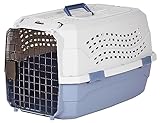
- Hard sided pet carrier with 2 doors for front and top entry; suitable for cat or medium size dog weighing 12 - 20 pounds
- Durable plastic construction with steel wire doors; screws keep the top and bottom sections securely connected
- Spring load latches ensure easy one-handed door opening and closing; top door swings open to the left or right and includes a top carry handle
- Plenty of air ventilation on the sides, top, and back of the carrier
- Note: Be sure to measure the size of the pet when choosing carrier size
- A crate or other cozy, dedicated safe space for a dog or cat.
- A pet gate or closed room to limit access while the animal adjusts.
- Species-appropriate food and water bowls; a shallow bowl or plate may suit some cats.
- For cats, a litter box positioned away from food, plus a hiding place and high perch.
- Paper or a phone note for logging meals, water, urine, stool, and symptoms.
How long should I expect adjustment to take?
There is no guaranteed timetable. The ASPCA 3-3-3 framework is useful for setting gentle expectations, not for postponing care: the first three days may be especially nervous, the next three weeks often involve routine-building, and adjustment can continue through the first three months. Judge progress by function—hydration, elimination, responsiveness, and gradually expanding comfort—not by whether the pet follows a calendar.
Arrange a veterinary relationship soon after adoption, keep the shelter or foster medical information, and ask for help whenever intake or behavior is moving in the wrong direction. Quiet structure gives a frightened pet the best chance to eat on its own while timely escalation protects against illness.
Quick wins for a faster PC:
Fix the driver behind crashes, sound loss and screen glitchesFind Drivers →Clear out junk files and repair common Windows errorsFree Scan →Frequently Asked Questions
Can pet insurance cover problems discovered after adoption?
Insurance policies differ in waiting periods, exclusions for pre-existing conditions, and eligibility rules. Compare those terms for your country or state before relying on a policy to pay for a new symptom; adoption guidance from the ASPCA specifically warns that coverage details vary.
Is a video appointment enough for a newly adopted cat?
A live video consultation can help a veterinarian triage a non-emergency case when travel or appointment access is difficult. It cannot replace an in-person first examination, and it is not appropriate for breathing trouble, collapse, urinary obstruction signs, toxin exposure, or other emergencies.
What should I bring to the first veterinary visit?
Bring the shelter or foster medical records, your intake log, the food label, and a list of any vomiting, diarrhea, medication, or possible exposure. The clinician can then review vaccination, deworming, and testing history alongside the new symptoms.
How can I tell whether another pet is preventing eating?
Feed animals in separate rooms or behind a closed door and measure each portion. If the new pet eats only when isolated, competition or feeling watched may be contributing; keep the separation while confidence develops and discuss persistent refusal with your veterinarian.
The Tool Desk
Outbyte Driver Updater FREEScan for outdated or missing drivers - takes under a minuteDriver Scan →Outbyte PC Repair FREEClear out junk files and repair common Windows errorsFree Scan →




Leave a Reply