
Some links on this page are affiliate links: if you buy through them we may earn a commission, at no extra cost to you.
The first 24 hours should be quiet, contained and predictable. Before pickup, prepare one pet-proofed room or area; transport the animal securely and go straight home; offer the food and routine used by the shelter or foster home; and let the pet choose how quickly to interact. Dogs generally need leashed, supervised exploration and frequent toilet breaks. Cats should be released voluntarily into a closed safe room and allowed to hide. Bring the adoption and medical records, confirm identification and licensing requirements, and book veterinary follow-up—within 72 hours for Houston BARC adoptions and within the first week under Ontario SPCA guidance.
What should I prepare before bringing an adopted pet home?
Set up a dedicated, quiet area before leaving for the shelter or rescue. ASPCA guidance calls for securing cords, windows and doors, removing chewable hazards and checking for toxic plants. The space should let the animal rest without being approached constantly.
As an Amazon Associate I earn from qualifying purchases.
Make a basic safe-area checklist
- Dogs: a properly fitted collar with an identification tag, leash, water and food bowls, familiar bedding or toys, and a secured room, gate or crate.
- Cats: a correctly sized carrier, food and water bowls, a litter box, a scratching option, a hiding place and, if possible, a vertical perch.
- For either species: remove accessible medicines, cleaners, loose wires, small objects and plants that may be toxic. Close exterior doors and windows before the animal arrives.
- Household plan: decide which people may meet the pet on day one, where the pet will sleep and who will handle feeding and toilet breaks.
Keep the first day free of errands, parties and unnecessary visitors. A calm room and a predictable schedule are more useful than a large welcome.
What should I ask the shelter or foster home before leaving?
Obtain the information the animal is already used to before you drive away. The current routine reduces avoidable stomach upset and gives the veterinarian a reliable starting point.
Popular on Amazon
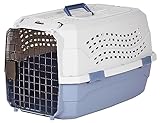
- Hard sided pet carrier with 2 doors for front and top entry; suitable for cat or medium size dog weighing 12 - 20 pounds
- Durable plastic construction with steel wire doors; screws keep the top and bottom sections securely connected
- Spring load latches ensure easy one-handed door opening and closing; top door swings open to the left or right and includes a top carry handle
- Plenty of air ventilation on the sides, top, and back of the carrier
- Note: Be sure to measure the size of the pet when choosing carrier size
- Ask for the exact food, feeding times and approximate portions.
- Collect vaccine, deworming, parasite-treatment and other medical records, plus medication instructions and packaging.
- Write down the microchip number, registered contact details and any identification paperwork.
- Ask about behavior notes: fears, handling preferences, toilet habits, triggers, sleep routine and reactions to children or other animals.
- Confirm what the adoption fee or package includes and what remains due. Houston BARC, for example, lists spay/neuter, age-appropriate vaccines, rabies vaccination, flea prevention, a microchip and city registration in its package; that combination is specific to its program, not a universal shelter standard.
Bring every record to the first veterinary appointment. If a clinic requests a fresh stool sample, ask the shelter how to collect and transport it.
How do I transport a newly adopted dog or cat?
Use species-appropriate containment and travel directly home. Cats Protection recommends an appropriate carrier, a familiar-smelling blanket and a short, direct journey. Houston BARC also identifies a travel crate or kennel as safe transport.
Free tools Windows power users keep installed
One-click scans. No signup required.
- For a cat, place the cat inside a secure carrier before opening any vehicle door. Keep the carrier closed in the car, out of direct sun and away from loose objects. Do not carry an unrestrained cat into the building or parking lot.
- For a dog, use a properly fitted collar and leash, or a travel crate secured in the vehicle. Keep the leash attached while moving through doors and gates; an identification tag belongs on the collar even if a harness is also used.
- Go straight home. Skip shopping, introductions and extended stops. A frightened animal can bolt during an unfamiliar transition.
What should happen during the first hour at home?
Bring the animal directly to the prepared area, offer water and familiar food, and keep the environment quiet. Do not turn arrival into a tour or a handling session.
For a cat
Take the carrier to the safe room, set it on the floor, open the door and step back. Let the cat emerge voluntarily. If it remains inside or hides, leave the room for an hour or two and return quietly; never pull the cat out or crowd the carrier. Leave food and water available, with the litter box positioned separately.
Also popular on Amazon

- Secure Hard-Sided Construction: Designed as a durable pet travel carrier for small dogs and cats, this hard shell pet carrier features four reinforced buckles with optional screws that help keep the top and bottom securely connected during car rides, vet visits and everyday travel.
- Front & Top Entry with 4-Sided Ventilation: Load your pet with ease using dual-door access. Four-sided ventilation allows continuous airflow and better visibility, making this dog and cat carrier more comfortable for road trips and camping.
- Comfortable Travel Essentials Included: The included feeding bowl makes feeding on the go easy, while the raised floor helps separate pets from urine and minor spills, creating a cleaner, more comfortable resting area during travel.
- Sized for Small Pets Up to 20 lbs: This pet carrier offers room for pets to sit, turn and lie down comfortably. Ideal for small dogs, cats, puppies and kittens during daily outings, road trips and veterinary appointments.
- Easy to Carry & Simple to Clean: Made from durable plastic with sturdy steel wire doors and secure locking latches, this travel pet crate is built for repeated use. The foldable handle makes carrying easier, while the smooth surface wipes clean quickly after every adventure.
For a dog
Enter on leash and allow a slow sniffing tour of the areas the dog will use. Secure doors and gates before unclipping the leash. Take the dog out for a quiet toilet break, reward outdoor toileting and avoid an immediate outing or crowded gathering.
Keep the same food used by the shelter or foster home when possible. The BC SPCA warns that an abrupt change can cause diarrhea; any change should be planned as a gradual transition with veterinary advice if the dog or cat has a sensitive stomach.
Do these 3 things before closing this tab:
1Clear out junk files and repair common Windows errors2Fix the driver behind crashes, sound loss and screen glitches3Repair Windows errors before they cause bigger problemsHow should I structure hours one through six?
Use short, repeatable care periods rather than continuous attention. Supervise every interaction and allow the animal to retreat.
Dogs: toilet, sniff and rest
- Offer regular bathroom breaks and keep the first walk short and exploratory.
- Provide familiar bedding or toys in the resting area.
- Teach household members to approach calmly. Children should not hug, chase, climb on or pass the dog around.
- Do not visit a dog park or introduce unknown dogs while vaccination and disease risks are still being clarified from the records and veterinarian.
Cats: hiding, litter and choice
- Keep the cat in the safe room unless it chooses to explore. Hiding is common and is not a behavior to punish.
- Provide an accessible hiding place and a vertical option, while keeping food and water away from the litter tray.
- Introduce children one at a time, briefly and quietly. Let the cat decide whether to approach.
- Check for eating, drinking and litter-box use without repeatedly disturbing the cat.
Resident animals
Do not stage a face-to-face meeting at the doorway. Keep the newcomer separate and begin with controlled scent or doorway exposure only when everyone is calm. A pet-safe gate or closed room allows visual contact without removing the newcomer’s escape route.
Also popular on Amazon

- High Quality Design:Sturdy steel cage structure and wooden support board maintain good spatial stability and shape. Breathable mesh windows on four sides,which can ensure good air circulation and views,make pets have a comfortable and safe travel.It can also be easy for you to check on your pets.There is a front pocket to store pet toys,treats,etc.
- Dimension and Weight:Made of durable tear-resistant fabric.Four easy entrances for pets. Dimensions: 17 inch x 11 inch x 11 inch (L*W*H), suitable for pets up to 16 lbs.Please don't choose your carrier based on weight only,consider your pet's length and height when choosing a carrier.
- Airline Approved & Safty:Can be placed under the seats of most airplanes(Four non-slip feet on the bottom to prevent movement), and comfortably on the seat next to you in a car or bus.It has a adjustable shoulder strap.Can also be fastened to the car seat with a safety belt or shoulder strap to keep your pet safe.
- Easy to Clean :You can clean the stains and dirt on the surface with a soft cloth.Soft mat inside the pet carrier is removable and washable.You can take it out and wash it easily to solve all stains.
- Easy to Collapsible & Lightweight:When not in use,fold it into a flat,space saving and easy to store.Only 2.2lbs,it's easier to carry around.It can also used as a toy of pet house,allowing pets to play in a safe space to relax and rest.
What should I do from hour six through the first night?
Repeat the same feeding, toilet and sleep pattern instead of adding stimulation. Keep the dog supervised whenever it is loose, and keep the cat in its safe room overnight unless it is confidently exploring under supervision.
Observe eating, drinking, urination, stool, breathing, mobility and behavior. Contact the shelter or a veterinarian promptly for injury, breathing difficulty, repeated vomiting, collapse or any concern that cannot safely wait. Emergency thresholds vary with the animal’s age, history and local veterinary advice, so use the clinic’s after-hours instructions rather than relying on a generic internet rule.
What’s actually slowing this PC down?
Pick the symptom - the matching free tool is one click away.
Keep exterior doors and windows shut. A newly adopted animal may not recognize the home or respond reliably to its name, so escape prevention matters even when the pet appears relaxed.
What is different about the first day with a dog?
The dog’s first day is built around controlled movement, toileting and rest. BC SPCA’s sequence is to bring the dog inside on leash, allow sniffing, provide regular bathroom breaks, take a sniffing walk if the dog is coping, teach people how to approach and set out familiar bedding and toys. Its stated goal is to help the dog learn about the home through good experiences.
Also popular on Amazon
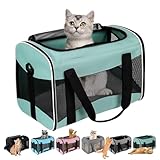
- [PRODUCT DIMENSIONS] Pet travel carrier size : 17x11x11 inches, recommended up to 15 lb pets, it is suitable for large, medium cats and small dogs. Please don't choose your airline cat carrying case based on weight, please refer to your pet's length and height when choosing a pet carrier size.
- [AIRLINE APPROVED] This cat carrier is designed with airline approved, it can fit comfortably under most flight seats, we can take our pets wherever we want. Dog travel carrier offers two attachment loop handles that can be used as a dual harness or as a luggage strap for balanced carry and secure transport.
- [EXCELLENT MATERIAL] Collapsible cat carrier is made of polyester fabric, supported by a steel ring, washable, wear-resistant and durable. The three sides and the top of this pet carrier are nylon mesh, scratch-resistant and not easy to damage, it can not only check your pet in real time, but also ensure enough air circulation.
- [SAFE AND COMFORTABLE] Dog travel bag has metal zippers on the top and side entrances, durable and not easy to deform, it allows your pets to enter and exit easily. The cat carrying case is equipped with an anti-escape safety buckle, which can effectively prevent pets from accidentally falling. It is suitable for car rides and vet rides.
- [PORTABLE AND FOLDABLE] Pet travel carrier comes with a detachable and hand washable wool pet bed, it can provide a comfortable sleeping space for your traveling pet. The cat travel case comes with an adjustable shoulder strap and handle for easy portability. When not in use, you can fold it up for storage.
Dog arrival checklist
- Keep a collar and identification tag on the dog, even when using a harness.
- Attach the leash before opening doors and keep gates latched.
- Use a quiet toilet area and reward success immediately.
- Keep greetings brief and supervised; let the dog move away.
- Do not bring the dog home and immediately leave for an outing.
- Check local licensing rules. Houston BARC’s phrase, “License, Leash, Love & Latch,” summarizes its local emphasis, but licensing requirements depend on your jurisdiction.
A dog that paces, pants, freezes or avoids contact may be overwhelmed rather than disobedient. Reduce noise and handling, return to the safe area and offer another short toilet break later.
What is different about the first day with a cat?
A cat needs control over distance and hiding. Cats Protection advises taking the carrier straight to the prepared safe space, opening it on the floor and allowing the cat to come out in its own time. If the cat hides, sit quietly, speak softly, leave food available and do not force an interaction.
The Tool Desk
Outbyte Driver Updater FREEFix the driver behind crashes, sound loss and screen glitchesFind Drivers →Outbyte PC Repair FREERepair Windows errors before they cause bigger problemsFix Now →Cat safe-room arrangement
- Place the litter box where the cat can reach it without passing through a busy doorway.
- Keep food and water separate from the litter area.
- Add a scratching surface, a covered hiding place and a safe elevated option.
- Keep the room closed to other pets and secure all windows and exterior doors.
Ontario SPCA suggests maintaining this arrangement for the first week or two while confidence develops. Cats Protection generally advises waiting three to four weeks before outdoor access, and only after the cat is neutered, vaccinated and microchipped. Those time frames are organizational guidance, not a substitute for advice based on your cat’s history and location.
Independent reader supportYour contribution helps us test, update, and keep practical guides available for everyone.When should the adopted pet see a veterinarian?
Arrange the appointment while the first-day details are fresh. Ontario SPCA calls a veterinary check within the first week critical for continuity of care and a preventive plan. Houston BARC requires follow-up within 72 hours for its own adoptions; other organizations may set different windows.
Also popular on Amazon

- AIRLINE APPROVED CARRIER - With airline-approved design, you can take your pet to go to everywhere. This pet carrier provides two connecting loop handles for balanced carrying as a dual seat belt or luggage strap to secure transport
- SAFETY DESIGN - The adjustable shoulder strap help you hands-free carrying and makes it more safe and convenient pet carrier bag for your travel
- DURABLE - This cat carrier is made of durable and lightweight polyester fabric. The four-side mesh will not only give a safe and comfortable travel for your pet, but also easy for you to check on your pet
- PORTABLE & FOLDABLE - This dog carrier is easy to carry and store, which has a padded shoulder strap and handles
- BOTH SIZES AND WEIGHTS - The mediun cat carrier is designed for small and medium pets within 15" x 9" x 9"(smaller than product) and 15 lbs. Please do not choose your carrier only based on weight. Reference your pets' length and height in selecting a carrier size.If carried on board, the maximum dimensions should not exceed 18IN*11IN*11IN.
Take these items and questions
- Adoption contract and all vaccine, treatment and deworming records.
- Medication packaging and written dosing instructions.
- The current food name and feeding schedule.
- Microchip number and registration information.
- Any stool sample requested by the clinic.
Ask the veterinarian to review the physical examination, oral health, diet, behavior, vaccination schedule, parasite prevention, microchip registration and any disclosed or suspected pre-existing condition. In a multi-cat household, discuss FeLV/FIV testing and parasite control before introductions; the appropriate tests and prevention depend on the household and the veterinarian.
What are the key differences between a first day with a dog and a cat?
The same principles—security, low stimulation and supervision—take different forms by species.
| Care question | Dog | Cat |
|---|---|---|
| Containment | Collar, identification tag, leash, secured gates or travel crate | Carrier followed by a closed safe room |
| Toileting | Frequent, quiet outdoor breaks with supervision | Accessible litter box kept separate from food and water |
| Social contact | Short, supervised greetings and leash-led sniffing | Voluntary emergence, hiding access and one-at-a-time introductions |
| Overnight plan | Supervised rest with familiar bedding or toys | Safe-room rest unless the cat chooses supervised exploration |
| Health timing | Prompt records review and a veterinary appointment; local licensing may apply | Prompt records review and a veterinary appointment; outdoor timing depends on identification and preventive care |
Should I buy pet insurance on adoption day?
Insurance is an optional ongoing-cost decision, not a first-night requirement. ASPCA warns that policies can include waiting periods and exclusions for pre-existing conditions, so read the terms before enrolling and do not assume a newly adopted animal’s disclosed history will be covered. First prioritize safe confinement, food, identification and the veterinary appointment.
Frequently Asked Questions
Can I change my adopted pet’s food immediately?
Keep the food supplied by the shelter or foster home at first. If a different diet is needed, ask the veterinarian for a gradual transition plan; an abrupt switch can trigger diarrhea, according to the BC SPCA.
What if the shelter did not give me a microchip number?
Tell the clinic when booking the first appointment. A veterinarian can check the animal’s chip and help correct or complete the registration record, while the shelter can provide its adoption documentation.
How can I tell whether hiding is normal for a new cat?
Hiding by itself is common during the move. Quietly monitor whether the cat begins eating, drinking and using the litter tray, and seek veterinary or shelter advice if those basic functions or the cat’s physical condition concern you.
Recommended Free Tools
What should I know before buying pet insurance after adoption?
Compare waiting periods, coverage limits and pre-existing-condition exclusions in the actual policy. Coverage terms differ, so an adoption-day purchase should not be treated as immediate protection for every condition.





Leave a Reply