
Some links on this page are affiliate links: if you buy through them we may earn a commission, at no extra cost to you.
When a puppy bites your feet while you walk, stop moving immediately, remove your attention, and give the puppy a suitable toy as soon as they let go. Freeze rather than kicking or running, because fast feet can turn ankle biting into a chase game. If the puppy cannot disengage, end the walk and provide a calm rest period; overtired puppies often lose the self-control needed to respond.
This behavior is usually normal puppy mouthing driven by play, exploration, teething, or excitement—not proof that a puppy is vicious. The safest plan combines an immediate, consistent response with short, low-distraction training sessions that reward the behavior you want: looking at you, walking beside your leg, and keeping a loose leash.
As an Amazon Associate I earn from qualifying purchases.
Why does my puppy bite my ankles when I walk?
Moving feet naturally trigger a puppy’s chase and play instincts. Puppies also use their mouths to investigate objects and relieve teething discomfort. On leash, ankle biting can signal boredom, frustration, excess arousal, or simply that the puppy has not yet learned what leash walking requires.
Playful mouthing is normal behavior for a puppy or young dog, according to the ASPCA. A puppy may be tired, hungry, or overstimulated even when the walk has just started. Looking at the circumstances around each episode helps you choose the right response rather than treating every bite as defiance.
Popular on Amazon

- TUG & PLAY: The Coachi Tuggi Tug is great for playing tug and also as a fun and enticing toy for games and rewarding recall, it can also help interrupt play biting & chewing.
- STRONG & COMFORTABLE: This soft stretchy toy will ensure games are comfortable for both you and your dog. Crafted with extra strength webbing for rough & tough play.
- PERFECT FOR PUPPIES: These super stimulating toys are a great alternative and or addition to food rewards and perfect for reducing puppy mouthing and biting.
- FUN TRAINING: The Coachi reward toys have been designed for you and your dog to have fun together whilst training. They are great for improving recall and discouraging chasing & perfect for agility.
- KEEP THEM MOTIVATED: Maintain the energy and enthusiasm by only using these toys as part of interactive play. This keeps the toy as a special reward, the same as a food treat.
- Play and movement: swinging legs, loose shoelaces, and a quick change of direction can become moving “prey.”
- Teething: puppies have about 28 baby teeth. Chewing can remain prominent for months while adult teeth emerge.
- Frustration: a leash prevents the puppy from reaching a person, dog, or scent and can redirect that energy toward your legs.
- Overtiredness: sleep-deprived puppies often become frantic and unable to respond to cues they know in calmer moments.
- Missing skills: a puppy may not understand that walking beside a person is a trained behavior, not an automatic one.
Keep a simple note of when biting starts—after play, near other dogs, at the end of a long outing, or whenever the leash tightens. Patterns can reveal whether you need shorter walks, more rest, lower distractions, or more reinforcement for walking skills.
What should I do the instant my puppy bites my feet?
Use the same sequence every time: freeze, withdraw attention, offer an alternative, and reward release. Consistency from every person in the household makes the lesson clearer and prevents biting from becoming an effective way to start a game.
Do these 3 things before closing this tab:
1Scan for outdated or missing drivers - takes under a minute2Repair Windows errors before they cause bigger problems3Fix the driver behind crashes, sound loss and screen glitches- Freeze your feet. Stop walking as soon as teeth touch your shoe, sock, or ankle. Keep your legs still; do not kick, run, hop, or wave them.
- Remove attention. Turn your body away, tuck your hands in, and avoid eye contact. If the puppy continues to mouth, calmly move behind a door, baby gate, or other barrier for a brief break.
- Offer a legal target. Present a puppy tug toy or safe chew toy once the puppy releases. For an ankle attack, a tug toy carried in a pocket can be brought down to the puppy’s level without making your feet exciting.
- Reward release and calm. The moment the puppy lets go and settles, praise quietly, give a small treat, restart the walk, or allow a short sniff. Dogs Trust recommends restarting the game only once the puppy is calm.
- Decide whether to continue. If the puppy can look at you and walk again, resume in an easy area. If biting restarts repeatedly or the puppy cannot respond, end the session and offer a quiet rest or nap.
Freezing is not a contest of endurance. If the puppy is attached to clothing, keep your body still and use a toy or treat to create space; pulling your leg away can make the puppy grip harder. Protect children and anyone who cannot safely stay still by using a gate and getting an adult to manage the interaction.
How can I stop ankle biting before it starts on a walk?
Preventive training works best before the puppy reaches a frantic state. Carry a tug toy and small, high-value treats, and reinforce calm choices from the first steps.
Practice in a quiet location
Begin indoors, in a hallway, yard, or other low-distraction area. Say the puppy’s name or wait for eye contact, then feed a treat beside your leg. Take one or two steps with a slack leash and reward again. Add distance only while the puppy can still respond.
Also popular on Amazon
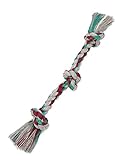
- INTERACTIVE FUN: Designed for playing tug of war with dogs, this knotted rope dog toy is perfect for tossing, catching and pulling during interactive play, or as a dog chew toy for solo play time.
- SAFE & NON-TOXIC: Made from premium North American Cotton-Poly yarns finished with sturdy knots, these Mammoth colorful dog pull toys are safe, durable and tough toys for dogs.
- TOSS, TUG, FLOSS!: This dog chew toy is great for easy dog teeth cleaning, naturally supporting your pup’s oral health - the fibers in the tugs floss dogs’ teeth as they chew and play.
- SMALL DOG TUG TOY: Great for small dogs, this is a Small 15-Inch tug toy for dogs weighing 15-30lbs. We recommend choosing larger dog toys for aggressive chewers or for heavier dogs.
- MAMMOTH PET PRODUCTS: Your pets deserve the best! Mammoth Pet Products has been a leading innovator and manufacturer of premium dog toys for all breeds and sizes since 1995.
Reward the position you want
Pay frequently for the puppy staying near your leg, checking in voluntarily, and walking without tension on the leash. Deliver treats close to your knee so the puppy’s body remains beside you rather than forging ahead. If the puppy surges toward your feet, stop and wait for attention instead of dragging the puppy forward.
Free tools Windows power users keep installed
One-click scans. No signup required.
Keep the leash boring
Do not dangle the leash in front of the puppy or flick it near the legs. A loose leash gives fewer moving targets and makes it easier to reward the puppy’s position. If the puppy grabs the leash, stop moving and trade for the tug toy rather than turning the leash into a tug-of-war.
Increase distractions gradually
Move from a quiet room to a calm outdoor area, then add ordinary neighborhood distractions one at a time. Short successful sessions teach more than a long outing that ends in repeated ankle attacks. Lower the difficulty again if the puppy cannot take treats, look at you, or release a toy.
What toy or reward should I use for a foot-biting puppy?
Choose an alternative that matches the reason the puppy is biting. A tug toy gives an excited puppy an appropriate moving target; a chew toy provides a stationary outlet for teething; food rewards reinforce attention and walking position.
| Situation | Useful alternative | How to use it |
|---|---|---|
| Puppy chases moving ankles | Durable puppy tug toy | Carry it during practice walks and present it after the puppy releases. Keep fingers away from the puppy’s mouth and let the toy, not your sleeve, be the target. |
| Puppy is chewing intensely | Safe puppy chew toy | Offer it during a calm pause or rest period. Supervise chewing and follow the toy maker’s size and safety guidance. |
| Puppy can still think and respond | Small, high-value training treats | Reward eye contact, a loose leash, and steps beside your leg before the puppy launches. |
| Puppy is frantic or repeatedly re-engages | Quiet rest area or nap | End the session and allow decompression instead of adding more commands or excitement. |
Rotate toys so the replacement remains interesting, but do not wave a toy rapidly at a puppy already biting. First make your feet still and remove attention; then calmly offer the toy. Otherwise, the puppy may learn that biting ankles makes an exciting toy appear.
Also popular on Amazon

- 【5PACK PUPPY TOYS】The dog toys set to keep your dog entertained is here! 5 piece puppy chew toys is carefully designed, with round rope ball, multi knots cotton rope dog chew toys and tug of war rope ball, to bring endless fun for both dog and owner.
- 【RICH DOG CHEW TOYS】Puppy chew toys for teething set contains a variety of different rope toys, is a puppy teething toys, interactive boredom toys, tug of war dog toy, to meet the dog's diverse play needs. You can throw the ball to make your dog excited to chase; also have tug a war to enhancement of mutual affection.
- 【DURABLE DOG TOYS FOR SMALL DOGS】Rich rope shape and bright colors, instantly attract the eyes of the dog, inspire their play nature, puppy toys to keep them busy, suitable for indoor and outdoor play. With this dog chew toys for small dogs, great protection for your home (shoes, sofa, pillows,ect) from chewing.
- 【SMALL DOG TOYS FOR AGGRESSIVE CHEWERS】 Accompany your dog to grow up, start with this dog rope toy for aggressive chewers! Tough dog rope toys, sturdy knots and weave tightly, at the mercy of the dog, allowing the dog to tear and bite as much as they want without worrying about falling apart.
- 【SAFE PUPPY TEETHING TOYS】100% natural cotton dog rope toy, soft and comfortable, safe and odorless, cotton thread fiber deep cleaning teeth while not harming the teeth, to protect the dog's oral health .Chew toys for puppies 0-6 months, small to medium breed, all can find their happy time in it!
How do I teach loose-leash walking to prevent leg attacks?
Loose-leash walking is a skill built in small increments, not a standard a young puppy is expected to know. Train it separately from difficult neighborhood walks.
- Stand still with the leash slack and wait for the puppy to glance toward you.
- Mark that attention with quiet praise and feed a treat beside your leg.
- Take one step. If the puppy stays with you, reward immediately.
- Build to several steps, then offer a brief sniff as another reward.
- When the leash tightens, stop. Resume only after the puppy returns attention or loosens the leash.
- Practice near mild distractions before attempting busy sidewalks, playgrounds, or dog-heavy routes.
Keep sessions short enough that the puppy remains able to eat, orient to you, and release a toy. A tug toy can be used as a planned reward, while treats are useful for precise placement beside your leg. Avoid jerking the leash or yanking your feet away; those reactions can increase arousal and make grabbing more persistent.
When should I stop the walk and provide a nap?
End the session when the puppy repeatedly returns to your feet, cannot take a treat, ignores a toy, or appears increasingly frantic. Those signs indicate that learning has stopped for the moment. A quiet, puppy-proofed rest area helps the nervous system settle.
A crate or pen may be part of that rest routine only if it has been introduced positively. The crate should never be used as punishment for biting. Guide the puppy there calmly with a chew or treat, reduce stimulation, and allow sleep. Puppies differ in how much rest they need, so use behavior—rather than a rigid clock—to decide when a break is necessary.
Recommended Free Tools
Which responses make foot biting worse?
Several natural human reactions accidentally reinforce chasing or create fear. Replace them with stillness, attention withdrawal, and a clear alternative.
Also popular on Amazon

- TUG & PLAY: The Coachi Tuggi Tug is great for playing tug and also as a fun and enticing toy for games and rewarding recall, it can also help interrupt play biting & chewing.
- STRONG & COMFORTABLE: This soft stretchy toy will ensure games are comfortable for both you and your dog. Crafted with extra strength webbing for rough & tough play.
- PERFECT FOR PUPPIES: These super stimulating toys are a great alternative and or addition to food rewards and perfect for reducing puppy mouthing and biting. Great for puppies, more gentle dogs and those with smaller mouths.
- FUN TRAINING: The Coachi reward toys have been designed for you and your dog to have fun together whilst training. They are great for improving recall and discouraging chasing & perfect for agility.
- KEEP THEM MOTIVATED: Maintain the energy and enthusiasm by only using these toys as part of interactive play. This keeps the toy as a special reward, the same as a food treat.
- Hitting, slapping, or scruff-shaking: physical punishment can increase fear and may intensify defensive or aggressive responses.
- Running or jerking your foot away: rapid movement can turn your ankle into a moving toy and encourage the puppy to chase.
- Shouting or rough play: loud, exciting reactions can add attention and raise arousal.
- Inconsistent household rules: if one person laughs, kicks, or continues playing while another withdraws attention, the puppy receives mixed information.
- Using confinement as retaliation: punishment can damage the crate’s role as a safe resting place.
Everyone who handles the puppy should follow the same freeze-and-withdraw routine. Agree in advance on the toy to carry, the barrier to use, and the point at which the walk ends.
How long does puppy ankle biting normally last?
Developmental timelines are useful reference points, not promises. The American Kennel Club describes puppies as having about 28 small teeth and notes that teething can make chewing and mouthing more likely for up to six months. PetMD reports that biting often peaks around 12–13 weeks as puppies transition from baby teeth to adult teeth, with adult teeth generally present by about seven months.
Some puppies improve earlier; others continue to mouth when excited because the behavior has been reinforced or because sleep and training are inconsistent. Progress should be measured by shorter episodes, easier redirection, more relaxed walking, and faster recovery—not by a particular birthday. If biting remains intense after teething, consider arousal, frustration, reinforcement history, and professional guidance rather than assuming teething is still the cause.
The Tool Desk
Outbyte Driver Updater FREEFix the driver behind crashes, sound loss and screen glitchesFind Drivers →Outbyte PC Repair FREERepair Windows errors before they cause bigger problemsFix Now →Is my puppy playing, teething, or showing aggression?
Body language and the puppy’s ability to disengage provide more information than the presence of teeth alone. Playful mouthing usually comes with a loose, wiggly body and improves when you stop moving or offer a toy. A puppy that can release, take a treat, sniff, or settle is showing useful flexibility.
Arrange a professional assessment if biting involves hard pressure or holding, a stiff body, deep growling, head shaking, guarding, fear, injury, or an inability to redirect. Repeated frustration biting or suspected fear or aggression warrants help from a qualified professional, such as a Certified Professional Dog Trainer, Certified Applied Animal Behaviorist, or veterinary behaviorist. A veterinarian can also check for pain or medical issues that may lower the puppy’s tolerance.
Also popular on Amazon
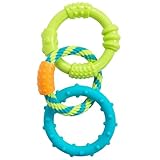
- Dog Chew Toy: Floppy three-ring design for flinging, tugging, and moderate chewing; perfect for teething puppies and small dogs up to 30 lbs
- Supports Dental Health: Textured surfaces and woven rope massage gums and help keep teeth clean
- Built for Play: Made of durable Orka material that floats in water for playtime at the pool or beach
- Keeps Them Busy: Satisfies natural chewing instincts and redirects attention towards positive play (and away from shoes)
- Product Dimensions: 8.5 x 4 x 1 inches (LxWxH)
Play biting does not mean a puppy is vicious, as AKC chief veterinarian Dr. Jerry Klein has explained. The important question is whether the puppy can learn an alternative and recover calmly. Seek prompt help if anyone is injured, the puppy’s behavior is escalating, or household members cannot safely manage the episodes.
How can the whole household respond consistently?
Write the response where everyone can see it: freeze; turn away; use a barrier if needed; offer the designated toy after release; reward calm; end the session when the puppy cannot respond. Children should not be responsible for physically stopping a biting puppy. An adult should supervise, and children can toss treats to a settled puppy from a safe distance.
Use the same cues and reward placement across indoor practice and outdoor walks. A well-run puppy socialization class can provide controlled practice around people and other dogs; the AKC recommends programs such as S.T.A.R. Puppy where available. Verify that any class uses reward-based handling and separates puppies by size, vaccination status, and play style when appropriate.
What is the quickest troubleshooting decision?
Match your response to the puppy’s arousal and the setting rather than repeating a cue the puppy cannot follow.
| What you see | Best next step |
|---|---|
| Puppy bites once, releases, and looks at you | Reward the release, offer the toy, and resume with one easy walking step. |
| Puppy keeps grabbing after you freeze | Turn away and move behind a gate or door briefly; restart only after calm. |
| Puppy can take treats but lunges at feet near distractions | Increase distance, reward eye contact and loose-leash steps, then end before another launch. |
| Puppy cannot take food, release, or orient to you | Stop the walk and provide a quiet rest or nap. |
| Biting is painful, guarded, fearful, or injures someone | Prevent unsafe interactions and contact a qualified trainer, behaviorist, or veterinarian. |
Frequently Asked Questions
Should I stop taking my puppy for walks if ankle biting keeps happening?
Do not abandon exercise and socialization, but temporarily choose shorter, quieter outings and practice the walking skill in easier locations. End a session before the puppy becomes frantic, then rebuild duration and distractions gradually.
Can I give my puppy a toy while they are still biting my ankle?
First make your feet still and remove attention. Present the toy after the puppy releases, so the replacement is linked to letting go rather than to grabbing harder.
Quick wins for a faster PC:
Scan for outdated or missing drivers - takes under a minuteDriver Scan →Clear out junk files and repair common Windows errorsFree Scan →Why does my puppy bite only one family member’s feet?
That person may move faster, wear dangling clothing, play more roughly, or respond in a way that adds attention. Have that family member use the same stillness and withdrawal routine while another adult supervises practice.
What should I record before contacting a behavior professional?
Note the puppy’s age, sleep before the incident, location, trigger, body posture, bite pressure, ability to release, and what ended the episode. A short, safely filmed clip from a distance can help a professional evaluate movement and context without provoking the puppy.





Leave a Reply