
The Tool Desk
Outbyte PC Repair FREEClear out junk files and repair common Windows errorsFree Scan →Outbyte Driver Updater FREEScan for outdated or missing drivers - takes under a minuteDriver Scan →Some links on this page are affiliate links: if you buy through them we may earn a commission, at no extra cost to you.
If your adopted pet ignores a new name, the word probably has not acquired meaning yet. Treat the name as a cue: say it once in a cheerful voice, reward the instant your dog or cat looks or turns toward you, and make the exercise harder only after easy repetitions are dependable. Quiet surroundings, consistent pronunciation and immediate positive reinforcement matter more than the pet’s age or previous name.
Renaming is possible for adult dogs and cats. The first goal is orientation—an ear flick, head turn or look—not an immediate recall across the house. With short, low-distraction practice and rewards your pet values, the new sound can become a reliable signal for attention and good outcomes.
As an Amazon Associate I earn from qualifying purchases.
What’s actually slowing this PC down?
Pick the symptom - the matching free tool is one click away.
Why is my adopted pet ignoring its new name?
A name is not automatically meaningful to an animal. It becomes meaningful through a history of consistent pairings: the sound is followed by something the pet wants, such as food, play, affection or access to you. An adopted pet may also be adjusting to unfamiliar people, rooms and sounds, so a cue that works in a quiet room can fail outdoors or during busy household activity.
Use one pronunciation and avoid cycling through several nicknames while the association is being built. Choose a name that is easy to call and does not sound too much like another cue your pet already hears. Say it once, then observe. Calling the name repeatedly can teach a dog to wait for a string of calls, while using it before scolding can make the sound predict something unpleasant.
Popular on Amazon

- BIG MOTIVATION IN EACH MINI BITE. Each of these 1.5 calorie treats are packed with flavor from pork liver, real bacon, and added botanicals that will keep dogs focused and eager to learn!
- TRAIN. ENRICH. TREAT. These low calorie training rewards are great for training sessions, enrichment activities such as puzzle toys and snuffle mats, and every day treating occasions.
- GREAT FOR SMALLER DOGS. These bite-sized treats are the perfect size for training and every day treating for smaller dogs. Each 10 oz bag includes approximately 500 treats
- REWARD THE EVERYDAY Pet Botanics healthy training rewards are perfect for training and treating every day in every way. These soft & chewy treats have no artificial flavors, colors or preservatives.
- PROUD MEMBER THE CLOUD STAR FAMILY. With Cloud Star products, you can spend less time worrying about what to feed your pet and spend more time Living Life with Your Dog by Your Side.
Dr. Megan E. Maxwell, CAAB, of the American Veterinary Society of Animal Behavior, describes name response as an essential foundation for clear communication. That foundation is built through many easy successes, not by testing the pet in the most distracting situation first.
Can I rename an adopted dog or cat at any age?
Yes. Adult dogs and cats can learn a new name when it consistently predicts positive consequences. Animals learn the sound associated with the name rather than a human-style identity attached to a particular word, so a previous name does not permanently prevent a new one.
Commit everyone in the household to the same pronunciation and basic rules. If one person uses a shortened form, another uses a different nickname and a third says the name sharply, the pet receives mixed information. You can introduce affectionate nicknames later, after the chosen name reliably gets an orienting response, but keep the training cue stable while teaching it.
How do I teach an adopted dog its new name?
Begin in a quiet, familiar room where your dog can notice you without competing noises. Keep the dog on a leash when you need controlled practice or when moving to a new environment. The sequence is simple: name once, mark the instant the dog orients, and reward immediately.
1. Select one cue and prepare the reward
Pick a short, usable name and one consistent pronunciation. Have tiny, soft dog training treats ready; small pieces let you repeat the exercise without filling the dog. A handheld training clicker is optional. If you use one, click at the exact moment the dog looks toward you, then deliver the treat.
Also popular on Amazon

- BUDDY TRAINING BITES: These bite-sized treats are chock full of meaty flavor from appetizing pork liver as the 1st ingredient, so they are easy to eat and perfect for dogs of all ages.
- ALL THE GOOD STUFF: Our training treats are made in the USA and they are free of corn, soy, artificial flavors and preservatives. With Buddy, you can feel good about serving your best bud the treats they deserve!
- LOW CALORIE: Only 1.5 calories per treat to help make your dog training sessions last longer! The delicious aroma will have your pup coming back for more.
- 500 TREATS PER BAG: Reward your dog's good behavior with 500 treats per bag. Buddy is healthy, tasty & fun!
- EVERYBODY LOVES BUDDY: Buddy is the perfect companion for your best friend! Buddy's delicious flavors are sure to bring your pup joy! Buddy has a range of treats - all made with real, simple ingredients that you can pronounce.
2. Start below the distraction threshold
Stand close to your dog in a room with few competing sounds. Wait until the dog is able to notice you, then say the name once in a bright, upbeat voice. Do not attach extra words, raise your volume or lean into the dog’s face. The target is any clear orientation—eye contact, a head turn or an ear directed toward you.
Quick wins for a faster PC:
Fix the driver behind crashes, sound loss and screen glitchesFind Drivers →Repair Windows errors before they cause bigger problemsFix Now →Scan for outdated or missing drivers - takes under a minuteDriver Scan →3. Mark and reinforce the instant response
The moment your dog looks or turns, say “yes,” click or use another marker, and give the tiny treat. Timing matters: the reward should follow the orientation, not several seconds later. After the reward, pause before the next repetition so the dog learns that one name produces one opportunity to respond.
If the dog does not look, do not chant the name. Make the exercise easier by moving closer, crouching, reducing background noise or tossing a treat to reset the dog’s position. You can also end that attempt and try later when the dog is more attentive. Repeating a cue while the dog is ignoring it weakens the meaning of the sound.
4. Build a dependable response history
Repeat the easy pairing in several short bouts. Best Friends’ progression is to begin with repeated, uncomplicated pairings, wait for the dog to look, and then mark and reward; only afterward should you add mild distractions and distance. Keep the dog successful enough that the name predicts a reward rather than frustration.
5. Add distance and distractions one variable at a time
When the response is reliable in the starting room, practice in another room, then outdoors on leash. Increase only one challenge at a time: distance, people, dogs, movement or background noise. If the response deteriorates, return to the last easy level and rebuild before advancing again.
Do these 3 things before closing this tab:
1Fix the driver behind crashes, sound loss and screen glitches2Clear out junk files and repair common Windows errors3Scan for outdated or missing drivers - takes under a minuteAlso popular on Amazon

- GRAIN-FREE PUPPY TREATS: These bite-sized, soft puppy training treats are the perfect reward during training sessions or any time you want to thank your dog for good behavior. Puppy bites contain 6 calories per individual treat!
- SUPPORTS BRAIN DEVELOPMENT: Soft dog treats are crafted with salmon, a healthy source of DHA to promote healthy brain development.
- HEALTHY INGREDIENTS: These treats for dogs are made with minimal ingredients focused on quality proteins: made with lamb and salmon, with added vitamins specifically for puppies.
- NO CORN, WHEAT, OR SOY: Treats for dogs do not contain wheat, wheat gluten, corn, soy, or artificial colors.
- MADE IN USA: Our dog treats are quality-assured, made in USA, and crafted from the finest globally-sourced ingredients. Treats are tender, healthy, and bite-sized for small, medium, and large dogs of all lifestages, and activity levels.
The American Veterinary Society of Animal Behavior gives a practical progression benchmark of looking toward you nine times out of ten indoors before adding outside practice. This is a training benchmark, not a population success rate or a promise that every dog will learn on a fixed schedule.
6. Thin food rewards only after reliability
At first, reinforce every correct orientation. Once the response is dependable, move gradually from continuous food rewards to intermittent food rewards while preserving a positive consequence every time. Praise, play or access to something the dog wants can supplement food, but do not remove all meaningful reinforcement abruptly.
How do I teach an adopted cat its new name?
Cats can learn a new name at any age, but they often respond best when the session matches their individual preferences and mood. Train when the cat is calm and attentive, not nervous, hiding or absorbed by another activity. Keep the name short, pronounce it consistently and limit competing nicknames during the learning period.
1. Choose a preferred motivator
Identify what your cat values most. A special food reward, a small amount of a lickable puree treat, play, feeding or affection may work. Food is not mandatory if your cat is more motivated by a toy or social interaction; the consequence must simply be desirable to that individual cat.
2. Work at close range
From about two feet away, say the name clearly and happily. When the cat looks toward you, immediately place the preferred treat in front of the cat. If needed, move the treat from the cat’s nose toward your eyes to help capture an orientation toward you. Keep the movement gentle and avoid looming over the cat.
Also popular on Amazon

- BUDDY TRAINING BITES - These bite-sized treats are chock full of meaty flavor from appetizing pork liver as the 1st ingredient, so they are easy to eat and perfect for dogs of all ages.
- ALL THE GOOD STUFF - Our training treats are made in the USA and they are free of corn, soy, artificial flavors and preservatives. With Buddy, you can feel good about serving your best bud the treats they deserve!
- LOW CALORIE - Only 1.5 calories per treat to help make your dog training sessions last longer! The delicious aroma will have your pup coming back for more.
- 501 TREATS PER BAG - Reward your dog's good behavior with 500 treats per bag. Buddy is healthy, tasty & fun!
- EVERYBODY LOVES BUDDY: Buddy is the perfect companion for your best friend! Buddy's delicious flavors are sure bring your pup joy! Buddy has a range of treats - all made with real, simple ingredients that you can pronounce.
3. Repeat briefly and consistently
Repeat the name-and-reward pairing a few times twice daily for two to three weeks, following the cat’s attention rather than forcing an interaction. Stop before the cat becomes irritated or disengages. The goal is for the sound itself to predict a pleasant event, not for the cat to be physically restrained until it reacts.
4. Reduce food rewards gradually
After the cat consistently looks when the name is spoken, reduce food rewards in small steps. Continue to reinforce the response with play, feeding, affection or verbal praise so the name remains useful and positive. If the response fades, return temporarily to more frequent food reinforcement and easier conditions.
What is different about teaching a dog and a cat a new name?
Both species learn through the same core sequence—one clear sound, an immediate positive consequence and gradual increases in difficulty—but the practical setup differs.
| Training element | Dog | Cat |
|---|---|---|
| First response target | Look or orient toward the adopter; recall comes later. | Look or orient toward the adopter; coming across a room is not the initial target. |
| Starting environment | Quiet, familiar room; a leash helps control practice as settings change. | Calm, attentive setting, usually at close range; avoid training when nervous or distracted. |
| Useful motivators | Tiny soft treats, praise and optionally a clicker; play can also reinforce. | Individual food preference, lickable puree treats, play, feeding, affection or praise. |
| Progression | Build easy repetitions, then add rooms, mild distractions, people, dogs and distance one step at a time. | Repeat short close-range sessions, then reduce food gradually while retaining other positive consequences. |
| Reward schedule | Reward every correct response initially; use intermittent food only after reliability. | Use frequent food rewards at first; taper them gradually and keep other rewards available. |
What should I do if my pet still ignores the name?
Lower the difficulty before changing the name. Shorten the distance, remove competing sounds, wait for a calmer moment and use a reward your pet values more. A dog that responds indoors but not outside is showing that the outdoor version is a harder exercise, not necessarily that the name has failed.
- Say the name once, then give the pet time to orient.
- Move closer or return to a quieter room.
- Use a higher-value treat or a favorite toy.
- Keep the tone cheerful and neutral rather than louder or sharper.
- End the attempt and try later if the pet is tired, nervous or overexcited.
Do not shout, chant the name repeatedly or use it immediately before punishment. The American Kennel Club warns that repeated calls can teach a dog to wait for multiple repetitions, and guidance from both the American Kennel Club and the American Veterinary Society of Animal Behavior cautions against creating negative associations. Positive reinforcement, rather than punishment, is also the approach recommended by VCA.
Also popular on Amazon
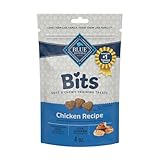
- REAL CHICKEN FIRST: BLUE Bits dog training treats are made with delicious real chicken as the first ingredient making them an ideal reward for your best friend’s best behavior
- SOFT TRAINING TREATS: For dogs that love a soft treat, BLUE Bits are tender, bite-sized morsels that are the perfect size for training; plus, with DHA to help support cognitive development, they’re an ideal puppy treat
- WHOLESOME INGREDIENTS: These dog treats don’t contain any chicken (or poultry) by-product meals and are free from corn, wheat, and soy; plus, they’re free from artificial preservatives like Propylene Glycol and colors like Red Dye 40
- HEALTHY DOG TREATS: Blue Buffalo natural dog treats feature the healthy, wholesome ingredients you’ll love feeding as much as they’ll love eating
- Contains: One (1) 4-oz bag of BLUE Bits Natural Soft-Moist Training Dog Treats, Chicken Recipe
How long does it take a rescue pet to learn a new name?
There is no controlled-study average or universal deadline. The American Kennel Club says many dogs may begin recognizing a new name within a few days, but that is practical guidance rather than a measured population statistic. For cats, Zoetis describes a two- to three-week routine of a few repetitions twice daily; that is a practice plan, not a guarantee of when every cat will respond.
Measure progress by behavior rather than the calendar. Early progress may be a quicker ear flick or head turn in a quiet room. Reliable responses at greater distance and around people, dogs or outdoor sounds require additional gradual practice. An older pet is not disqualified; it may simply need more low-distraction repetitions and a reward that matters to it.
Recommended Free Tools
Which common name-training mistakes slow progress?
- Repeating the cue: saying the name five times teaches the pet that the first call is optional.
- Testing too soon: moving outdoors or adding visitors before indoor responses are dependable makes the task unnecessarily difficult.
- Using the name for correction: the pet can learn that the sound predicts scolding, restraint or another unpleasant event.
- Changing pronunciation: several versions of the name prevent a clear sound-to-outcome association.
- Rewarding late: a treat delivered after the pet has looked away reinforces the wrong moment.
- Overtraining: long or pressured sessions can make an otherwise valuable reward less appealing.
When should I get professional help?
If lowering the difficulty and improving the reward does not produce progress, or if the name problem is part of a broader, persistent behavior challenge, consult a reward-based trainer or a certified animal behaviorist. The American Veterinary Society of Animal Behavior specifically directs adopters toward professional help for ongoing challenges. Ask prospective professionals how they use reinforcement and whether they avoid intimidation, pain and punishment.
Bring a simple record of where you practiced, the distance, distractions, reward used and the pet’s response. That information helps a professional identify whether the problem is cue consistency, excessive difficulty, motivation or a wider adjustment issue.
Frequently Asked Questions
Is the nine-out-of-ten indoor benchmark a pass-or-fail test?
No. It is a practical progression point from American Veterinary Society of Animal Behavior guidance, not a clinical cutoff or a prediction of every dog’s learning speed. If your dog is close but inconsistent, keep practicing indoors rather than treating the number as a deadline.
Should I train the new name at the same time as recall?
Use the name first to obtain orientation, then give a separate, already-taught recall cue when you need the dog to travel to you. Keeping those functions distinct prevents the name from becoming a repeated command that the dog learns to ignore.
Outdated Drivers Are Slowing You Down
One free scan finds every outdated or missing driver and matches the right update for your exact hardware.Free scan · exact hardware matchWindows Errors? Fix Them Before They Spread
Repair common Windows errors and clear accumulated junk for a smoother, more stable PC - no reinstall needed.Free scan · no reinstallWhat if my cat only responds when food is visible?
Keep the food out of sight until after the cat orients, so the name—not a visible treat—predicts the reward. Once the response is steady, replace some food rewards with play, affection, feeding or praise and add food back temporarily if attention declines.
Can household members practice different versions of the exercise?
They can take turns, but everyone should use the same pronunciation, cheerful tone and one-call rule. Agree on the marker and reward timing beforehand so the pet receives the same information from each person.





Leave a Reply