
The Tool Desk
Outbyte Driver Updater FREEScan for outdated or missing drivers - takes under a minuteDriver Scan →Outbyte PC Repair FREERepair Windows errors before they cause bigger problemsFix Now →Some links on this page are affiliate links: if you buy through them we may earn a commission, at no extra cost to you.
A fine-needle aspiration (FNA) is a minimally invasive test in which a veterinarian uses a thin needle to collect cells or fluid from a lump, lymph node, organ or body cavity. For many skin and soft-tissue lumps, your dog or cat can stay awake and go home shortly afterward. Internal targets, painful areas or patients that cannot remain still may require ultrasound guidance, sedation or light anesthesia.
You can expect brief needle discomfort, several possible needle passes, and either an in-clinic review or laboratory analysis of slides. Results may be available the same day or take several days or longer, and an inconclusive sample sometimes leads to a repeat aspirate or a core or surgical biopsy.
As an Amazon Associate I earn from qualifying purchases.
Free tools Windows power users keep installed
One-click scans. No signup required.
What is a fine-needle aspiration, and why is it used?
FNA collects individual cells or fluid for cytology, the microscopic study of those cells. It is commonly used to investigate skin and subcutaneous lumps, but a veterinarian can also sample enlarged lymph nodes, selected organs and body fluids. The test can help distinguish inflammatory, infectious, benign and malignant processes without removing the entire mass.
Because FNA samples cells rather than a block of tissue, it does not show the way cells are arranged through the whole lesion. That distinction matters when a definitive diagnosis, tumor grading or a surgical plan depends on tissue architecture. In those situations, histopathology from a core or surgical biopsy may be recommended even when an aspirate has already been performed.
Popular on Amazon
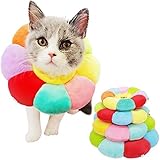
- 【Protect Your Cats and Small Dogs】Elizabethan collar is a safe and good method of preventing pet from aggravating a healing wound or injury. The cute sunflower collar will not block your kitten's vision, they can eat, drink, sleep and play normally.
- 【Comfortable Material】The Wound Healing Protective Cone is stuffed with cotton, soft and lightweight, ensures pet comfortable wearing experience and won't irritate pets skin.
- 【Adorable Costume】Cute Sunflower shape neck cone add more fun and laughter to your cat and your family during its recovery time after Surgery. Great for photo shoots, party times or for Halloween or Christmas day.
- 【WARM TIPS】Your pets can still lick their front and back paws with wearing this cone. Only useful for wounds on the upper part their body. Please confirm the position of your lovely pet's wound before placing the order.
There is no universal appointment length or diagnostic-yield percentage that applies to every pet. The target’s location, the amount and type of material it releases, your pet’s behavior and the laboratory’s workflow all affect what happens next.
Will my dog or cat need sedation for an FNA?
Often, no. A cooperative pet with a superficial, nonpainful lump can commonly have an FNA during a routine visit while awake. Sedation or light anesthesia becomes more likely when the pet is frightened, painful or unable to stay still, or when the target is in the mouth, abdomen or an internal organ.
Quick wins for a faster PC:
Fix the driver behind crashes, sound loss and screen glitchesFind Drivers →Repair Windows errors before they cause bigger problemsFix Now →When an awake FNA is reasonable
- The lump is easy to reach and can be stabilized safely.
- Your pet tolerates gentle restraint and brief handling.
- The expected benefit of staying awake outweighs the stress of medication.
When sedation or anesthesia may be safer
- The needle must be guided into an organ or a lesion deep in the body.
- Movement could cause the needle to leave the target or injure nearby structures.
- The area is painful, or your pet’s fear makes safe restraint impossible.
- The veterinarian needs a still patient for ultrasound-guided sampling or several passes.
If sedation is planned, the team may monitor breathing, heart rate, blood pressure and oxygenation, then observe your pet during recovery. Ask what level of medication is planned and how long supervision will continue; the answer depends on the drug, dose, patient and procedure.
How should I prepare my pet before the appointment?
For a routine skin or subcutaneous lump, most owners receive no special at-home preparation. The veterinarian may disinfect the skin immediately before inserting the needle. Internal procedures can require clipping, sterile preparation, imaging, fasting or medication instructions, so follow the clinic’s directions for that specific target rather than assuming that instructions for a skin lump apply.
- Confirm the target. Ask whether the veterinarian is sampling a superficial mass, a lymph node, an organ or a body fluid.
- Clarify the medication plan. Ask whether food, water or any regular medication must be withheld. Do not give a sedative, antihistamine or anxiety medicine unless the veterinarian prescribed or specifically directed it.
- Plan transportation. If sedation or anesthesia is possible, arrange a secure carrier or a vehicle setup that prevents falls and keeps your pet supervised on the way home.
- Ask about reporting. Find out whether slides are reviewed in the practice or sent to a pathologist, the expected turnaround and who will contact you.
Bring a list of medications and relevant medical history. Tell the team about previous reactions to sedation, unusual bleeding, allergies and any change in the lump’s size, firmness, color or tenderness.
What happens during the procedure?
The veterinarian first examines and positions your pet, then cleans the skin or prepares the imaging field. A sterile fine-gauge needle is inserted into the lump or target. With an aspiration technique, gentle suction draws cells or fluid into a syringe; the veterinarian may redirect the needle within the lesion or remove and reinsert it to obtain representative material.
Recommended Free Tools
Also popular on Amazon

- GREAT PROTECTION FOR YOUR PETS: The dog cone collar is a safe and good method of preventing your pet from aggravating a healing wound or injury. Helps to overcome lick-bite, Itch-scratch cycle. Ending self-Inflicted wound aggravation or mutilation, prevent your pet bite others in the dermatology / Beauty / surgical procedure.
- PERFECT FIT: Suitable for different ages or sizes dogs and cats, Meet your different needs. Please refer to our size chart before ordering, if your pet's measurement is close to the maximum please order the next size up.
- CONVENIENT TO USE: Hook & Loop design easy to tighten or loosen. This soft pet cone with above design can keep the collar secure in place and keep it from being pulled off or from falling off.
- HIGH QUALITY MATERIAL: Made of high quality PVC material, extra soft fabric edge provides your pet additional comfort and protection, durable and healthy, this pet recovery collar is light enough which never make your lovely pets get tired. And it's easy to clean!
- Warm Reminder: Some dogs may initially feel uncomfortable with the dog head cone. To prevent them from licking their wounds, we encourage you to comfort your dog and accompany them through this challenging recovery period. If you have any questions, please contact us.
- Positioning and restraint: Your pet is held in a posture that keeps the target accessible and limits sudden movement.
- Needle placement: The needle enters the lesion. For an internal target, ultrasound can show the lesion and needle tip in real time.
- Collection: The veterinarian moves the needle through an appropriate portion of the target, with or without suction, to collect cells or fluid.
- Slide preparation: Material is expelled onto glass slides, spread into a thin film, dried and stained for microscopic examination.
- Assessment: Slides may receive an initial in-house review, digital cytology assessment or outside laboratory interpretation. Additional passes may be made if the first material is scant or unrepresentative.
More than one needle pass is not automatically a sign that something went wrong. Lesions can contain mixed areas, fluid, blood or too few diagnostic cells, and the veterinarian may need multiple samples to improve the chance of an interpretable result.
Does an FNA hurt, and what risks should I know about?
Most pets experience a brief pinch or pressure. Mild tenderness, a small bruise or a little bleeding can occur afterward. Veterinary Practice Support characterizes FNA as having a relatively low complication risk while still identifying pain, bleeding, infection and bruising as possible effects.
Risks with superficial masses
A skin or subcutaneous aspirate usually involves limited tissue disruption. Apply only the care your clinic recommends, and do not massage or squeeze the site. If your pet keeps licking or rubbing it, an optional recovery cone (Elizabethan collar) can prevent irritation; most uncomplicated FNAs do not require one routinely.
Additional concerns with internal targets
Sampling an organ or a deeply located lesion carries greater bleeding concerns and may require post-procedure observation. The veterinarian will weigh the target’s location, nearby vessels and your pet’s health before recommending the test.
Mast-cell tumor reactions
Some mast-cell tumors can swell or trigger an allergic-type reaction when manipulated. Tell the clinic immediately if your pet develops rapidly increasing swelling, hives, facial swelling, breathing difficulty, collapse or sudden weakness. These signs require urgent or emergency veterinary attention.
When will the results come back?
Timing depends on who examines the slides and what level of interpretation is needed. A practice with in-house cytology may provide an initial impression the same day. Slides sent to an outside diagnostic laboratory can take several days or, in some cases, longer than a week.
Also popular on Amazon
- GREAT PROTECTION FOR YOUR PETS: The dog cone collar is a safe and good method of preventing your pet from aggravating a healing wound or injury. Helps to overcome lick-bite, Itch-scratch cycle. Ending self-Inflicted wound aggravation or mutilation, prevent your pet bite others in the dermatology / Beauty / surgical procedure.
- PERFECT FIT: Suitable for different ages or sizes dogs and cats, Meet your different needs. Please refer to our size chart before ordering, if your pet's measurement is close to the maximum please order the next size up.
- CONVENIENT TO USE: Hook & Loop design easy to tighten or loosen. This soft pet cone with above design can keep the collar secure in place and keep it from being pulled off or from falling off.
- HIGH QUALITY MATERIAL: Made of high quality PVC material, extra soft fabric edge provides your pet additional comfort and protection, durable and healthy, this pet recovery collar is light enough which never make your lovely pets get tired. And it's easy to clean!
- Warm Reminder: Some dogs may initially feel uncomfortable with the dog head cone. To prevent them from licking their wounds, we encourage you to comfort your dog and accompany them through this challenging recovery period. If you have any questions, please contact us.
Ask whether the first report is a preliminary assessment or a final pathologist interpretation. A report may describe the cell types seen, whether inflammation or microorganisms are present, and whether the findings are compatible with a particular tumor. Your veterinarian must interpret that information alongside the physical examination, imaging and clinical history.
Before leaving, confirm the expected reporting window and the communication plan. If the clinic has not contacted you by the agreed date, call rather than assuming that no news means a benign result.
What’s actually slowing this PC down?
Pick the symptom - the matching free tool is one click away.
What does an “inconclusive” FNA mean?
An inconclusive or nondiagnostic aspirate means the sample did not provide enough reliable information to answer the clinical question. It does not prove that the mass is harmless. A needle may have collected mostly blood, too few cells or material from an area that is not representative of the lesion.
What your veterinarian may recommend next
- Repeat aspirate: A second attempt can target a different area or use a different technique.
- Imaging: Ultrasound or other imaging may identify a safer route or a more informative region to sample.
- Monitoring: For a low-risk-appearing lesion, the team may document its size and changes while deciding whether further testing is needed.
- Core biopsy: A larger tissue cylinder provides more structural information than individual cells.
- Surgical biopsy or excision: Removing part or all of the lesion may be appropriate when a definitive diagnosis will change treatment.
Histopathology examines tissue architecture and is generally regarded as the diagnostic gold standard when a definitive tissue diagnosis is required. The choice depends on the lesion, your pet’s condition, the suspected disease and whether the result will change staging, surgery or monitoring.
Independent reader supportYour contribution helps us test, update, and keep practical guides available for everyone.How is an FNA different from a biopsy?
Neither test is universally “better.” FNA is less invasive and often faster, while biopsy provides tissue architecture and is more likely to settle questions that cytology cannot.
| Consideration | Fine-needle aspiration | Core or surgical biopsy |
|---|---|---|
| What is collected? | Individual cells or fluid for cytology | A tissue core or a larger piece of tissue for histopathology |
| Invasiveness and anesthesia | Usually limited needle puncture; superficial lesions may not need sedation | More tissue disruption; sedation or anesthesia is more commonly required |
| Architecture | Does not preserve the lesion’s overall tissue arrangement | Preserves architecture needed for some definitive diagnoses and grading |
| Speed | In-house review may be same day; outside interpretation varies | Processing generally takes longer because tissue must be fixed and sectioned |
| Cost | Often less costly than a surgical procedure, but the clinic’s quote varies | Usually involves procedure, anesthesia and pathology charges; obtain an itemized estimate |
| Recovery and bleeding considerations | Usually brief recovery for a superficial site; internal sampling needs individualized monitoring | Incision care and a longer activity restriction may be needed, depending on the procedure |
| When it changes decisions | Can guide monitoring, medical treatment or the need for a larger sample | May be necessary for definitive diagnosis, tumor grading or surgical planning |
Your veterinarian may start with FNA because it answers an important question with less disruption, then escalate only if the result, lesion behavior or treatment plan warrants more tissue.
Also popular on Amazon
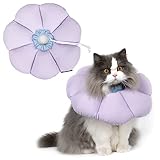
- SCOPE OF APPLICATION FOR CAT CONE M size (neck circumference 6.5" - 10.5" diameter 11.5") is suitable for pets weighing less than 6 - 11 lbs. Measure the pet's neck circumference before ordering. The cone features an adjustable elastic for a secure fit
- NO IMPACT ON DAILY LIFE If your pet struggles to eat or drink with standard plastic cones, this e-collar is an ideal solution. Your pet can eat, drink, and play normally. For foot wounds, consider a larger size if neck circumference allows
- NOT JUST RECOVERY AFTER SURGERY Pets often lick their wounds. We increased the diameter of the cat cone to prevent this, even for lower limb wounds, promoting better recovery. It is also suitable for in vitro deworming, nail trimming, and grooming
- SOFT WATERPROOF MATERIAL This e-collar is made of waterproof PP cotton, keeping your pet's wound dry for better recovery. The soft material prevents scratches to pets and furniture. The smooth outer fabric ensures comfort, even in summer
- FESTIVAL DECORATION This cat cone can be used as a soft pillow or Christmas or Halloween decoration.The neck rope has been designed with an open knot, and if the rope is too long or there is a risk of the pet breaking free, it can be knotted
What should I expect after my pet goes home?
After an uncomplicated superficial FNA, many pets return to normal activity with little special care. Keep the puncture area clean and prevent persistent licking or rubbing. Follow any written restrictions instead of applying human creams, disinfectants or pain medicines unless the veterinary team approves them.
Contact the veterinary team if swelling worsens, the site becomes hot or very red, discharge appears, bleeding does not stop, or your pet remains painful, unusually quiet or off food. Hives, facial swelling, breathing difficulty, collapse or sudden weakness are emergencies.
After sedation or anesthesia, follow the clinic’s instructions about supervision, stairs, food and exercise. University of Minnesota client guidance advises watching for bleeding, redness or swelling and keeping a recovering pet away from stairs and obstacles until coordination returns.
What should I ask the veterinarian?
- Where exactly is the target, and is FNA the safest first test?
- Will my pet be awake, lightly sedated or anesthetized?
- Does my pet need fasting or any medication changes?
- How many passes are typical, and how will discomfort be managed?
- Will slides be reviewed in-house or sent to a pathologist?
- When should I expect results, and who will call me?
- What findings would lead to a repeat aspirate or biopsy?
- What amount of swelling, bleeding or soreness is expected?
- Which signs mean I should call immediately or seek emergency care?
Frequently Asked Questions
Can a fine-needle aspiration confirm cancer in a pet?
Sometimes cytology identifies a characteristic cancer, but not every tumor sheds diagnostic cells and some require tissue architecture for confirmation or grading. A nondiagnostic or uncertain report may therefore lead to a core or surgical biopsy rather than reassurance that the lesion is benign.
Do these 3 things before closing this tab:
1Scan for outdated or missing drivers - takes under a minute2Repair Windows errors before they cause bigger problems3Fix the driver behind crashes, sound loss and screen glitchesCan my pet have several fine-needle aspirations from the same lump?
Yes. Different areas of one lesion can contain different material, and a repeat sample may be recommended when the first slides are too bloody, too sparse or not representative. The veterinarian will balance the expected information against discomfort and bleeding risk.
Should I measure the lump while waiting for results?
Ask the clinic whether it wants measurements or photographs. If so, use the same ruler, angle and lighting each time and record dates; bring any rapid change, ulceration or new pain to the veterinarian’s attention rather than waiting for a scheduled recheck.
Who interprets the slides from an FNA?
Depending on the practice, a veterinarian may perform an initial in-house review, a digital cytology service may assess images, or slides may go to a veterinary pathologist at an outside laboratory. Ask which type of report you will receive and whether a specialist interpretation is included in the estimate.





Leave a Reply