
Some links on this page are affiliate links: if you buy through them we may earn a commission, at no extra cost to you.
Do not feed a baby squirrel while you wait for help. Do not give it water, milk, formula, nuts, fruit, or any other food unless a licensed wildlife rehabilitator gives you specific instructions. The safest temporary care is warmth, darkness, quiet, minimal handling, and a secure ventilated box or small carrier. If the squirrel is warm, alert, and uninjured, its mother may still be able to retrieve it during daylight near where it was found. Coldness, weakness, wounds, bleeding, breathing or movement problems, fly eggs or maggots, or any cat or dog contact make the situation urgent. Contact a permitted wildlife rehabilitator or your state or provincial wildlife agency for instructions as soon as possible.
What should I feed a baby squirrel before a rehabilitator arrives?
Nothing, unless a licensed wildlife rehabilitator specifically directs you. Emergency feeding is not a safe substitute for professional assessment. A baby squirrel can inhale liquid into its lungs, become dangerously chilled while being handled, or suffer digestive complications when given an unsuitable product or amount.
As an Amazon Associate I earn from qualifying purchases.
That prohibition includes cow’s milk, plant-based milk, puppy or kitten milk replacers, homemade formulas, plain water, electrolyte drinks, nuts, fruit, bottles, droppers, and syringes. Even a product marketed for wildlife may be wrong for the animal’s age or condition. Keep the squirrel contained and warm while you arrange professional help.
Toronto Wildlife Centre’s public guidance puts the priority plainly: “Do not give the baby any food or water – right now keeping them warm, dark, and quiet is more important.”
Popular on Amazon

- 【Large Size But Foldable】Large Expand Size: 5.9*7*5.9 inch. Large capacity is big enough for hedgehog, hamster, squirrel, parrot, rat and squirrel etc small animals. The small pet carrier can be folded for easy carrying out and indoor storage with the the Foldable Size: 1.6*10.6*7.9 inch.
- 【Transparent Breathable Mesh Design】2 transparent mesh windows on the hamster carrier and 1 side opening mesh door are designed to ensure fresh air and air circulation for your furry child and they can enjoy the scenery. There is a side pocket which is very convenient for you to foldable bowls, toys and store food.
- 【Material】The material is PET breathable gauze +Oxford cloth. It is normal for aggressive rabbit and hamster to chew and bite anything so please put some hamster teething toys or food in the carrier before going out.
- 【Portable and Safety Designer 】This small animal carrier is easy to carry and store, The hamster bag has a hand strap and an adjustable shoulder strap, so you can choose a more comfortable way of carrying. It’s very good option for travel to vet, short trip to vet.
- 【Easy To Carrier】This small animals carring bag has one removable support mat which can be washed by hand or machine, easy to clean. The small animal carry bag is light, easy to fold, and carry.
Why can home feeding harm a baby squirrel?
Squirrel infants have changing nutritional and developmental requirements. The correct formula, concentration, volume, temperature, and feeding position depend on factors a finder usually cannot assess safely, including age, hydration, body temperature, swallowing ability, and injury.
Aspiration is an immediate danger
Liquid placed in a squirrel’s mouth with a syringe, dropper, or bottle can enter the airway instead of the stomach. Aspiration may cause respiratory distress, pneumonia, or rapid death. A weak, cold, or injured squirrel is at especially high risk because it may not have a normal swallowing reflex.
Cold babies cannot digest normally
Hypothermia changes circulation and digestion. Attempting to feed a cold infant can worsen its condition, and handling it repeatedly to feed increases stress and heat loss. Warmth and professional assessment come before any nutrition plan.
Wildlife diets are not pet diets
Baby squirrels do not simply transition from milk to the foods people associate with adult squirrels. Their development includes learning shelter, predator avoidance, seasonal food handling, and other survival skills. Wisconsin Humane Society notes that these lessons include “recognizing and avoiding predators, finding shelter, finding, storing and processing food in different seasons, and much more.” Raising one at home can leave serious nutritional, behavioral, and legal problems even when the animal appears to improve.
How can I tell whether the squirrel is a dependent infant or a juvenile?
Appearance and coordination provide a useful first triage, but they do not replace a rehabilitator’s assessment.
Also popular on Amazon

- 1.Space capsule appearance Design: Space Capsule Bubble Window allows your pets to have a clear view of the outside world, reducing anxiety during travel. They can observe their surroundings while staying safe and secure in the carrier.
- 2. Enhanced Breathability & Ventilation: Our Guinea pig Bunny backpack carrier has 5 vents in front and both top sides,1 opening net window,1 mesh pocket for store snacks and water cup,ensuring fresh air, preventing your small pets from overheating.
- 3. Ergonomic & Adjustable Backpack:with High-quality PC, and oxford cloth material,The straps of backpack can absorb sweat and relieve the pressure from your backpack to make you feel more comfortable, Padded shoulder straps and an adjustable chest strap provide comfort during long carries. The top handle offers an alternative carrying option for quick trips. Lightweight yet sturdy, it’s easy to take anywhere.
- 4. Versatile for Various Small Pets: Large size: 11.8*8.2*12.6 inch,Big enough for hedgehogs, rabbits, birds, squirrels, hamsters, lizards, and other small animals (size-appropriate). The spacious interior accommodates pets comfortably, making it ideal for vet visits, outdoor adventures, or daily outings.
- 5. Durable & Easy-to-Clean Material: Made with high-quality, water-resistant fabric that withstands daily use. The interior cushion is removable and washable, keeping the carrier hygienic. Reinforced zippers and sturdy stitching ensure long-lasting durability.
Nestling or infant
A dependent infant may be naked or sparsely furred, have closed or newly opened eyes, and have a thin tail that cannot be held over its back. These babies rely on their mother for food, warmth, and protection. California Department of Fish and Wildlife states: “All baby squirrels are born with their eyes closed and fully rely on their mother for food, warmth, and survival.”
Free tools Windows power users keep installed
One-click scans. No signup required.
Juvenile
A fully furred squirrel with open eyes, a bushy tail, and coordinated movement may be exploring rather than abandoned. Gray squirrel guidance from the Wildlife Center of Virginia (2024) gives approximate milestones: eyes open at about four weeks, exploration outside the nest may begin around six weeks, and weaning occurs by about ten weeks. Those ages apply to the gray squirrels covered by that guidance, not every individual or species.
A juvenile that repeatedly approaches people, cannot move normally, appears distressed, or is easy to catch still needs professional advice. Do not assume that a bushy tail alone means it is safe to leave.
What should I do immediately after finding a baby squirrel?
Work through the following sequence while calling for help. Handle the animal only enough to remove immediate danger and place it in safe temporary containment.
- Remove hazards. Keep cats, dogs, children, and onlookers away. A cat or dog can cause fatal injuries that are not obvious from the outside, so any contact is an urgent reason to call a rehabilitator.
- Use a secure container. Place the squirrel in a ventilated cardboard box or small ventilated animal carrier lined with a soft, non-looping cloth. Close or secure the container so the squirrel cannot escape, but do not seal ventilation openings.
- Choose a quiet location. Keep the container in a warm, dark, quiet room away from household activity, smoke, and direct sunlight. Avoid repeatedly opening the box to check or photograph the animal.
- Provide indirect warmth when needed. Put a wrapped warm rice sock or warm-water bottle beside the container, or place a low heating pad under only part of the container. This creates a cooler area the squirrel can move toward. Recheck the heat source frequently; never put the squirrel directly on a heating pad, hot bottle, or other hot surface.
- Call a qualified authority. Contact a licensed or permitted wildlife rehabilitator, your state or provincial wildlife agency, or the referral service that agency designates. Tell them where the squirrel was found, its appearance, whether it feels cold, and any contact with cats, dogs, vehicles, or people. Follow their instructions for reunion, transport, and timing.
California Department of Fish and Wildlife cautions people not to “intervene without proper guidance from a trained professional (i.e., capture, handle, confine, feed/water).” If you have already offered food or liquid, report what was given, how much, and when; do not try to compensate with more feeding.
Also popular on Amazon
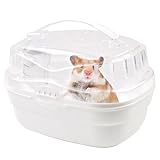
- Product Size:Dwarf hamster travel carrier size is 7.87x5.90x5.51 inches/20.0x15.0x14.0 cm,suitable for small animals such as hamsters,dwarf hamsters, guinea pigs,hedgehogs
- Easy to Carry:Hamster carry cage is made of high-quality plastic, with a small volume, light weight, and easy to carry.Breathable travel hamster cage is the perfect item to carry on your travels,shopping, walks,or picnics
- Ventilation:The ventilation design at the top of hamster carrying cases increases air circulation,allowing your hamster to breathe smoothly and freely.Travel is more reassuring
- Free Drinking Water:When you take your pet out to play,dwarf hamsters carrying case by water feeder carried can meet the needs of your pet to drink water and avoid the trouble of forgetting to bring water feeding tools
- Safety Lock: Portable mouse cage is equipped with a safety lock to prevent hamsters from escaping.The 360 ° transparent window allows you to easily observe your pet's activities and interact with them
When is a baby squirrel an emergency?
Prompt professional help is warranted for any of the following signs. Keep the squirrel contained and warm while you make the call rather than attempting treatment yourself.
- Bleeding, an open wound, puncture, burn, obvious fracture, or a body part held at an abnormal angle
- Coldness, wet fur, marked weakness, collapse, or inability to stay upright
- Labored, noisy, or irregular breathing
- Inability to move normally, seizures, or severe lethargy
- Fly eggs or maggots on the body
- Any bite, pawing, carrying, or other contact with a cat or dog, even if no wound is visible
- A confirmed dead mother, or a location where reunion cannot be made safe because of traffic, predators, flooding, construction, or extreme weather
An injured or chilled squirrel should not be placed outside to “wait for the mother.” A rehabilitator can determine whether it needs immediate veterinary treatment, specialized stabilization, or transport to a permitted facility.
Can the mother safely retrieve a healthy baby squirrel?
Often, yes. A warm, alert, uninjured infant may have fallen while its mother was moving it or may be waiting near a nest. Reunion is preferable to hand-raising when conditions are safe and a professional agrees that the attempt is appropriate.
Prepare the reunion site
Keep the baby close to the original location, but away from hazards. If a rehabilitator advises it, place the squirrel in a shallow, open container secured near the original tree or nest site. The container should be stable and easy for the mother to access; do not put a dependent infant directly on the ground where it can be reached by pets or predators.
Give the mother privacy
Move people and pets well away from the site. A mother may avoid approaching while humans stand nearby. Observe from a discreet distance during daylight rather than repeatedly approaching the container. Do not leave a dependent baby outside overnight.
Also popular on Amazon

- Unique Design: Transparent front window design guinea pig carrier, meet with that pets like to pay close attention to the surrounding environment, and allows you to see small animals everything inside the handbag. At the same time, the transparent window is separated from the bottom of the zipper, making it easier and safer for pets to enter and exit
- Breathable & Comfortable: This small animal carrier has a larger interior space, with a bite resistant ventilation net on the side and three ventilation holes on the front, ensuring fresh air and airflow for fur children without worrying about suffocating
- Convenient to Carry: Bunny travel bag can be carried by hand or shoulder for comfort. Its inner bottom is a detachable seat cushion and comes with a safety buckle, ensuring that pet is carried comfortably and safely. The side is equipped with a water bottle installation hole, which can be installed as needed, allowing pets to travel long distances without thirst.It is very convenient for you to use it to take pets on trips
- Warm Tips: Chinchilla carrier has side pockets for storing water bottles, fans, and bowls. It is recommended that you put some food or hamster molar toy in the carrier before going out to prevent small pets from biting and damaging the bag
- Small pets' Large travel carrier bag: 11.8 * 9.84 * 9.84 inches. Large enough for small animals such as guinea pigs, hamsters, parrots, rabbits, kittens, hedgehog and bearded dragon
How long should I wait?
Published guidance is not uniform. A U.S. Fish & Wildlife Service-hosted chart describes six to eight daylight hours and reheating the heat source every two hours. National Wildlife Rehabilitators Association hotline guidance describes waiting four hours or overnight in some circumstances. These are not universal rules: the correct window depends on the baby’s condition, weather, time of day, predator risk, and local wildlife practice. Ask the local rehabilitator or wildlife agency which window applies, and keep the baby indoors and warm if daylight ends before a safe reunion is confirmed.
Should I leave a fully furred squirrel alone?
Not automatically. A coordinated, fully furred juvenile may be learning to forage and may not need rescue, but repeated approaches to people, visible distress, or exposure to hazards change the decision.
| Situation | Preferred action | Reason |
|---|---|---|
| Warm, alert, uninjured infant; safe daylight site; professional agrees | Offer a protected reunion opportunity near the original location and watch from a distance | The mother may still be able to retrieve it |
| Cold, weak, wet, injured, or abnormal breathing or movement | Contain indoors with indirect warmth and arrange urgent transfer | The squirrel needs stabilization, not outdoor waiting |
| Any cat or dog contact | Contain and contact a rehabilitator promptly | Hidden punctures and infection can be life-threatening |
| Healthy-looking juvenile exploring safely | Ask a local authority before capturing it; keep pets away | Capture may disrupt normal development, while local rules differ |
| Unsafe weather, predators, traffic, or no safe reunion site | Keep the animal contained and follow professional transport instructions | Context can make reunion more dangerous than temporary containment |
How do I transport a baby squirrel to a rehabilitator?
Transport only after a rehabilitator or wildlife agency tells you where to go and how to travel. Keep the squirrel in the secure ventilated box or small carrier, with the soft lining and indirect heat arrangement that the professional recommends.
Windows Errors? Fix Them Before They Spread
Repair common Windows errors and clear accumulated junk for a smoother, more stable PC - no reinstall needed.Free scan · no reinstallOutdated Drivers Are Slowing You Down
One free scan finds every outdated or missing driver and matches the right update for your exact hardware.Free scan · exact hardware match- Keep the vehicle quiet and comfortably warm, avoiding direct sun, drafts, loud music, and unnecessary stops.
- Do not open the container to offer food or water during the trip unless the receiving professional instructs you.
- Do not carry the squirrel loose, in a pocket, or in a passenger’s hands.
- Tell the rehabilitator about all known events: fall location, time found, estimated exposure outdoors, injuries, cat or dog contact, and anything already given by mouth.
Possession and transport rules vary by jurisdiction. A wildlife agency can identify permitted caregivers and explain whether you may move the animal yourself.
Independent reader supportYour contribution helps us test, update, and keep practical guides available for everyone.Why should I avoid raising the squirrel myself?
Hand-raising requires species- and age-appropriate nutrition, safe feeding technique, disease control, housing, exercise, and a plan for developing natural behaviors. Incorrect formula or technique can cause severe illness or death, while human handling can interfere with the animal’s ability to avoid predators and function independently.
Also popular on Amazon

- Bulk Set: You will receive 15 pack individual disposable carriers, essential for poultry farmers, bird breeders, reptile handlers, or animal rescue organizations that frequently transport small animals.
- Dimensions: These pet carriers measure 11 x 8 x 6 inches, providing ample space for small creatures such as baby chicks, ducklings, quail, finches, canaries, hamsters, gerbils, guinea pigs, rats, and small reptiles such as geckos snakes. Please Note: These are NOT suitable for adult cats, dogs, or other large animals due to size and material limitations.
- Sturdy Contruction: Constructed from thick, double-wall corrugated fiberboard for superior strength, sturdy and durable. The durable structure withstands bumps during short-distance travel, making it a reliable for short-term travel and transport needs.
- Ventilation Holes: Each pet transport box features a convenient built-in handle, making it easy to transport your small pets with a secure and steady grip. Built-in ventilation holes allow for proper airflow, keeping your small animals comfortable and safe during travel.
- Easy to Assembly: No tape, glue, or tools required. Simply fold and snap the flaps into place for a secure box. Flat for space saving storage.
Rehabilitation is also regulated in many places. A licensed professional can decide whether the squirrel can be reunited, needs treatment, or is old enough for a different response. Do not keep a wild squirrel as a pet or release it based only on apparent improvement; obtain local instructions.
What if I cannot reach a rehabilitator immediately?
Leave a message with a licensed rehabilitator and contact the state or provincial wildlife agency or its after-hours referral service. Until someone responds, maintain the secure, dark, quiet, indirectly warmed setup and avoid feeding, bathing, medicating, or repeated handling.
Quick wins for a faster PC:
Fix the driver behind crashes, sound loss and screen glitchesFind Drivers →Repair Windows errors before they cause bigger problemsFix Now →Scan for outdated or missing drivers - takes under a minuteDriver Scan →If the squirrel has urgent signs and no wildlife professional is reachable, tell an emergency veterinary clinic that you have a wild squirrel and ask whether it accepts wildlife or can direct you to the authorized service. Do not assume a regular pet-care protocol is safe for a wild infant.
Frequently Asked Questions
How can I tell whether the mother has come back for the squirrel?
Watch from a substantial distance and avoid approaching the container or nest site repeatedly. A mother may wait until people and pets leave, so lack of immediate movement is not proof of abandonment. If the local professional’s reunion window passes without retrieval, report that to the rehabilitator or wildlife agency rather than extending outdoor exposure on your own.
What should I do if it gets dark before the mother returns?
Bring a dependent baby back indoors in its ventilated container and maintain indirect warmth, darkness, and quiet. Do not leave it outside overnight, even if the weather seems mild. Ask the responding rehabilitator when to make another daylight attempt or arrange transport.
Can I keep a baby squirrel until it is old enough to release?
Do not make that decision yourself. Wildlife possession, rehabilitation, and release are regulated differently by jurisdiction, and a squirrel needs specialized care and behavioral preparation that a household generally cannot provide. A permitted rehabilitator can take legal responsibility and set a release plan if recovery is possible.
Recommended Free Tools
Is a squirrel that seems calm and quiet doing well?
Not necessarily. Quietness can reflect fear, hypothermia, shock, or weakness rather than comfort. Check for the urgent signs listed above and describe the animal’s behavior to the professional instead of using calmness as a reason to feed or release it.



Leave a Reply