What’s actually slowing this PC down?
Pick the symptom - the matching free tool is one click away.
You can learn a lot about a dog before adopting, but no shelter visit or behavior test can guarantee how that dog will act in every future situation. Ask what staff have actually observed, look for patterns across settings, and decide whether the dog’s known needs fit your household and your ability to manage them.
Can you tell a dog’s temperament at a shelter?
A shelter meeting is one useful observation—not a complete forecast. A dog’s behavior at a particular moment can be affected by emotional state, stress, health, handling and surroundings. A fearful response during a medical exam, for example, may reflect pain or stress rather than a stable trait.



The ASPCA says standardized shelter behavior assessments have not been shown to predict post-adoption aggression with high accuracy or precision, and that their overall usefulness remains inconclusive. There is no established percentage that tells you how accurately a test predicts one individual dog’s future behavior. A single growl, bark, shy response or friendly greeting should not be treated as a definitive personality verdict.
Temperament reflects a combination of influences, as the ASPCA puts it: “A dog’s personality is formed by a complex interplay between his genetic predispositions, his developmental circumstances and his life experiences.” The practical goal is to gather several pieces of information and understand their limits.
#1 Best Overall
What should you ask before adopting a dog?
Ask for specific examples and the circumstances behind them, rather than relying on labels such as “sweet,” “dominant” or “good with kids.” Keep interactions supervised and follow shelter staff instructions.
- What have staff observed during ordinary daily care, and how often has the dog been observed?
- What is known from a previous owner or the person who found the dog? How long did that person know the dog?
- Has the dog stayed in a foster home? If so, what happened around visitors, household activity, handling and time alone?
- How has the dog responded to unfamiliar adults, children, other dogs and routine care? Which situations have staff actually observed?
- Has the dog been walked outside the kennel? What was observed around the leash, passersby, children, joggers, cyclists, other dogs and unfamiliar places?
- Was a standardized assessment used? What was the setup, what happened, and was any concerning behavior seen in another setting?
- What support, supervision or management does the shelter recommend for this dog’s known needs?
You can also ask whether the dog seeks interaction, enjoys petting or play, is comfortable resting near a person, responds to familiar verbal cues, or is motivated by treats. These are observations of particular behaviors—not guarantees about how the dog will respond in a different place or situation.
How should you weigh different observations?
Each source can answer different questions. The ASPCA advises treating any one source as “a piece of the puzzle”; more independent observations can make the picture more complete.
Previous-home or finder reports
Firsthand reports can help explain a dog’s history, but they may be incomplete. The ASPCA notes that adopter reports in research it summarizes matched owner questionnaire responses for some behaviors—not all—including aggression toward unfamiliar people, urination when left alone and destructive chewing. Ask who supplied the information, how well they knew the dog, and what specific situations they described.
Do these 3 things before closing this tab:
1Scan for outdated or missing drivers - takes under a minute2Repair Windows errors before they cause bigger problems3Fix the driver behind crashes, sound loss and screen glitchesStaff and volunteer observations
People who see a dog regularly may notice useful patterns. Still, a positive summary can miss details, and observers without behavior training may overlook subtle signals. Ask what the dog did, in what circumstances and how consistently, rather than treating a broad adjective as evidence.
Medical handling
A veterinary exam matters for health, but defensive or fearful behavior during handling may be influenced by pain, prior medical experiences or stress after arrival. Ask whether a reaction occurred during an exam and whether staff have seen similar behavior during ordinary care. Do not treat a medical procedure as a neutral personality test.
Rank #3
Walks and socialization
A supervised walk can show how a dog responds to having a collar held, a leash applied and nearby environmental stimuli. It may offer clues about the particular route and encounter, but a calm short walk does not establish how the dog will behave in every home or neighborhood situation.
Playgroups
When shelter staff consider them appropriate, playgroups can show how a dog interacts with other dogs off leash. Anxiety or intense interest in other dogs can affect what is observed, and playgroup behavior is not interchangeable with behavior on a leash or around every individual dog.
Foster stays
A foster home can reveal how a dog responds to ordinary household activity and may reduce the stress associated with a shelter environment. The ASPCA describes foster care as potentially the closest reflection of behavior in an adoptive home, while recognizing that foster placements depend on available resources. Ask what the foster actually observed and over what period.
Rank #4

- 3-Pack Pet Health Logs: Includes 3 puppy health record booklets, ideal for dog breeders, pet care centers, and multi-pet households. Whether for daily use, travel, or boarding, each 12-page booklet features 8 dedicated pages for tracking health and 4 blank pages for extra notes and pet details.
- Compact Size & Flat Lay: Each book measures 5"×3.5" folded and 5"×7" open flat, fitting easily into purses, glove boxes, or pet bags. Perfect for on-the-go use at the dog park, daycare, or training sessions. Opens 180 degrees for comfortable writing with dedicated spaces for vaccination stickers and pet photos.
- Premium Quality & No Bleed-Through: The cover features sturdy coated paper with a protective laminate finish. Inside, 80gsm high-quality offset paper is durable and ink-resistant, resisting bleed-through from pens or markers to keep your entries neat, organized, and easy to read.
- Complete Puppy Health Record Booklet: Thoughtfully organized sections cover owner/puppy info, health history, vaccination logs with sticker space, wellness visits, care schedules, and care & service contacts. An essential tool for first-time owners, experienced breeders, and pet caregivers alike.
- Pet Passport & Gift Ready: Works as a pet companion passport for tracking health schedules and checkups during travel, boarding, or vacation. Includes dedicated sections for photos, markings, and ID info. Makes a thoughtful holiday gift, birthday present, or stocking stuffer for new puppy parents and dog lovers.
Standardized behavior assessments
SAFER, Match-Up II and Assess-a-Pet are examples of assessments the ASPCA discusses. Their results need context: the ASPCA cites studies in which food-related aggression during an assessment did not predict behavior in an adoptive home, a fake dog was not a valid substitute for a real dog when assessing dog-directed aggression, and a dog’s response to a doll may not reflect its response to a child. These limitations are reasons to ask what a test can and cannot show—not reasons to dismiss a specific safety concern.
How do you know if a rescue dog is right for your household?
There is no universally best temperament apart from context. Compare what is known about the dog with the people, animals, routines and surroundings the dog will encounter. If more than one dog is a genuine option, use the same questions for each rather than ranking them by a general label.
| Fit area | What to ask or consider |
|---|---|
| People in the home | What has been observed around familiar and unfamiliar adults? What handling and interaction does the dog seem comfortable with? |
| Children | Has the dog actually been observed around children? In what setting, and with what supervision? A doll test does not establish child safety. |
| Other pets | What is known about interactions with other animals? Distinguish off-leash playgroup behavior from leash behavior and ask about any known history. |
| Daily routine | What is known about activity, play, settling and time alone? Consider whether the dog’s needs fit the time and attention available. |
| Environment | How has the dog responded to traffic, visitors, cyclists, joggers, other dogs and other stimuli likely near your home? |
| Care capacity | Can you provide the supervision, training, veterinary care and ongoing management the dog may need? Consider your willingness as well as your practical ability. |
The ASPCA’s placement guidance says decisions should consider the adopter’s ability and willingness to meet an animal’s needs, the animal’s quality of life and public safety. A workable match is one in which the dog’s known behavior and care needs can be managed safely in your actual household, with unknowns discussed openly.
Best Value
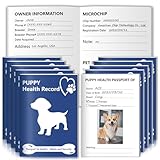
- Sufficient Quantity:When you choose our dog vaccines records, you'll receive 10 notebook.Whether you're a breeder, veterinary practice, or multi pet household, this will ensure you have enough documentation on hand for managing each pet's health history。Every puppy vaccination record book has 12-page puppy health journal has 8 dedicated pages for tracking your pup’s health, vet visits, and key details, with 4 blank pages at the end for jotting down extra notes, pet-related info, or anything else you want to record.
- .Ideal Size for Record Keeping:Each dog vaccine record book measures 5x3.5 inches folded; 5x7 inches unfolded, allowing for easy portability and storage.These handy health records notebook for dogs with double sided printing, featuring enough space and columns for all your pets important information,plus, it has dedicated spots for sticking on vaccine stickers and adding cute puppy photos.They offer a stylish and organized approach to pet health documentation, a must have addition to your pet supplies.
- Premium Quality: The puppy health record tracker’s cover features 300gsm coated paper with vibrant full-color printing and a protective laminate finish. Inside, 100gsm high-quality offset paper pages are durable and ink-resistant, ensuring no bleeding from pens or markers—so your records stay neat and easy to read.
- .Effortlessly Track Vaccinations and More:The canine health record booklets pages include:owner and puppy information,medical history and hospitalizations,vaccination record and sticker,dog service providers,fecal examinations and de-worming,heartworm screening, prevention and treatment etc.This record keeping tool will ensure every important detail is accounted for and make this task easy, organized, and straightforward.Add this essential tool to your pet supplies for a happier, healthier pet.
- Essential for Pet Owners:Designed for veterinary clinics and pet owners, these puppy vaccination record books make tracking key health details—like shots, checkups, and treatments—simple and organized. When you’re away and leave your pup with a sitter or family, the dog medical record and vaccine book serves as a quick reference for their medical history, ensuring care stays on track even in your absence. Plus, dedicated sections for photos, physical markings, and ID info prepare you for emergencies, helping you recover your friend quickly if they ever get lost.
How should you handle a concerning behavior or bite history?
Ask the shelter to explain the underlying observation: what happened, where, with whom, what preceded it and whether similar behavior occurred elsewhere. The ASPCA recommends using multiple sources when evaluating serious behavioral concerns and corroborating a concerning assessment response in another environment, except when the behavior is egregious.
That is shelter guidance, not a layperson’s risk-assessment checklist. The ASPCA’s examples of egregious aggression for shelters include a bite requiring medical treatment, an injurious bite without an apparent warning, or repeated injurious bites. Discuss any bite history candidly with shelter professionals; do not independently decide that a warning is harmless or that a test result settles the question. Placement decisions need to account for both the animal’s welfare and public safety.
What makes a useful adoption decision?
Before deciding, make sure you can distinguish what the shelter knows from what remains uncertain. Ask for concrete observations in more than one setting where possible, then weigh them against your household’s needs and your ability to provide appropriate care. The ASPCA’s guidance does not promise certainty about an individual dog; it supports a careful, evidence-informed match rather than a pass-or-fail judgment based on one brief meeting.
Sources: ASPCA, Position Statement on Shelter Dog Behavior Assessments; ASPCA, Position Statement on the Responsibilities of Animal Shelters. The ASPCA pages do not state publication dates; they provide U.S.-oriented institutional guidance, not an individual evaluation or diagnosis.
Recommended Free Tools
Quick Recap
Product prices and availability are accurate as of the date/time indicated and are subject to change. Any price and availability information displayed on Amazon at the time of purchase will apply.




