
Some links on this page are affiliate links: if you buy through them we may earn a commission, at no extra cost to you.
A Newfoundland can be a devoted indoor family companion, but adopting one means planning for a giant dog, intensive coat care, daily activity, and a relatively short 9–10-year breed-profile life expectancy. The right match depends less on a breed reputation than on whether your household can safely handle the individual dog’s size, health needs, grooming tolerance, and history.
Before agreeing to adoption, meet the dog, review every available veterinary record, ask how the dog behaves with people and animals, and arrange a veterinarian’s assessment. Use the breed information below as a planning guide—not as a guarantee of how any particular Newfoundland will behave or what conditions it may have.
As an Amazon Associate I earn from qualifying purchases.
Newfoundland adoption at a glance
| Consideration | What the breed profile says | What it means for an adopter |
|---|---|---|
| Adult size | Males: about 28 inches and 130–150 pounds; females: about 26 inches and 100–120 pounds | Plan for safe leash handling, vehicle access, sturdy equipment, stair use, visitor management, and backup care. |
| Life expectancy | 9–10 years | Prepare for a long-term commitment, including care in later life. |
| Exercise | At least 30 minutes of moderate activity daily, according to the American Kennel Club (AKC) | Build a dependable daily routine rather than relying on occasional long outings. |
| Coat | Thorough brushing at least weekly; more often during shedding seasons | Budget time for hands-on grooming, nail care, ear checks, and coat maintenance. |
| Living arrangement | AKC says Newfoundlands are meant to live indoors with their human family | A home that treats the dog as an indoor companion is a better fit than one that expects outdoor isolation. |
These are breed-profile figures, not a prediction for every dog. A mixed-breed dog identified as a Newfoundland cross may mature at a different size, and an adult rescue’s current weight may reflect age, health, or nutrition rather than eventual genetic potential.
Can your household manage a Newfoundland?
Giant size changes ordinary tasks
A 100–150-pound dog can be difficult to move if injured, frightened, or recovering from surgery. Consider who can control the leash, load the dog into your vehicle, manage stairs, and provide care if the primary adopter is ill or away. Check that doorways, crates, beds, grooming areas, and vehicle entry points are physically workable. Discuss how the dog responds to visitors before bringing it into a busy home.
Popular on Amazon
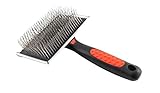
- EXTRA LONG PINS - Crafted from high-quality materials, this professional-grade "Tuffer Than Tangles" brush features extra-long stainless steel pins that easily penetrate deep into your pet's coat, removing dirt and debris from the undercoat.
- COMFORTABLE - The flat slicker design allows for gentle yet effective grooming, while the ergonomic handle ensures maximum comfort and control during use.
- ALL COAT TYPES - The Paw Brothers Extra Long Pin Flat Slicker Brush is suitable for all coat types and can be used on both dogs and cats. It's perfect for pet owners, as well as professional groomers.
- SIZE - Head 4.5in x 3in, Handle length 4.75in, Pins 1in length
- WHY RYAN'S PET SUPPLIES - Established in 1959, we have grown from humble beginnings as a family-operated four-page catalog to an international business featuring top quality products and services for pet professionals and pet lovers alike.
These are practical consequences of the AKC’s listed adult size, not a universal housing rule. A large home is not automatically required, but safe handling space and a realistic plan matter more than square footage alone.
Temperament is a tendency, not a guarantee
The AKC describes the Newfoundland as devoted, sweet, and patient. Its breed-standard explanation says a sweet temperament is the “most important single characteristic” of the breed. That description should guide questions, not replace observation. Ask the rescue or shelter to describe the dog’s behavior around children, strangers, other dogs, cats, handling, food, and routine changes. Look at the individual dog’s body language and history rather than assuming every Newfoundland is naturally comfortable in every situation.
Indoor companionship is part of the match
Newfoundlands are intended to live with their human family indoors. A dog that spends most of the day isolated outside may become difficult to manage, regardless of yard size. The Newfoundland Club of America (NCA) also cautions that the breed should not be left in the sun, particularly in a parked car. Provide shade and climate-controlled indoor space, and never treat a vehicle as a safe place to wait.
Daily care: coat, exercise, food, and home setup
Grooming is a recurring obligation
AKC recommends a thorough brushing at least once a week using a slicker brush and a long-toothed comb. The goal is to remove dead hair and prevent mats, especially in dense areas where tangles can hide. Shedding generally occurs twice a year; during those periods, brushing may need to become daily. Spayed or neutered dogs may shed throughout the year and need brushing several times weekly.
Also popular on Amazon

- 【Premium Dog Grooming Kit】Owning a professional dog slicker brush and a comb, you can effectively remove tangles, knots, and mats, significantly reducing brushing and drying time. Let you, as the groomer, give your furry companion a shiny, healthy coat , Goldendoodle Must Haves - The Best Dog Gifts - Merry Christmas
- 【Professional Slicker Brush for Dogs】Designed for medium-length and curly-haired pets with thick, difficult-to-manage coats, our slicker brush features extra-long angled pins that penetrate deeply to remove dead hair and loose undercoat. It is the best choice for deep combing undercoat for Goldendoodles, Poodles, Labradoodles, etc.Ergonomic handle minimizes hand and arm fatigue during grooming sessions, making it an essential tool for shedding season
- 【High Quality Dog Comb】Made of high quality stainless steel, this comb is durable, corrosion resistant and will not fade, good for avoiding static electricity.Rounded pin ends are gentle to the skin.it’s perfect to promote blood circulation and massage skin
- 【Optimize Combing Function】Pin Length ≈ 1in,Tilt Angle ≈ 45° Extra-long pins effortlessly reach through dense coats, while the angled design protects sensitive skin. This innovative structure simplifies detangling by effectively accessing the undercoat.Ideal for Poodles, Bichons, Labradoodles, Goldendoodles, and Other Doodle Breeds
- 【2-Year Warranty & Support】As a professional pet care brand, we are committed to providing safe, practical, and affordable solutions. Enjoy peace of mind with our 7*24 customer support and 2-year quality guarantee covering any manufacturing defects
Ask the rescue how the particular dog reacts to brushing, bathing, drying, feet handling, and nail trimming. Find out whether the coat currently has mats, irritated skin, or areas that cannot be touched safely. A dog that has had painful mat removal may need a slower, cooperative-care plan rather than an immediate full grooming session. Nails still require regular trimming, and ears should be checked for signs of infection. Your veterinarian or a qualified groomer can show you safe techniques for a dog of this size.
Provide moderate activity every day
AKC recommends at least a half-hour of moderate exercise daily, and the NCA describes Newfoundlands as active dogs that need daily exercise. Suitable activities can include walks, hikes, and swimming, depending on the dog’s age, fitness, training, and health. Ask what the individual dog already does comfortably and whether it pulls, tires quickly, fears traffic, or has joint restrictions.
Swimming is an activity the breed may enjoy, not a safety guarantee. Never assume an unfamiliar Newfoundland can swim, enter water safely, or return to shore without help. Use supervision and appropriate access controls around pools, ponds, rivers, and docks.
Feed for age and body condition
AKC recommends an age-appropriate, high-quality dog food and veterinary supervision for home-prepared diets. Monitor body condition rather than feeding to a target weight alone; excess weight adds stress to already substantial joints. Ask the rescue what food, portions, treats, and feeding schedule the dog currently receives, then change diets gradually with veterinary advice.
Also popular on Amazon

- 【Premium Dog Grooming Kit】Owning a professional dog slicker brush and a comb, you can effectively remove tangles, knots, and mats, significantly reducing brushing and drying time. Let you, as the groomer, give your furry companion a shiny, healthy coat , Goldendoodle Must Haves - The Best Dog Gifts - Merry Christmas
- 【Professional Slicker Brush for Dogs】Designed for medium-length and curly-haired pets with thick, difficult-to-manage coats, our slicker brush features extra-long angled pins that penetrate deeply to remove dead hair and loose undercoat. It is the best choice for deep combing undercoat for Goldendoodles, Poodles, Labradoodles, etc.Ergonomic handle minimizes hand and arm fatigue during grooming sessions, making it an essential tool for shedding season
- 【High Quality Dog Comb】Made of high quality stainless steel, this comb is durable, corrosion resistant and will not fade, good for avoiding static electricity.Rounded pin ends are gentle to the skin.it’s perfect to promote blood circulation and massage skin
- 【Optimize Combing Function】Pin Length ≈ 1in,Tilt Angle ≈ 45° Extra-long pins effortlessly reach through dense coats, while the angled design protects sensitive skin. This innovative structure simplifies detangling by effectively accessing the undercoat.Ideal for Poodles, Bichons, Labradoodles, Goldendoodles, and Other Doodle Breeds
- 【2-Year Warranty & Support】As a professional pet care brand, we are committed to providing safe, practical, and affordable solutions. Enjoy peace of mind with our 7*24 customer support and 2-year quality guarantee covering any manufacturing defects
Bloat is a life-threatening condition, and its causes are not fully understood. AKC notes that feeding multiple smaller meals and avoiding vigorous exercise around mealtimes may help reduce risk. These measures do not guarantee prevention. Ask your veterinarian to explain the warning signs and the emergency plan for your location.
Prepare floors and equipment before arrival
Growing puppies can struggle on slippery hardwood or tile. AKC recommends preparing traction, such as area rugs, so a puppy can stand, turn, and walk without repeatedly sliding. The same principle can help an older dog with weakness or arthritis. Secure rugs so they do not bunch, and check that collars, harnesses, leads, crates, beds, and vehicle ramps are rated for a giant dog.
Do these 3 things before closing this tab:
1Fix the driver behind crashes, sound loss and screen glitches2Repair Windows errors before they cause bigger problems3Scan for outdated or missing drivers - takes under a minuteHealth questions to ask before adoption
Request records, not assurances
Ask for every available veterinary record, including examination notes, vaccination history, laboratory results, imaging, surgeries, dental work, medications, allergies, weight history, and current diagnoses. Specifically ask about hip and elbow problems, heart disease, urinary stones or cystinuria, prior injuries, and any chronic or ongoing condition. Find out which treatments are temporary and which are expected to continue after adoption.
AKC rescue guidance also supports asking what is known about the dog’s breed makeup. A shelter’s breed label may be based on appearance or background information, and it may not predict adult size or inherited risk precisely. Treat the label as useful context while evaluating the dog in front of you.
Also popular on Amazon

- PERFECT HAIR REMOVAL AND GROOMING SET: The NeatHoiho grooming set includes a slicker brush and a heavy-duty metal comb , so you can groom your dog or cat with comfort at home.The slicker brush and comb set is perfect for keeping short or long hair clean and tangle-free, as well as for removing dirt and dander from pets with sensitive skin
- 2 IN 1 STAINLESS STEEL COMB: The pet comb has high quality anti-static stainless steel round teeth that are strong enough. Our dog grooming comb features round teeth that break up tangles and effectively remove loose hair, dander dirt trapped beneath fur. NeatHoiho cat comb naturally support the health of your furry best friend by boosting circulation
- LONG PINS and CUSHION PAD:NeatHoiho slicker brush has 50% longer, denser, and softer pins– each pin is approximately 1 inch long.Each pin is bent and angled at approximately 45 degrees, so it won’t scratch your dog’s skin. This dog slicker brush has a retractable cushion pad that protects your pet's skin from being scratched by the brush's pins
- LONG AND ERGONOMIC HANDLE:NeatHoiho professional pet hair brush is perfect for groomers and home use. It has a slip-resistant grip that gives you more control while brushing and helps reduce strain on your hand, wrist, and arm
- WIDELY APPLICATION:NeatHoiho long slicker dog brush is perfect for Alaskan, Golden fur, Poodles, Goldendoodles, Schnauzers, Pomeranians, Collies, Labradors, other large medium and long hair dogs, and a wide range of cat breeds with soft, fluffy coats. It's recommended by many professional dog groomers
Understand what breed screening does—and does not—prove
For Newfoundland breeding programs, AKC lists hip evaluation, elbow evaluation, a cardiac exam, and a Newfoundland cystinuria DNA test among recommended health tests. It identifies hip and elbow dysplasia, cardiac disease, and cystinuria as conditions for which responsible breeders screen.
Those recommendations are a checklist for record requests and a conversation with your veterinarian. They do not mean a rescue dog has been screened, and a screening result is not a promise that disease will never develop. If records are absent, your veterinarian can discuss an examination and any age-appropriate tests rather than assuming either health or illness.
Arrange an independent veterinary visit
Schedule a veterinary appointment soon after placement and bring all records. Ask the veterinarian to assess body condition, gait, joints, heart, skin and coat, ears, oral health, and urinary history, then create a preventive-care plan suited to the dog’s age and known conditions. For a dog taking medication, confirm the dose, timing, refill process, and what changes require an urgent call.
Adult rescue or puppy: which information is clearer?
| Factor | Adult rescue | Puppy |
|---|---|---|
| Behavior and care history | You may have observed habits, previous routines, and known reactions, although history can be incomplete. | Personality, adult size, and future behavior are still developing. |
| Health information | There may be established diagnoses, medications, surgeries, or gaps in records to investigate. | You must plan for developmental care and monitor growth; screening paperwork is not automatically provided. |
| Grooming tolerance | Ask whether the dog accepts brushing, feet handling, bathing, and nail care now. | Begin brief, positive grooming practice immediately. |
| Exercise and maturity | Activity can often be matched to observed fitness, age, and veterinary restrictions. | Newfoundlands mature more slowly than smaller breeds; exercise must be limited while joints develop. |
| Training and socialization | Assess existing skills and any behavior support needed. | Plan early safe socialization, puppy classes, and patient foundation training. |
| Household fit | You can evaluate the individual dog’s response to children, animals, handling, and daily noise. | You are choosing a developing dog whose needs will change rapidly. |
Neither route is universally better. Choose the option for which your household can provide safe handling, consistent care, appropriate training, and veterinary follow-through.
Also popular on Amazon

- 【Professional Pet Grooming Kit 】3 Pet grooming tools selected by pet lovers, which can meet daily all the grooming needs of pets. Let you, as the groomer, personally give your furry friend a shiny and healthy coat. This is a must-have beauty product set for pet lovers! The Best Dog Gifts - Merry Christmas
- 【Why Choose Augwind 3PCS ?】 Augwind Pet Grooming Rake makes it easy to remove stubborn, tangled hair. Augwind Self-Cleaning Slicker Brush quickly removes loose hair, dander, and residual dirt. Augwind Flea Comb effectively remove small objects and Dandruff Flakes. Our 3-in-1 Pet Grooming Kit handles all your needs: detangling, hair removal and removes fleas and ticks – The Ultimate Pet Essentials
- 【Dematting and Deshedding Tools】 Augwind Pet Grooming Rake features a double-sided design: The 9-tooth bristle side detangles stubborn knots and mats. The 17-tooth bristle side trims excess pet hair. Augwind self-cleaning dog brush includes a push-button retractable mechanism – simply retract the bristles after use to remove loose hair quickly and effortlessly
- 【Flea Comb】Use this fine-toothed lice comb regularly to effectively remove small debris and dandruff, help keep away fleas and ticks, and maintain your pet’s coat tidy and healthy
- 【2-Year Warranty】We are a professional pet products company, committed to bringing the safest, practical and affordable pet products to pets and owners. We promise to solve it for you at any time if there is any quality within 2 years. We provide 7*24 hours after-sales service, if you have any questions, please feel free to contact us
If you are adopting a Newfoundland puppy
Socialize safely and start training early
AKC recommends early safe socialization and puppy classes. Introduce people, surfaces, sounds, grooming tools, car travel, and calm handling gradually, keeping experiences positive. Teach practical skills such as accepting a collar or harness, walking without dragging, settling on a mat, and allowing examination of paws, ears, mouth, and coat.
Protect developing joints
Because Newfoundlands mature more slowly than smaller breeds, do not design a puppy’s routine around forced running, repetitive jumping, or long strenuous outings. AKC advises limiting exercise while joints are growing and consulting a veterinarian and breeder about safe activity levels. Use traction on slippery floors and watch for fatigue, reluctance to move, or a change in gait that warrants veterinary advice.
Windows Errors? Fix Them Before They Spread
Repair common Windows errors and clear accumulated junk for a smoother, more stable PC - no reinstall needed.Free scan · no reinstallOutdated Drivers Are Slowing You Down
One free scan finds every outdated or missing driver and matches the right update for your exact hardware.Free scan · exact hardware matchMake grooming normal before the coat becomes difficult
Keep sessions short and frequent at first. Pair brushing, comb contact, foot handling, and ear checks with calm rewards. A puppy that learns these routines early is easier and safer to groom when it reaches giant size.
Questions to ask the shelter, rescue, or foster home
- What is known about the dog’s breed makeup, age, previous homes, and reason for surrender?
- How does the dog behave with children, unfamiliar adults, dogs, cats, food, toys, confinement, and being left alone?
- Can I see veterinary records, medication instructions, surgery reports, imaging, and laboratory results?
- Has the dog had hip, elbow, cardiac, urinary, or cystinuria-related evaluation, and what were the findings?
- Does the dog have any chronic or ongoing condition, and what care will continue after adoption?
- How does the dog respond to brushing, bathing, nail trimming, ear checks, and veterinary handling?
- What exercise does the dog currently tolerate, and are there restrictions from a veterinarian?
- What food, portions, feeding schedule, and weight-management plan are currently used?
- What support, return policy, follow-up, or referral help is available after placement?
- What adoption fees and medical services are included locally, and which future costs remain the adopter’s responsibility?
Local fees, availability, and policies change. The NCA reports adoption assistance through its Charitable Trust and regional clubs, but procedures and capacity vary by location, so confirm current details directly with the organization serving your area.
A practical decision checklist
- Measure your household’s handling capacity against a mature giant dog, including emergency transport and backup care.
- Confirm that the dog can live indoors with the family and that your home has safe footing and suitable resting space.
- Set a daily schedule that includes at least the recommended moderate activity, companionship, feeding, and coat care.
- Review records and write down every diagnosis, medication, restriction, and unanswered health question.
- Observe the dog with the people and animals who will share the home; ask for a careful description of behavior you cannot observe.
- Book a veterinary examination and clarify how you will manage known or possible joint, heart, urinary, weight, or bloat-related concerns.
- If choosing a puppy, prepare for controlled exercise, traction, socialization, puppy classes, and gradual grooming practice.
- Identify who will provide care during travel, illness, emergencies, and periods when the dog cannot use stairs or walk normally.
A Newfoundland is a strong match when the household welcomes an indoor companion, can safely manage giant size, accepts regular grooming, and is prepared to investigate and fund the individual dog’s health needs. If those conditions are not realistic, choosing a smaller or lower-maintenance dog is kinder than adopting first and discovering that the daily demands cannot be met.





Leave a Reply