Free tools Windows power users keep installed
One-click scans. No signup required.
Fish need different water temperatures depending on their species, variety, and sometimes their origin or life stage. Many tropical community fish are kept around 75–80°F (24–27°C), while goldfish and some other fish do well in cooler water; there is no single temperature for all fish. Identify your fish, check a species-specific care sheet, and use a thermometer to keep the aquarium stable.
Quick temperature guide for common fish
| Fish or group | Care-sheet guidance | Important qualification |
|---|---|---|
| Many tropical community fish | About 75–80°F (24–27°C) | A broad starting point, not a target for every tropical species. |
| Bettas | OATA: 68–82°F (20–28°C); Aqueon: 76–85°F (about 24–29°C) | Published recommendations differ. Consider the fish’s origin and use guidance suited to that fish. |
| Captive-bred tetras and pencilfish | 72–81°F (22–27°C) | Wild-caught fish may need different conditions. |
| Danios | 63–81°F (17–27°C) | Confirm the range for the particular danio species. |
| White cloud mountain minnows | 63–73°F (17–23°C) | They can be kept without a heater if ambient conditions stay in range. |
| Fancy goldfish | OATA: 59–73°F (15–23°C) optimal, with a wider stated tolerance of 39–77°F (4–25°C); Aqueon: 68–74°F (20–23°C) | Optimal and tolerated ranges are not the same; published guidance frames these ranges differently. |
| Comets and shubunkins | 60–70°F (16–21°C) | Aqueon recommendation; do not automatically apply fancy-goldfish guidance to these varieties. |
| Discus and certain equatorial fish | 84–88°F (29–31°C) | Aqueon identifies this as a hotter special case, not a general tropical setting. |
These are care-sheet recommendations, not experimentally tested limits or a complete catalogue. OATA and Aqueon differ on betta guidance, and goldfish recommendations vary by variety and by whether a source describes an optimal or tolerated range. Check the exact fish’s care sheet and consult a knowledgeable fish retailer or aquatic veterinarian if its needs are uncertain.
Why water temperature matters to fish
Fish are ectothermic: their body temperature is influenced by the surrounding water. Temperature affects activity, appetite, metabolism, breathing, immune response, and other aspects of fish health. Aqueon notes that cold conditions can reduce activity and appetite, while warm water can increase metabolism and breathing.
Warm water holds less oxygen, while fish may need more oxygen as their metabolism rises. Aqueon also warns that beneficial aquarium bacteria can begin to die above 90°F (about 32°C), which can put water quality at risk. These effects are not inevitable for every fish, but they are reasons to consider temperature alongside oxygenation and water quality.
Do these 3 things before closing this tab:
1Clear out junk files and repair common Windows errors2Scan for outdated or missing drivers - takes under a minute3Repair Windows errors before they cause bigger problems#1 Best Overall

- 2 Heating Outlets: Temperature control mode: on and off control. Please note that it is just a heating controller with no cooling function. The probe comes with a suction tray and ideas for a water tank
- Applicable scene: Because it has the powerful function of corrosion protection, it is very suitable for freshwater, seawater aquariums, coral cylinders, ornamental shrimp, and tropical fish
- Dual Time Cycles Setting: Different daytime and night temperatures can be set within 24 hours, depending on the needs of animals or plants.Displays: Plug-and-play and designed with dual displays; support Celsius or Fahrenheit
- Multi-functions: Temperature calibration; sensor fault alarm; Maximum output load 1200 W (110 V)
- Over/Under-Temperature Alarm: Non‑adjustable fixed setting; Temperature out of range (from -50°C/-58°F to 99°C/210°F) triggers an alarm, turns off all outputs, sounds the buzzer, and displays “HL”
In an aquarium, fish have less opportunity than in natural habitats to move to a more comfortable microhabitat. Long-term unsuitable temperatures may affect growth, color, breeding, or lifespan; do not assume that every fish will experience every effect.
Bettas: check which care guidance fits your fish
Published care guidance differs for bettas. OATA gives 20–28°C (68–82°F) for tank-reared bettas, while Aqueon recommends 76–85°F (about 24–29°C). Rather than treating one number as universal, check guidance appropriate to your betta’s origin and circumstances.
OATA recommends a heater for bettas. Measure the aquarium water directly: room temperature does not prove that the water is within range or stable. Less common betta species may have specific requirements.
Goldfish: recommendations vary by variety
Goldfish are generally kept cooler than many tropical community fish, but care guidance depends on variety and on whether a source describes an optimal range or a wider tolerated range. OATA lists 15–23°C (59–73°F) as optimal for fancy goldfish and a broader tolerance of 4–25°C (39–77°F); Aqueon recommends 20–23°C (68–74°F) for fancy goldfish. Aqueon recommends 16–21°C (60–70°F) for comets and shubunkins.
Windows Errors? Fix Them Before They Spread
Repair common Windows errors and clear accumulated junk for a smoother, more stable PC - no reinstall needed.Free scan · no reinstallCrashes, No Sound, or Screen Glitches?
Random freezes, missing sound and display glitches usually trace back to one bad driver. Find and replace yours safely.Free scan · under a minuteOATA’s general goldfish guidance gives a broad 4–25°C (39–77°F) range, says a heater is not generally required unless the room is very cold, and warns against extreme fluctuations. Do not interpret a tolerated range as an ideal target or assume one variety’s guidance applies to every goldfish.
Rank #2
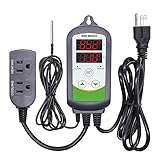
- 【Easy to use】 Supports °C/°F display.
- 【Dual relay】able to power refrigeration and heating equipment as conditions change.
- 【Dual Display Window】Displays measured temperature and set temperature at the same time.
- 【Buzzer Alarm】High and low temperature alarms are available when the temperature is over or the sensor experiences a malfunction.
- 【Safety】Maximum output load: 1100 W(110 V). Customize temperature and compressor delay, protecting your refrigeration/heating equipment.
Other tropical and temperate freshwater fish
“Tropical” is a broad category, not a complete temperature recommendation. Aqueon gives about 75–80°F (24–27°C) as a broad guide for many tropical community fish, but some species need cooler or hotter conditions. For example, OATA lists 17–27°C (63–81°F) for danios and 17–23°C (63–73°F) for white cloud mountain minnows; Aqueon identifies discus and certain equatorial fish as a hotter special case at 29–31°C (84–88°F).
Before combining fish, compare their temperature needs as well as their water chemistry, adult size, temperament, and habitat requirements. Aqueon advises choosing fish whose preferred temperature ranges match the tank. A forced compromise can leave tankmates outside their preferred conditions.
Pond, wild, and cold-water fish
Do not assign wild or pond fish an aquarium default based only on a broad label such as cold-water or warm-water. The dossier’s care sheets provide selected aquarium examples, not a universal temperature guide for trout, salmonids, bass, sunfish, carp, or every pond species. Identify the exact species and seek guidance for its setting and life stage.
Temperature can vary with season and location. Avoid abrupt changes when moving fish or changing their water; match replacement water temperature as closely as possible and follow species-specific advice.
Marine fish need species-specific temperatures too
This guide’s listed ranges are for selected freshwater fish. Do not apply them automatically to marine fish or reef systems. Set temperature according to the exact species and system, and consult a species-specific care source.
Rank #3

- Heating and Cooling: Controls both a heating and cooling (such as refrigeration) device at the same time; This controller can also be used to easily control a single heating or cooling device
- Applicable Scene: Because it has the powerful function of corrosion protection, it is very suitable for fresh water, sea water aquarium, coral cylinder, ornamental shrimp and tropical fish
- Dual Display Windows: Display the measure temperature and set temperature at the same time; Provides a temperature display of Celsius or Fahrenheit
- Alarms: High and low temperature alarms; sensor failure alarm; Maximum output load: 1200 W (110 V)
- Input Power and Temperature Control Output: 100 to 240 VAC; 50Hz or 60Hz; Max. 10 A, 100 to2 40 VAC
How to measure the actual water temperature
Use an accurate aquarium thermometer and measure the water itself. Do not rely only on room temperature or the heater dial. Recheck the reading regularly, especially after adjusting equipment or during seasonal changes.
How to keep the temperature stable
For fish that need heating
If the room is too cool for the species, choose a heater designed for the tank size and ensure water circulates around it. Follow the manufacturer’s installation instructions and verify the water temperature with a thermometer. Some tropical fish need heat year-round.
For fish that may not need heating
Goldfish and selected cooler-water species may do well without a heater if room conditions stay within their appropriate range. Measure the aquarium rather than assuming it matches the room.
Keep the aquarium away from temperature sources
Position the aquarium away from direct sun, drafts, vents, fireplaces, and other heat sources that can cause fluctuations. During water changes, match replacement water temperature as closely as possible.
If the aquarium overheats
For overheating, Aqueon suggests opening the lid and directing a fan across the water surface for evaporative cooling; coldwater fish or sensitive corals may require a chiller. Cool gradually and follow species-specific guidance. Aqueon cautions against lowering aquarium temperature by more than 2–3°F in four hours.
Rank #4

- 🐟【Explosion-proof Quartz Aquarium Heater】This 300W submersible aquarium heater is made of high-quality quartz glass tube, it's very durable and explosion-proof. The aquarium heater can be used for freshwater and saltwater aquariums, it is pretty shatter-proof and blast-proof and prevents electricity leakage. The stronger black ABS protective shell is easier to hide and prevents scalding, protect you and your aquatic pets on all fronts!
- 🐟【Rapid Heating System】The fish tank heater is suitable for 40-75 gallon tank, the voltage of the aquarium heater is 100-120V/50-60HZ, power 300W, Universal two-pin plug, heater rod length 12.99 inch, power cord is 98.5 inches long, Temp range: 63-94℉/17-34℃. The heating wire is nickel-chrome wire which can conduct heat quickly and fully adequate heat dissipation to achieve rapid heating effect.
- 🐟【Sensitive Temperature Control Probe】This aquarium heater has a unique intelligent temperature and water sensor system, the heater will automatically stop heating when the aquarium heater head is 5cm out of water, the digital screen will display "E1", green light flashing or it rapidly heats beyond the set temperature, the indicator light will turn green to ensure the maximum safety of you and your aquatic organisms.
- 🐟【Digital LED Display Controller】This aquarium heater has two temp control systems, temp control range: 63-94℉/17-34℃. The controller displays real-time water temp on the top and set water temp on the bottom, you just need to press and hold the button over and over again to finish setting the temp, the red light on means start heating, the green light on means stop heating, long press the thermostat button for 5 seconds to switch between ℉ and ℃ directly at will.
- 🐟【Removable Aquarium Heater】The shell of this aquarium heater can be disassembled into 4 sections, you need to press the clips and then push outward to pull off the housing. There are 2 strong suction cups on the heater guard, it's easy to install the aquarium heater no to the tank walls or bottom, please keep them fully submerged before plugging in. The heater is suitable for many occasions such as aquariums, betta fish tanks, turtle tanks, small fish ponds and aquarium market.
Temperature changes, water changes, and acclimation
Stability matters. Avoid sudden temperature changes when moving fish or adding replacement water. Match replacement water as closely as possible to the aquarium temperature and follow a suitable acclimation protocol for the species and situation.
Warm water and oxygen
Warm water holds less oxygen, and fish may breathe more as their metabolism increases. During warm conditions, pay attention to fish behavior and appropriate water movement. If fish appear distressed, check the temperature and water quality and seek qualified fish-health advice when needed.
A practical temperature checklist
- Identify the fish. Check species, variety, and origin where known.
- Consult a suitable care sheet. Treat broad labels such as tropical as starting categories, not exact recommendations.
- Compare tankmates. Choose fish with compatible preferred temperature ranges.
- Measure the water. Use an accurate aquarium thermometer rather than relying on the heater dial or room temperature.
- Check for stability. Keep the tank away from direct sun, drafts, vents, fireplaces, and other heat sources.
- Heat only when needed. Use a heater suited to the tank and the fish’s requirements.
- Match replacement water. Keep its temperature as close as possible to the aquarium’s during water changes.
- Respond to distress. Check temperature and water quality, and seek qualified help if the problem is severe.
Common temperature mistakes
- Assuming every fish needs the same temperature: species and varieties have different care requirements.
- Treating a tolerated range as an ideal target: the two can differ, as OATA’s fancy-goldfish guidance illustrates.
- Combining incompatible fish: a compromise setting may leave tankmates outside their preferred ranges.
- Trusting the room reading or heater dial: measure the aquarium water with a thermometer.
- Heating every aquarium automatically: some cooler-water fish may not need a heater if the room remains suitable.
- Ignoring location and temperature swings: direct sun, drafts, vents, and other heat sources can affect stability.
- Making abrupt changes: match replacement water closely and cool overheated water gradually.
What to do if the reading is outside the recommended range
If the water is too cold
- Confirm the reading with an accurate aquarium thermometer.
- Check the species-specific care guidance and whether a heater is appropriate.
- If heating is needed, use a heater designed for the tank and follow its instructions.
- Recheck the water and seek qualified fish-health advice if fish are distressed.
If the water is too warm
- Move the aquarium away from direct sun and other heat sources if possible.
- Follow species-specific cooling guidance and lower the temperature gradually.
- Monitor fish and check water quality if they appear distressed.
- Seek qualified advice if distress is severe or continues.
If the temperature keeps changing
Check for direct sun, drafts, vents, fireplaces, or other nearby heat sources. Review heater suitability and placement, and match replacement water temperature closely during water changes. Continue monitoring with an aquarium thermometer.
FAQ
What water temperature do fish need?
There is no universal temperature for all fish. Many tropical community fish are kept around 75–80°F (24–27°C), but individual species and varieties may need cooler or warmer water. Check the exact fish’s care sheet.
What temperature should my fish tank be?
Set it to suit the fish living in the tank. For a community aquarium, choose fish with compatible preferred temperature ranges instead of forcing a compromise that leaves tankmates outside their preferred conditions.
What’s actually slowing this PC down?
Pick the symptom - the matching free tool is one click away.
Best Value
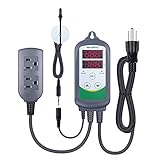
- Temperature Control Mode: On/Off Control. Cooling and Heating control
- Fully submersible probe. Aquarium probe works better in water than standard probe
- Temperature calibration; Over-temperature and sensor fault alarm. Dual display window, be able to display measured temperature and set temperature at the same time
- Maximum output load: 1200W (110V)
- It's an all in one, simple solution providing control of cooling and heating
What temperature do bettas need?
Published recommendations differ: OATA gives 20–28°C (68–82°F) for tank-reared bettas, while Aqueon recommends 76–85°F (about 24–29°C). Check guidance suited to your fish and measure the aquarium water directly.
Do goldfish need a heater?
Not necessarily. OATA says a heater is not generally required for goldfish unless the room is very cold. Check the guidance for your goldfish variety and measure the aquarium water.
How do I keep aquarium temperature stable?
Use an accurate thermometer, place the aquarium away from direct sun and other temperature sources, and use a correctly selected heater only when needed. Match replacement water temperature as closely as possible during water changes.
The Bottom Line
Fish need a stable temperature suited to their species and variety, not one universal setting. Check an appropriate care sheet, compare tankmates’ needs, and measure the aquarium water with a thermometer. Published guidance can differ, so distinguish optimal ranges from wider tolerated ranges.
Quick Recap
Product prices and availability are accurate as of the date/time indicated and are subject to change. Any price and availability information displayed on Amazon at the time of purchase will apply.




